
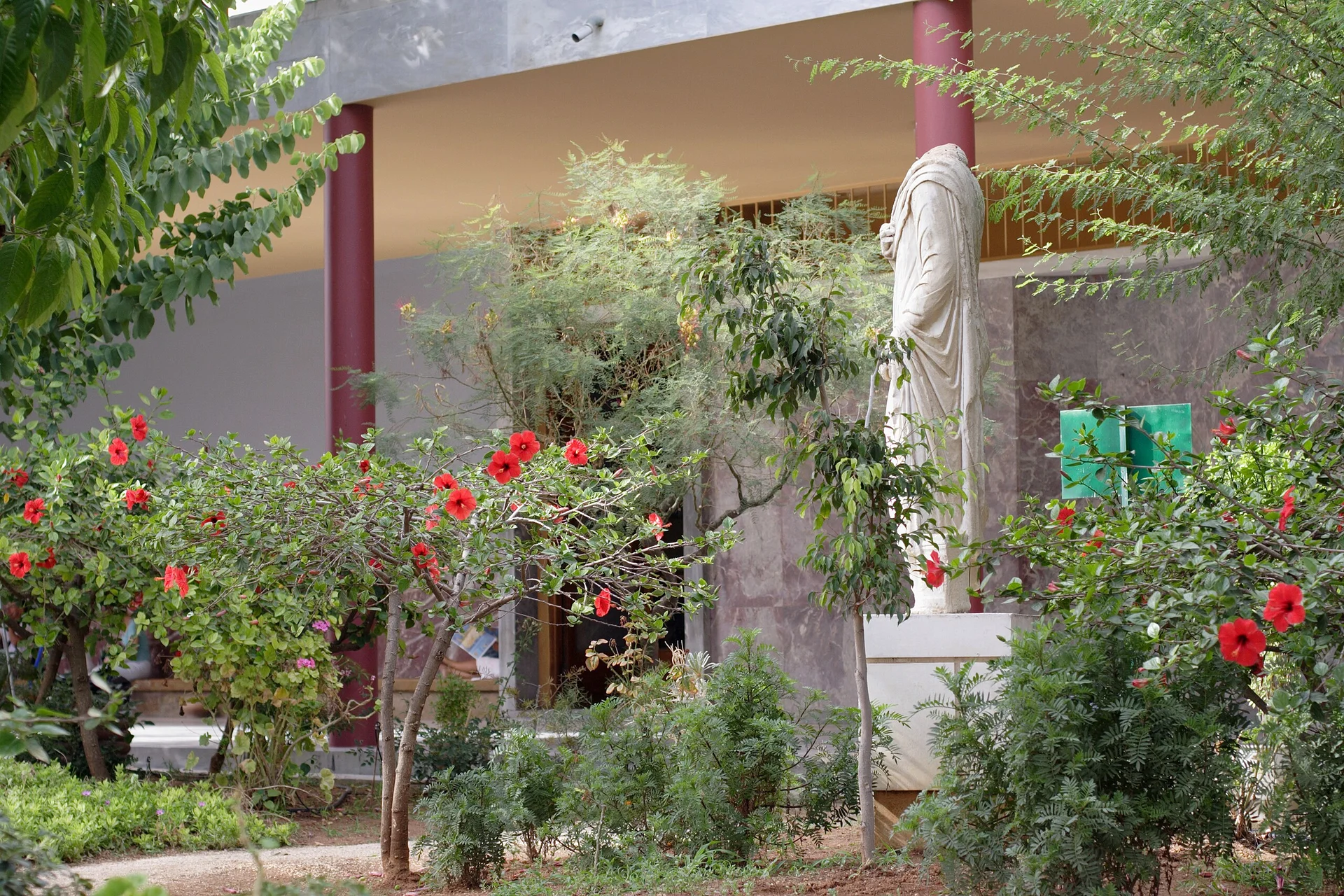
Heraklion Archaeological Museum: 5,500 years of history across 27 galleries
Editor's note, published 10/23/2025
A clay disc etched with undecipherable symbols. Goddesses brandishing snakes in their upraised hands. A bull carved from black stone with crystal eyes that seem to track your movement. Behind the stark Bauhaus facade of the Heraklion Archaeological Museum lies the most significant collection of Minoan art in the world.
Why this museum is worth your time
As the second most important museum in Greece, this institution founded in 1883 houses the treasures unearthed from the palaces of Knossos, Phaistos, Malia, and Zakros. These 5,500 years of Cretan history are housed in a modernist building designed by architect Patroklos Karantinos between 1937 and 1940.
After closing for eight years for renovations, the museum reopened in 2014 featuring a decidedly contemporary layout. The 27 galleries spanning two floors follow a path that is both chronological and thematic, covering everything from the Neolithic era to the Roman period.
Masterpieces that define the collection
The mysterious Phaistos Disc
Inside display case 51, this 16-centimeter clay disc has fascinated researchers since its discovery in 1908. Engraved with 241 symbols arranged in a spiral, it continues to baffle linguists and cryptographers. Dating back to the 17th century BCE, it remains one of the greatest archaeological puzzles in existence.
The Snake Goddesses of Knossos
These two figurines made of glazed faience, standing barely 30 centimeters tall, embody the power of the Minoan female cult. Dressed in long, tiered skirts and wearing elaborate tiaras, they grip snakes firmly in their hands. The intricate detailing demonstrates a stunning level of artistic skill for that period.
The bull's head rhyton
Carved from black steatite with rock crystal and jasper eyes, this ritual vessel was used for libations during religious ceremonies. The restored gilded horns and the mother-of-pearl inlaid muzzle give it a hypnotic presence. The bull held a central position in Minoan culture, as evidenced by the famous bull-leaping frescoes.
The bee pendant of Malia
This gold jewelry piece of incredible delicacy depicts two bees depositing a drop of honey into a honeycomb. The granulation technique used to create these tiny gold spheres remains a feat even for modern jewelers. It is a masterpiece from 1700 BCE that measures just 5 centimeters wide.
The fresco floor: Minoan life in color
On the first floor, Gallery XIII is a highlight of the visit. The restored frescoes from Knossos, Amnissos, and Agia Triada reveal a refined society where women played a prominent role. The blue, ocher, and red pigments have held up remarkably well over the millennia.
The fresco of the cupbearer, with his naturalistic profile, stands in contrast to the Egyptian art of the same time. The bull-leaping scene shows athletes, both men and women, performing dangerous acrobatics on the back of the sacred animal. Scenes of processions and enclosed gardens offer a look into the private lives of these lost palaces.
Insider tip: Buy your combined museum and Knossos ticket for 20 EUR (about $21), which is valid for three days. Tour the museum first to build a foundation of Minoan civilization, and the palace will make much more sense afterward. In the summer, aim for the 8:00 AM opening or late afternoon to avoid the cruise ship crowds. The air-conditioned museum also provides a welcome break from the heat.
Beyond the Minoans: Greek and Roman collections
The galleries on the first floor and ground floor cover the later periods. The black and red ceramics of the Kamares style, votive idols from mountain sanctuaries, and Mycenaean jewelry provide a complete overview of Cretan antiquity.
The sculpture collection presents works ranging from the 7th century BCE to the 3rd century CE. The limestone Lady of Auxerre, along with statues of Isis-Persephone and Sarapis-Hades with Cerberus, show the transition toward classical Greek and Roman art. This historical continuity provides essential context for the Minoan era.
Opening hours
*Information subject to change

This museum is very well organized and maintained. The rooms are even air conditioned, which is really nice. The collections are well displayed and quite varied. The exhibited objects cover a long period. Plenty to learn more about this civilization.