
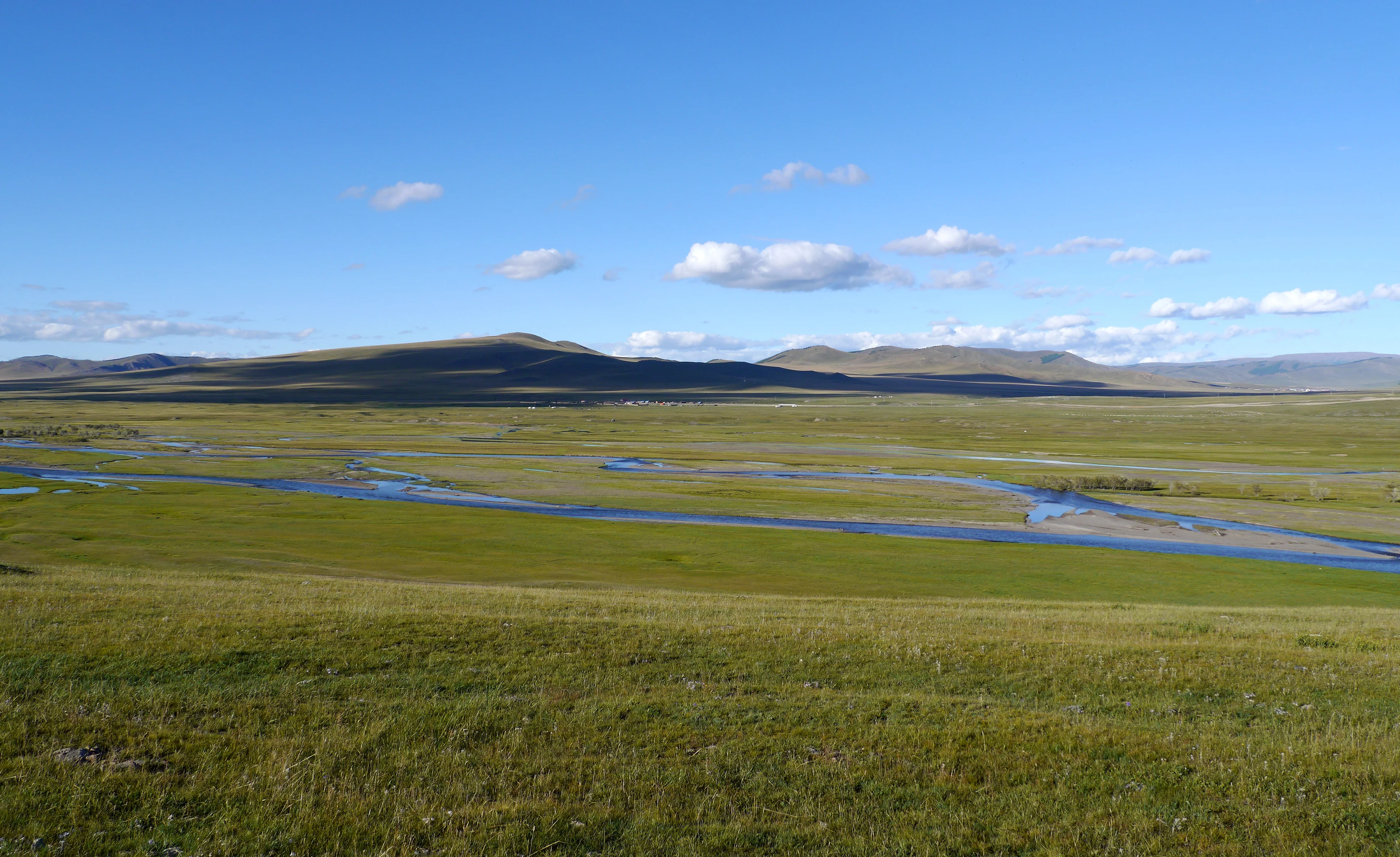




La steppe copyright GERES

Top 6 Travel Agencies for Africa Rankings 2026

Africa spans 54 countries, each with its own visa requirements, health regulations, and logistics that can easily trip up an itinerary. Working with an agency that truly knows the ground makes the difference between a trip that delivers and a costly disappointment. This list features agencies recommended by Avygeo travelers who have been there, helping you choose based on actual experiences rather than glossy brochures.

Partner

#1 Evaneos +21 recs 4.8/5

Custom-tailored trips to Africa, organized by local experts on the ground.

Evaneos connects you with pre-vetted local agencies across Africa, based right on the ground and ready to build a fully customized itinerary that fits your specific budget, pace, and interests. For a continent as vast and diverse as Africa, this model makes a real difference. You are talking directly to someone who knows the terrain, not a sales rep sitting in an office thousands of miles away.

Read reviews View offers
Partner

#2 Comptoir des Voyages +5 recs 4.8/5

Specializing in immersive travel, ATR-certified since 2009

Comptoir des Voyages approaches Africa with a specific philosophy. Expect authentic lodging, local transportation, and genuine interactions with residents rather than cookie-cutter tour packages. Every itinerary is crafted by a destination specialist you can contact both before and during your trip. Their ATR certification ensures a respectful approach to local communities and ecosystems, a standard that carries particular weight on this continent.

Read reviews View offers
Partner

#3 Jet Tours +2 recs 5/5

Over 50 years of experience with advisors available by phone

Jet Tours draws on more than 55 years of experience and the NG Travel group network to provide in-depth coverage of Africa. They offer beach getaways, small-group guided tours, safaris, and multi-destination itineraries spanning from Senegal to South Africa, including stops in Morocco and Tanzania. Their "Signature" line features limited-capacity itineraries with perks negotiated directly with local hoteliers.

Read reviews View offers
Partner

#4 Ltur +2 recs 3.8/5

Europe's #1 for last-minute travel

You have a few days off to head to Africa and want to make your budget go further. LTUR is built exactly for that. By aggregating unsold inventory from over 130 airlines and nearly 10,000 partner hotels, this German travel provider puts together flight and hotel packages at a discount for a variety of African destinations: Cape Verde, Tanzania, South Africa, Namibia, Morocco, Tunisia and more.

Read reviews View offers

#5 Masanke Travel 0 rec

High-end travel agency specializing in West Africa

Masanke Travel is a high-end Travel agencies specializing in authentic and immersive experiences across West Africa. We design custom tours that bring together culture, heritage, nature, and direct engagement with local communities. Every trip is crafted to provide an exclusive, elegant, and responsible discovery, led by experts who are passionate about Africa.

Write a review View offers

#6 South African Travellers 0 rec

Your custom trip to Southern Africa

South African Travellers is a local Travel agencies specialist crafting custom trips through Southern Africa since 2007. Based in Cape Town, our team designs personalized itineraries for South Africa, Namibia, Botswana, Mozambique, Zimbabwe, and Zambia, backed by deep local knowledge, hand-picked accommodations, and dedicated support before and during your journey.

Write a review View offers

Choosing an agency for Africa: what really matters

Africa spans 54 countries, dozens of visa protocols, wildly different infrastructure quality, and seasonal shifts that vary drastically between the Maghreb, East Africa, Southern Africa, and West Africa. On this continent, your choice of agency has a direct impact on the quality of your trip.

This is not about luxury levels, it is about logistical feasibility.

Generalist vs. specialized agencies: making the call

Many generalist travel agencies offer trips to Africa, focusing primarily on well-trodden paths: Morocco, Tunisia, Kenya, Tanzania, and South Africa. For these destinations, the market is saturated and the itineraries are well-refined.

The situation changes the moment you step off the beaten path. For Ethiopia, Rwanda, Namibia, Senegal, Madagascar, or Mozambique, specialized agencies hold a clear advantage. They offer established local partnerships, deep knowledge of seasonal shifts and ground-level constraints, and often better responsiveness when plans go sideways.

  • Africa specialists know their local providers on the ground, not just through brochures
  • They anticipate logistical hurdles specific to each region, such as dirt road conditions, actual travel times, and local closures
  • They track updates to entry requirements and security alerts on a country-by-country basis
  • Their local network allows them to manage unexpected issues faster than a large generalist agency

Entry formalities: a country-by-country reality

Africa is not a uniform travel zone from an administrative standpoint. Every country has its own requirements, including mandatory visas, applications prior to departure or on arrival, passport validity rules, yellow fever vaccination certificates, health records, and repatriation insurance.

A yellow fever vaccination certificate is required for entry into many sub-Saharan African countries. Some enforce this systematically, while others only require it if you are arriving from a high-risk country. Verify this specific point for every leg of your itinerary, not just your primary destination.

An agency that truly understands the continent must be able to provide a precise and up-to-date list of requirements for your specific route. If they remain vague on this, consider it a red flag.

Good to know: While you are ultimately responsible for your own travel documents, a professional agency should proactively inform you of the requirements in effect at the time of your departure rather than leaving you to figure it out on your own.

African seasonality: not one, but many

This is one of the most overlooked factors. There is no single "best" season for Africa. Climatic patterns vary radically by region.

Major seasons by African region
Region Peak tourist season Period to anticipate / avoid
East Africa (Kenya, Tanzania) July to October (Great Migration) April-May: heavy rains, difficult road conditions
Southern Africa (Botswana, Zimbabwe, Zambia) May to October (dry season) November to March: rainy season
South Africa Varies by province Austral winter (June-August): mild but cool at higher elevations
Maghreb (Morocco, Tunisia) Spring and autumn July-August: extreme heat in the south
West Africa November to March (dry season) June to October: rainy season, high humidity

This climatic variety directly impacts pricing and availability. For safaris in East Africa, booking 6 to 12 months in advance is common during the peak season, especially for lodges in protected areas where capacity is limited.

Common pitfalls in African travel

A few points deserve extra attention, regardless of the agency's overall reputation.

Single supplement fees are often higher on African circuits than elsewhere, particularly for lodge-based safaris. Verify this cost as soon as you receive a quote.

Activities in national parks are sometimes marketed as included in the brochure prices, but daily entry fees in certain parks, such as the Serengeti or the Masai Mara, can be substantial. Explicitly ask if these fees are already covered.

Be wary of itineraries that cram multiple countries into a short trip. Actual travel distances in Africa and transit times between airports, lodges, and parks are frequently underestimated in brochures. A circuit that looks seamless on paper can become exhausting in practice.

The case for an Africa-specialized agency

  • Ground-level knowledge of local providers and parks
  • Handling of complex formalities like multi-country visas and vaccinations
  • Responsiveness in the event of logistical or security emergencies
  • Access to small, boutique lodges and camps that are difficult to book directly

When an agency might not be necessary

  • For seaside trips to Morocco or Tunisia, direct package offers are very competitive
  • Travelers who are already experienced with a destination may find group tours too rigid
  • Some "specialized" agencies actually keep their offerings limited to the same 4-5 classic destinations

Questions to ask before booking

For an African trip, these concrete questions will quickly reveal an agency's level of expertise.

  • Who is your local partner on the ground, and how long have you been working together?
  • Are the national park entry fees included in the total price?
  • Which vaccinations and formal entry requirements are necessary for my exact itinerary?
  • What is your procedure if a domestic flight is canceled or a park closes due to weather?
  • Is the single supplement fee negotiable or fixed?

An agency that answers these questions precisely and without hesitation provides a good guarantee of the support you will receive once you are on the ground.

Frequently asked questions

Do I need specific travel insurance to visit Africa with an agency?
Most standard travel insurance policies cover Africa, but verify two critical points: medical repatriation insurance (medical evacuations from remote areas cost tens of thousands of euros, or over $10,000 to $50,000+) and coverage for your planned activities (vehicle safari, trekking, scuba diving). Some areas flagged by authorities may be excluded from coverage. Ask the agency if they include insurance in their quote or if they recommend a specific provider, and read the exclusions before you sign.
How can you verify that an agency has genuine expertise regarding Africa?
Ask specific questions about secondary destinations. If an agency only offers Kenya, Tanzania, Morocco, and South Africa, it remains a generalist. A true specialist names their local partners, knows the differences between lodges in the same park, and can explain why they advise against a specific time of year in a particular region. Also, verify if they are a member of a professional trade association like SETO or APST in France. These memberships require a financial guarantee in the event of insolvency.
What is the average budget for an East Africa safari booked through an agency?
Price ranges vary significantly based on your choice of lodging. For a week in Kenya or Tanzania at a mid-range lodge, expect to pay between €3,000 and €5,000 per person (about $3,250 to $5,400) for an all-inclusive package departing from Europe, excluding international flights. High-end lodges or camps in exclusive zones easily exceed €7,000 to €10,000 ($7,600 to $10,800). If you see a price below €2,500 ($2,700) all-inclusive, check the details carefully. Park entrance fees and domestic flights are often the first items removed from the advertised price.
Can you combine multiple African countries into a single trip through an agency?
Yes, and this is one of the situations where a specialized agency is most helpful. They manage visa requirements, domestic or regional flights between countries, and actual transfer times. Be careful about the density of your itinerary. Combining Kenya, mainland Tanzania, and Zanzibar in 10 days is doable, but adding Rwanda or Ethiopia in the same window significantly complicates the logistics. Ask the agency for the actual travel time between each stop, not just the straight-line distance.
Are French travel agencies better positioned than local African agencies to organize a safari?
Both models coexist with distinct advantages. A French agency provides a contact person who speaks your language, French legal protections, and financial guarantees through the APST or professional insurance. A local agency based in Kenya or Tanzania may offer more competitive pricing and deep on-the-ground expertise, but without the European regulatory safety net. Many specialized French agencies work directly with established local operators. You get the best of both worlds, provided the agency is transparent about its partners.