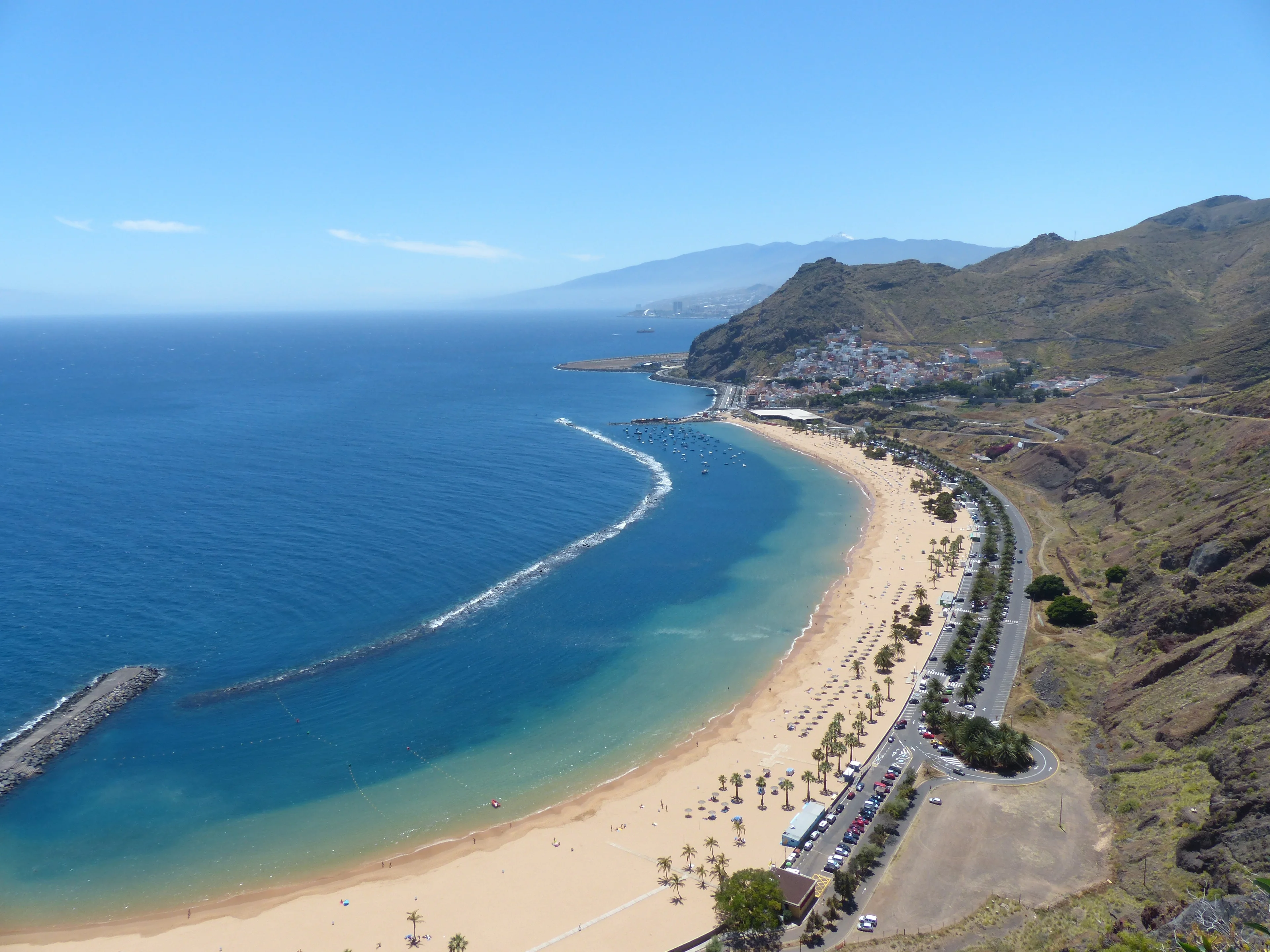
Playa las Teresitas

Top 7 most beautiful cities in Canary Islands to visit2026 ranking

Discover the most appreciated cities in Canary Islands by our members. Feel free to publish your own reviews to take part in this collaborative ranking.

The most beautiful cities in Canary Islands

#1 Santa Cruz de Tenerife +26

Most travelers bypass Santa Cruz de Tenerife, rushing straight to the southern resorts. They miss out on the local Canarian cuisine where a satisfying meal costs around 15-20 EUR (about $16-22), a massive market with 200 stalls, an auditorium designed by Calatrava overlooking the Atlantic, and the second-largest carnival in the world. This is a city built for living well, and the food is even better.

Must-see

#2 Puerto de la Cruz +22

Puerto de la Cruz, on the northern coast of Tenerife, features cobblestone streets, black volcanic beaches, and a relaxed local atmosphere. Spend your time wandering the historic center, walking through the lush Botanical Garden, or swimming in the saltwater pools at Lago Martiánez. For a change of scenery, take a day trip to Teide National Park to see dramatic volcanic landscapes that feel like another planet. It is a solid choice for travelers looking to balance outdoor exploration with a classic island pace.

Must-see

#3 Teguise +12

Perched in the center of Lanzarote, Teguise provides a quiet escape in one of the oldest towns in the Canary Islands. As the island's former capital, it features a well-preserved historic center, enduring local traditions, and sweeping views from the Castillo de Santa Bárbara. You will find an authentic atmosphere here, defined by the Sunday market and local festivals, far removed from the typical beach resort crowds.

#4 Puerto del Rosario +6

Puerto del Rosario serves as the capital of Fuerteventura in the Canary Islands and acts as the island's primary port. Outdoor and water sports are a way of life here, with the area standing out as a premier spot for windsurfing. Once known as Puerto Cabras, a nod to the goat herds that used to graze along its shores, the city has evolved into a town filled with the white, low-profile homes characteristic of island architecture. You can easily spend an afternoon at local white-sand beaches like Playa Chica or Playa de los Pozos right in the city center, or head slightly further out to Playa Blanca.

The largest city in Fuerteventura

Puerto del Rosario offers a laid-back pace, with a sprawling seaside promenade lined with over 200 sculptures. Walking the waterfront feels like touring an open-air art gallery. Each piece is curated during the Simposio Internacional de Escultura, an annual festival held every fall. The city is also covered in murals, including the famous Sabotaje al Montaje, which depicts a classic early 20th-century ocean liner. It is a massive piece, measuring 80 meters wide and over 11 meters high.

In the heart of the city, you will find a solid selection of bars and restaurants, along with the pristine white Nuestra Señora del Rosario church.

Cultural stops in Puerto del Rosario

Puerto del Rosario offers enough culture to justify a break from the beach and the local nightlife scene.

Start with a visit to the Unamuno House-Museum, the former home of the influential Spanish intellectual and poet during his exile. The space retains its original 1920s furnishings, providing an authentic look into that era. You can dive into Unamuno's philosophical and artistic world here, which includes his personal writings on the ocean and the local flora and fauna.

Next, head to the Ecomuseo de la Alcogida. This site recreates the look and feel of traditional Canarian rural villages. You can tour seven historic houses to learn about period construction techniques and watch artisans demonstrate crafts native to the Canary Islands.

When to go

Fuerteventura maintains a mild climate year-round, making it a reliable destination regardless of whether you visit in winter or summer.

How to get there

Puerto del Rosario is a quick 10-minute drive from Fuerteventura Airport via the FV-2 highway. You can also arrive by ferry from Las Palmas, Santa Cruz de la Palma, Santa Cruz de Tenerife, Arrecife, or, for the truly adventurous, from Cadiz in Spain, a journey that takes 31 hours.

#5 Yaiza +3

Yaiza is the southernmost town on Lanzarote in the Canary Islands. This area, once known as El Rubicón, served as the initial landing point for the first settlers to reach the Canary Islands. The name Yaiza itself is believed to be of indigenous origin, stemming from the language of the Guanche people who inhabited the island before the Spanish arrived. Today, Yaiza is a quiet, small town characterized by its impeccably maintained, stark white buildings. They stand in sharp contrast to the dark, desert-like volcanic landscapes surrounding the town, a direct result of the eruptions that reshaped this part of the island between 1730 and 1736.


One of Lanzarote's most beautiful villages

Yaiza pulls you in with its combination of rolling, arid terrain, the mountains of the parc national de Timanfaya in the distance, and the simple aesthetic of palm trees set against traditional white houses. For local history, step inside the 17th-century église de Nuestra Señora de los Remedios or visit the Casa de la Cultura Benito Pérez Armas, a prime example of colonial architecture featuring classic wooden balconies and staircases.

The town sits at the edge of the Los Ajaches natural monument, a volcanic massif shaped by an eruption 15 million years ago. Seven hiking trails start from Yaiza, leading you through these cliffs up to the Atalaya peak at 608 meters (roughly 1,995 feet). These ridges hide some of Lanzarote's most iconic spots, including the Plage de Papagayo, widely considered one of the best beaches in the Canary Islands.

You can also explore the volcanic hills of the parc national de Timanfaya on foot via the route de Tremesana, by bus, or even by camel. The Montagnes de Feu (Fire Mountains) are striking, rising out of a lunar landscape where vegetation struggles to take hold. Don't skip Los Hervideros, a series of sea caves and blowholes carved into old lava flows by the crashing Atlantic waves.


Exploring southern Lanzarote

The southern part of the island, where Yaiza is located, has a distinct character. Beyond the rusted hues of the volcanic rock, the south is home to two major resort hubs, Playa Blanca and Puerto Calero.

In the immediate vicinity of Yaiza, make time for the salines de Janubio, where the salt pans create a dramatic gradient of ochre tones. Nearby, you will find the region of La Geria, where farmers have adapted to the rugged volcanic soil to grow grapes in a way that is unique to this part of the world.


When to go

The Canary Islands enjoy a mild climate year-round. You can expect pleasant, sunny weather in the summer and comfortable temperatures in the winter, moderated by the surrounding ocean.


Getting there

The port at Marina Rubicón in Playa Blanca handles ferry traffic to and from the neighboring island of Fuerteventura. If you are flying in, Yaiza is a 20-minute drive from the airport in Arrecife, or you can take the line 60 bus.

Must-see

#6 La Orotava +2

La Orotava sits in the northern reaches of Tenerife in the Canary Islands. Nestled at the foot of the 3,718-meter Teide volcano, the town preserves a strong colonial architectural heritage, defined by ornate churches and historic mansions fronted by intricate wooden balconies. The old town was designated a national historical and artistic site in 1976. Surrounded by banana plantations, the area maintains a distinct Canarian character.

A classic Canary Islands village

La Orotava remains one of the best places in the Canary Islands to see the footprint left by the early conquistadores. If you want to dive into local heritage, head to the Casa de la Cultura on the place de la Constitución, which sits right next to the San Agustín church. Take time to admire the 17th-century mansions, the most famous of which is the Casa de los Balcones. Built in 1632, it features multiple levels of balconies and a central patio framed by high columns, a hallmark of colonial design. Continue your walk along Calle San Francisco to find other notable examples, including the Casa de los Monteverde and the Casa Lercaro.

If you time your visit correctly, you can witness one of the most significant traditions on the island of Tenerife, the floral carpets created for Corpus Christi. These massive, temporary murals are crafted from volcanic sand and flower petals, blanketing the streets of the village. To learn more about the technique, visit the Museo de las Alfombras.

Gardens and museums

La Orotava moves at a slow, deliberate pace. The terraced jardines Victoria offer expansive views over the town and the sea below. The town also features an acclimatization garden filled with tropical species like fuchsia and hibiscus, along with a Moreton Bay fig tree that is over 200 years old, known for its sprawling, photogenic aerial roots.

The cultural scene is substantial, featuring a 19th-century neoclassical town hall and the museo de l'artisanat espagnol et ibéro-américain, which is housed in a 17th-century convent.

Finally, La Orotava serves as an ideal base for hikers looking to explore the réserve naturelle de Pinoleris, the Corona Forestal natural park, the Costa de Acenjeto, or the Resbala area.

When to go?

The climate on the island of Tenerife is mild year-round, making it a viable destination in both winter and summer. If you want to see the Corpus Christi festivities, plan your trip for 60 days after Easter.

Getting there

Fly into Tenerife North airport, which is the closest terminal to La Orotava. From the airport, it is a 20-minute drive via the autoroute TF-5. If you are using public transit, take bus line 20 or 30 to the stop named Enlace Orotava.

#7 Las Palmas

This is the largest city in the Canary Islands and the capital of Gran Canaria, one of the islands in the archipelago. Located off the west coast of Africa, Las Palmas was conquered by Spain in 1483. Since then, it has grown by consistently leveraging its coastal setting. Sugarcane long defined the economy, making the city a target for privateers and pirates. Las Palmas endured numerous attacks before evolving into a popular tourist destination known for its climate, beaches, and duty-free shopping.

One of the finest urban beaches

With two miles of fine sand stretching across the bay, la Playa de Las Canteras is ranked among the best urban beaches in the world. A coral reef keeps the water calm for swimmers while providing a playground for snorkelers and divers who come to see the marine life. Just a few yards off the shore, volcanic rock formations known as la barra create a natural breakwater, perfect for surfing, kayaking, or stand-up paddleboarding. This area is the soul of the city, especially lively and active.

The waterfront, Paseo de las Canteras, serves as both a scenic walkway and a prime spot to grab a table at the restaurants lining the path. Menus are packed with local specialties like grilled fish and embarrado, a marinated tuna dish. Meat is less common, but the local black pork served in puchero, a traditional stew, is worth trying. Palm sap Catalan cream is the standard for dessert. At night, this district stays awake late with parties and events. This is also where you will find the Auditorio Alfredo Kraus, a striking piece of architecture where the stage seems to dissolve into the ocean during concerts.

The port of La Luz remains a busy hub, with a constant parade of cruise ships, cargo vessels, and fishing trawlers. A rudimentary fort from 1494 has been restored nearby.

An authentic historic district

Las Palmas is a large, cosmopolitan city with typical commercial boulevards. In the historic center, le Vegueta, the atmosphere shifts to something more authentic, concentrated with the city's most significant buildings. The market is one of the oldest in Spain, housed under an 1863 structure where exotic fruits create a display of color and flavor. On the Rue des balcons, noble houses stand in contrast to the modern high-rises. In the Plaza de Santa Ana, eight bronze-sculpted dogs keep watch. These mysterious symbols of the city appear to guard the cathedral, which took four centuries to complete and blends Gothic, Renaissance, and neoclassical styles. Its dark, gray stone contrasts with the elegance of the Palais épiscopal and the architecture of the Casa Regental.

In the Pasaje Pedro de Algara, ochre tones take over, leading to the Casa de Colón, a museum dedicated to the island's history, the Americas, and the explorers of the New World. It was once the governor's residence where Christopher Columbus stopped over, and the site includes a courtyard filled with parrots. Further on, the cabinet littéraire is no longer a theater, but its opulent salons now host various exhibitions. Surprisingly, the avant-garde Centro Antlántico de Arte Moderno has opened its doors in Vegueta, gaining fame for its collection of paintings, sculptures, and graphic works from three continents. The 1757 hermitage of San Antonio Abad, the indigenous artifacts at the Musée Canarien, and the Musée des arts sacrés are all worth visiting. Past the busy shopping street of Triana, the Parc San Telmo offers a breath of fresh air, and you should not miss the city's most popular plaza, Santa Catalina.

When to go

The sun shines year-round, with peak temperatures from April through late October. Outside of summer, the thermometer hovers between 63°F and 70°F (17°C and 21°C), though the water can be a bit chilly. In February, for nearly a month, the carnival transforms the city. It has been a marquee event since the 16th century and is recognized as a festival of national tourist interest, drawing massive crowds.

How to get there

The city is served by its own airport, with numerous direct flights available. Buses and taxis provide easy access to the city center, though renting a car is a practical option. Several ferry companies operate routes from the Spanish mainland as well as inter-island connections.

Must-see

Rankings by travellers, for travellers

Our rankings are powered by thousands of reviews from travelers like you, not the arbitrary pick of a single editor. Every positive review you publish raises the destination’s score.

1 positive review = +1 reco

Your voice matters!

Have you travelled and discovered amazing places? Share your experience and help the community rank the most beautiful destinations! Sign up for free to post reviews and make your voice heard.