
The smallest country on earth holds humanity's greatest treasures
Have you ever felt that electricity in the air when 20,000 pilgrims and tourists converge on the exact same spot every morning? Welcome to the enclave where Michelangelo painted the sky, where Bernini sculpted perfection, and where every square centimeter breathes profound history. You do not simply visit a museum or a church here. You step into a sovereign microstate spanning 44 hectares that packs a density of art and spirituality found nowhere else on earth.
A pilgrimage site as much as a cultural destination
If you hate crowds, stay away or visit in the dead of winter. More than 6 million visitors file through these walls every year, creating legendary lines and an anthill atmosphere. But if Renaissance art speaks to you, if you dream of gazing up at the Sistine Chapel, or if the thought of standing in Saint Peter's Square moves you, then prepare to rub shoulders with the masses.
This is paradise for art history buffs, believers seeking spiritual depth, and baroque architecture fans. On the other hand, travelers looking for local authenticity or everyday street life will leave disappointed. Everything here revolves around religious and artistic heritage. It is impossible to live like a local in a country of barely 800 permanent residents, all tied to the Church.
A museum budget that might sting
Admission to the Vatican Museums costs $23* at the ticket desk, or $29* when booked online via the official website, including the $5.70* booking fee that lets you skip the line. Expect to pay $45-$57* per person for a guided tour that saves you 2 to 3 hours of waiting. The good news is that St. Peter's Basilica is free, as is access to the square. To climb the dome, budget $12* with a partial elevator ride or $9* on foot, which means tackling 551 steps.
Unmissable treasures: An artistic odyssey
The classic route starts at the Vatican Museums, a labyrinth of 7 kilometres of galleries where masterpieces follow one after another. The Gallery of Maps, stretching 120 metres with its gilded ceiling, causes instant vertigo. The Raphael Rooms dazzle with monumental frescoes, notably The School of Athens, which brings together Plato, Aristotle, and the greatest thinkers of antiquity.
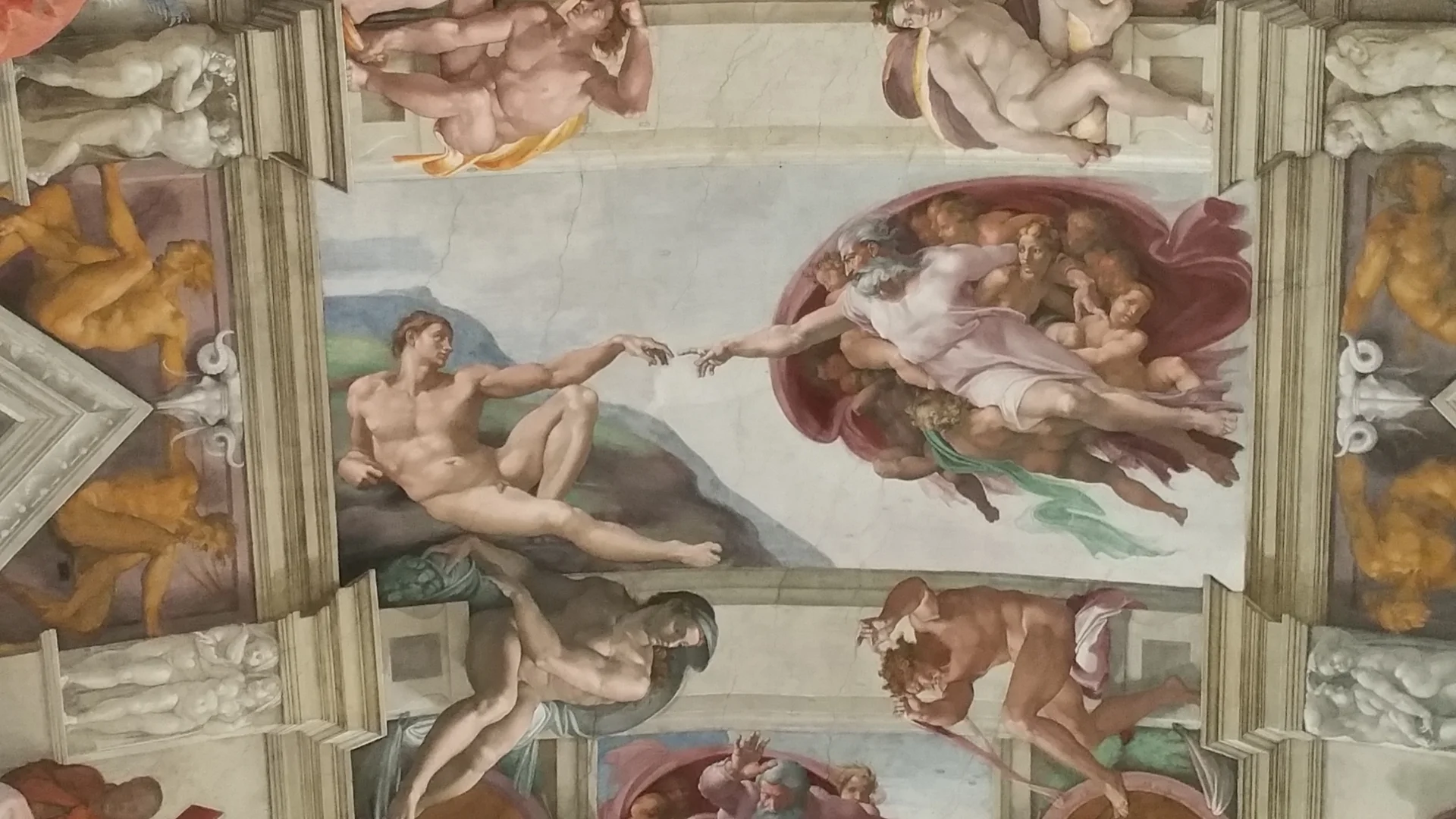
Then comes the main event, the Sistine Chapel. Silence is mandatory, and the sense of contemplation is intense. Michelangelo's ceiling, painted between 1508 and 1512, tells the story of Genesis across 1,100 m². In front of you, The Last Judgment covers the entire altar wall. The experience can be spoiled by the sheer mass of visitors and guards repeating no photo on loop, but look up anyway. The magic works regardless.
Friendly tip: book an 8 AM slot right at opening time. You will have the Sistine Chapel almost to yourself for 15 precious minutes before the tour groups arrive. Afternoons are a crowd nightmare.
St. Peter's Basilica: Breathtaking baroque scale
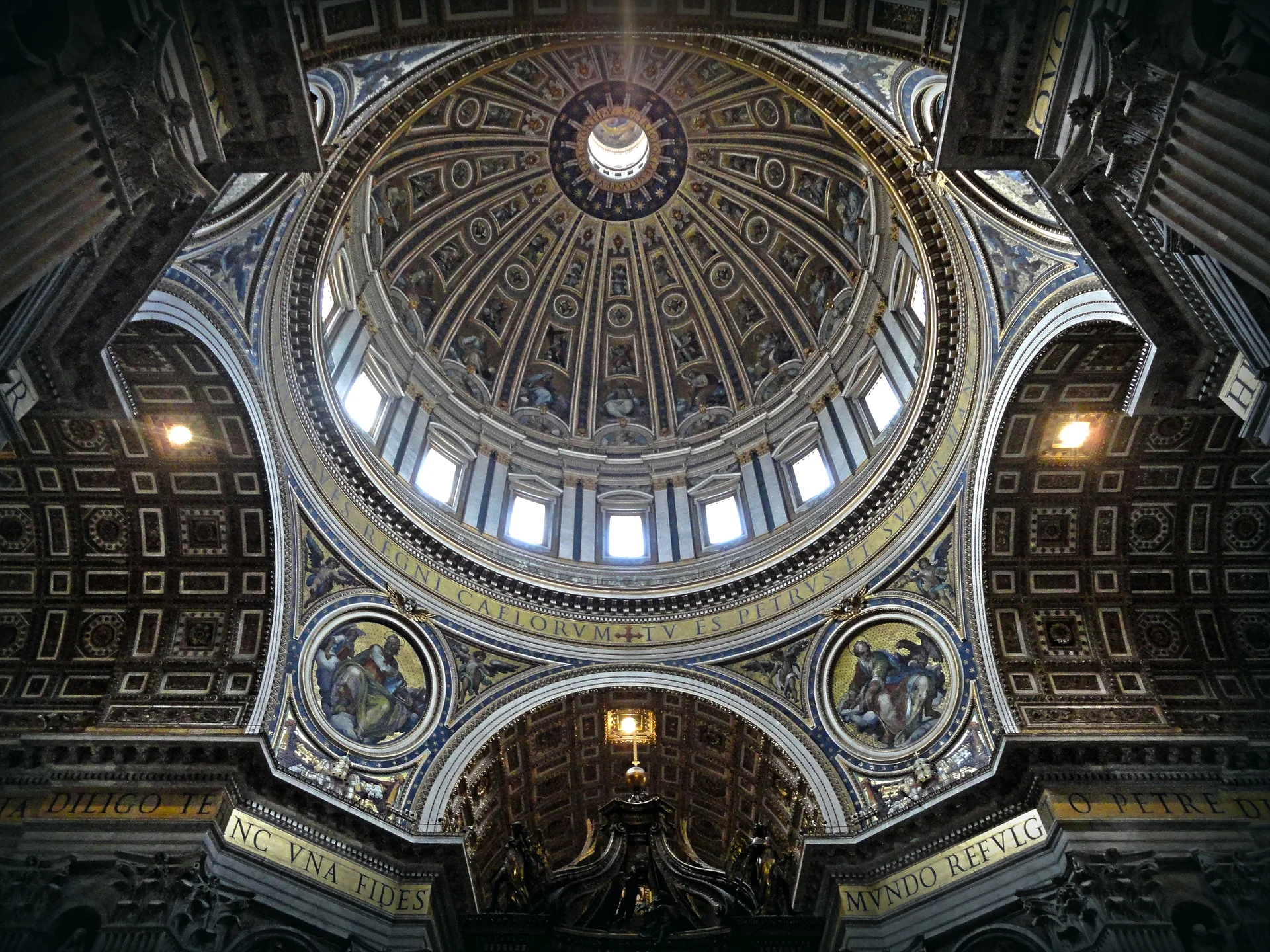
After the museums, head to Basilica di San Pietro, the largest church in the world. Measuring 186 metres long with a dome soaring 136 metres high, the interior features works that stop you in your tracks. Michelangelo's Pietà, sculpted when he was just 24 years old, sits behind bulletproof glass on your right as you enter. Further in, Bernini's 29-metre-high bronze baldachin marks the spot of Saint Peter's tomb.
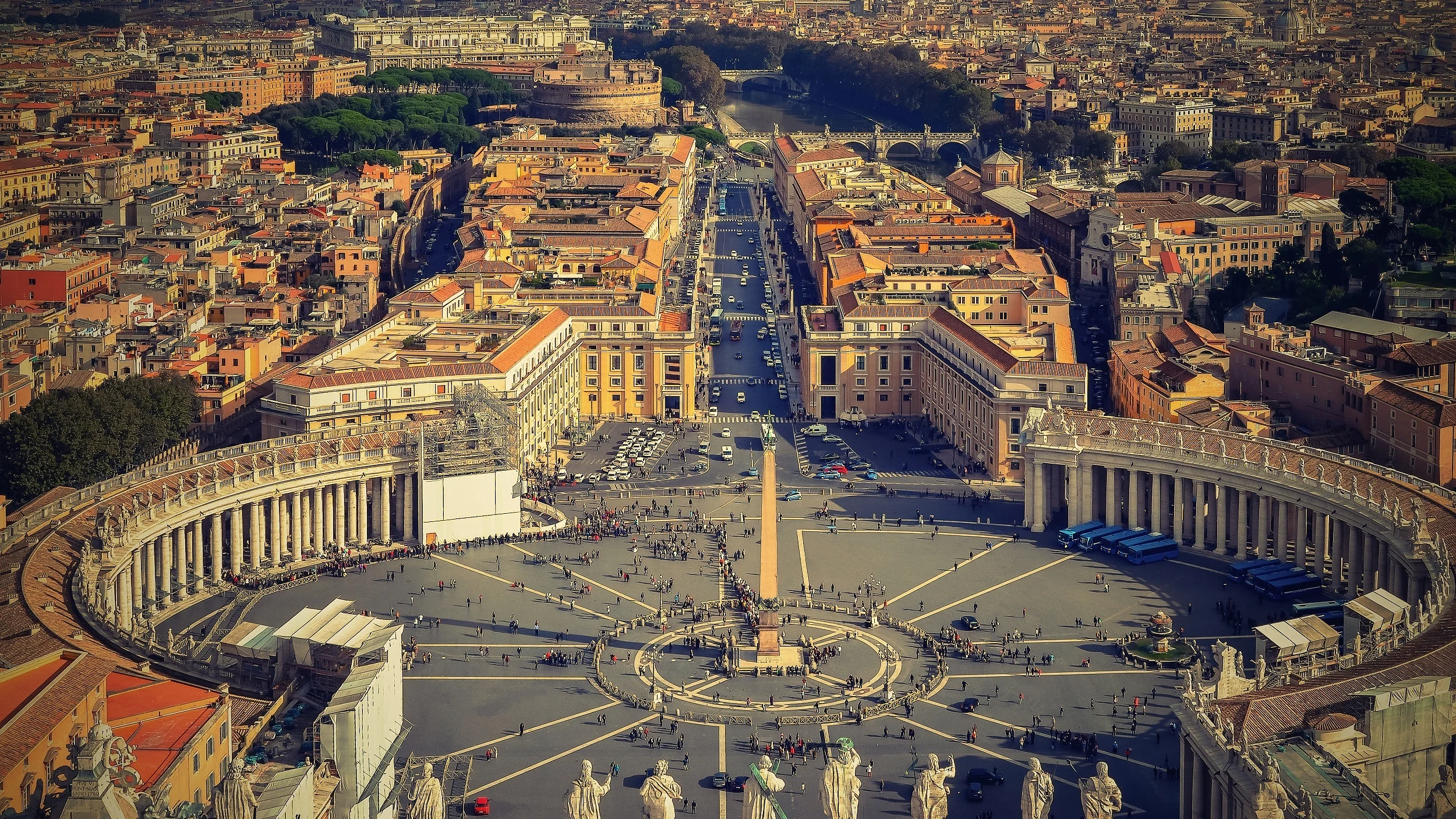
Do not skip the climb to the dome. The ascent is tough. Even with the elevator up to the halfway point, 320 steps remain in a steadily narrowing spiral staircase. The final metres feel claustrophobic, and the leaning walls make you feel like you are walking down a crooked hallway. Up top, Rome spreads out in a 360-degree view, from Saint Peter's Square with Bernini's giant embracing colonnades to the off-limits Vatican Gardens and the Eternal City stretching out beyond.
Friendly tip: arrive at the basilica around 7 AM, well before the museums open. No lines, no chaos, just you and the baroque immensity breathing quietly.
Secret experiences for the curious
The Vatican Grottoes beneath the basilica house the tombs of numerous popes, including Benedict XVI. Access is free but frequently overlooked by rushed visitors. Even more exclusive, the Scavi archaeological excavations take you deep beneath the basilica down to a 1st-century Roman necropolis where Saint Peter is believed to rest. You must book this tour months in advance through the official website, and it costs around $17*.
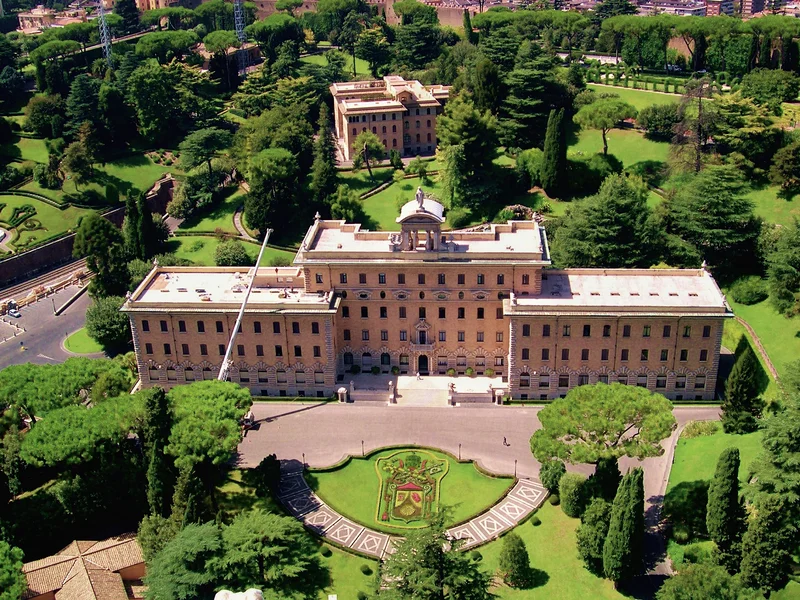
For a moment of pure contemplation far from the hordes, book a tour of the Vatican Gardens. These 23 hectares make up more than half of the country's territory. The open-air bus tour lasts 45 minutes and offers unique angles on St. Peter's dome. Note that advance booking is mandatory and tours often sell out several days ahead.
Friendly tip: on the last Sunday of every month, the museums are free from 9 AM to 12:30 PM. Great for your wallet, terrible for your nerves, with lines lasting at least 2 hours. Decide for yourself if the savings are worth the trial.
The papal audience: A moment of grace or a trial?
Every Wednesday at 10:30 AM (except in July), Pope Leo XIV holds an audience in Saint Peter's Square or the Paul VI Audience Hall depending on the season. It is free, but you must reserve tickets through the prefecture's official website. Tens of thousands of the faithful crowd in, creating a unique atmosphere that sits somewhere between religious fervor and a rock concert.
Keep in mind that the whole area gets gridlocked by 8 AM on those days. If your goal is a quiet museum visit, avoid Wednesdays entirely. On the other hand, if you are a believer or simply curious to experience this moment of global communion, it is a moving event.
Where to eat and drink around these sacred walls?
Let's be honest, people do not come here for the food. Inside the microstate, your options boil down to a few basic museum cafeterias where a panino costs $9* and a cappuccino runs $4.50*. The milk supposedly comes from the papal herd at Castel Gandolfo, but that does not justify the price.
The real culinary action happens in the Roman neighborhoods bordering the walls, specifically Prati and Borgo. In Prati, head straight to Pizzarium on Via della Meloria, the mecca of pizza al taglio by Gabriele Bonci. Expect to pay $17* for a hearty meal and prepare to wait in line. For an authentic trattoria free of tourists, Osteria delle Commari (Via Silla 26) serves flawless Roman classics like cacio e pepe, amatriciana, and saltimbocca. Budget: $29-$40* per person.
Near the basilica, Il Sorpasso (Via Properzio 31) offers great value with hearty brunch options and wines by the glass. The Trionfale market, a 5-minute walk from the museums, remains the best spot to eat local, featuring a porchetta panino for $4.50*, fresh fruit, and sharp pecorino cheese. It is a down-to-earth neighborhood market with zero pretension and locals doing their grocery shopping.
Friendly tip: avoid the restaurants on Via della Conciliazione, the grand avenue leading to St. Peter's, at all costs. It is the Bermuda Triangle of tourist traps, featuring picture menus for $17*, reheated pasta, and inflated bills. Walk 10 minutes further and you will eat twice as well for less.
Where to stay near the papal enclave?
Sleeping inside the microstate is impossible unless you are a cardinal. Your base camp will inevitably be in Rome, ideally in the Prati neighborhood. It is residential, elegant, upscale, and connected to the rest of the city via Metro Line A. Hotel Vespasiano, located 300 metres from the museum entrance, offers a great compromise by being modern, comfortable, and starting from $135* a night.
For tighter budgets, head to Borgo just south of Saint Peter's Square. Accommodations are simpler, but you are a 5-minute walk from the basilica. Hotel Museum (Via Tunisi 8) is functional, clean, and lacks particular charm, but its location is unbeatable, with doubles starting from $90*. Book well in advance because it is a favorite among smart pilgrims and travelers.
Another smart option is Trastevere across the Tiber River. It is livelier and more authentic, filled with cobblestone alleyways and neighborhood trattorias. Expect a 20-minute walk or a bus ride to reach the papal sites. Airbnb offers nice apartments here ranging from $79 to $169* a night depending on the season.
How to get to and around this destination?
From Fiumicino airport, take the Leonardo Express train to Termini ($16*, 30 minutes), then hop on Metro Line A toward Battistini and get off at Ottaviano-San Pietro for the basilica or Cipro-Musei Vaticani for the museums. Total cost: $17* in about 1 hour door to door. A direct taxi from the airport costs a flat official rate of $62*, making it a good deal for groups of 3 or 4.
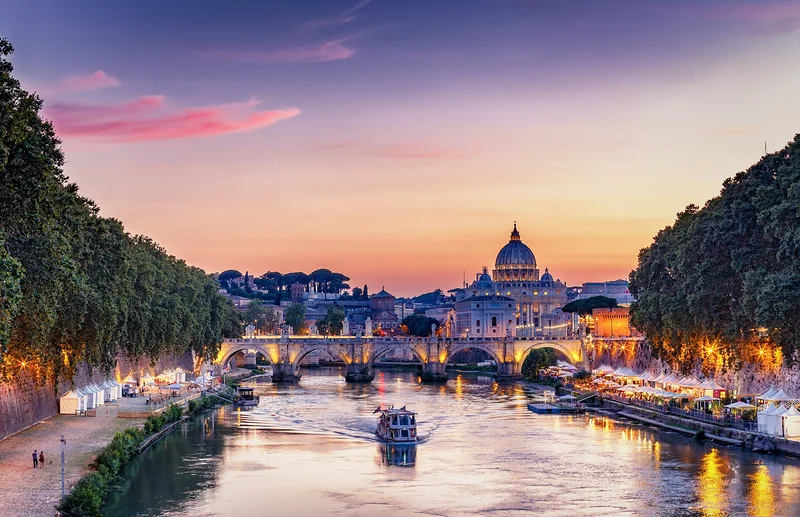
From central Rome, everything is walkable. From Piazza Navona or the Pantheon, figure on a quiet 20 to 25-minute walk along the Tiber. Buses 40 and 64 connect Termini to the papal district, but watch out for pickpockets since these lines are notorious. Metro Line A remains your best ally because it is frequent, reliable, and cheap at $1.70* for a 100-minute ticket.
On site, everything is done on foot. The two main sights (museums and basilica) are 500 metres apart, but their respective public entrances create a 15-minute detour around the outer walls. A direct passage connects the Sistine Chapel to the basilica, but it is reserved for guided tour groups. Moral of the story: wear good walking shoes.
When to go?
The months of April-May and September-October offer the best balance, featuring pleasant temperatures of 15-25°C and slightly lighter crowds than peak summer. July and August are best avoided unless you enjoy sweating in packed rooms at 35°C alongside hundreds of travelers armed with selfie sticks. Winter (November-February) sees lines drop considerably, though the weather can turn chilly and rainy.
Avoid Wednesdays entirely if you want a calm visit, as this is the day of the papal audience which paralyzes the whole sector. Saturdays and Sundays swarm with Italian tourists from all over the country. On the last Sunday of the month, free museum entry triggers chaos that puts major department store sales to shame. Tuesdays and Thursdays remain your best bets, ideally right at opening time.
The year 2025 was special because it marked a Jubilee, a holy year that takes place every 25 years. It closed on 6 January 2026 after record-breaking visitor numbers, and the next ordinary Jubilee will not come around until 2050.
I think it is safe to say that the Vatican is a world apart. Just seeing the Swiss Guards in their anachronistic uniforms is enough to prove that. Regardless, it remains a must-see, provided you have an interest in religious art and history. And that goes for whether you are a believer or not! I recommend seeing at least St. Peter's Basilica. Just a heads-up, you cannot be allergic to crowds!