
Visiting Castel Sant'Angelo
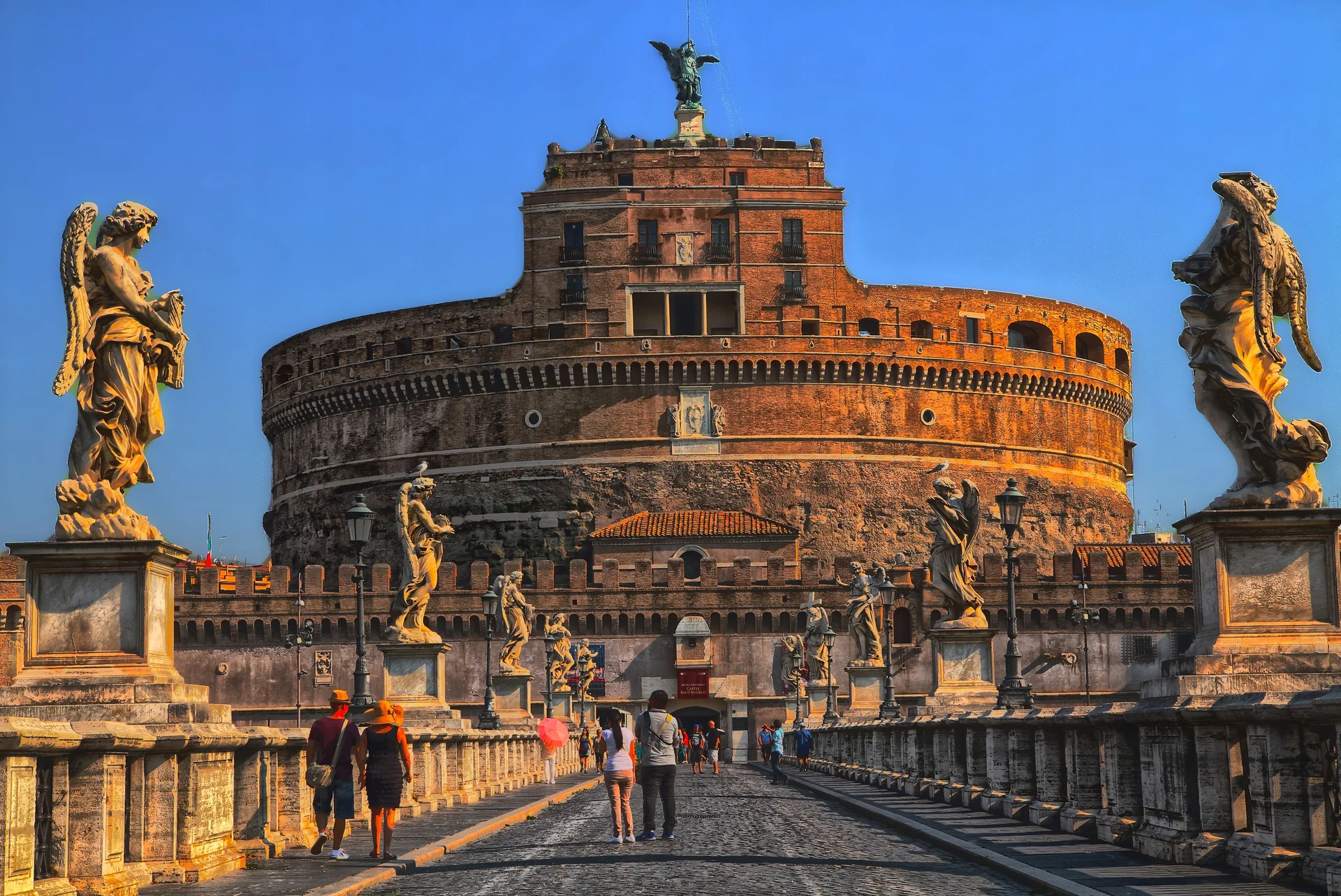
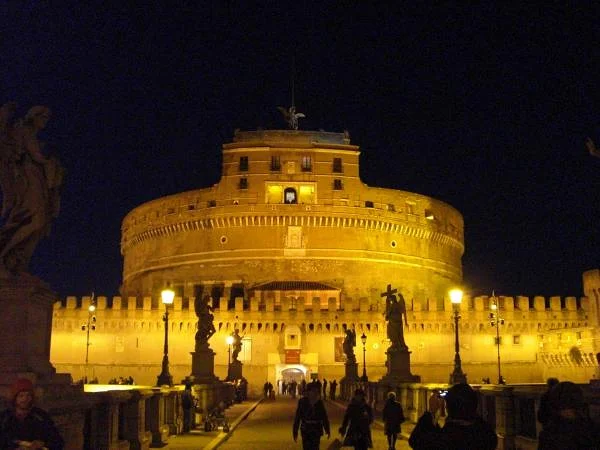
Castel Sant'Angelo is a monument in Rome that spans 2,000 years of history involving both the city and the Vatican. The structure was originally built by the architect Demetriano in 135 AD at the request of Emperor Hadrian, who commissioned it as a mausoleum modeled after the Mausoleum of Augustus, also located in Rome. By 403 AD, its purpose shifted and it was integrated into the Aurelian Wall, the defensive perimeter of Rome. Over the centuries, the monument underwent major transformations, serving as a fortress, a prison, and a papal residence before becoming a museum in the early 20th century.
The origin of the name Castel Sant'Angelo
The name Castel Sant'Angelo stems from a mystical event during the great plague of 590. While crossing the bridge with a procession of the faithful, Pope Gregory I had a vision of the Archangel Michael atop the castle, sheathing his sword. This was interpreted as a sign that the epidemic was coming to an end. To honor this event, both the bridge and the fortress were renamed Sant'Angelo, and a statue of the angel with his sword was erected at the summit. The original was destroyed multiple times, meaning the current bronze statue dates to 1753.
Links between Castel Sant'Angelo and the Vatican
In 1365, the fortress was ceded to the Vatican. Popes used the castle as a refuge during the conflicts that punctuated the following centuries. An 800-meter elevated corridor known as the passetto was constructed to connect the building to St. Peter's Basilica, allowing religious leaders to flee quickly in the event of an attack. During the 15th century, Pope Alexander VI and his successors transformed the castle into a papal residence.
Opening hours
| Monday | 09:00-19:30 |
|---|---|
| Tuesday | 09:00-19:30 |
| Wednesday | 09:00-19:30 |
| Thursday | 09:00-19:30 |
| Friday | 09:00-19:30 |
| Saturday | 09:00-19:30 |
| Sunday | 09:00-19:30 |
*Information subject to change

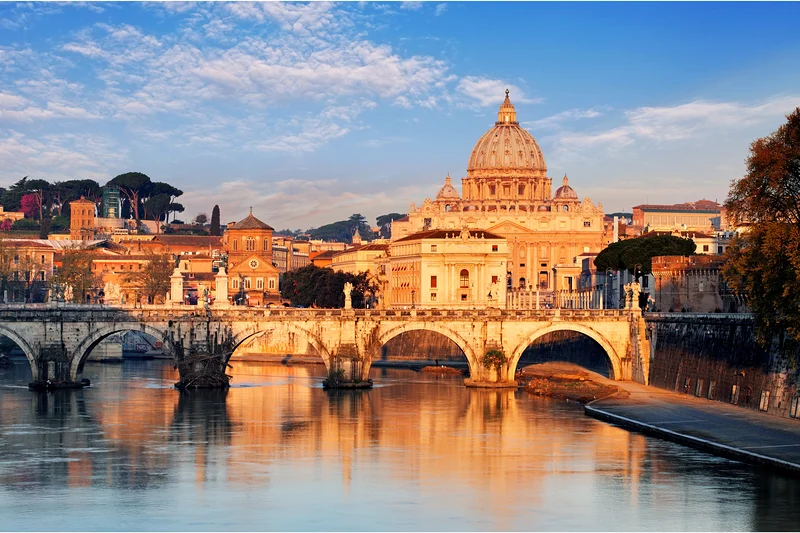
An incredible atmosphere in this fortress, a very well preserved castle, very enriching for the history of Rome.
A cafe restaurant with a stunning view of Rome awaits you at the very top :)