
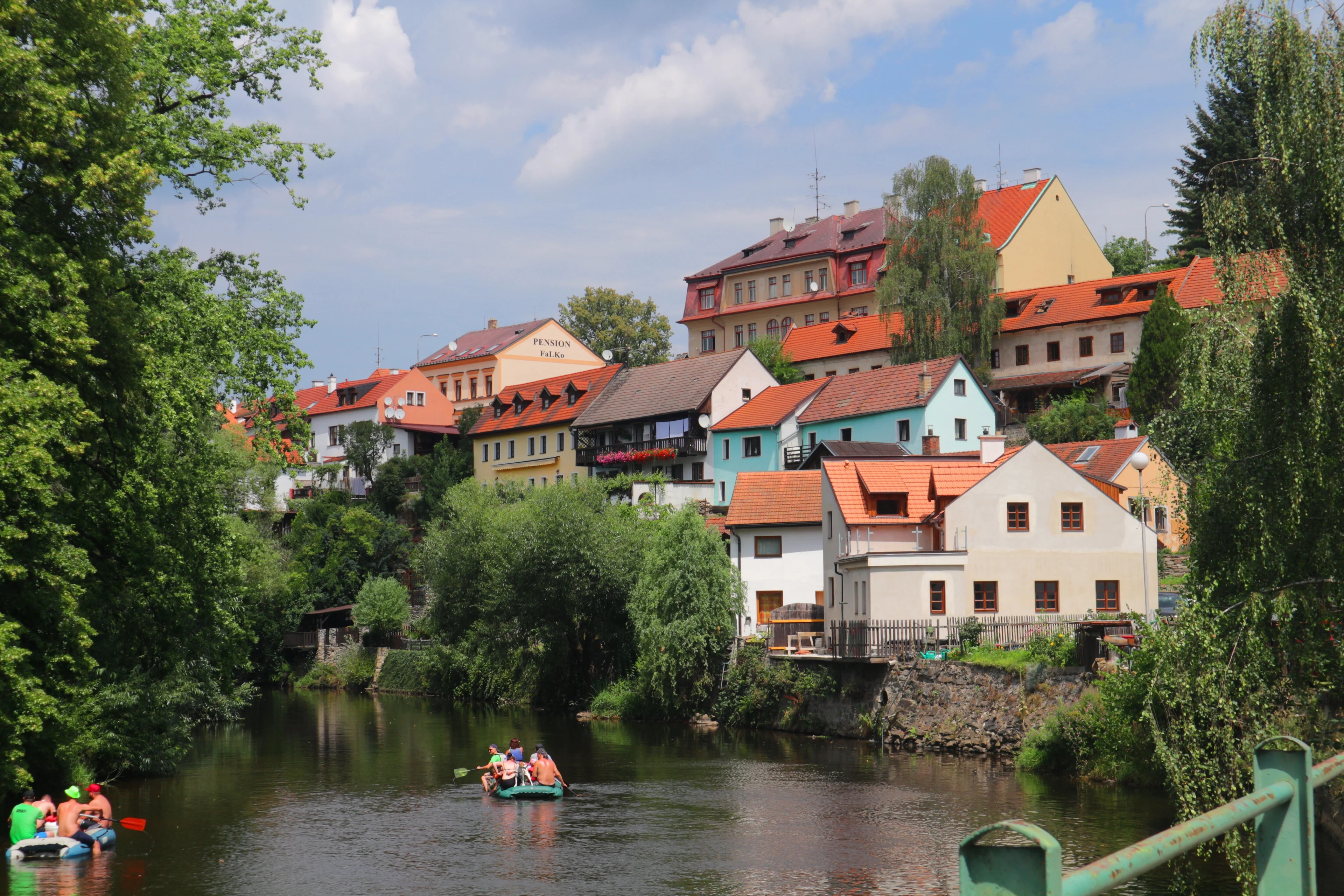
Visiting Český Krumlov
People often call this place "Little Prague." While it is a hundred times smaller than the Czech capital, Český Krumlov holds its own in terms of elegance and charm. The high spire of the St. Vitus Cathedral is enough to remind you of the city of a hundred spires. Tucked into a loop of the Vltava river, the town has preserved deep roots from the medieval era alongside stunning Renaissance architecture. The Rosenberg Castle, which looms over the city, is its most iconic landmark. Inside, the Masked Hall features elaborate trompe-l'oeil paintings depicting scenes from the commedia dell'arte.
A lively small town
Start your visit by exploring the castle grounds. You can reach the entrance via Latrán, a narrow street that dates back to the Middle Ages. You will cross a bridge over the castle moat, where you might spot the bears kept on the grounds. The castle complex is massive, spanning forty buildings, five courtyards, and about seven hectares (nearly 17 acres) of gardens. Feel free to wander at your own pace, as access to the grounds is free unless you book a guided tour. You only pay a few Czech koruna (typically 100-200 CZK, or about $4-9) to enter and climb the central tower. From the top, you get a clear view of the town and the surrounding countryside.
During your walk, do not miss the Cloak Bridge, a massive stone structure supported by high pillars with three levels of corridors. It leads directly to the well-preserved Eggenberg Theater. Český Krumlov often feels like a storybook setting. The medieval city center, a UNESCO World Heritage site, is packed with old baroque buildings. Head to the central square, or Náměstí Svornosti, which serves as the heart of the town and features a 16th-century town hall. In the middle of the square stands the Plague Column, topped with statues of the Immaculate Virgin and the city's patron saints.
The natural setting of South Bohemia
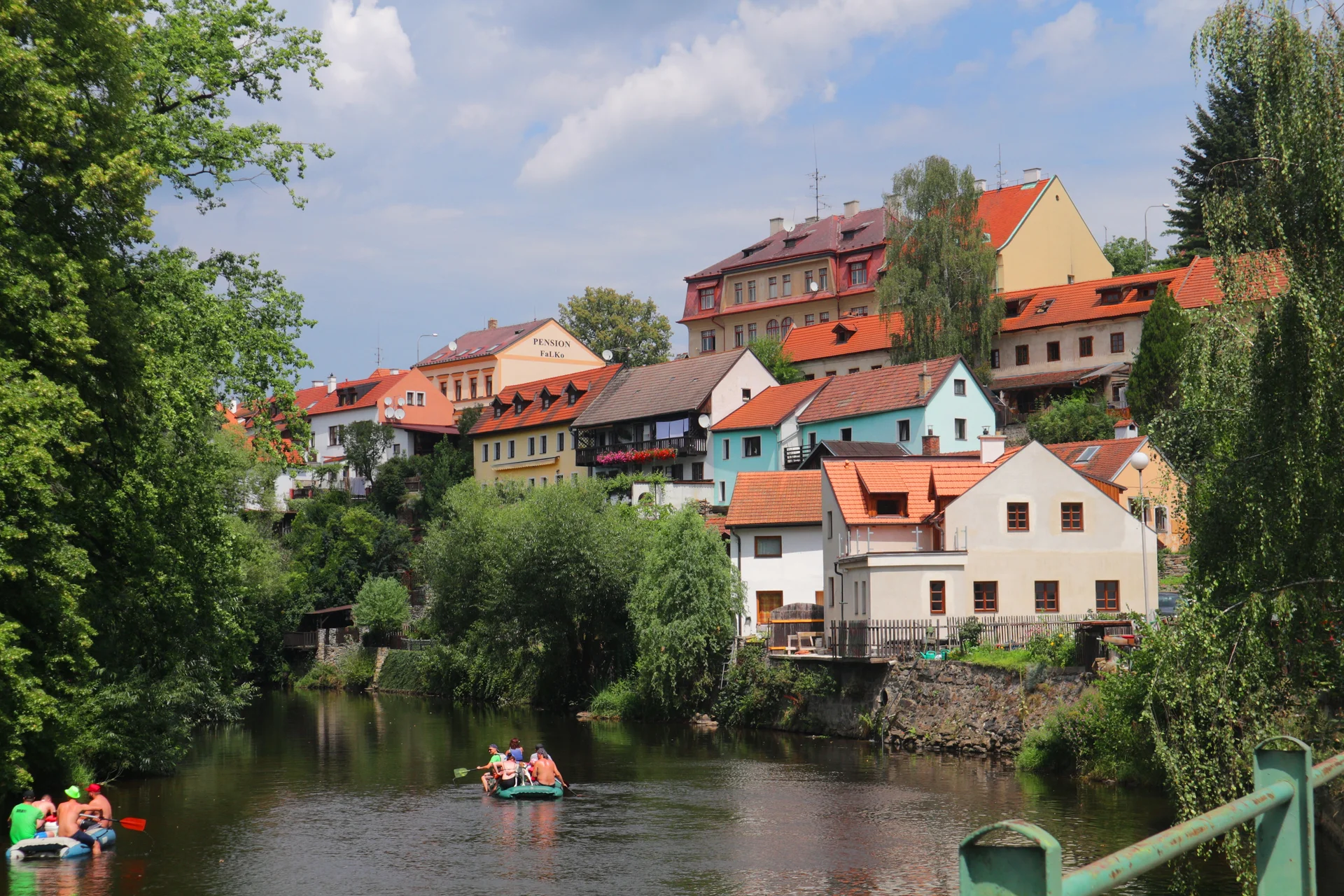
Beyond the local museums, such as the Regional Museum which details the history of the area, the surroundings are ideal for outdoor excursions. You can kayak or raft down the Vltava river. For a longer trip, head to the Cistercian Monastery of Vyšší Brod, only a 30-minute drive away. Also founded by the Rosenberg dynasty, the abbey is still home to a small community of monks.
The Šumava National Park, located at the western edge of the Czech Republic, is also worth a visit. It is part of the largest forested region in Europe. You can find protected species here like lynx and elk. You can even see traces of the Iron Curtain, which once separated Eastern and Western Europe during the Cold War.
When to go
To enjoy the pleasant weather and the many local festivals, the best months to visit Český Krumlov are during the warmer season, from May to September.
How to get there
From Prague, Flixbus operates direct routes to Český Krumlov that take about three hours. You can also take a train from Prague to the nearby city of Cesky Budějovice. From there, transfer to a local train that will take you directly into Český Krumlov.
City (or village?) full of charm, but you can see it all pretty quickly. One day is enough.