Visiting Franciacorta
A handful of gentle hills south of Lake Iseo, between Brescia and Bergamo, an hour from Milan. Here chardonnay and pinot noir vines give Franciacorta, a sparkling wine made like champagne, with a second fermentation in the bottle. The cellars, often set in old villas, open their doors for tastings.
Between the vines, abbeys, castles and stone villages are a few minutes apart by bike or car. To the north, the lake offers its shores and Monte Isola, an inhabited island where cars don't go. You come for the bubbles, Lombard cooking and slow days between lake and hills.
You'll love it if
- You love sparkling wine and cellar tastings
- You're after easy bike rides between vines and lake
- You want a break close to Milan, away from the crowded big lakes
Look elsewhere if
- You don't drink alcohol: the region lives around its cellars
- You're after great monuments or high mountains
- You're travelling without a car or bike: the cellars are scattered
The must-sees
-

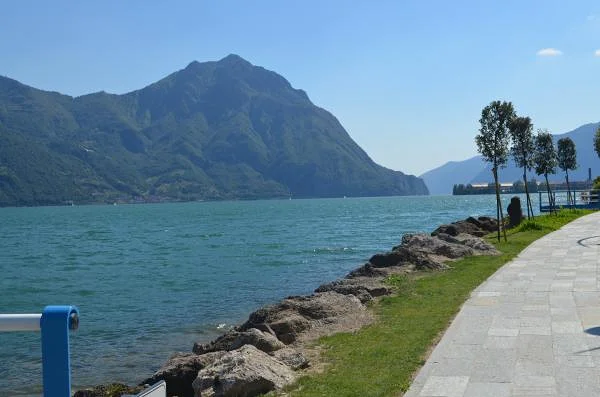
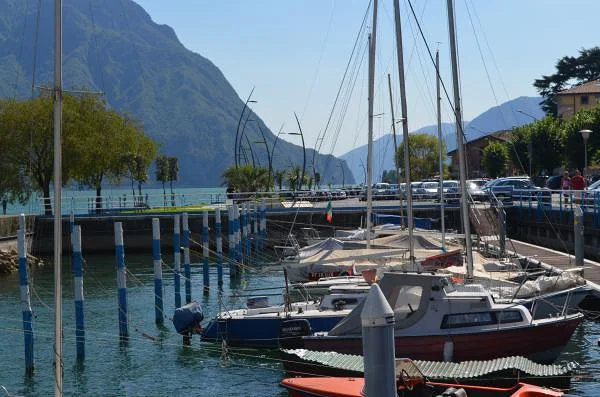
The most discreet of the Lombard lakes, tucked between wooded mountains. In Iseo, the waterfront promenade leads to the harbour, where boats leave for the villages on the shore. In the evening the terraces fill up for aperitivo, a glass of Franciacorta in hand.
-
2 Monte Isola Island
Italy's largest lake island, in the middle of the lake, with no cars. Walk or cycle around it, between fishing villages and nets drying in the sun, then climb to the Madonna della Ceriola sanctuary at the top for a view over the whole lake.
-
3 The Franciacorta cellars Wine
More than a hundred estates make the region's wine, many in villas or in cellars dug beneath the vines. Book a visit: you'll be shown the bottles resting on their racks, then the riddling, before the tasting.
-
4 The abbey of San Nicola Heritage
In Rodengo Saiano, a large abbey of Olivetan monks keeps three cloisters and Renaissance frescoes. Monks still live there. It's one of the most peaceful stops in the region, between two cellars.
-
5 The Sebino peat bogs Nature
South of the lake, a nature reserve of marshes and reed beds, covered with water lilies in early summer. A path loops around it, below the monastery of San Pietro in Lamosa. Come early in the morning for the birds.
The classic trap
Planning a day trip from Milan by car and hopping from cellar to cellar behind the wheel. Breath tests are frequent, and every tasting counts. Stay locally, hire a bike or book a driver: you'll move from one cellar to the next without a second thought.
Our itineraries in Franciacorta
| Length | Route | What you see |
|---|---|---|
| 2 days | Iseo › Monte Isola › Erbusco | The lake, the car-free island and two cellars |
| 4 days | Iseo › Provaglio › Rodengo Saiano › Erbusco › Cologne | The lake, the peat bogs, the abbey and the hillside cellars |
| 1 week | Franciacorta by bike, then the lakeshore up to Lovere | The vines at a gentle pace, the lake villages and their mountains |
Start with Iseo and the boat to Monte Isola. The next day, head down into the hills: the Sebino peat bogs, the abbey at Rodengo Saiano, then one or two cellars around Erbusco. Got a week? Hire a bike and follow the wine route, then follow the lake northwards.
When to visit Franciacorta
| Appeal | Season | Temperatures | Highlight | Crowds and prices |
|---|---|---|---|---|
| WinterDec. to Feb. | -1 to 8 °C | Mist over the lake and quiet cellars | Low | |
| SpringMarch to May | 8 to 23 °C | Budding vines and bike rides | Medium | |
| SummerJune to Aug. | 17 to 30 °C | The lake, swimming and cellar festivals | High | |
| AutumnSept. to Nov. | 7 to 24 °C | The harvest and golden vines | Medium |
Our advice
Come in May, June or September: the weather is mild, the cellars open and the roads quiet. The harvest starts early here, often from mid-August, because grapes for sparkling wine are picked before they're fully ripe. In July and August the lake draws crowds at weekends.
Getting to Franciacorta
-
By plane to Bergamo or Milan The simplest
Bergamo airport is about forty minutes from Franciacorta, the Milan airports just over an hour. Both have direct flights from London and many UK cities.
-
By train via Milan Without a car at first
From Milan, trains reach Brescia in under an hour. From Brescia, a small local line takes you to the Franciacorta villages and Iseo.
-
By hire car To explore everything
Hire a car at the airport: Franciacorta is just off the Milan to Venice motorway. A car is handy for getting from cellar to cellar, as long as you don't taste too much.
Once there, the region is small: the villages are ten or fifteen minutes apart. Cycling is a great option, on gentle hill roads and waymarked cycle paths. For the lake, boats leave Iseo for Monte Isola several times an hour.
Getting around Franciacorta
A car is the most practical, but the bike is the best way to see the region: distances are short, and rental shops offer e-bikes. The regional train links Brescia and Iseo, stopping at several villages. Boats serve the lakeshore and Monte Isola.
Good to know
On Monte Isola only residents and a few services drive: leave your car on the shore and take the boat. For tastings, arrange a driver or a hotel close to the cellars. Remember that the drink-driving limit in Italy is lower than in England and Wales.
What to eat in Franciacorta
- Franciacorta: the region's sparkling wine, as brut, softer satèn or rosé.
- Stuffed tench from Clusane: lake fish baked with breadcrumbs and cheese, served with polenta.
- Manzo all'olio from Rovato: a cut of beef slowly braised in olive oil.
- Casoncelli: meat-filled pasta served with butter and sage.
- Monte Isola sardines: small lake fish dried in the sun, then grilled.
- Spiedo bresciano: a skewer of meats roasted for hours, the dish of big family tables.
To eat like the locals, book a trattoria in Clusane, on the lake, for Sunday tench. In the hills, many cellars have their own restaurant or agriturismo. On Mondays, you'll taste manzo all'olio at the Rovato market.
Where to stay in Franciacorta
| Area | What for | Good to know |
|---|---|---|
| Iseo and the lake | Waterfront, boats, Monte Isola | The liveliest |
| Erbusco and Corte Franca | Big cellars, hills, golf | The most wine-focused |
| Rodengo and Cazzago | Abbey, villages, small cellars | The quietest |
| Cologne and Rovato | Monte Orfano, convent, market | The most practical |
How much does a trip in Franciacorta cost?
| Trip | Length | Budget per person |
|---|---|---|
| Budget (B&B, bike, trattorias) | 4 days | €350 to €550 |
| Comfort (lakeside hotel, tastings) | 4 days | €700 to €1,100 |
| Luxury (relais among the vines, Michelin-starred table) | 4 days | €1,800 to €3,500 |
- Tastings: most cellars charge for them, more for the top cuvées.
- The bike: hiring an e-bike for the day costs less than a driver.
- The boat: the ticket to Monte Isola is cheap and the crossing takes just a few minutes.
- The season: in spring and autumn you often pay less than in summer.
- Meals: the trattorias' lunch menu is the best deal in the region.
Traditions and way of life in Franciacorta
In the Middle Ages, Benedictine and Cluniac monks cleared these hills and planted vines. Their lands were exempt from taxes, curtes francae, which is said to be where the name Franciacorta comes from. The abbeys, like San Nicola in Rodengo Saiano, are still there, among the vines.
The sparkling wine, though, is recent: the first traditional-method bottles date from the early 1960s. In a few decades, the region became one of Italy's great sparkling-wine appellations. Raising a glass in a villa among the vines? It may once have belonged to a noble Brescian family.