
Where to stay in Dortmund: the 4 neighborhoods to know in 2026
There are two Dortmunds, and three kilometres of U-Bahn separate them. To the north, a ring of boulevards encloses a centre rebuilt after the war, with its two medieval churches, its former brewery water tower turned art centre and a shopping street you cross in twenty minutes. To the south, a stadium holding eighty-one thousand, an exhibition centre and a large park, all three side by side.
So the decision comes down to one question: is there a match? If there is, the south puts the turnstiles two minutes away, and rates climb across the whole city. If there isn't, the centre costs $96 to $113* and puts the museums, the opera house and the station within walking distance. The four neighbourhoods below start at the ring and head south, then move away.
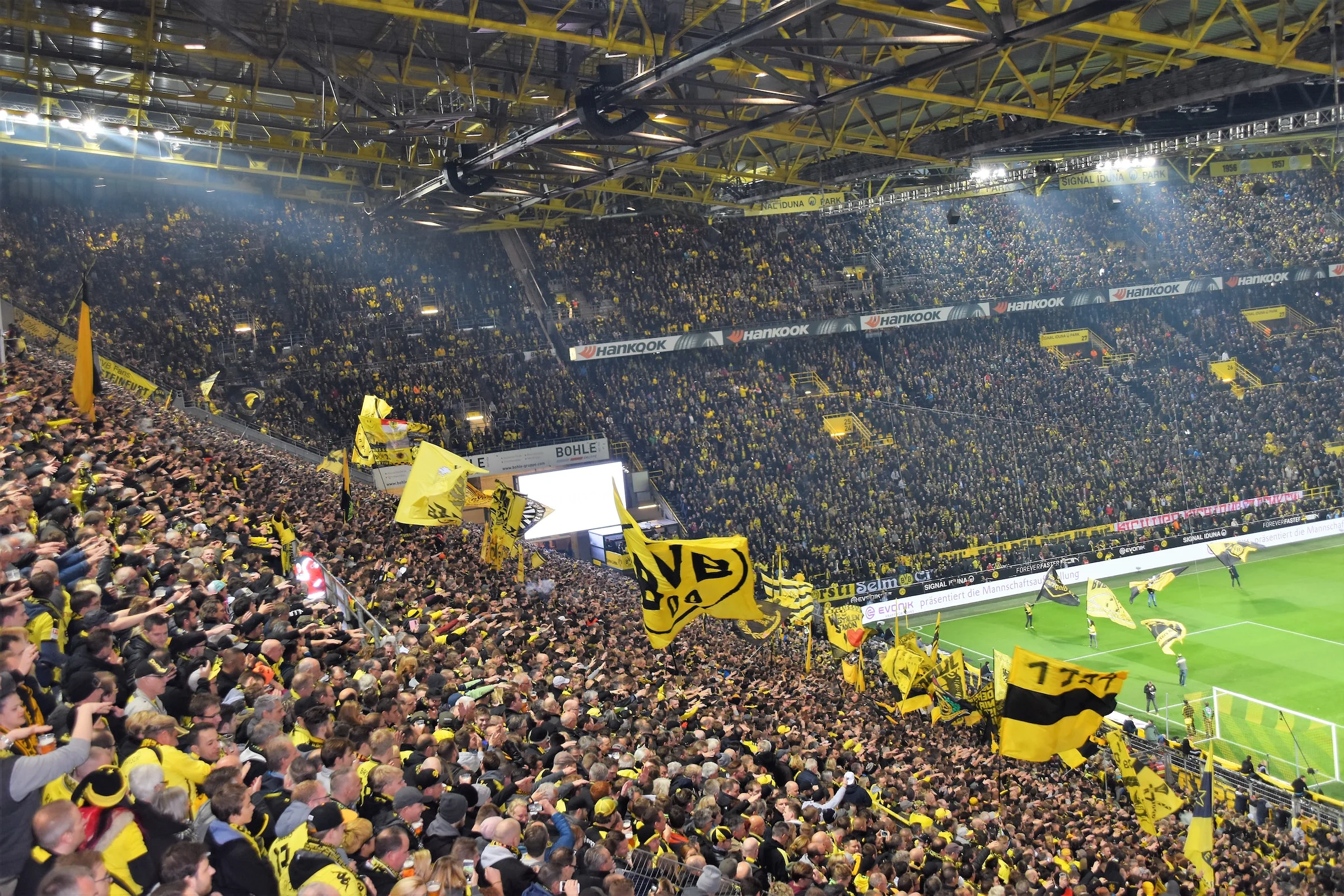
I let myself get talked into this adventure without many expectations, just to go along with my boyfriend. Honestly, it was a great atmosphere and super impressive to see, hear, and feel. I definitely don't regret it, and on top of that, the tickets are much cheaper than at other stadiums.
Compare hotel prices in Dortmund
In a hurry? Find the best accommodation deals in 3 clicks.
Compare live deals from Booking, Expedia, Agoda and other partners.
At a glance: our picks by traveller type
Pick the profile that suits you to head straight to the recommended neighborhood.
The neighborhood map in Dortmund
Get your bearings on the neighborhoods and must-see sights before choosing where to drop your bags. Click a name to jump to its description.
The centre inside its ring The two medieval churches of St Reinold and St Mary facing each other, the Dortmunder U and its former brewery water tower turned art centre, Hansaplatz, the Westenhellweg shopping street and the Thier-Galerie, the opera house, the theatre, the concert hall and the orchestra centre, the Steinwache memorial in the old police station, and the museums of art, cultural history, brewing and natural history
for a first visit, for the five museums, for arriving by train
A ring of boulevards runs around the centre, and everything that counts fits inside it. The two churches of St Reinold and St Mary face each other across the shopping street, with their medieval altarpieces: these are the two buildings that came through 1945 here. To the west, the Dortmunder U is recognisable from afar by the lit-up U on its roof, because it was a brewery water tower before it became an art centre. And the Steinwache memorial occupies the old police station, two streets from the station.
Where to stay in this neighborhood
IntercityHotel Dortmund Mid-range
8.7, with more than six hundred reviews behind it. Location 9.5, cleanliness and comfort 9.1, staff 9.0, facilities 8.8, value for money 8.6. It stands opposite the central station, three minutes from the shopping street, and the transport ticket is included in the night. From $107*.
Leonardo Hotel Dortmund Mid-range
8.6, and more than four thousand eight hundred reviews, the biggest volume on this page. Staff climbs to 9.1, cleanliness, location and comfort to 9.0, facilities to 8.8, value for money to 8.5. It sits on the Ostwall, the eastern side of the ring, four minutes from the museum of art and cultural history. From $96*, double that on a busy night.
Pros
- Fifteen of this guide's thirty places within a kilometre and a half
- The station opposite one of the two addresses kept here
Cons
- A rebuilt centre: two churches, and new build around them
- On match days, rates climb here too
The stadium, the halls and the Westfalenpark The Signal Iduna Park and its eighty-one thousand seats, the Westfalenhallen exhibition centre and the Helmut-König arena right beside it, the Westfalenpark and its rose garden, and the two-hundred-metre Florian tower planted in the middle of the park
for a match, for a trade fair, for the tower and the park
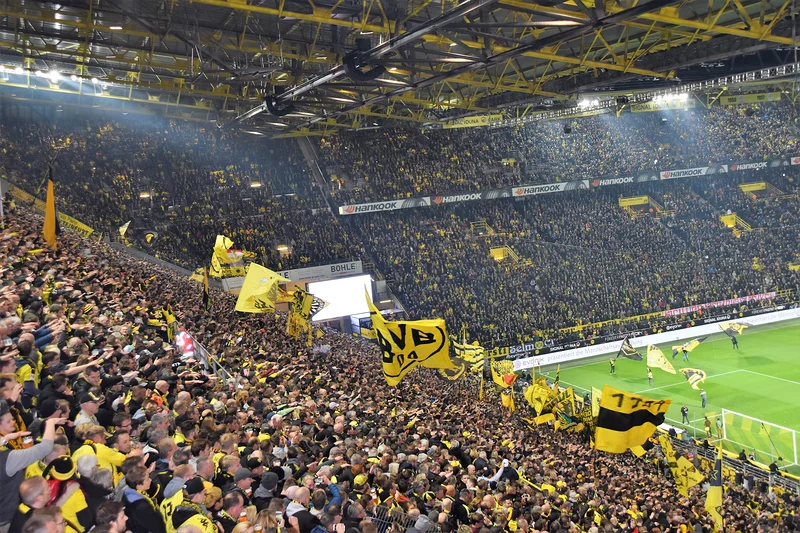
Three kilometres south of the centre, three venues touch one another. The Signal Iduna Park is the largest stadium in Germany, and its south stand is one unbroken wall where you watch the match standing up: twenty-five thousand people in one place, and banners unfurled before kick-off. Next door, the Westfalenhallen run trade fairs all year, which pushes prices up with no match at all. And the Westfalenpark closes the block to the east, with its rose garden and the Florian tower in the middle.
What to see & do in the neighborhood
Where to stay in this neighborhood
Radisson Blu Hotel Dortmund Mid-range
8.4, more than two thousand reviews, and 9.2 for staff. Cleanliness and comfort 8.8, location 8.7, facilities 8.6, value for money 8.0. It is set between the park, the halls and the stadium, with an indoor pool, a spa and a car park, which the other two addresses on this page do not have. From $113*.
Mercure Hotel Dortmund Messe Mid-range
8.2, one thousand six hundred reviews, and a gap that tells the whole story: 9.5 for location against 7.7 for value for money, a 1.8-point spread, the widest in this guide between those two scores. Cleanliness and comfort 8.5, facilities 8.1. It is on Strobelallee, two or three minutes from the turnstiles: you are paying for the distance to the stadium. From $102*.
Pros
- The turnstiles two minutes from one of the two addresses
- The rose garden and the tower in the same park, out of match season
Cons
- The centre is three kilometres away: count on the U-Bahn
- This guide's widest gap between location and value for money
Further south: the parks, the zoo and the Ruhr The Rombergpark botanical garden and its sixty-five hectares, the zoo just below it, the German cookbook museum, the Olpketal theatre, and right at the southern end the Hohensyburg casino above the Ruhr
for trees, for the zoo, for a day with children
The south of Dortmund is green for eight kilometres. The Rombergpark is a sixty-five-hectare botanical garden around a pond, and the zoo begins where it ends, which makes a full day without getting back on the tram. Lower still, Hohensyburg plants a casino and a ruined castle above the mouth of the Ruhr, with the reservoir below. This guide keeps no address here, and says so: this is a residential south, to be visited during the day.
Pros
- Sixty-five hectares of botanical garden, and the zoo next to it
- The view over the mouth of the Ruhr, right at the southern end
Cons
- No address kept here, and this guide says why
- Eight kilometres from one end of the area to the other: you have to choose
Around the city: industry and the castle The DASA and its halls on the world of work to the west, the Zollern colliery industrial museum further out with its brick machine hall, the moated castle of Bodelschwingh to the north-west, the climbing hall in a former pit yard, and the golf course to the north-east
for the industrial museums, for the castle, by car
What Dortmund was before football can be seen on the outskirts. The Zollern colliery, ten kilometres west, kept a machine hall of brick and stained glass that was saved from demolition in the sixties: it is the starting point of all industrial conservation in the region. The DASA, closer in, fills thirteen thousand square metres on the world of work, running machines included. And the moated castle of Bodelschwingh, to the north-west, still stands in its park.
Pros
- The colliery machine hall, saved from demolition
- Thirteen thousand square metres on work, with machines running
Cons
- No address kept here either: you go, you don't sleep
- Ten kilometres and two changes for the colliery, without a car
Our tips for booking the right place
- The match ticket is cheaper than elsewhere, the room is dearer: This is the only calculation to make before booking. Bundesliga tickets cost markedly less here than abroad, standing in the south stand as much as seated elsewhere, and travellers all notice it. Against that, hotels across the whole city climb on match nights, and one guest saw their rate triple. So you check the fixture list BEFORE picking a date: seventeen Saturdays a year, a full stadium, and two hundred and fifty beds in the stadium area. A weekend with no match costs half as much.
- The south stand is watched standing up, and it is not the same ticket: The four sides of the Signal Iduna Park are not alike. The south stand is one unbroken wall behind the goal, with STANDING places in the league: it is the largest of its kind in Europe, and the pre-match banners unfurl there. In European competition the rules require seats, so the same wall is watched sitting down and the capacity drops. Anyone after the atmosphere described everywhere should take a league match, not a European night.
- Three kilometres separate the two cities, and the U-Bahn links them: Between the ring of the centre and the stadium block there are three kilometres of nothing in particular. The U-Bahn covers it in eight minutes from the central station, with a stop at the foot of the turnstiles and another at the halls, and services thicken on match nights. On foot, allow forty minutes through the Westfalenpark, which is pleasant once. The night's transport ticket is included at one of the central addresses: check before paying for a journey.
- The club's season runs August to May, the Hansaplatz tree at Christmas: There is no good or bad season here, there is a calendar. The league runs from mid-August to the end of May, the Westfalenhallen fairs fill the rest, and both have the same effect on rates. In late November the Christmas market plants its tree on the Hansaplatz: it is made of several dozen spruces stacked into a pyramid, it rises above the buildings around it, and it is the only time of year when the centre fills up as much as the south.
- Booking without checking the club's fixture list: seventeen Saturdays a year, rates across the whole city change.
- Expecting an old town: two medieval churches came through 1945, the rest of the centre is rebuilt.
- Taking a room near the stadium to see the city: the centre is three kilometres away.
- Counting on an evening in the southern parks: the Rombergpark and the zoo close, and nothing opens afterwards.
FAQ: where to stay in Dortmund
Which neighbourhood should you stay in in Dortmund?
How much does a night in Dortmund cost?
How many days for Dortmund?
Can Dortmund be seen on foot?
When is the best time to come to Dortmund?
What should you see in Dortmund in one day?
 Keep exploring
Things to do in Dortmund
Comments (0)
No comments yet. Be the first!