
Ottrott, the Alsatian Village with Its Own Red Wine
There is only one red wine appellation along the entire Alsace Wine Route, and it bears the name of a village most travelers drive right past. Ottrott, tucked at the foot of Mont Sainte-Odile, has produced a pinot noir for centuries that local winemakers simply call "Le Rouge d'Ottrott."
Wine enthusiasts often make a detour from Strasbourg just for this bottle. The village itself is split in two: Ottrott-le-Haut and Ottrott-le-Bas, which were independent communes until 1858, each with its own church, châteaux, and distinct history.
Is This Destination Right for You?
Hikers, wine lovers, and history buffs, yes. Everyone else, maybe not.
Ottrott is not known for buzzing nightlife or major national museums. It is a quiet wine-producing village well-positioned for exploring Mont Sainte-Odile, the medieval hillside châteaux, and the wine route. If you are looking for a peaceful base to explore this corner of Alsace with good food and tasting cellars close at hand, you are in the right place.
Great fit for:
- Hikers wanting easy access to Mont Sainte-Odile and medieval ruins
- Fans of Alsatian wine, especially those curious about Rouge d'Ottrott
- Couples looking for a relaxing weekend getaway, particularly thanks to the village hotel spas
- Families with young children (featuring the Naïades aquarium and easy walking trails)
- Travelers looking for a quiet stop along the Wine Route
Skip it if:
- You do not have a car, as public transit to the village is limited
- You are a city dweller looking for nightlife, national museums, or major exhibitions
- You are on a tight budget during high season, when quality hotels get expensive
Budget: Mid-range for Alsace, though hotel spas will drive up the tab
| Expense Type | Estimated Range |
|---|---|
| Budget lodging (gîte, B&B, Domaine Le Moulin) | From $72* per night |
| Comfortable lodging (3-4 star hotels like L'Ami Fritz or Hostellerie des Châteaux) | $141 to $230* per night |
| Quick meal / winstub / sandwich shop in Obernai (2.5 miles away) | $14 to $21* |
| Sit-down restaurant meal (L'Ami Fritz, Hostellerie dining room) | $34 to $62* |
| Activities (free hiking, Klingenthal museum admission, cellar tasting) | to $17* |
| Budget daily total | $90 to $113* |
| Comfortable daily total | $210 to $320* |
Practical realities to keep in mind
Having a car is practically essential to get the most out of Ottrott and the surrounding area. The Obernai train station is 2.5 miles away, connected to Strasbourg by regional rail (taking about 30 minutes and costing under $12*). From there, a taxi or e-bike rental gets you up to the village. Parking is easy and free within the town. Walking between Ottrott-le-Haut and Ottrott-le-Bas is entirely manageable on foot.
As for languages, Alsatian and French are everywhere, and German is widely understood. English works fine in tourist hotels and restaurants. During the week, tasting cellars often close in the afternoon, so check hours before making the trip.
Mont Sainte-Odile and the Châteaux: Mountains with an Alsatian Story
Two marked hiking trails lead from the village up to medieval ruins perched above the vineyards. Rathsamhausen Castle and Lutzelbourg Castle stand barely 150 feet apart, offering impressive stone remnants including three keeps, residential quarters with carved fireplaces, and intricate window bays. Rathsamhausen features a palace-keep where an 18th-century historian named Silbermann uncovered a grim discovery: a skeleton chained inside a doorless room surrounded by 13-foot-thick walls.
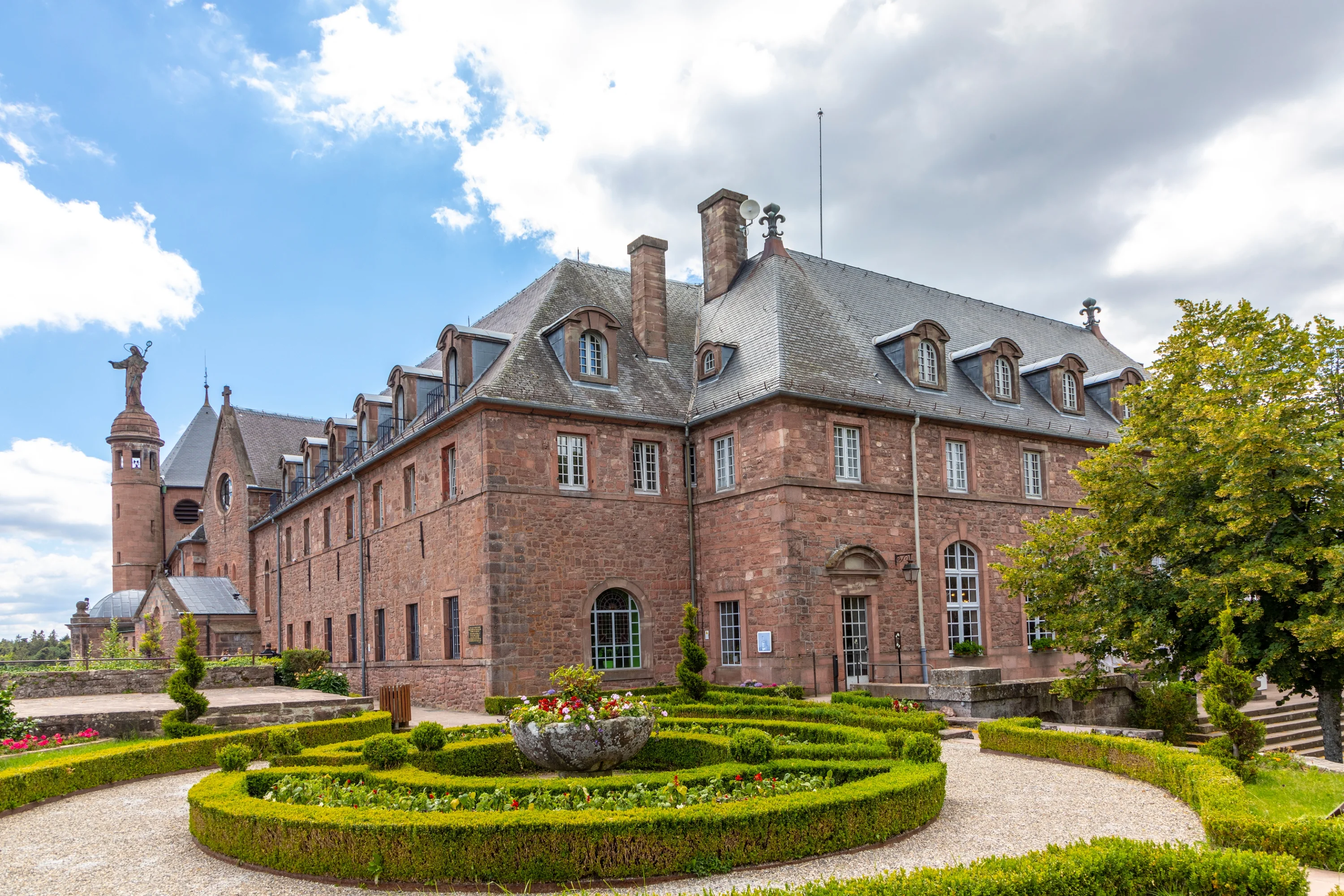
From these ruins, the Pilgrims Trail climbs up to Mont Sainte-Odile (elevation 2,500 feet), the sanctuary of the patron saint of Alsace that draws both hikers and the faithful. The views stretching across the Alsatian plain and the Rhine loop are well worth the effort. Plan for a 2- to 2.5-hour round trip from the village.
Friendly tip: Follow the trace of the Pagan Wall, a 6.5-mile stone fortification winding around the summit. It is one of Northern Europe's most mysterious ancient structures, and its exact purpose remains unsolved to this day.
Klingenthal and Local Heritage: Two Thousand Years of History in a Hamlet
The hamlet of Klingenthal, literally translating to blade valley, owes its existence to a decree by Louis XV in 1730 establishing France's first royal manufactory of edged weapons there. Specialized workers were recruited from Solingen, Germany, to forge sabers, swords, and bayonets. Today, the Museum of the Manufacture, housed in the former village school, recreates period workshops and techniques with a fine collection of edged weapons and scythes.
In the village itself, the Saint-Nicolas Chapel of Ottrott-le-Bas dates back to the 12th century and houses one of the oldest Madonnas in Alsace. The church of Ottrott-le-Haut, built in 1771, features a historic Silbermann organ, an instrument whose reputation reaches far beyond regional borders. Regular concerts take place during the summer.
Le Rouge d'Ottrott: A Wine Oddity Worth Seeking Out
The pinot noir of Ottrott is a delightful anomaly along the white wine dominated Alsace Wine Route. The Fritz-Schmitt and Vonville estates, the latter run by generations of winemakers since 1830, welcome visitors into their unpretentious cellars for tastings.
- Le Rouge d'Ottrott is produced entirely from pinot noir, the only red grape allowed in Alsace
- The wineries are an easy walk from the center of the village and do not require reservations in the off-season
- Prices stay reasonable compared to Grand Cru bottles from neighboring villages
Friendly tip: In May and June, the village hosts a gourmet vineyard hike featuring tasting stops. In July, the blueberry trail in the Vosges heights offers a nice change from standard tourist footpaths. Also keep an eye out for the spit-roasted wild boar event hosted twice a year by the Confrérie de la Corne, if you know where to look.
Domaine du Windeck: A Stroll Through an Exceptional Park
Few guidebooks mention the Domaine du Windeck, attached to the Foyer de Charité. It is a 19th-century château surrounded by a 27-acre park considered one of the finest in Bas-Rhin, complete with terraced ponds, heritage trees, and sightlines designed like an open-air museum. Access requires prior permission requested from the Foyer de Charité, which naturally keeps the crowds down.
Where to Eat and Drink in Ottrott
The culinary scene in Ottrott is small but refined. The Hostellerie des Châteaux offers a fine-dining experience run by chef Ernest Schaetzel, best reserved for a special dinner (expect $45 to $68* per person, drinks not included). For a more casual meal, the Hotel-Restaurant L'Ami Fritz, set inside an 18th-century stone building, serves hearty Alsatian comfort food at friendlier price points.
Flammekueche (tarte flambée) and choucroute are reliable staples at the local winstubs. If you want a quick lunch, the market in Obernai 2.5 miles away has cheese, charcuterie, and local bread. Be sure to pick up a bottle of red from a village winery because the house carafes served at area restaurants are often less interesting than buying direct from the producer.
Where to Stay In and Around Ottrott
The village punches above its weight with a solid hotel selection. The Hostellerie des Châteaux & Spa (4 stars) is the local heavyweight featuring a 27,000-square-foot spa and three pools. For a more family-run feel, Domaine Le Moulin and Hotel L'Ami Fritz offer great value with rooms starting around $72-$96* a night. For a unique experience, the Hostellerie du Mont Sainte-Odile sits at an elevation of 2,500 feet right on the mountain, offering rooms starting around $90* a night with panoramic views of the Alsatian plain.
Several gîtes and vacation rentals are also available in the village and neighboring Boersch. Weekly rentals start around $560*. If you are backpacking on a budget, the closest campgrounds are located near Obernai or down in the Bruche Valley about 9 miles away.
How to Get to Ottrott
From Strasbourg: It is an 18-mile drive, taking about 35 minutes via the D422. By public transit, regional trains connect Strasbourg to Obernai in 30 minutes (under $12*), followed by a taxi or e-bike to cover the final 2.5 miles. There is no direct bus to the village.
From Paris: Take the TGV high-speed train to Strasbourg (1 hour 50 minutes, starting at $33* when booked in advance), then continue by car or regional train. From Germany: Freiburg is 47 miles away (1 hour) and Stuttgart is 100 miles away (1 hour 45 minutes). Strasbourg-Entzheim Airport is about 12 miles from the village.
Getting Around Ottrott
The village is entirely walkable between its two parts (Ottrott-le-Haut and Ottrott-le-Bas). Marked trails to the châteaux and Mont Sainte-Odile start straight from the town center. Hotel L'Ami Fritz rents e-bikes, which are ideal for exploring the vineyards and nearby Wine Route villages.
A car is still helpful for visiting Obernai, Barr, or traveling further along the wine route. Parking is free and easy. Taxis from Obernai serve the village on call, and while there is no local rideshare app, major platforms like Uber operate out of Strasbourg with longer wait times for rural pickups.
When to go
Spring (May and June) is the ideal season when the vineyards turn green, the gourmet hike animates the village, and the trails remain uncrowded. Autumn (September and October) draws crowds for the grape harvest. The Alsatian winter has plenty of charm, but check opening hours for wine cellars and historic sites first. Avoid Ascension weekend and weekends in August when Mont Sainte-Odile gets very crowded.
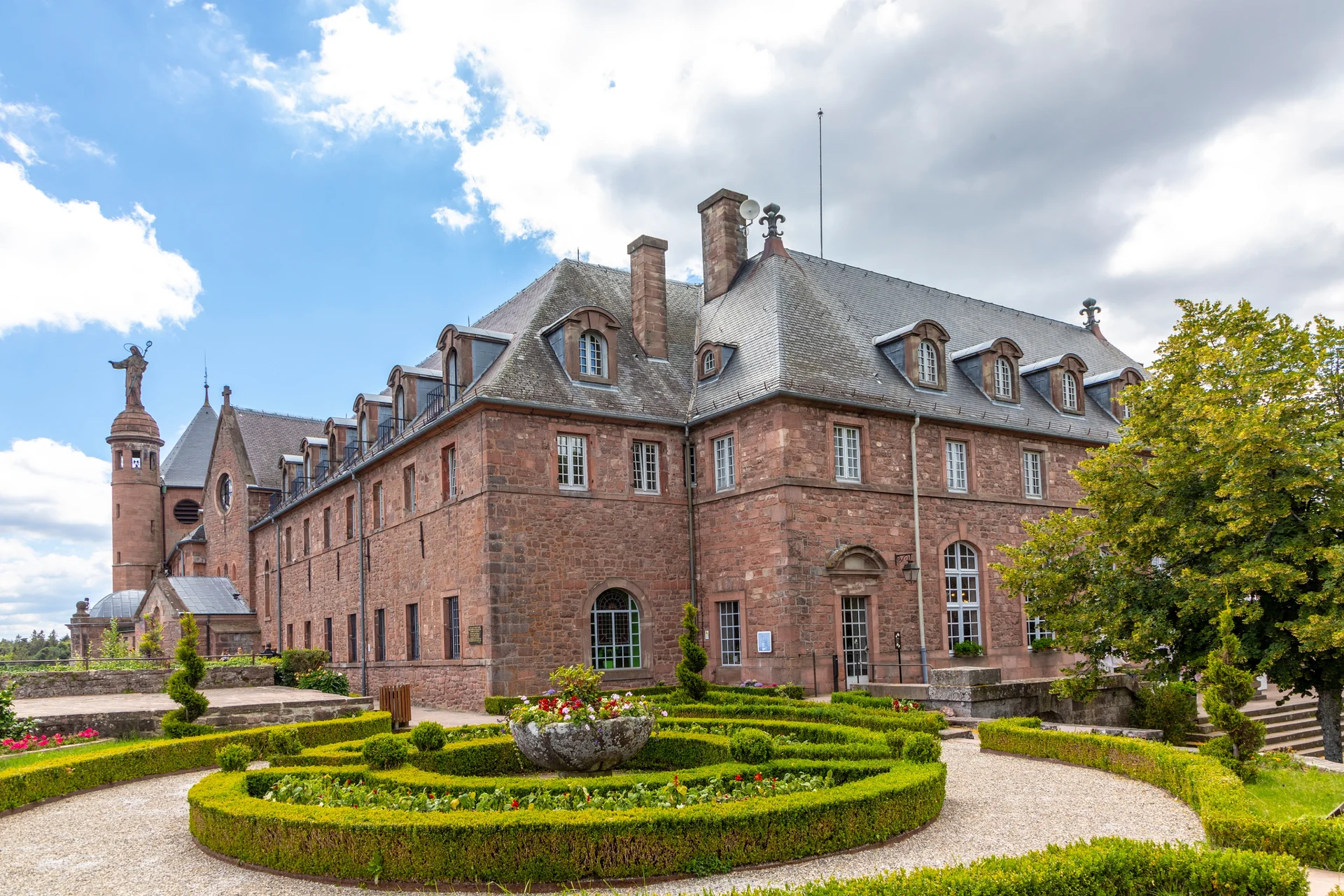
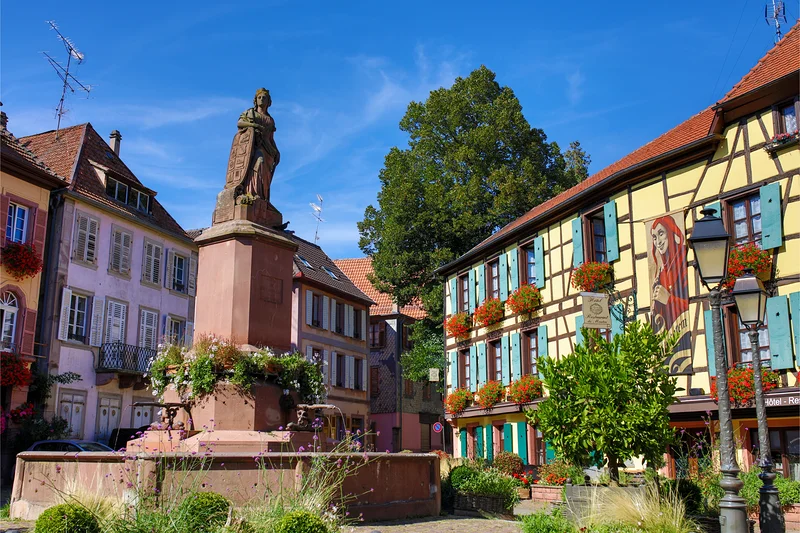
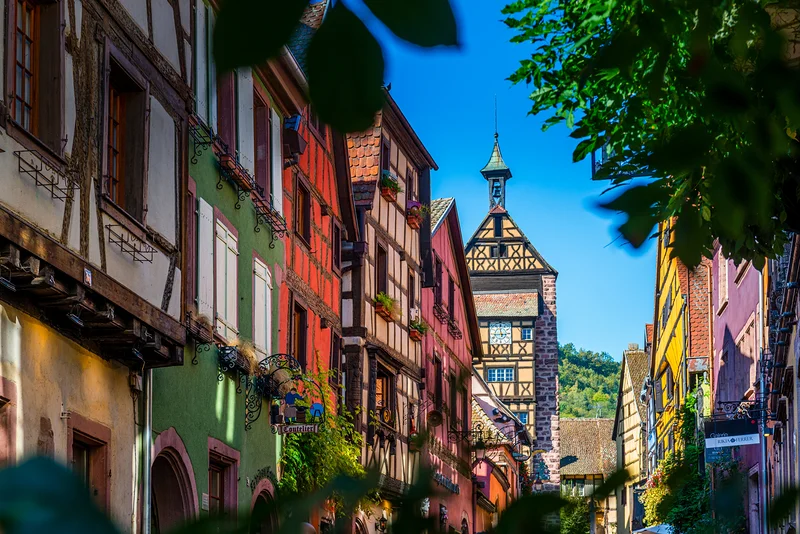
The town of Ottrott itself is not necessarily super interesting. On the other hand, I highly recommend visiting Mont Saint Odile, where you will find an abbey that is still in use. The view there is spectacular. While the site is accessible by car, you can also hike up. It is nice, even if it is a bit of a workout.