
Visiting Mont Saint-Michel: Where the Sea Sculpts a Legend
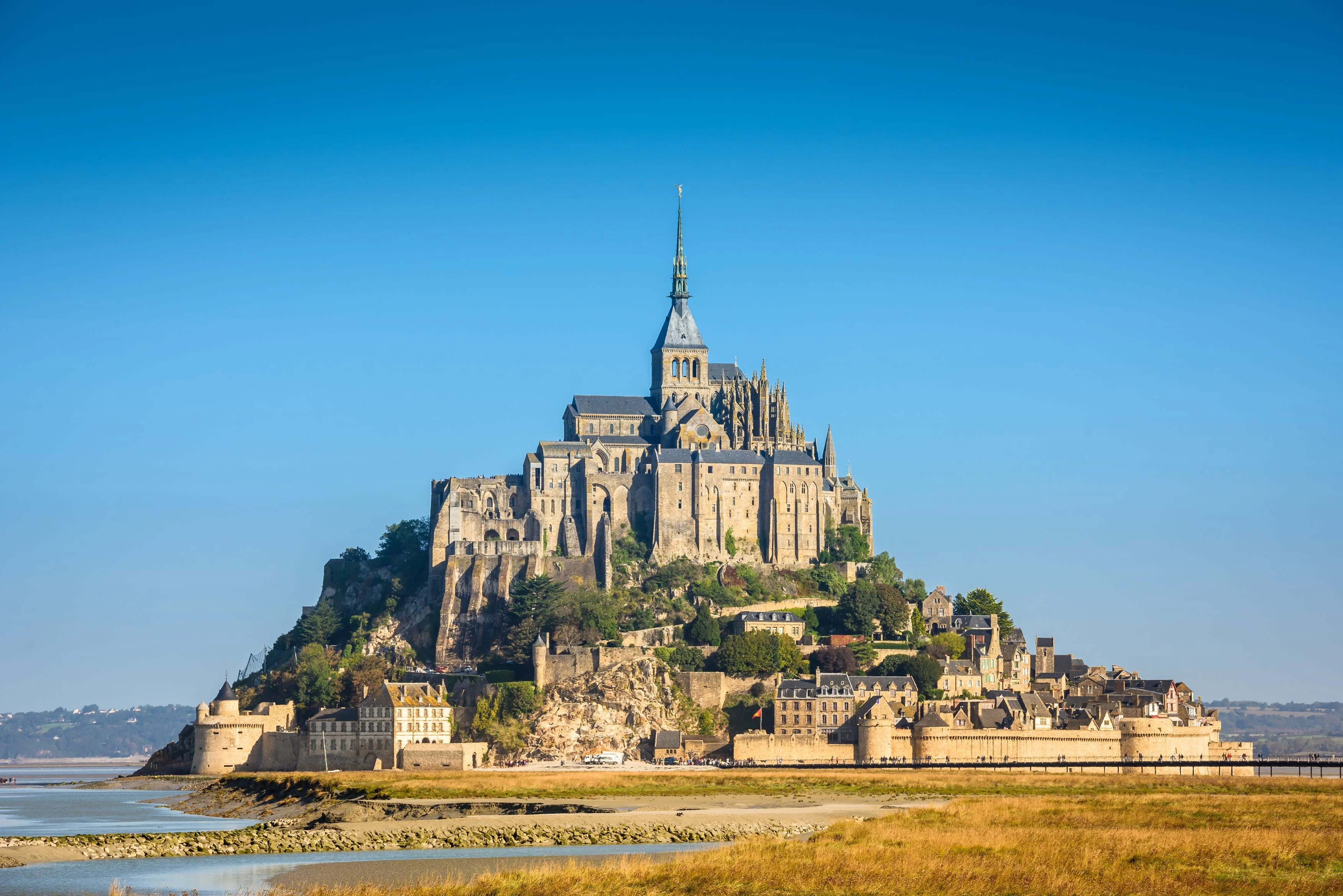
Picture a granite island rising from the water, crowned by an abbey that seems to defy gravity. It is battered by winds and circled twice daily by the largest tides in Europe. This is the Mont-Saint-Michel, a landmark perched between Normandy and Brittany that draws nearly 2.5 million visitors every year.
Do not mistake this for a mere tourist trap. It remains a living place where the cobblestone Grande Rue climbs steeply, where seagulls compete with the chatter of tourists, and where the scent of salt air mixes with the smell of crêpes.
Visiting this UNESCO World Heritage site requires stamina. Expect a lot of walking, occasional crowds, and an experience that changes drastically depending on the time of day and the season. It is a singular experience, especially if you set aside enough time to stay overnight.
Is Mont Saint-Michel for you?
If you dislike stairs and crowds, the Mont will be a challenge. This vertical village packs 350 steps up to the abbey, and in the heat of summer, you will move at a crawl through the Grande Rue alongside thousands of others. However, for those who love medieval history, spectacular natural phenomena, and dramatic landscapes, it is a must. Families with children will appreciate the fairy-tale aesthetic, provided the kids can handle the hike.
The Mont suits photographers (the light is magical), hikers (the bay crossing is unforgettable), and foodies eager to try agneau de pré-salé (salt-meadow lamb) and other Norman specialties. On the other hand, travelers with limited mobility will face real difficulties despite some accessibility improvements. If you are looking for the quiet authenticity of an untouched medieval village, look elsewhere. The Mont is a high-functioning tourist machine.
A significant but justified budget
Visiting the Mont requires a serious budget. Expect to pay €11.70 (about $13) for parking (free after 6:30 p.m. in the off-season), €13-€16 (about $14-$17) for the abbey (free for EU residents under 26), and €15-€50 (about $16-$54) for a meal depending on your taste. Lodging varies widely, from €60/night (about $65) for a guesthouse in the surrounding area to over €200 (about $217) for a hotel with a view of the bay. If you add a guided bay crossing (€15-€30, or about $16-$32), a full day can easily run €100-€150 (about $108-$163) per person.
The Abbey: The heart of the Mont
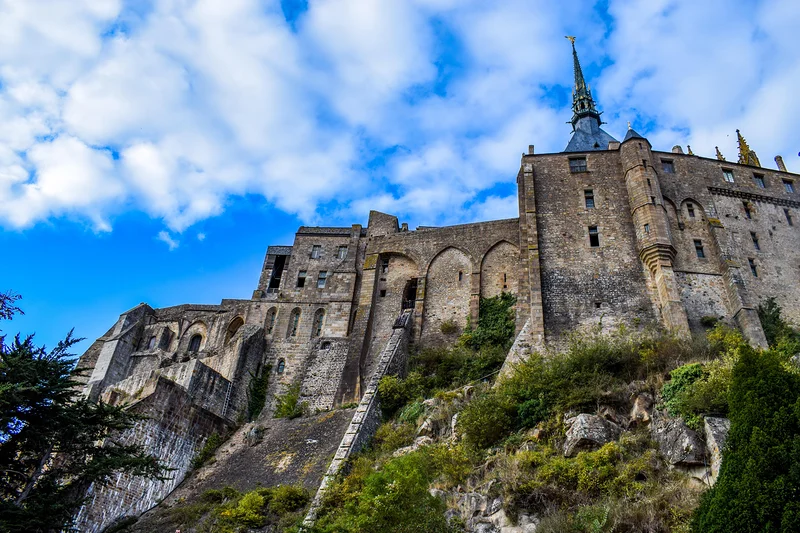
You cannot come here without climbing to the abbey of Mont-Saint-Michel, a masterpiece of monastic architecture nicknamed the Merveille (The Marvel). Founded in the 8th century after a bishop claimed to have seen the archangel Michael in a dream, it spans several levels of Gothic and Romanesque halls. The cloître suspendu (hanging cloister), the light-filled réfectoire (refectory), and the église abbatiale (abbey church) perched 80 meters high all tell a piece of history.
A self-guided tour takes between 45 minutes and 1.5 hours, but guided tours add real value with fascinating anecdotes. From the church terrace, the panoramic view of the baie du Mont-Saint-Michel is striking, especially at sunrise or sunset. A dozen monks and nuns from the Fraternités Monastiques de Jérusalem still live in the abbey and maintain its spiritual life.
Local tip: Arrive right at opening time at 9:00 or 9:30 a.m. depending on the season, or after 5:00 p.m. You will avoid the endless lines and experience the site in an almost mystical atmosphere. In winter, the early morning hours offer beautiful golden light.
The medieval village: Beyond the Grande Rue
The Grande Rue is the main artery of the Mont, climbing steeply from the Porte du Roi. Lined with 15th-century timber-framed houses, it is packed with souvenir shops, crêperies, and restaurants. Yes, it is touristy. Yes, it is crowded in high season. But the medieval facades, the wrought-iron signs hanging from the walls, and the Saint-Pierre church halfway up are worth the detour.
The secret? Leave the crowd. Use the small side alleys like the venelle du Nord or the chemin des Fanils. These narrow passages offer stunning views of the bay with no one else around. You will find hanging gardens, forgotten medieval nooks, and a clear sense of why the Mont was an impregnable fortress during the Hundred Years War. The remparts (ramparts) are free to access and allow you to walk around the rock with spectacular views.
Local tip: Visit in the evening after the tour buses leave. From 6:00 p.m., the Mont finds its soul again. The alleys empty, the light becomes magical, and you can take all the photos you want without twenty people in your frame.
Crossing the bay: A nature adventure
Walking in the footsteps of pilgrims
The traversée de la baie du Mont-Saint-Michel (crossing of the bay) is an experience in itself. This guided hike introduces you to sables mouvants (quicksand), rivières (rivers) you must cross barefoot, and the fascinating spectacle of the tides. Guides certified by the prefecture share their knowledge of this unique ecosystem where history, legends, and natural phenomena collide.
Several options exist: a short 2-hour walk around the Mont to discover the quicksand, a 3-4 hour trip to the islet of Tombelaine, or the long 5-7 hour crossing from Genêts or le Grouin du Sud. Some guides even offer night crossings or trips during the incoming tide to observe seals and birds. The mascaret (tidal bore) phenomenon, where a wave forms as the sea rushes back in, is always impressive.
Local tip: Book with a certified guide like Ludo, Julien, or Benjamin who offer off-the-beaten-path routes. Bring comfortable clothes, water, and sunscreen. Above all, go barefoot or in neoprene booties, as other shoes are useless and dangerous.
The high tides: When the Mont becomes an island
During grandes marées (high tides) with a coefficient greater than 110, Mont-Saint-Michel becomes a true island again. The water rises 15 meters over a distance of 15 kilometers in just a few hours, a gripping spectacle that many come to admire. The dates of these high tides are predictable, occurring about 36 to 48 hours after the new and full moons. In 2025, several dates will be particularly dramatic with coefficients exceeding 115.
The view is best from the remparts du Mont or the access footbridge. Watching the water gradually encircle the rock, hearing the sound of waves hitting the walls, and observing the shifting reflections is a moment suspended in time. Be warned: these periods attract massive crowds and lodging prices skyrocket.
Local tip: Check tide schedules on the tourist office website. Arrive 2 hours before high tide to watch the entire progression. If you cannot visit during the high tides, do not worry: the Mont remains magnificent at low tide.
Where to eat and drink at Mont-Saint-Michel?
Norman gastronomy comes to the Mont with two essential specialties. The omelette de la Mère Poulard, beaten for hours and cooked over a wood fire, has been an institution since 1888. Fluffy and soufflé-like, it is divisive. Some find it overpriced at €20-€40 (about $22-$43), while others see it as a mandatory rite of passage. The agneau de pré-salé AOP, raised on the salt meadows of the bay, offers tender meat with a slightly briny finish. The sheep graze in pastures covered by the tide, which gives the meat its unique flavor.
In the village, La Mère Poulard and Le Mouton Blanc offer traditional cuisine in historic settings, but prices are high. Near the Mont, before the footbridge, Le Pré Salé revisits local specialties with creativity, while La Ferme Saint-Michel focuses on local products. Do not forget to try the moules de bouchot (mussels) from the bay, salicorne (sea asparagus), and accompany it all with a crisp cidre normand or a glass of pommeau.
Local tip: To avoid the extravagant prices on the Mont, have lunch in surrounding villages like Beauvoir or La Caserne, where restaurants offer better value. Book ahead if you come for dinner, as tables fill up fast.
Where to sleep at Mont-Saint-Michel and its surroundings?
Sleeping within the walls of the Mont is a magical but expensive experience. La Mère Poulard, Les Terrasses Poulard, or Le Mouton Blanc offer rooms with views of the bay for €140-€250 (about $152-$271) per night. The advantage? Seeing the Mont at sunrise and in the evening after tourists leave, when the alleys reclaim their medieval soul. The nighttime quiet, the lights illuminating the abbey, and the sound of the waves are a privilege you pay for.
For more reasonable budgets, La Caserne, the area between the parking lots and the Mont, has several 3 and 4-star hotels like the Mercure or the Relais Saint-Michel (€60-€150, or about $65-$163). You are a 10-minute walk from the Mont with great views. In Pontorson, 9 km away, guesthouses and small hotels offer rates of €50-€80 (about $54-$87). The villages of Beauvoir, Genêts, or Saint-Léonard also offer lovely spots in a rural Norman setting, ideal if you have a car.
Local tip: Book several months in advance for high tide dates and summer periods. If your budget allows, treat yourself to a night inside the walls. It is an experience you will never forget.
How to get to and around Mont-Saint-Michel?
From Paris, expect a 3.5-hour drive (360 km via the A13 and A84) with tolls. By train, the Train du Mont-Saint-Michel runs from Paris Montparnasse to Pontorson every weekend year-round and daily from April to October for a flat rate of €32 (about $35, including the shuttle). The trip takes about 3.5 to 4 hours. Without the direct train, go through Rennes (2 hours by TGV) and then take a bus to the Mont. Direct FlixBus buses also connect Paris to Mont St-Michel in 5-6 hours for €30-€50 (about $33-$54).
Once you arrive, your car stays in the paid parking lot (€11.70, or about $13 for 24 hours; free after 6:30 p.m. in the off-season). A free shuttle runs every 10-15 minutes between the parking lot and the Mont. The walk on the footbridge is 1.5 km but offers magnificent views. Once at the Mont, everything is done on foot. The village is pedestrian-only, and the climb to the abbey is hard-earned. Bring good shoes, as the medieval cobblestones and stairs are numerous.
Local tip: If you visit in summer or on a weekend, arrive before 10:00 a.m. or after 5:00 p.m. to avoid traffic jams and find a parking spot easily. The shuttle runs regularly but can be packed during peak hours.
When to go?
September and October offer the best compromise: pleasant temperatures around 20°C (68°F), beautiful autumn light, and much more reasonable crowds than in the summer. Spring, from April to May, is also appealing with blooms in the bay and spectacular tides. Summer (July-August) guarantees sun but also crowds, with up to 15,000 visitors per day, lines everywhere, and high prices.
Winter (November-March) turns the Mont into an almost mystical place with few tourists and superb, low-angled light, though the climate is windy and rainy. Favor weekdays (Tuesday-Thursday) rather than weekends, and avoid school holidays and public holidays at all costs. High tides draw large crowds but offer an unforgettable spectacle. It is up to you to choose between authenticity and natural wonder.
A te lire, tu as passé beaucoup de temps les pieds dans l'eau. En combien de temps se visite la ville à proprement parler ?