
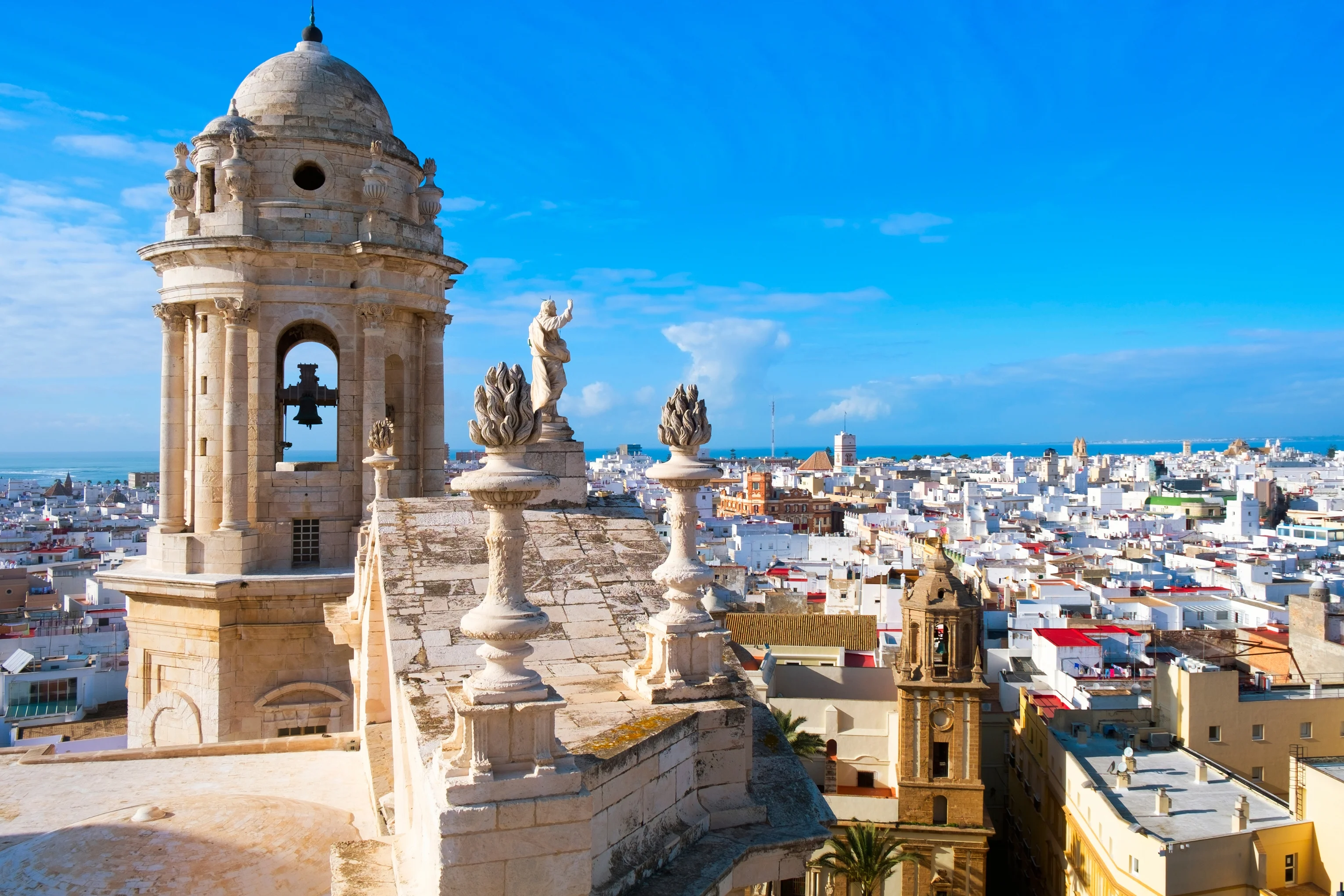
Cadiz, three thousand years facing the Atlantic
The Phoenicians founded it in 1100 BC. Three millennia later, the golden dome of its cathedral still shimmers above the waves. This peninsula, tethered to Andalusia by a thin strip of land, is the oldest continuously inhabited city in Western Europe. Locals call it the Tacita de Plata, or the little silver cup, and the nickname fits perfectly: white, compact, and tucked into the ocean light. You will not find grandiose monuments on the scale of Seville here, but rather a salty atmosphere and narrow alleys where you can find the best fried fish on the continent.
A city for those seeking Andalusia without the crowds
Cadiz is for travelers who want to avoid mass tourism without sacrificing history. You can walk the entire city in a day, but it is worth staying two or three nights to find its rhythm. If you enjoy urban beaches, you will find fine sand and clear water here, minus the congestion of the Costa del Sol. The local cuisine, centered on seafood, is a highlight.
However, if you are looking for spectacular monuments or a high-octane nightlife, you might be underwhelmed. The city operates at a slow pace, and evenings are spent on terraces with a glass of fino and a few tapas. Also, factor in the wind. The peninsula's exposed position guarantees frequent gusts, even in the summer.
A mild budget for Andalusia
Cadiz remains more affordable than Seville or Granada. Expect to pay 70 to 120 euros ($75 to $130) per night for a good hotel in the historic center, and 15 to 25 euros ($16 to $27) for a generous meal at a freiduria. Admission to the cathedral is 5 euros ($5.50), as is entry to the Torre Tavira.
The old heart: from El Populo to the cathedral
The Barrio del Populo is the oldest neighborhood in the oldest city in Europe. You enter through three medieval arches: the Arco de la Rosa, the Arco de los Blancos, and the Arco del Populo, which are vestiges of the city's fortified gates. The alleys open onto small plazas where laundry still hangs from the windows.
The Roman theater, discovered in 1980 beneath neighborhood houses, could seat 10,000 spectators. It is the second largest in Spain. An interpretation center allows you to observe the ongoing excavations through large glass windows. A few hundred yards away, the cathedral imposes its baroque and neoclassical silhouette. Its construction spanned 116 years, from 1717 to 1838, resulting in a mix of styles from successive architects.
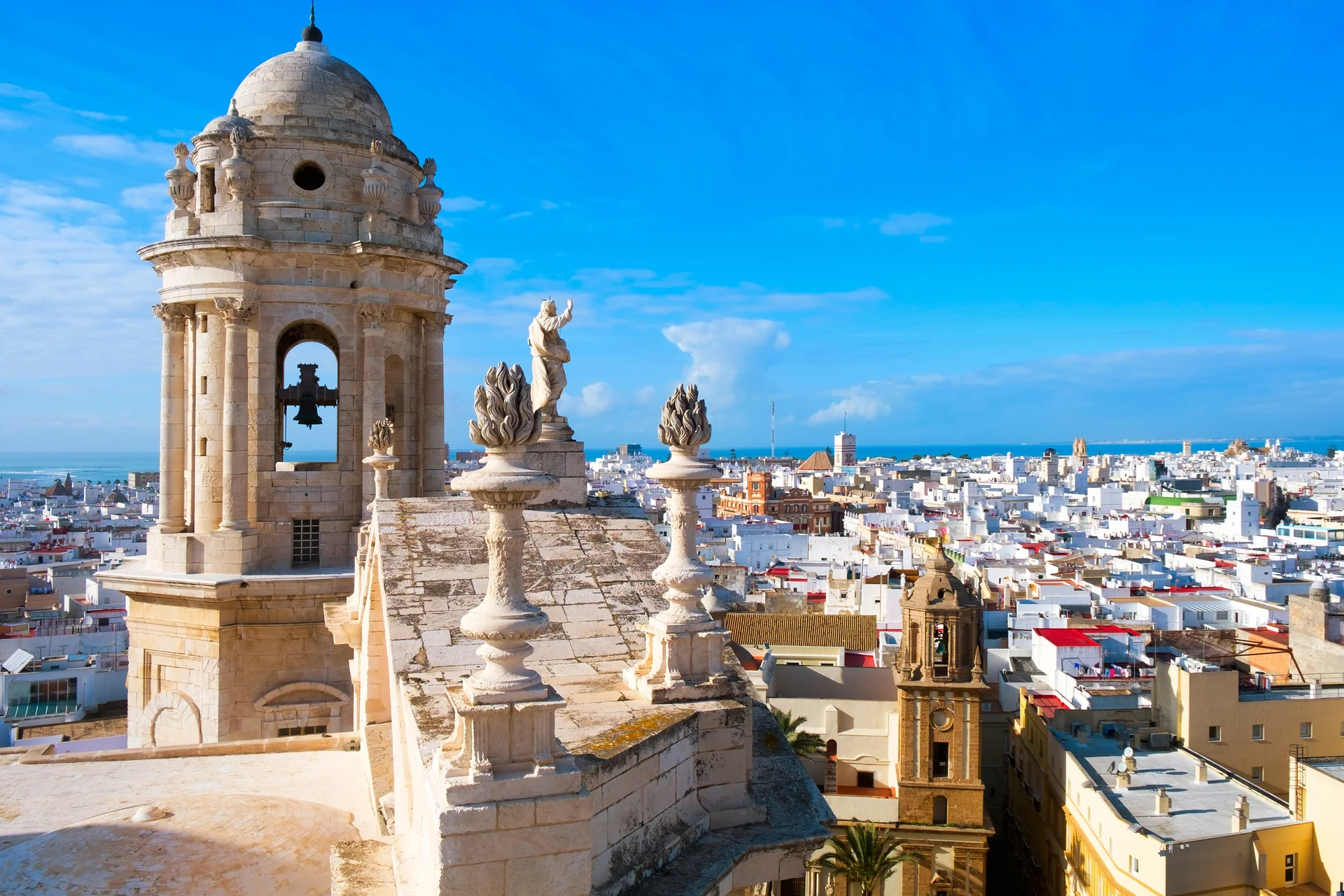
Pro tip: Climb to the top of the Torre del Poniente, one of the cathedral's bell towers. The 170 spiral steps offer a 360-degree view of the white rooftops and the ocean. The golden dome literally shines beneath your feet.
The Torre Tavira and the watchtowers
In the 18th century, merchants in Cadiz needed to monitor the arrival of their ships loaded with riches from the Americas. They built 129 watchtowers throughout the city. The Torre Tavira, standing 148 feet tall, was the official watchtower for the port. It now houses a camera obscura that projects a real-time image of the city onto a concave screen.
The effect is striking as you watch passersby cross the plazas without them knowing. The guided tour lasts about fifteen minutes and is a unique experience. The panorama from the terrace is worth the trip alone, especially at the end of the day when the low-angle light gilds the facades.
La Caleta and the maritime fortresses
Playa de la Caleta is the only beach in the historic center, wedged between two castles. Halle Berry emerged from these waters in a famous scene from the James Bond film Die Another Day. The sand is fine, the water is clear, and the setting is spectacular with the old Balneario de la Palma building perched on the sand like a Moorish pastry.
The Castillo de Santa Catalina, shaped like a star, dates back to the 17th century. Entry is free and the view of the ocean is worth the walk. On the other side of the bay, the Castillo de San Sebastian stands on a small island connected by a long causeway. The walk to reach it, buffeted by waves and wind, is a highlight of any visit.
La Vina, the neighborhood of the locals
The Barrio de la Vina is the popular heart of the city, where the locals actually dine. The streets of San Felix and La Palma are lined with tapas bars where fried fish arrives piping hot in paper cones. This is where the Carnival of Cadiz is born every February, with its chirigotas poking fun at politicians through satirical songs.
The Parque Genoves, a few steps away, offers an unexpected green escape. This 19th-century botanical garden houses century-old ficus trees, sculpted cypresses, and an artificial waterfall set among fake grottos. The benches facing the ocean are perfect for reading or a nap.
Where to eat and drink in Cadiz?
Pescaito frito (fried fish) is a local religion. Pieces of fresh fish are simply floured and fried in olive oil, including chocos (cuttlefish), acedias (sole), boquerones (anchovies), and puntillitas (baby squid). The apparent simplicity hides a craft passed down through generations. The secret lies in the freshness of the fish, the temperature of the oil, and the calibration of the flour.
Bodeguita El Adobo, on Calle Rosario, is the spot for connoisseurs. There is no fixed menu, just a chalkboard that changes based on the day's catch. Their morena en adobo (marinated moray eel) is legendary. Another institution is Los 12 Hijos de Juan, an unpretentious kiosk where locals queue for paper cones of crispy fish. Freiduria Las Flores, on the plaza of the same name, is more touristy but remains a reliable choice.
Pro tip: Do not leave without trying the tortillitas de camarones, which are thin, crispy fritters stuffed with tiny shrimp. The best ones are found at the bar of the El Faro restaurant for a fraction of the price of the formal dining room.
Where to stay in Cadiz and the surrounding area?
The historic center holds most of the accommodations and remains the most convenient choice. Everything is walkable and you will enjoy the atmosphere of the lively plazas in the evening. The La Vina neighborhood, which is more working-class, offers a local immersion just steps from the beaches.
The Parador de Cadiz, a modern hotel facing the sea, features a pool that seems to blend into the ocean. The Hotel Argantonio, housed in an 18th-century palace, offers rooms with character at reasonable prices. For tighter budgets, apartments near Playa de la Victoria allow you to combine beach time with proximity to the city center.
How to get to and around Cadiz?
The train from Seville takes about 1 hour and 40 minutes and costs between 15 and 40 euros ($16 to $43) depending on the time. A dozen daily connections serve the Cadiz train station, located a five-minute walk from the historic center. From Jerez, the trip takes 35 minutes. Jerez Airport, 25 miles away, offers low-cost flights from several European cities.
From the US, the easiest route is to fly into Seville or Jerez. By car, Cadiz is 1 hour and 15 minutes from Seville via the highway. Parking in the city center is complicated and unnecessary, as the entire peninsula is walkable. Leave your vehicle in an outlying parking lot if you have one.
When to go?
The oceanic climate guarantees mild temperatures all year round, with summers that are less stifling than in the interior of the country. Spring and autumn offer the best conditions for exploring the city. The Carnival, held in late February or early March, turns the streets into a giant stage for eleven days. It is a festive atmosphere, but accommodation prices skyrocket, and booking months in advance is mandatory.

Cadiz is not easy to get a handle on, but this port city is definitely worth exploring for its old town.
For me, it was love at first sight. You feel so far away from everything on this peninsula, right at the foot of the massive cathedral.
Special shout-out to the towers that overlook the city. From their summits, the view of the city and its beaches is stunning.
The best part is that you can explore the old district on foot, just letting yourself be carried along by the sea breeze.