Armenia: The Country That Claims You Before You've Made Up Your Mind
The first thing you notice in Yerevan isn't the monasteries or the mountains. It's the drinking fountains. Dozens of small patinated bronze fountains run continuously on nearly every street. Locals stop at them without thinking. Visitors stop out of curiosity. Both end up doing the same thing.
That small gesture tells you a lot about Armenia. This is a place where generosity comes before the ask. About the size of Maryland, Armenia was the first nation in the world to adopt Christianity as its state religion, in 301 AD. Its capital is 29 years older than Rome.
Is Armenia Right for You? Probably More Than You'd Expect
Armenia isn't a beach destination, a theme park, or an Instagram-optimized highlight reel. It rewards a little patience and gives back a lot. If you're after white-sand beaches or five-star resort infrastructure, this isn't your trip. But if wandering between thousand-year-old monasteries, sitting down to a memorable meal for under $4, and meeting people who are genuinely glad you showed up sounds like your kind of travel, keep reading.
thumb_up Great fit for:
- History buffs, religious heritage enthusiasts, and fans of medieval architecture
- Hikers and anyone drawn to serious mountain scenery
- Budget-conscious travelers who want genuine value for their money
- Food lovers curious about Caucasian and Middle Eastern cuisine
- Travelers looking for authentic experiences and real human connection
- Anyone who wants to combine two countries: the Georgia + Armenia combo is a classic circuit
warning Not a great fit for:
- Beach seekers and all-inclusive resort travelers
- Travelers who need reliable, punctual public transportation
- Party travelers looking for an intense nightlife scene
- Anyone sensitive to cold if traveling in winter
- LGBTQ+ couples who want to be openly affectionate outside of Yerevan
One of the Most Affordable Countries in the Region
Armenia ranks in the top 10 most affordable countries on the European continent. A full meal at a solid local restaurant runs 3,800 to 7,200 AMD (about $10-19), a taxi ride across Yerevan costs under 800 AMD (under $2), and a family guesthouse rarely exceeds 12,000 AMD ($27) per night. One caveat: since 2022, a large influx of Russian residents has pushed accommodation prices in Yerevan up by roughly 30 to 40%.
| Trip Type | Where | Duration | Estimated Budget |
|---|---|---|---|
| Monastery and nature road trip | Yerevan, Noravank, Tatev, Dilijan | 10 days | 240,000 to 430,000 AMD ($550-$980) |
| Cultural city trip | Yerevan and surroundings | 4-5 days | 96,000 to 216,000 AMD ($220-$490) |
| Trekking and hiking | Dilijan, Geghama, Syunik | 1 week | 144,000 to 288,000 AMD ($330-$650) |
| Caucasus circuit (Georgia + Armenia) | Tbilisi, Yerevan, north and south | 2 weeks | 384,000 to 720,000 AMD ($880-$1,640) |
| Wine and food trip | Yerevan, Areni, Vayots Dzor | 5-6 days | 168,000 to 336,000 AMD ($385-$770) |
| Budget backpacking | Country-wide | 2 weeks | 144,000 to 264,000 AMD ($330-$605) |
Getting Around Day to Day: What You Need to Know
Main roads are in decent shape, but secondary routes can throw surprises at you: potholes, missing signage, and road signs written exclusively in the Armenian alphabet. Driving in Yerevan is aggressive by most standards. Outside the capital, marshrutkas (shared minivans) connect towns for a few dollars, with no fixed schedule. English is increasingly common among younger Yerevan residents, but in rural areas, Armenian and sometimes Russian are the only languages spoken.
Is Armenia Safe to Travel?
Armenia ranks among the 8 safest countries in the world according to the Numbeo 2025 index. Violent crime against tourists is essentially nonexistent. The one serious precaution involves the border zone with Azerbaijan: the border is closed, and it's strongly advised to stay at least 3 miles (5 km) away from it. The border with Turkey is also closed. Entry to the country is by air or via the land border with Georgia or Iran.
Is Armenia Safe for Solo Female Travelers?
Solo female travelers report an overwhelmingly strong sense of safety. Street harassment is rare, and Armenians tend to be protective of visitors. Some curious looks are possible in rural areas, but never hostile. For monastery visits, bring a scarf or layer to cover shoulders and knees.
For LGBTQ+ travelers, discretion is the practical approach. Homosexuality is legal, but social attitudes remain conservative, especially outside Yerevan. Public displays of affection between same-sex couples are not recommended outside the capital.
Cliff-Hanging Monasteries and Carved Stone: Heritage That Stops You Cold
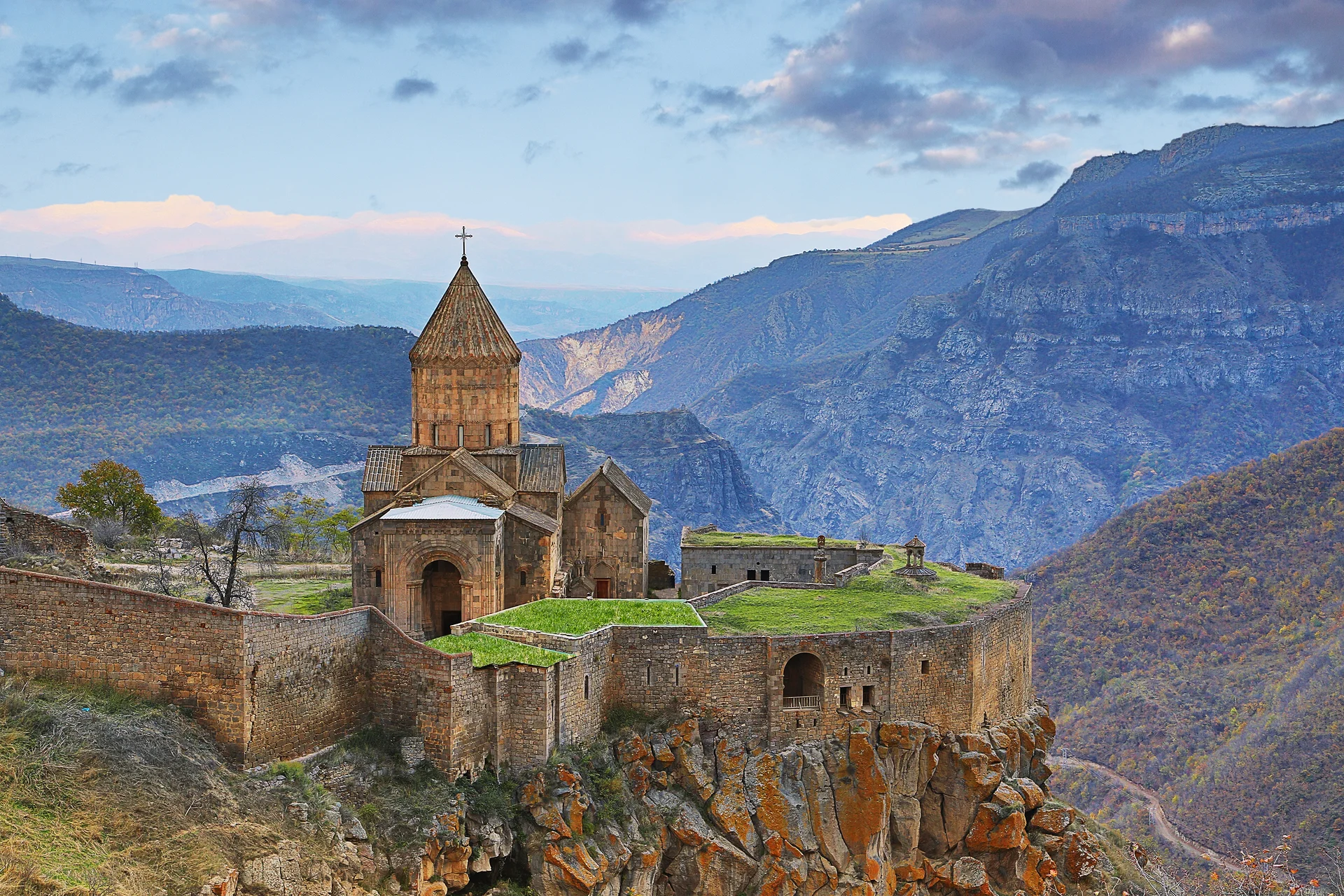
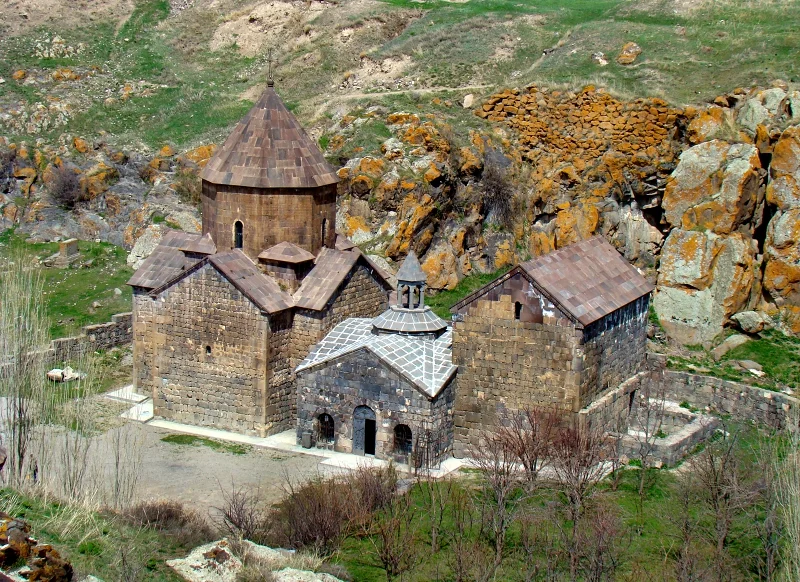
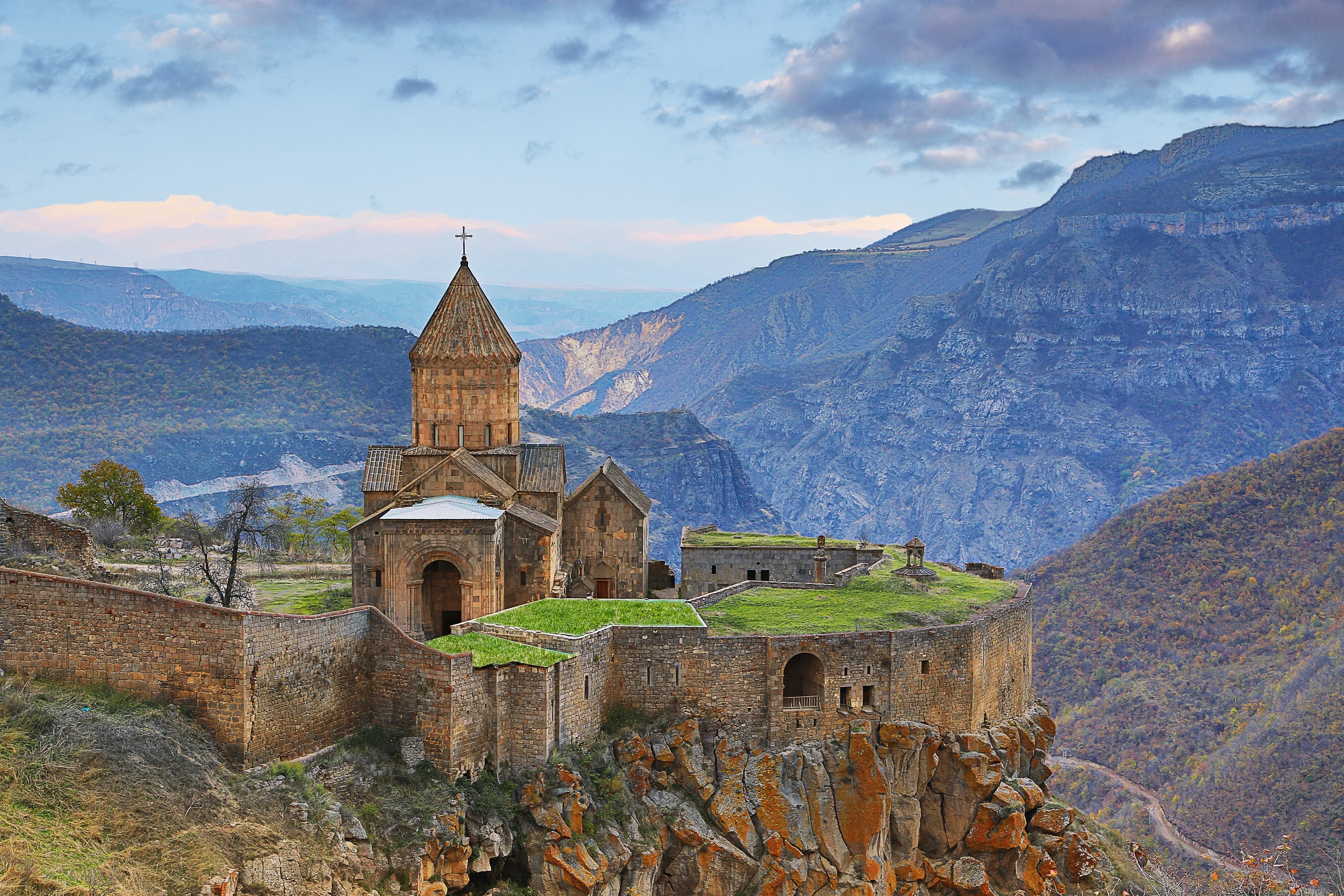
Armenia has hundreds of monasteries, many of them set in landscapes that look almost too dramatic to be accidental. The standout is Tatev, reached via the longest reversible aerial tramway in the world: 3.5 miles (5.7 km) above the Vorotan Gorge. The 9th-century monastery sits on a rocky promontory with canyon views in every direction.
Geghard, a UNESCO World Heritage site, is partially carved directly into the rock face. Natural springs flow inside the main chapel. Go on a Sunday morning to hear nuns singing in the cave. The natural acoustics are something you won't forget.
Insider tip: Most monasteries are free to enter. A few sites like the temple of Garni charge a small admission fee, around 1,500 AMD (about $3.50). The khachkars, intricately carved stone crosses found by the thousands across the country, are worth a trip on their own.
Khor Virap delivers the quintessential Armenian postcard: the monastery in the foreground, snow-capped Mount Ararat rising behind it just across the Turkish border. According to tradition, King Tiridates IV imprisoned Gregory the Illuminator in a pit here for 13 years before converting to Christianity.
Mountains, Extinct Volcanoes, and Landscapes With No Filter Needed
More than half of Armenia sits between 3,300 and 6,600 feet (1,000 to 2,000 meters) in elevation. Dilijan National Park, nicknamed "the Armenian Switzerland," is the country's green lung. Marked trails wind through dense beech and oak forests, leading to mountain lakes like Lake Parz and remote monasteries like Haghartsin.
In the Garni gorge, the "Symphony of Stones" is a geological showstopper: perfectly symmetrical hexagonal basalt columns form a natural stone organ rising several stories high. You can reach it on foot in about 15 minutes from the temple.
Lake Sevan, known as the "Armenian Sea," covers 5% of the country's total area. Sitting at 6,200 feet (1,900 meters) above sea level, it's one of the largest high-altitude lakes in the world. Armenians come here in summer to swim, eat grilled trout, and visit the Sevanavank monasteries perched on the shore.
Insider tip: The Hike Armenia app maps dozens of trails with GPS tracks, difficulty ratings, and descriptions. It's the essential tool for hiking anywhere in the country.
Yerevan: The Pink City That Doesn't Call It a Night Early
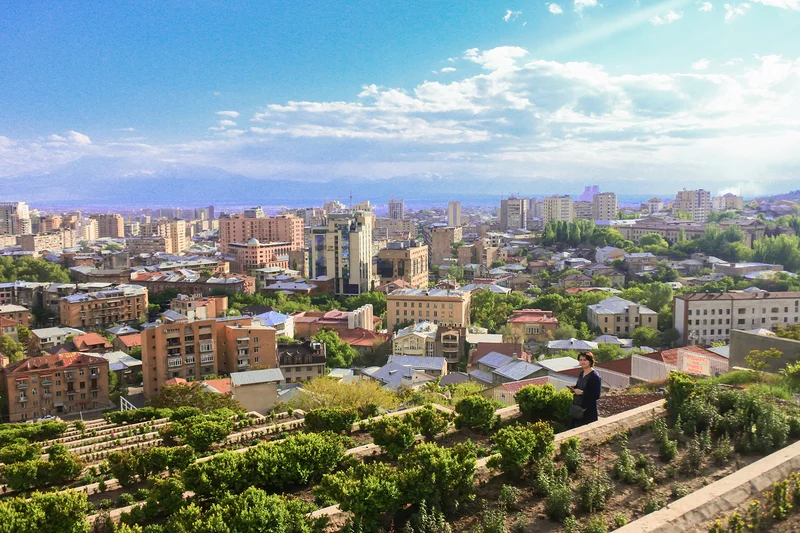
Yerevan isn't conventionally pretty. Soviet-era architecture sits alongside trendy café terraces and contemporary art galleries. Republic Square, with its musical fountains in the evening, is the natural starting point. The real pulse of the city is the Cascade, a monumental staircase complex housing the Cafesjian art center, with panoramic views of Mount Ararat on a clear day.
The Matenadaran holds one of the largest collections of medieval manuscripts in the world. The Armenian Genocide Memorial at Tsitsernakaberd is essential: understated, moving, and free. It gives you the context to understand the country's collective memory in a way nothing else does.
The Avygeo team has a soft spot for the Vernissage flea market, open on weekends. You'll find hand-carved chess sets, antique rugs, musical instruments, and Soviet-era objects. For an evening out, the streets around Saryan Street concentrate wine bars and restaurants in a relaxed, unhurried atmosphere.
The Wild South: Gorges, Caves, and Vineyards Older Than You Can Imagine
Southern Armenia is the least visited part of the country and, in our experience, the most striking. The drive between Eghegnadzor and Goris cuts through landscapes that look like a Western film set: ochre hills, red cliffs, and vertiginous canyons. The monastery of Noravank, set inside a cirque of orange rock, is extraordinary at sunset when the stone seems to catch fire.
Around Areni, winemaking has a history of over 6,100 years. The Areni-1 cave yielded the oldest known winery in the world. Small producers in the Vayots Dzor valley offer tastings that are often informal, at someone's home, around a table that keeps filling up as the conversation goes on.
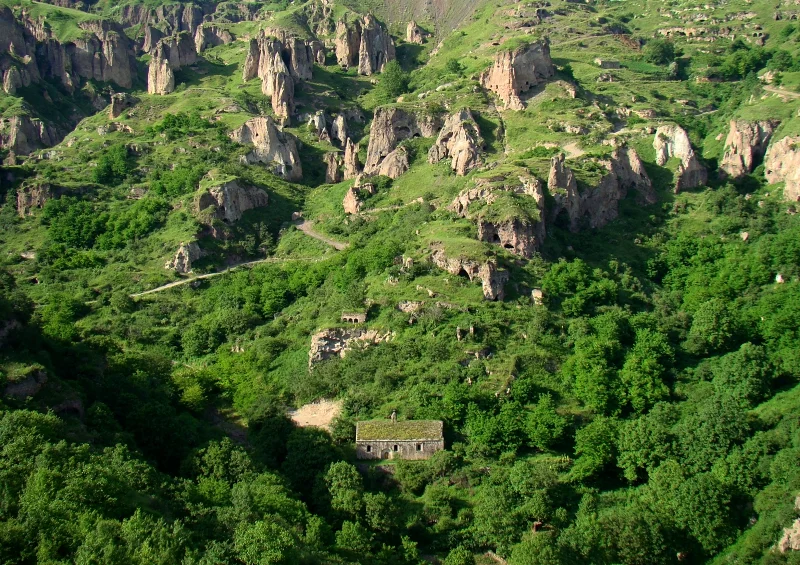
Goris is worth a stop for its troglodyte formations: fairy chimneys and cave dwellings abandoned in the 19th century dot the surrounding hills. It's also the departure point for Tatev via the aerial tramway.
Insider tip: If you're renting a car, the road between Goris and Tatev has some of the best views in the country. Budget about 30 minutes by car, or 12 minutes via the Wings of Tatev tramway, which runs around 3,500 AMD round-trip (about $8).
Armenian Food: Eating as a Social Event
Armenian cuisine isn't a list of dishes. It's a ritual. Meals run long, tables are always overloaded, and declining a second helping requires genuine diplomatic skill. Khorovats, the Armenian barbecue of marinated pork or lamb grilled over wood fire, is the centerpiece of every family gathering. Every father in the country considers himself the best grillmaster in the Caucasus.
Lavash, a thin flatbread baked in a clay oven called a tonir, is on the UNESCO Intangible Cultural Heritage list. It functions simultaneously as plate, spoon, and napkin. Tolma, grape leaves stuffed with ground meat and rice, is the dish every Armenian grandmother claims to make better than anyone else's.
Lahmajoun, a cheese-free Armenian flatbread topped with spiced meat and finished with lemon juice, is everywhere and runs 1,000 to 1,500 AMD (about $2-3.50). For winter mornings, khash is a beef trotter broth served at dawn with raw garlic, dried lavash, and vodka. Ghapama, a pumpkin stuffed with rice and dried fruit, is the celebration dish, and it even has its own folk song.
When to Go to Armenia
The sweet spot is mid-May through early June, then again from late September through mid-October. Temperatures are comfortable, trails are open, and the monasteries aren't crowded. Spring covers the mountains in wildflowers; fall turns the forests of Dilijan gold and copper.
Summer can be brutal in Yerevan, with temperatures hitting 104°F (40°C). It's peak tourist season, though crowds stay manageable by most standards. Winter is harsh in the mountains, with temperatures dropping to -4°F (-20°C) in the north, but Tsaghkadzor becomes an affordable ski resort. The Armenian New Year period, December 31 through January 6, is festive and warm in spirit.
Getting to Armenia
From the US, there are no nonstop flights to Yerevan. Most connections route through European hubs. Common layover options include Lufthansa via Frankfurt, LOT via Warsaw, Austrian Airlines via Vienna, and Aegean via Athens. Total travel time from major US cities typically runs 14 to 20 hours depending on the connection. Budget for round-trip fares in the range of $700 to $1,400 from the East Coast, more from the West Coast. February tends to be the cheapest month to fly; August is the most expensive.
Zvartnots Airport is 7.5 miles (12 km) from downtown Yerevan, about 20 minutes by taxi for roughly 1,900 to 2,900 AMD ($4-7).
US passport holders can enter Armenia visa-free for stays of up to 180 days. A valid US passport is all you need. No ESTA or advance visa application required. The land borders with Turkey and Azerbaijan are closed. Overland entry is only possible from Georgia or Iran.
Getting Around Armenia
Car rental is the most practical way to explore the country properly. Expect to pay 19,000 to 24,000 AMD per day (about $44-55). An international driving permit is recommended. The GG app works well for taxis within Yerevan at very low rates.
Marshrutkas (shared minivans) connect cities for 960 to 2,900 AMD ($2-7) per ride, but they leave when full, not on a fixed schedule. A daily train connects Yerevan to Gyumri in about 3 hours, and in summer the line extends to Lake Sevan.
Hitchhiking works surprisingly well in Armenia. It's a common practice among locals, a holdover from the Soviet era. For day trips out of Yerevan, many agencies run small-group tours to the main sites for 4,800 to 12,000 AMD per person (about $11-27).