
Visiting Mumbai
Mumbai, or Bombay, serves as the capital of the Maharashtra state in India and functions as the nation's primary financial hub. This metropolis, home to over 18 million people, sits on a landmass formed by joining seven islands around 1845. While Portuguese colonists reached the archipelago in 1534, the region has been inhabited since 250 BC. Beyond its economic weight, the city is globally recognized for the Bollywood film industry and as the site where Gandhi launched his non-violent independence movement in 1947.
Legacy of the British Colonial Empire
British influence defines much of the city's history, starting with the East India Company in the mid-17th century and followed by direct colonial administration beginning in 1857. Victorian architectural styles dominate the central districts, particularly around the Oval Maidan park, which features a dense collection of neo-Gothic and Art Deco buildings.
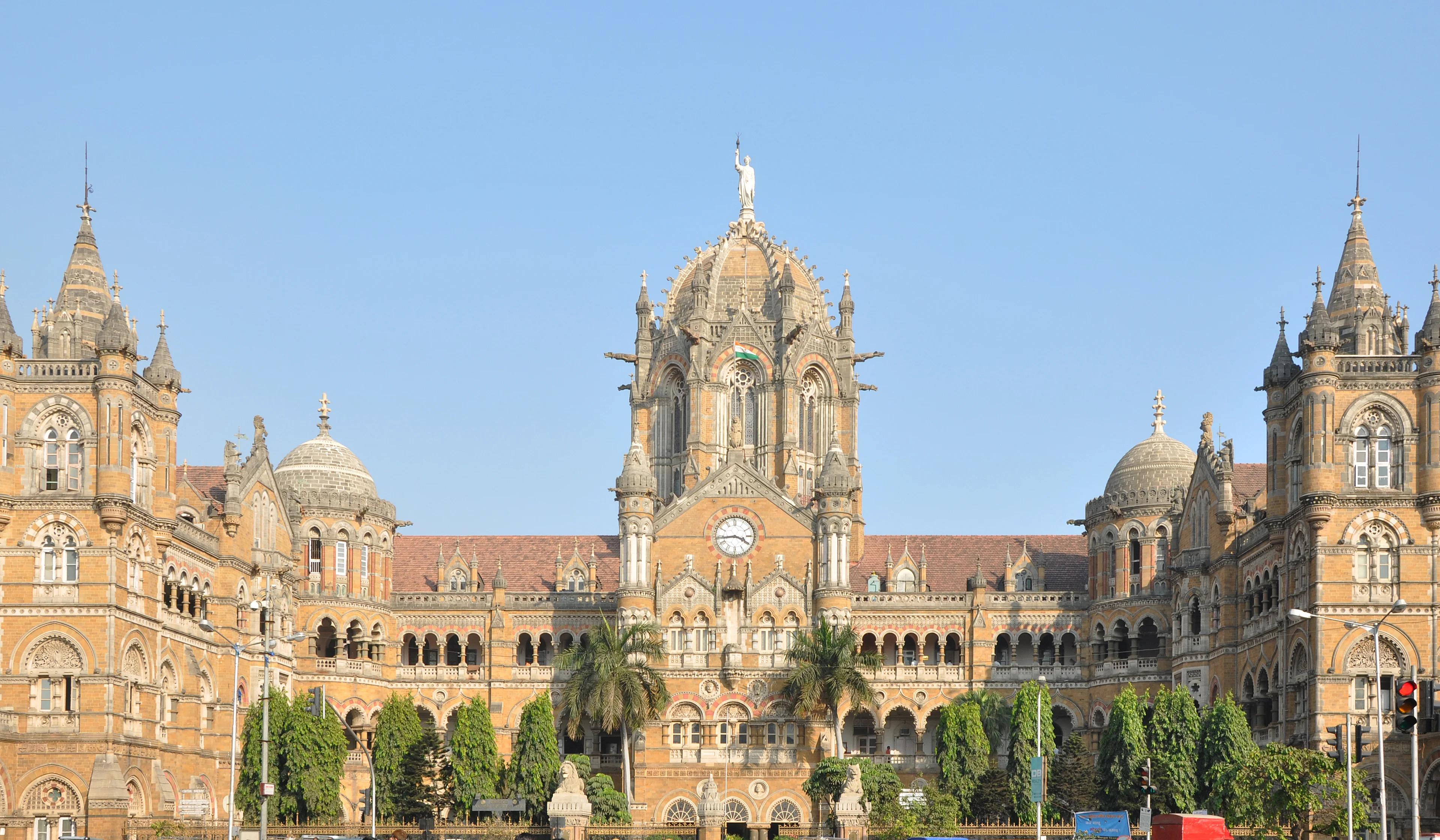
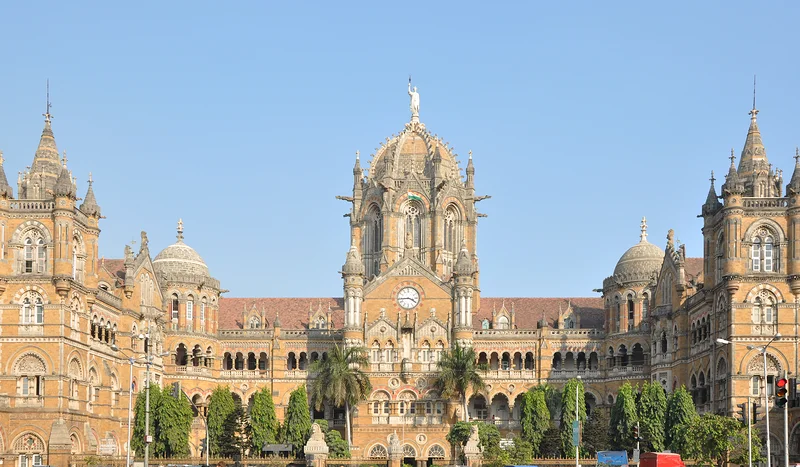
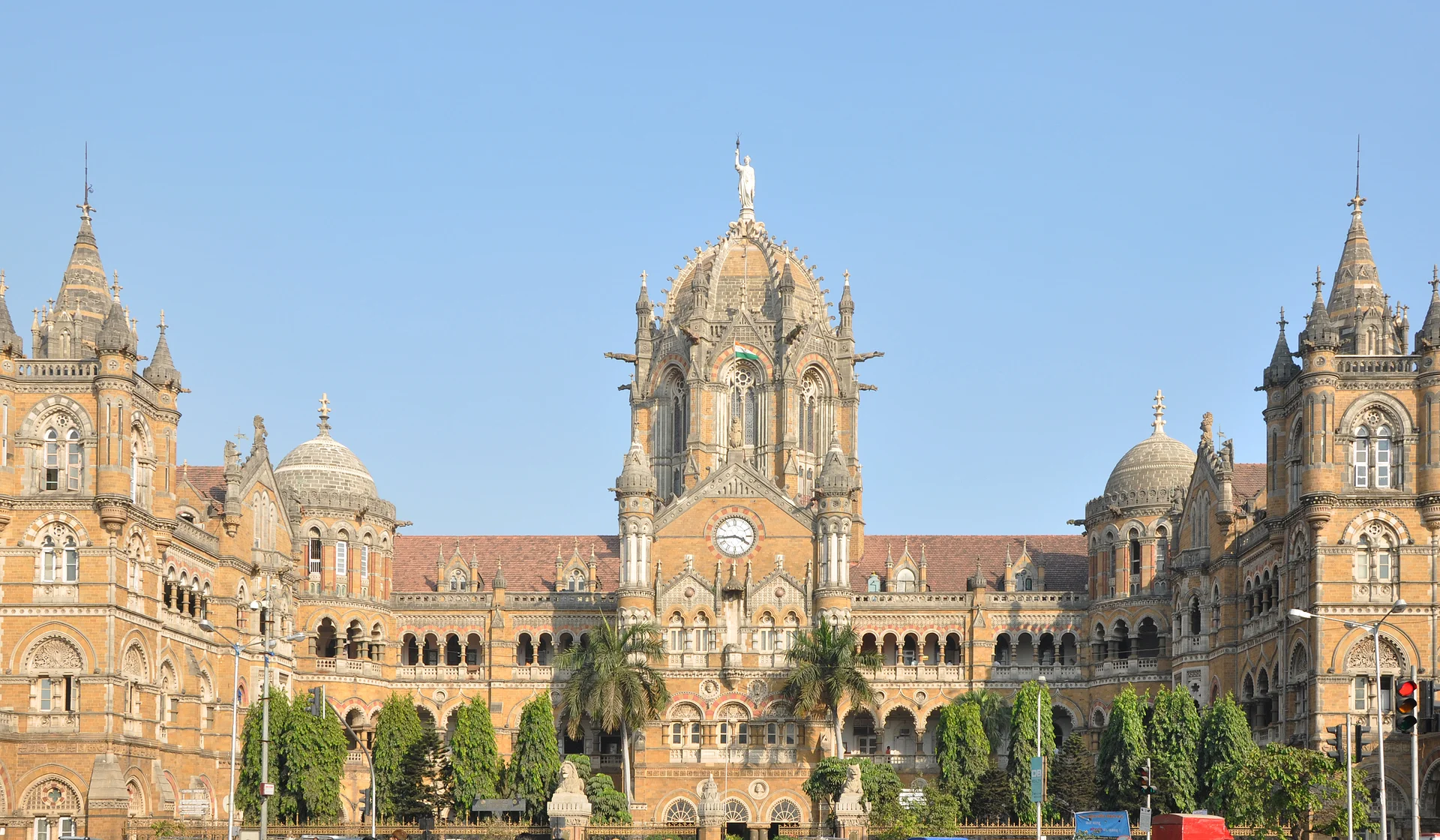
Key landmarks here include the Bombay High Court, the University, and the Rajabai Clock Tower, a structure that mirrors the design of London's Big Ben. A short walk away, you will find the Chhatrapati Shivaji Terminus, a UNESCO World Heritage site, and the Chhatrapati Shivaji Maharaj Vastu Sangrahalaya (formerly the Prince of Wales Museum of Western India).
A City of Sharp Contrasts
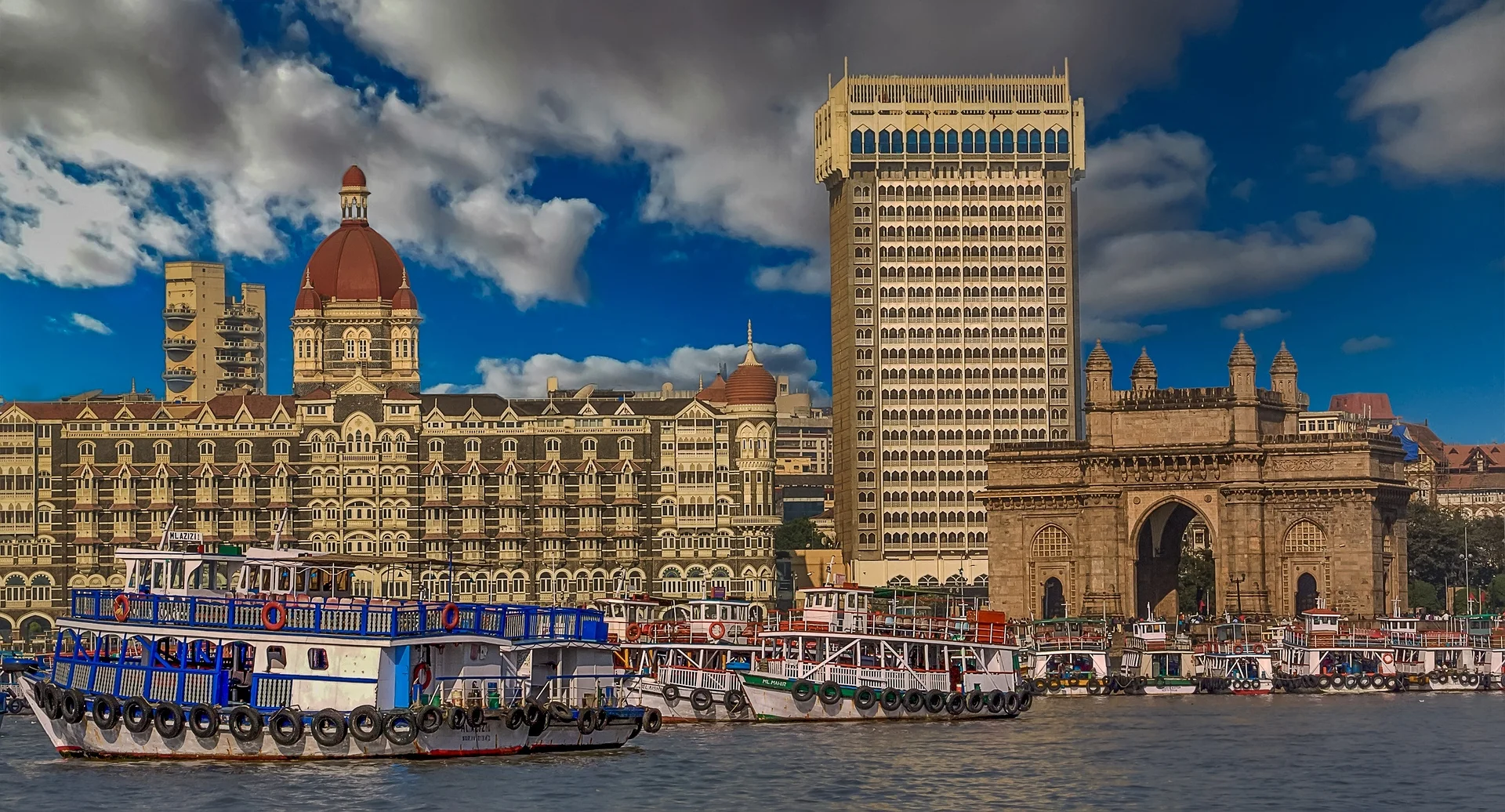
Like many Indian cities, Mumbai is defined by its crowded streets and massive open-air markets, such as the Chor Bazaar, where you can grab a quick bite. Economic inequality is visible throughout the urban landscape. To the south, the Colaba neighborhood and the Marine Drive waterfront serve as the primary tourist hubs. This area is home to the Gateway of India, built to commemorate the visit of King George V. Standing across from it is the Taj Mahal Palace, a luxury hotel known for its blend of Mughal and Victorian architectural elements.
Mumbai Off the Beaten Path
West of Marine Drive, you can find pockets of relative quiet, such as the Hanging Gardens, or Ferozeshah Mehta gardens, located on Malabar Hill. Nearby, the Banganga Tank offers a glimpse of a sacred water basin surrounded by Hindu temples.
If you have extra time, take a trip to Elephanta Island to explore a network of 6th-century Hindu temples and rock-cut sculptures. For those looking for outdoor space, the Sanjay Gandhi National Park in the northern part of the city is a sprawling nature reserve that houses wild animals and an important archaeological site containing Buddhist caves.
When to Go
Mumbai has a tropical climate. The best time to visit is during the dry winter months between November and February.
Getting There and Around
Mumbai is served by an international airport with connections to most major Western cities. Once you arrive, the metro system is an efficient way to get around the city center, as traditional rickshaws are prohibited in the downtown area.
Once you arrive in Mumbai, prepare yourself for a major culture shock. The city is very different from anything you know. There are an incredible amount of people, traffic, noise, and pollution. The inequality is also very present. I would not necessarily recommend stopping here during your trip to India.