Visiting Bohol
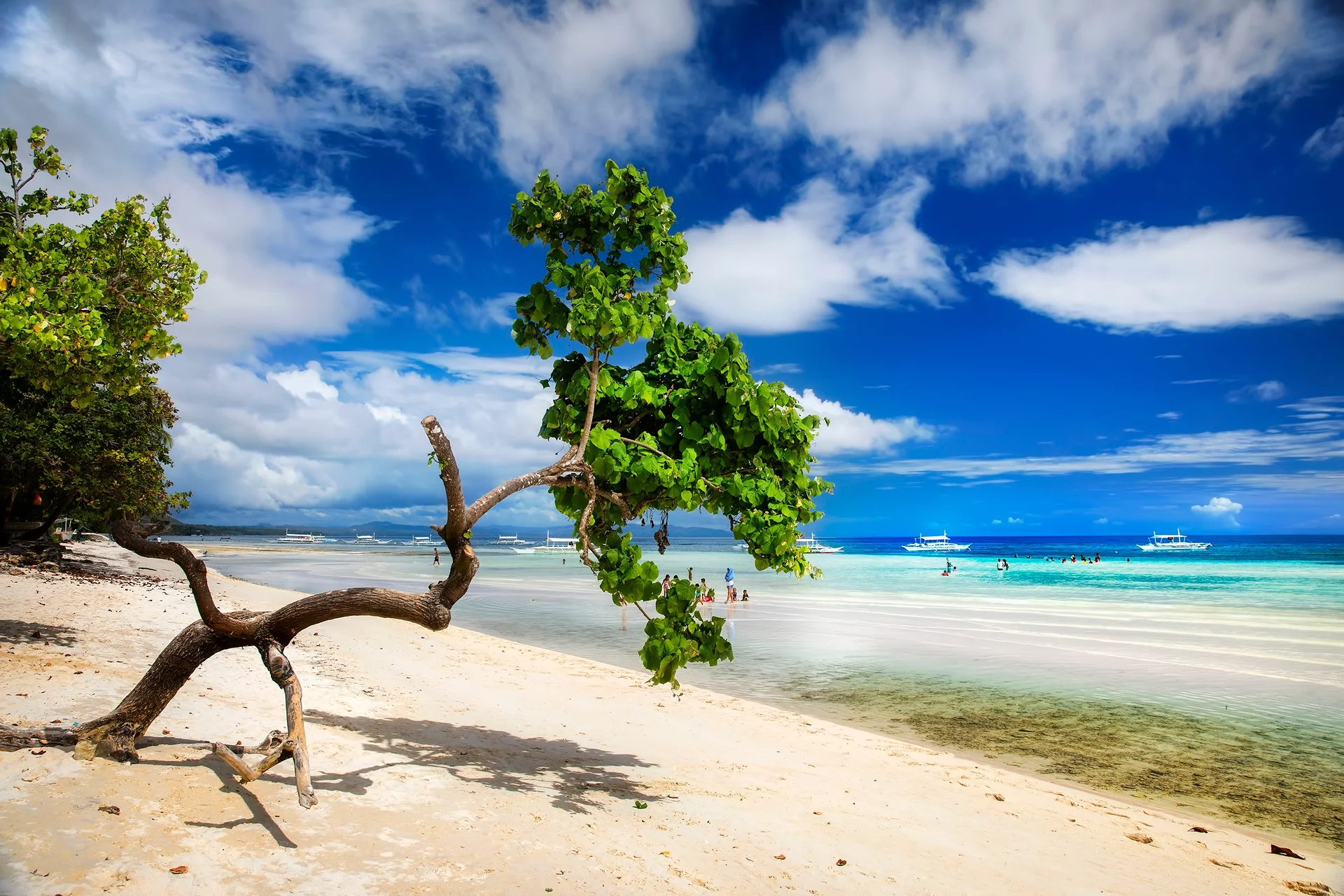
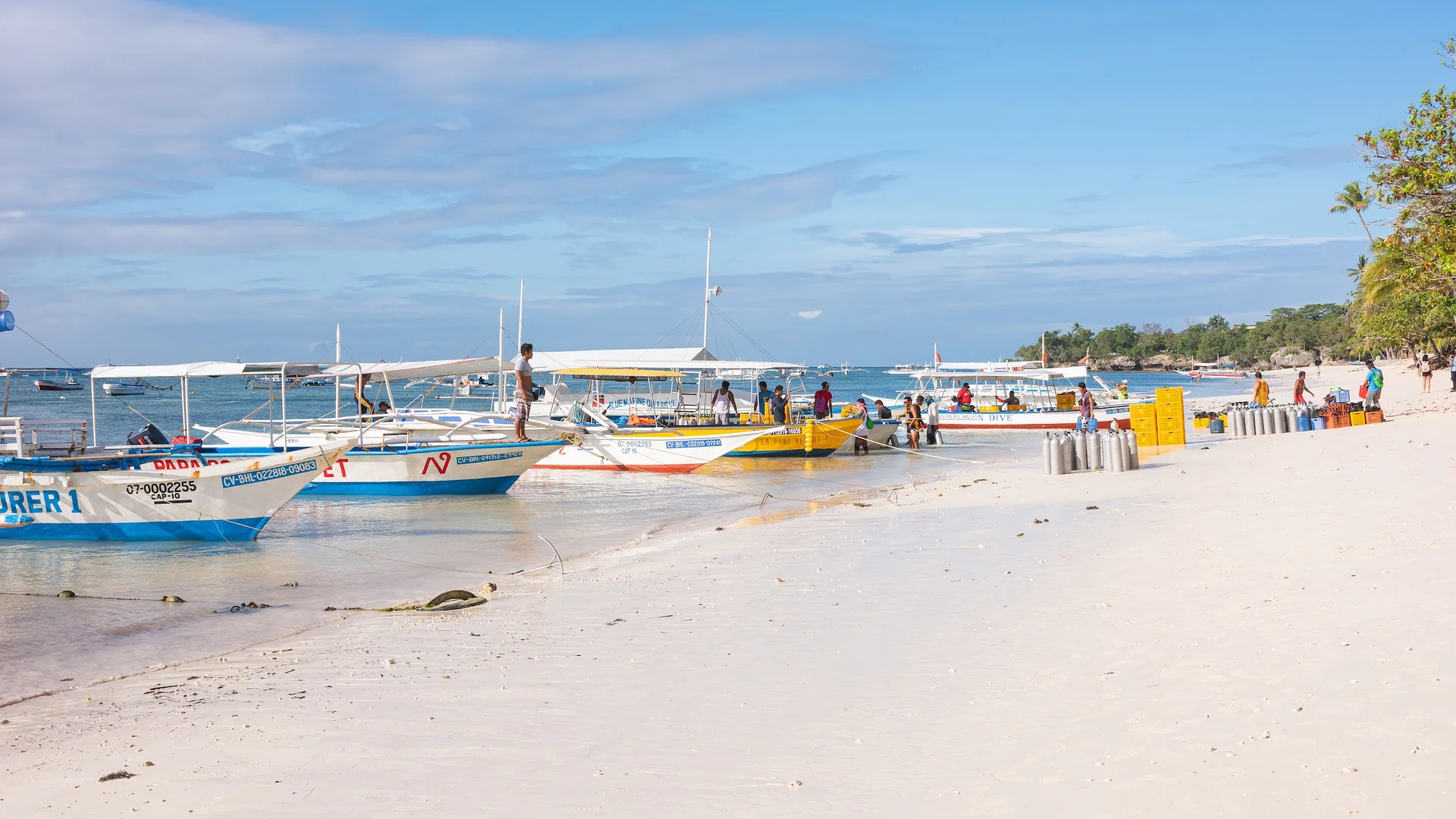
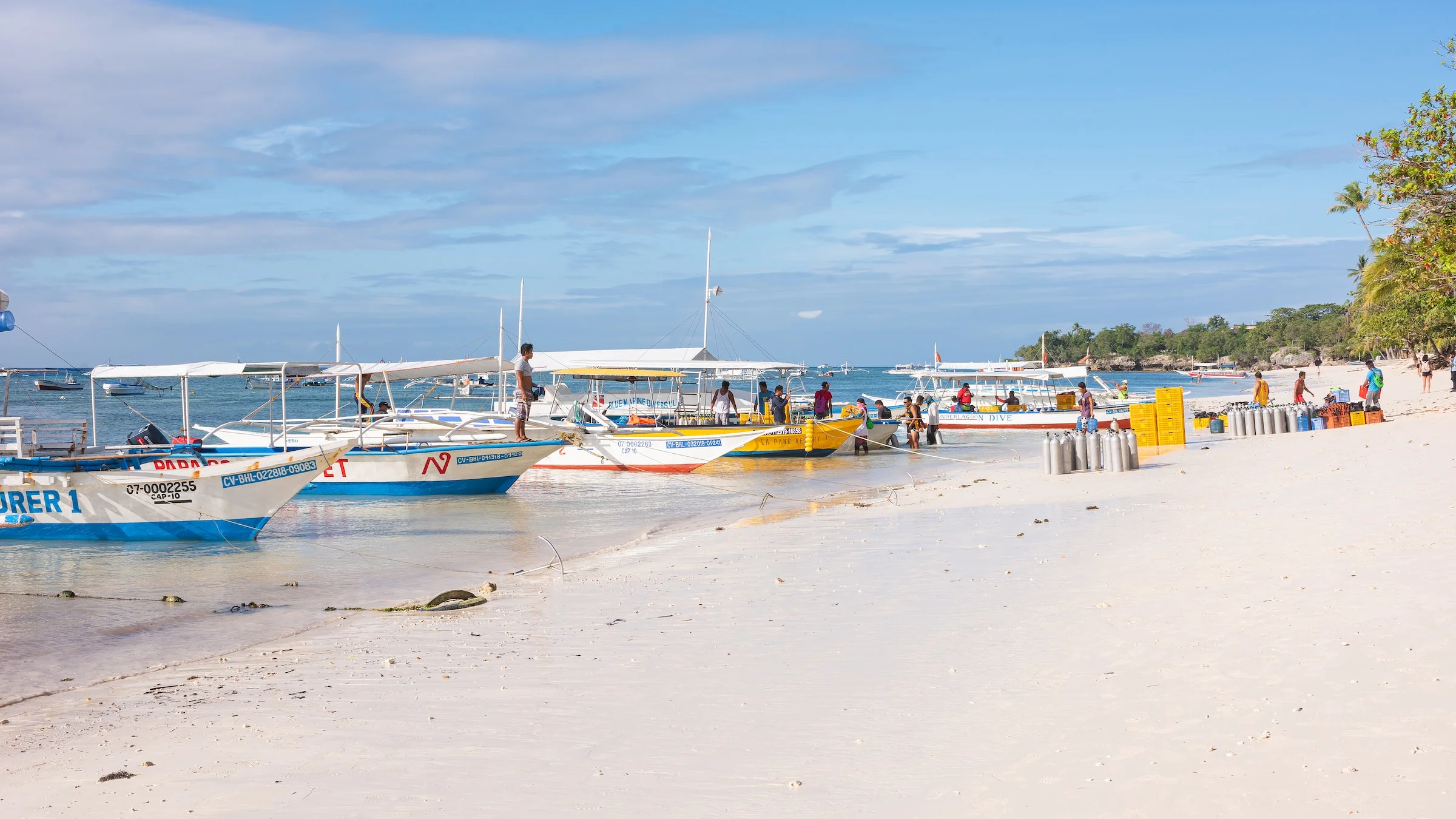
An island of hills and rivers, joined by two bridges to Panglao, the beach island. On one side, the white sand of Alona and the boats that leave early to find the dolphins. On the other, the interior: the Chocolate Hills, the forests where tarsiers live and the churches built of coral stone.
So Bohol comes in two parts, sea and land, an hour and a half's drive apart. That mix is what sets it apart from the neighbouring islands: you don't have to choose between the beach and the landscape.
You'll love it if
- You want the beach in the morning and the countryside in the afternoon
- Diving and dolphins are what draw you
- You like old churches and small villages
Look elsewhere if
- You're after empty beaches with no tour boats
- Crowds at famous viewpoints spoil the visit for you
- You want to hop between islands without worrying about ferries
The must-sees
-
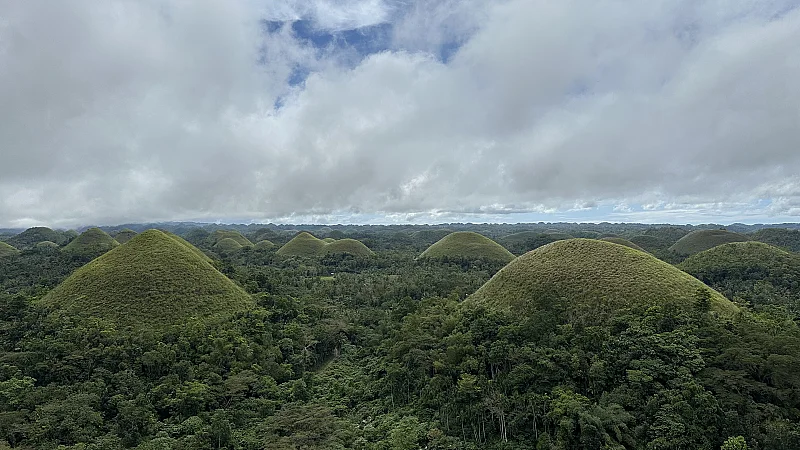 Photo posted by Megane Odyzea
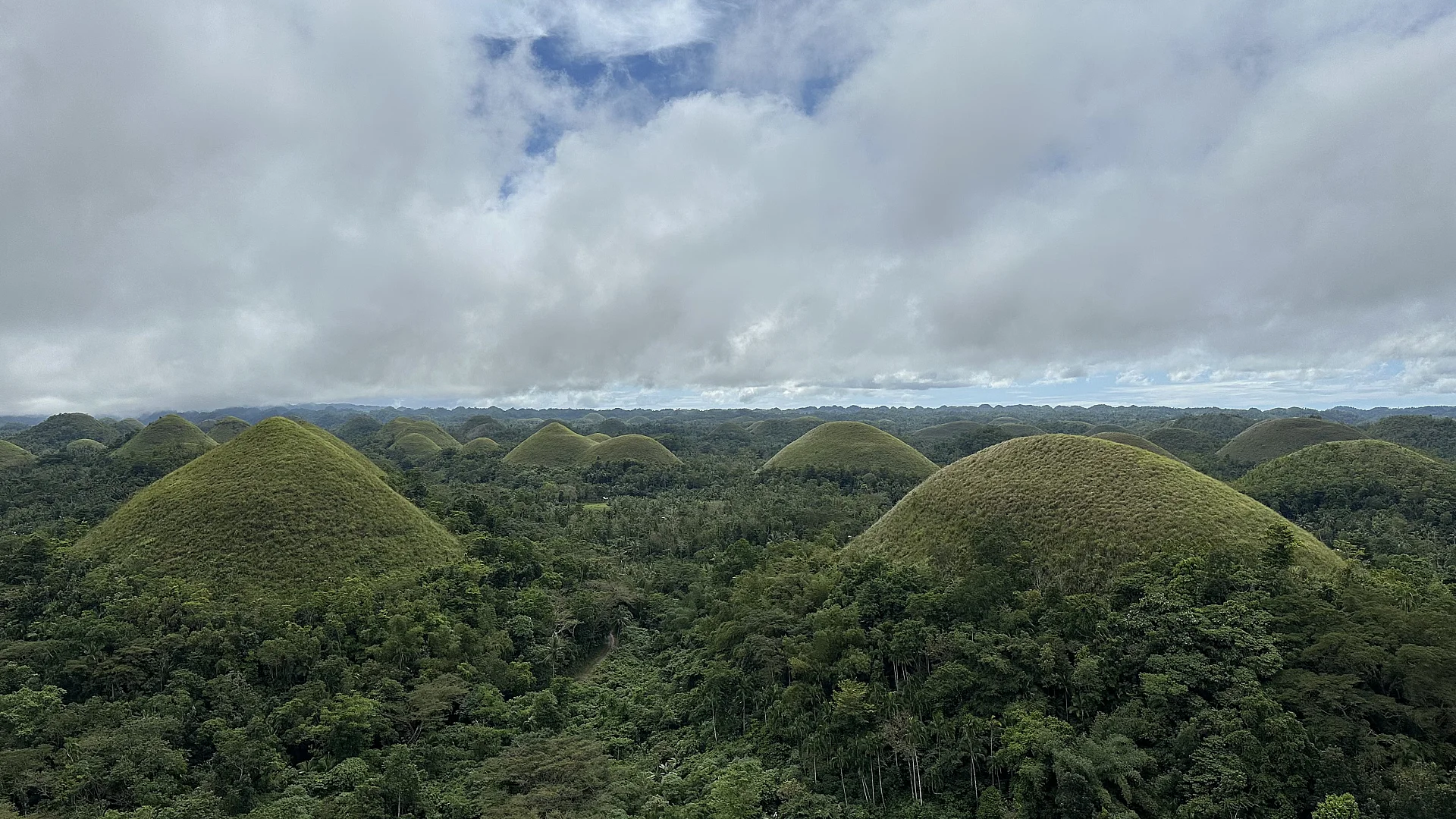
1 The Chocolate Hills, early in the morning Before 9 am +1 rec
Hundreds of cone-shaped, grass-covered hills that turn brown in the dry season, hence the name. The main viewpoint is at Carmen, at the top of a staircase of more than two hundred steps. A recent member review describes it as "overrun": get there at opening time, before the tours from Panglao arrive. The site is a protected natural monument, and the whole island has been a UNESCO Global Geopark since 2023.
-
2 The tarsiers of Corella Sanctuary
The Philippine tarsier fits in the palm of a hand, and its eyes are bigger than its brain. Go and see it at the Philippine Tarsier Foundation sanctuary in Corella, where it lives free in the forest and guides point it out on its branch. No flash, no reaching out, keep your voice down: the animal is nocturnal and stress kills it. Avoid the roadside enclosures.
-
3 Balicasag and Pamilacan by boat March to June
The bangkas leave Alona at dawn for two islets. Around Pamilacan, a former whale-hunting village whose people now guide watching trips, you meet dolphins, especially from March to June. At Balicasag, the wall of the marine sanctuary drops straight down a few metres from the shore, for snorkellers and divers alike. Leave early: the sea is calmer and the dolphins more numerous.
-
4 Baclayon Church Coral stone
Completed in 1727 with blocks of coral bound with egg white, it is one of the oldest stone churches in the country. The earthquake of 15 October 2013 brought down its facade and bell tower; restored stone by stone, it reopened in 2018. Go up to the parish museum, on the upper floor of the convent, for its carvings and vestments.
-
5 The cave pools of Anda East coast
In the east, the limestone of Anda hides more than twenty caves filled with clear fresh water. Cabagnow, the best known, is reached down a ladder, and the bolder visitors jump in from four or five metres. Allow two hours' drive from Panglao: come for a night on the Anda coast, whose beaches stay much quieter than Alona.
The classic mistake
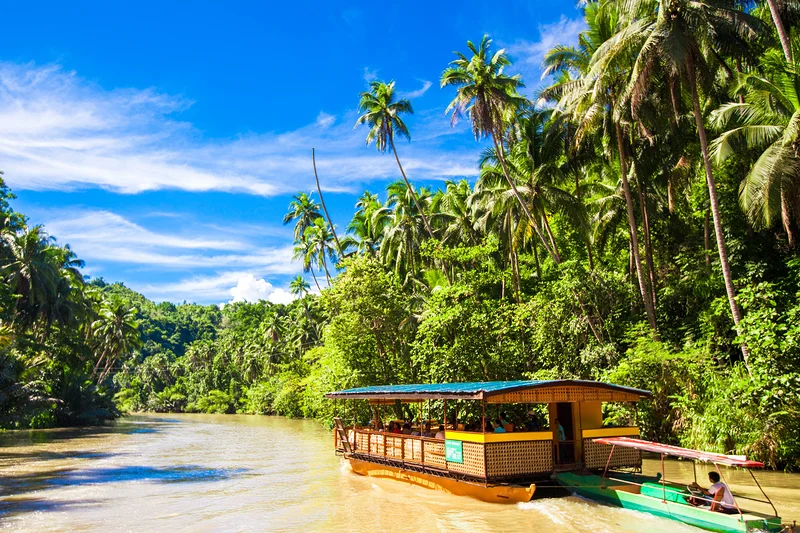
Doing the whole interior in a single day trip from Alona: hills, tarsiers, the Loboc river, the Bilar forest. You spend the day in a van, at the hours when everyone is at the same sites. Split it in two, or spend a night inland.
Our itineraries in Bohol
| Length | Itinerary | What you see |
|---|---|---|
| 3 days | Panglao › Chocolate Hills › Corella | Beach, hills, tarsiers |
| 5 days | Panglao › Pamilacan › Loboc › Chocolate Hills | Dolphins, river, countryside |
| 1 week | Panglao › Loboc › Chocolate Hills › Anda | The whole island |
Settle first in Panglao, close to the airport and the boats. Do the interior in two half days, or with a night by the Loboc river. Keep the Anda coast for the end of a week-long stay: it is two hours' drive away, at the far end of the island.
When to visit Bohol
| Rating | Season | Rain | Sea | Crowds and prices |
|---|---|---|---|---|
| Cool seasonJan. and Feb. | Passing showers | 27 °C | High | |
| Dry seasonMarch to May | The driest | 28 to 29 °C | Medium | |
| Southwest monsoonJune to Sept. | Afternoon showers | 29 °C | Medium | |
| Typhoon seasonOct. to Dec. | The wettest months | 29 °C | Low |
Our advice
Aim for March, April or May: rain is at its lowest and the sea is calm for boat trips to Pamilacan. Between October and December, leave slack in your plans: Typhoon Odette devastated the island in December 2021, and ferries are cancelled at the first storm warning.
Getting to Bohol
-
By air, via Manila The fastest
Most travellers reach Manila with one connection, through a hub in Asia or the Middle East; from London there is also a direct flight. From Manila, daily domestic flights land at Panglao airport, twenty minutes by road from the beaches of Alona.
-
By fast ferry from Cebu To combine islands
No flights link Cebu and Bohol: you cross by fast boat to the port of Tagbilaran, in two hours. In 2026, cancellations have become frequent: check the timetable the day before.
-
By ferry from Siquijor or Camiguin On a longer trip
Fast boats from Siquijor and Dumaguete arrive in Tagbilaran. From Camiguin, the ferry docks at Jagna, on the south coast, an hour and a half's drive from the city.
Most European passport holders, like British, American and Australian travellers, enter without a visa for thirty days, with an onward ticket; check the rules for your own passport before you book. Fill in the free eTravel form online within 72 hours before arrival, and beware of websites that charge for it.
Getting around Bohol
On Panglao, a tricycle is all you need to get from one beach to the next. For the interior, hire a van with driver for the day, 2,500 to 3,500 pesos per vehicle: it's the simple way to see the hills, the tarsiers and the river without relying on the buses from the Dao terminal in Tagbilaran.
Good to know
Your foreign licence is valid for ninety days if it is in English or comes with an international driving permit. For a scooter, also carry your stamped passport. Off the main roads, street lighting is scarce: don't drive inland after dark.
What to eat in Bohol
- Kalamay: a paste of sticky rice, brown sugar and coconut milk, cooked for hours and sold in a sealed half coconut shell. The speciality of Jagna, on the south coast.
- Peanut kisses: small peanut and egg-white cookies shaped like the Chocolate Hills. The souvenir everyone brings home from Bohol.
- Ube: the purple yam, the island's favourite crop, which colours cakes, ice cream and halo-halo. A festival is held in its honour every January in Tagbilaran.
- Kinilaw: raw fish marinated in coconut vinegar with ginger and onion, served on the beaches as well as in village restaurants.
- Bahalina: coconut palm wine, tuba, aged with mangrove bark, which gives it its brick-red colour.
In Alona, the seafront restaurants lay out the catch of the day on ice: you pick your fish, it is weighed, then grilled. Ask the price per kilo before ordering, and go to dinner in Panglao town or Dauis to pay less than on the beach.
Where to stay in Bohol
| Area | What it's for | Good to know |
|---|---|---|
| Alona Beach | Diving, boats, restaurants | Lively and crowded |
| The rest of Panglao | Quieter beaches, resorts | Tricycle to go out at night |
| Tagbilaran | Port, ferries, small budgets | No beach |
| The interior, around Loboc | River, hills, tarsiers | Quiet nights, few restaurants |
| Anda | Peaceful beaches, caves | Two hours' drive from the rest |
How much does a trip in Bohol cost?
| Trip | Length | Budget per person |
|---|---|---|
| Budget (guesthouse, tricycles, local meals) | 7 days | 300 to 500 € |
| Comfort (resort with pool, private van, boat trips) | 7 days | 700 to 1,100 € |
| Luxury (beach resort, dives, driver) | 7 days | 1,600 to 2,800 € |
- The private van: shared between four, it costs little per person and spares you the group tours.
- Boat trips: a private bangka costs a good deal more than a seat on a shared trip, but leaves when you want.
- Entrance fees: the hills, the tarsier sanctuary, the caves and the marine sanctuaries each charge their own, payable in cash.
- Cash: outside Panglao and Tagbilaran, cards are often refused, and the ATMs in Alona charge a fee on every withdrawal.
- The seafront: dinner in Alona costs a good deal more than a few streets back from the beach.
Traditions and way of life in Bohol
Bohol has been Catholic since the 16th century, and every village has its stone church and its patron saint's feast. On 16 March 1565, the chief Sikatuna sealed a blood compact here with the Spaniard Legazpi, which the Sandugo festival re-enacts throughout July in Tagbilaran.
People here speak Boholano, a variety of Cebuano, and English almost everywhere. On 22 July, Bohol Day, the island celebrates its separation from Cebu in 1854.
Local etiquette
Dress properly to enter a church, shoulders and knees covered, even between two beaches. At natural sites, don't pick up coral or shells: Virgin Island had to close for nearly two years after damage to its reefs, and only reopened in February 2026, under supervision.