
Luang Prabang, where monks and waterfalls set the rhythm
It is 5:45 am, and the streets of Luang Prabang are still wrapped in morning mist. Dozens of monks in saffron robes walk in silence, barefoot on the chilly pavement, while locals kneel to place sticky rice into their waiting bowls.
This tak bat ritual has repeated every morning for centuries, almost unchanged, in this former royal capital tucked into the confluence of the Mekong and Nam Khan rivers.
Is this destination right for you?
If you want a city that has held onto its soul despite tourist traffic, Luang Prabang hits every mark. Its designation as a Unesco World Heritage site back in 1995 locked in its colonial architecture and Buddhist temples within a protected frame, without turning the place into a lifeless museum exhibit.
On the flip side, if you are after high-energy nightlife or sprawling urban sprawl, you will likely get restless fast. The town closes down early with an unofficial curfew around 11:00 pm, and the pace here remains decidedly slow.
Great fit for:
- fans of Buddhist culture and heritage sites
- travelers looking for quietude and nature near waterfalls and rivers
- couples and families wanting a gentle stopover in Southeast Asia
Poor fit for:
- partygoers searching for a night scene
- travelers on a tight schedule, as land connections from the rest of Laos take time
A manageable budget compared to the rest of Southeast Asia
Laos remains one of the least expensive countries in the region, even though Luang Prabang draws more visitors and runs slightly higher prices than Vientiane or the countryside.
| Expense | Range |
|---|---|
| Basic guesthouse night | $5.60 to $14* |
| Comfortable hotel night | $28 to $68* |
| Street food meal at the night market | $1.20 to $3.40* |
| Sit-down restaurant meal | $5.60 to $14* |
| Daily transport and activities | $12 to $23* |
Estimated rates subject to change
Practical realities: what to expect on the ground
The town is compact and easy to navigate on foot or by bicycle. English is limited among older residents, but you will find enough speakers in tourist areas. The tropical climate brings two distinct seasons: the dry season from November to April and the monsoon season from May to October, with searing heat peaking in April during the famous Pi Mai Lao New Year celebrations.
Luang Prabang ranks among the safest cities in Southeast Asia. Snatch-and-grab thefts are uncommon, and solo female travelers can navigate the area without major concerns, provided they respect local dress codes around temples.
Sunrise from Mount Phousi
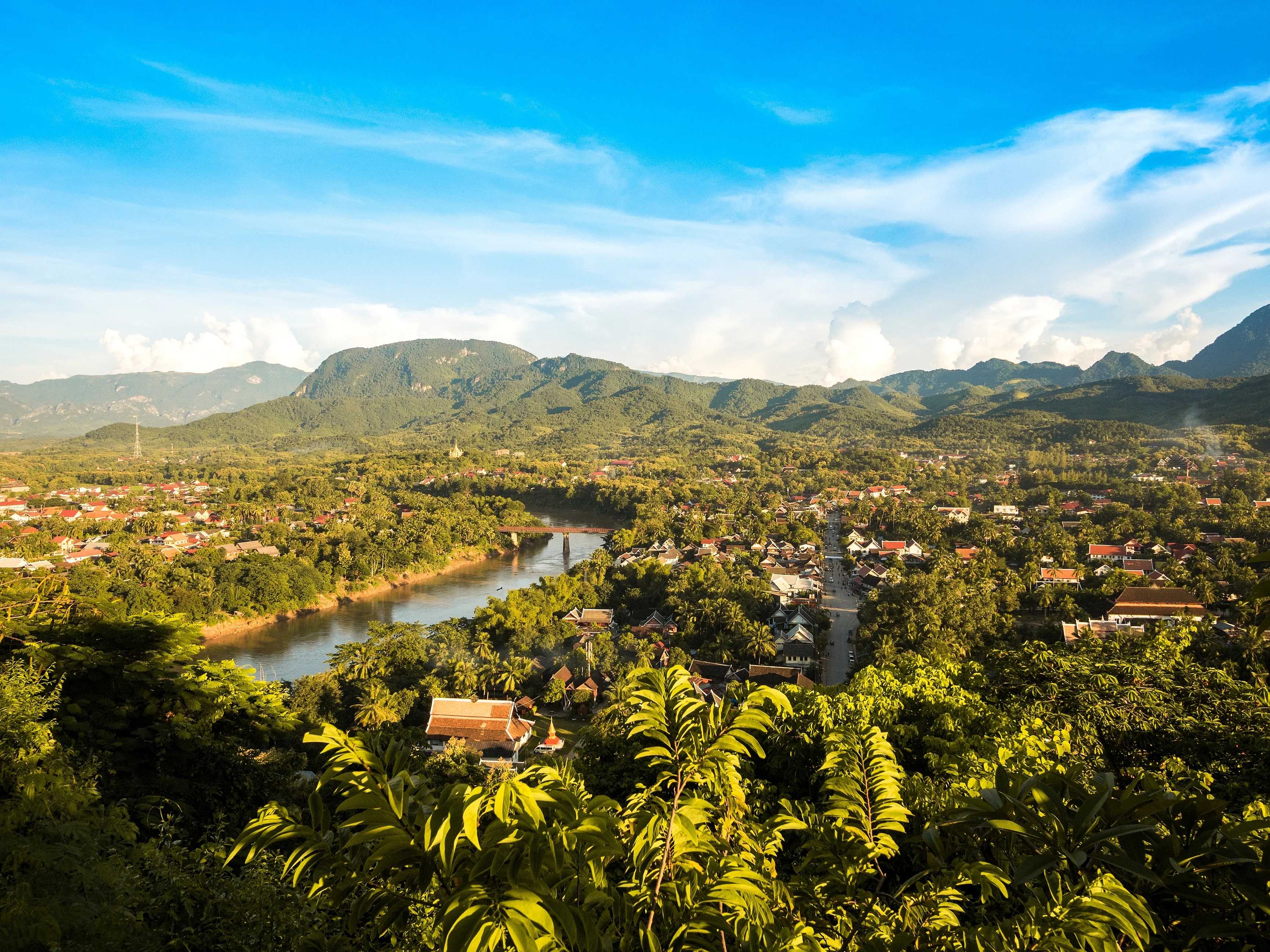
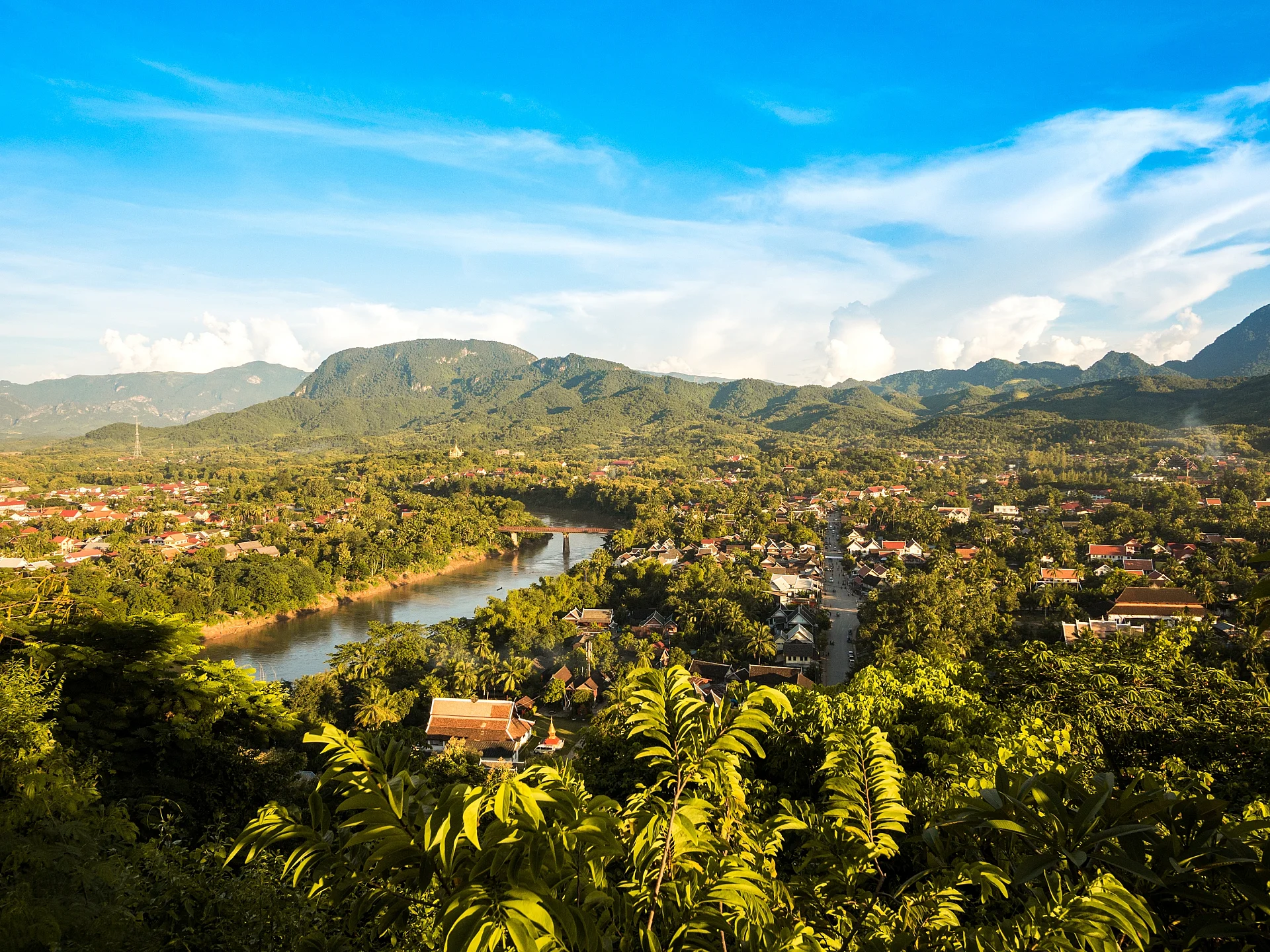
Climbing the 328 steps of Phousi before dawn is practically a rite of passage. The panorama over the golden roofs of Wat Chom Si, the waking town, and the surrounding mountains justifies the physical effort, even if you will share the summit with other early risers.
Friendly tip: Skip the sunset climb, which gets crowded and packed. Head up at dawn for a much quieter experience, or go in the late morning to have the site almost entirely to yourself.
Temples of the historic center
Wat Xieng Thong
Built in 1560, this temple stands as the most revered in town. Its low-sweeping roofs with distinctive curves and the glass mosaic tree of life on the back exterior wall rank among the finest examples of Lao religious art.
Wat Mai
Set across from the royal palace, this 18th-century temple commands attention with its gilded relief facade depicting scenes from the life of the Buddha. It once served as the residence of the supreme patriarch of Lao Buddhism.
Waterfalls around the city
Kuang Si
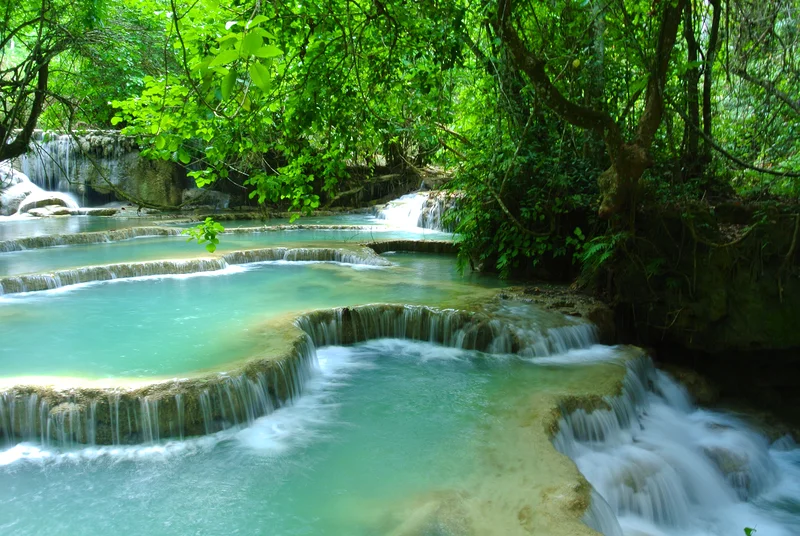
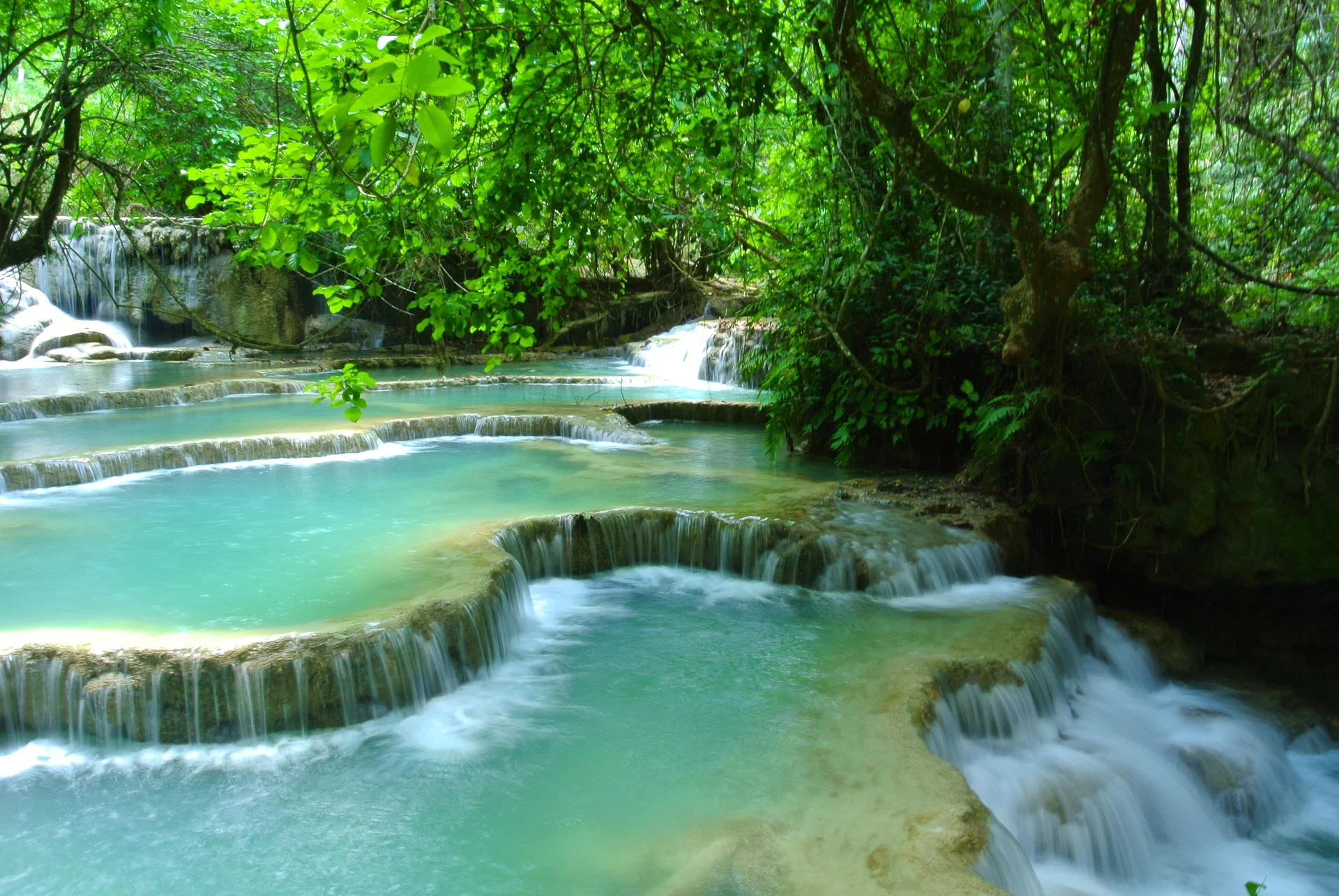
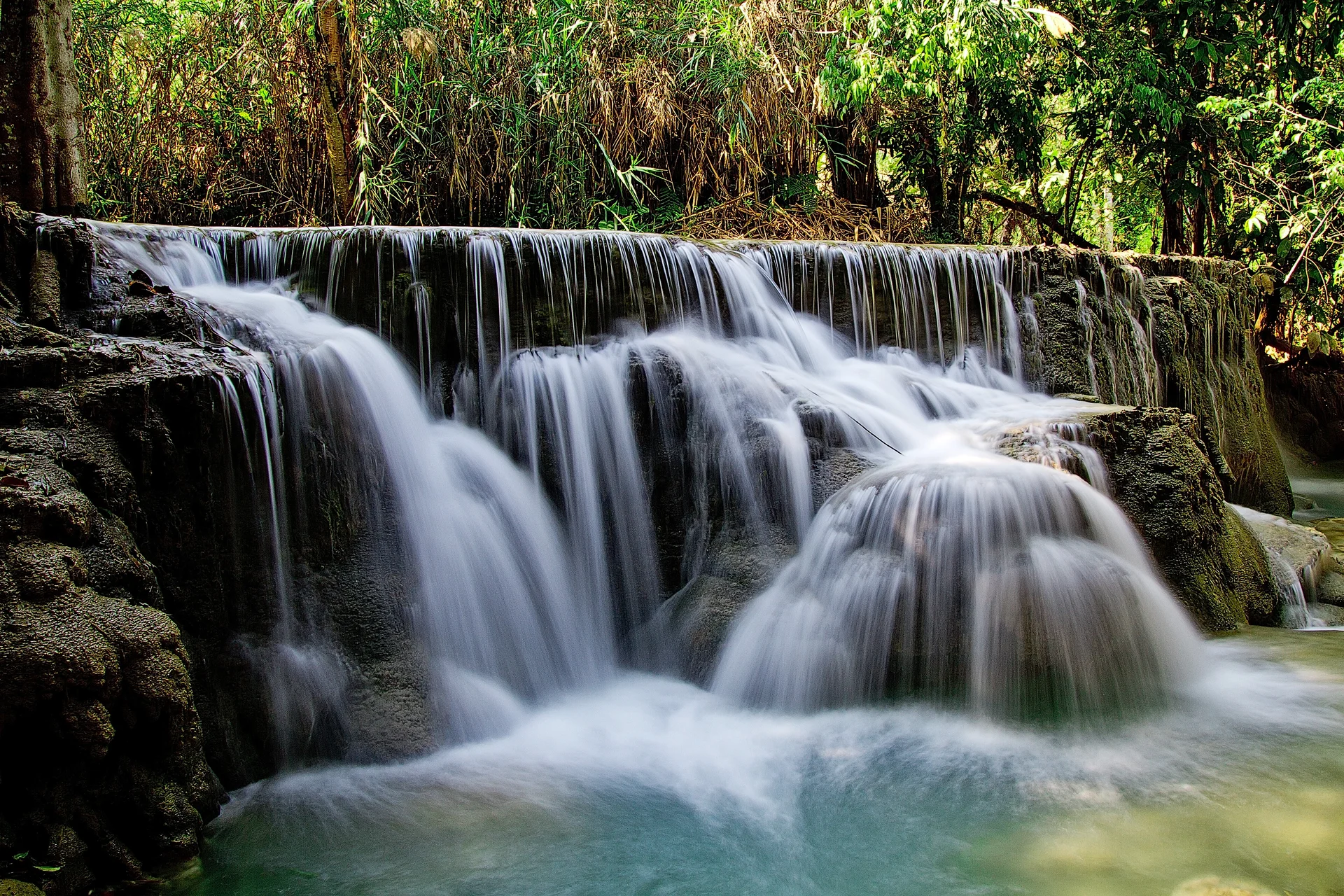
Located about 30 kilometres south, these cascading falls feed striking turquoise pools that invite swimming. A rescued bear sanctuary near the entrance also makes it worth stopping by.
Tad Sae
Less crowded and closer to the center at about 17 kilometres away, these falls offer a quieter alternative, especially outside the rainy season when water flow can fluctuate wildly.
Where to eat and drink in Luang Prabang
The night market set up every evening along Sisavangvong Street is your best bet for sampling local dishes on a budget, from grilled skewers to laap, the spiced minced meat salad, and orlam, a hearty regional vegetable and meat stew.
For a slower meal, the banks of the Mekong feature several terraces where you can sip an iced Beerlao at sunset, typically accompanied by grilled fish skewers.
Where to stay in Luang Prabang and surrounding areas
The historic center wedged between the Mekong and the Nam Khan hosts most of the boutique guesthouses housed in restored colonial buildings. For extra quiet, select properties lining the Nam Khan provide a more peaceful setting just a short walk from the center.
How to get to Luang Prabang
Luang Prabang (LPQ) international airport only handles regional flights, meaning travelers coming from North America or Europe connect through hubs like Bangkok, Hanoi, or Chiang Mai. From Vientiane, the high-speed train connects the two cities in about 2 hours, cutting travel time drastically compared to the 8 to 10 hour drive by road.
How to get around Luang Prabang
The downtown area is entirely walkable or bikeable with rentals available for just a few dollars a day. For longer distances, particularly out to Kuang Si falls, shared tuk-tuks remain the most cost-effective option.
When to visit Luang Prabang
The dry season running from November to February brings the most pleasant temperatures and clear skies, making it ideal for temple hopping and waterfall visits. Try to avoid March and April if possible, when the heat turns stifling and agricultural burning haze frequently obscures the sky.
A city where you take the time to slow down, between golden temples, colonial houses, and the confluence of the Mekong and Nam Khan rivers. I also recommend exploring the surrounding area and checking out the night market to sample Lao dishes.