Vientiane, the capital that refuses to take itself too seriously
No skyscrapers, no monstrous traffic jams, no packed crowds shoving in front of temples. Vientiane is easily Southeast Asia's quietest capital, a place where cows still graze right next to government ministries and where watching the sunset over the Mekong draws a bigger crowd than any monument.
You rarely end up here as a first choice, often as a stopover, and you sometimes leave surprised by how much you loved it.
A destination made for you?
If you prefer capitals that move fast, pulse all night, and pack in non-stop attractions, Vientiane might let you down. Everything closes early here, distances between points of interest are measured in tuk-tuks rather than on foot, and some visitors find the city downright sleepy.
Yet if you want a gentle transition between the high-speed rhythm of neighboring Thailand and the slow pace of rural Laos, or simply a human-scale city where you can wander without a strict plan, you will feel at home here in no time.
Great for:
- Travelers looking for quiet and authenticity, far from mass tourism
- Street-food fans and local market enthusiasts
- Anyone putting together a broader trip through Laos who wants a smooth transition stop
Not ideal for:
- Hardcore nightlife seekers
- Rushed travelers who want to check off a massive list of sights in a short window
Some of the most budget-friendly prices in Asia
This is one of the city's major perks: you can travel on a tight budget here without feeling like you are missing out.
| Expense | Range |
|---|---|
| Night in a basic guesthouse | $5.70 to $12* |
| Night in a comfortable hotel | $29 to $57* |
| Street food meal (pho, Lao baguette sandwich) | $1.20 to $2.30* |
| Restaurant meal | $4.50 to $12* |
| Daily transport and activities | $5.70 to $17* |
| Total daily budget for backpackers | $17 to $23* |
| Total daily budget for comfort | $45 to $79* |
Estimated rates subject to change
Practical realities: what people do not always tell you
Getting around is easy by tuk-tuk or bicycle, but tourist infrastructure remains modest compared to Bangkok or Hanoi. ATMs often cap withdrawals at relatively small amounts, so plan on making multiple trips or keeping some cash on hand.
Humid heat bakes the city from April through June, while the rainy season from July through October brings short, intense downpours. English is limited outside established tourist spots, so having a small phrasebook in Lao or even French, still spoken by older generations, makes a real difference.
Along the Mekong, the soul of the city at sunset
Every evening, the riverside promenade along the Mekong turns into the city's main gathering spot. Skewer stalls, fresh fruit smoothies, and impromptu aerobics classes on the plaza bring locals out to watch the sun drop behind the Thai riverbank.
Friendly tip: grab a spot on the river steps around 5:30 pm, order an iced Beerlao from a street vendor, and let the show begin. It is free, and it is usually the best part of the day.
Temples and monuments that tell the story of Laos
Pha That Luang
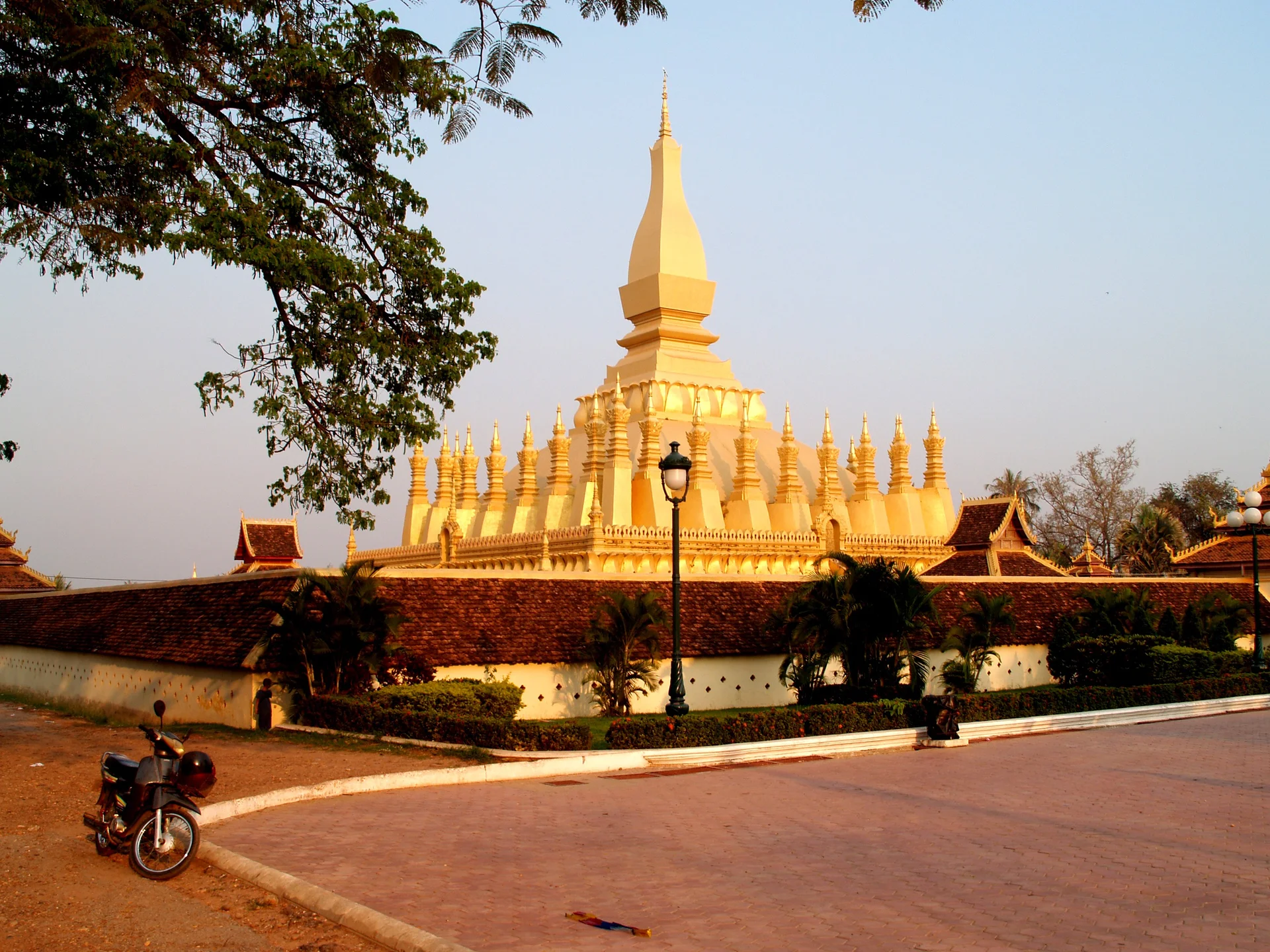
The grand golden stupa of Pha That Luang is the country's national symbol, featured right on the bank notes. Built in the 16th century and rebuilt after multiple invasions, it commands attention with its pointed golden architecture, sitting in a relatively peaceful setting outside of guided tour hours.
Patuxai
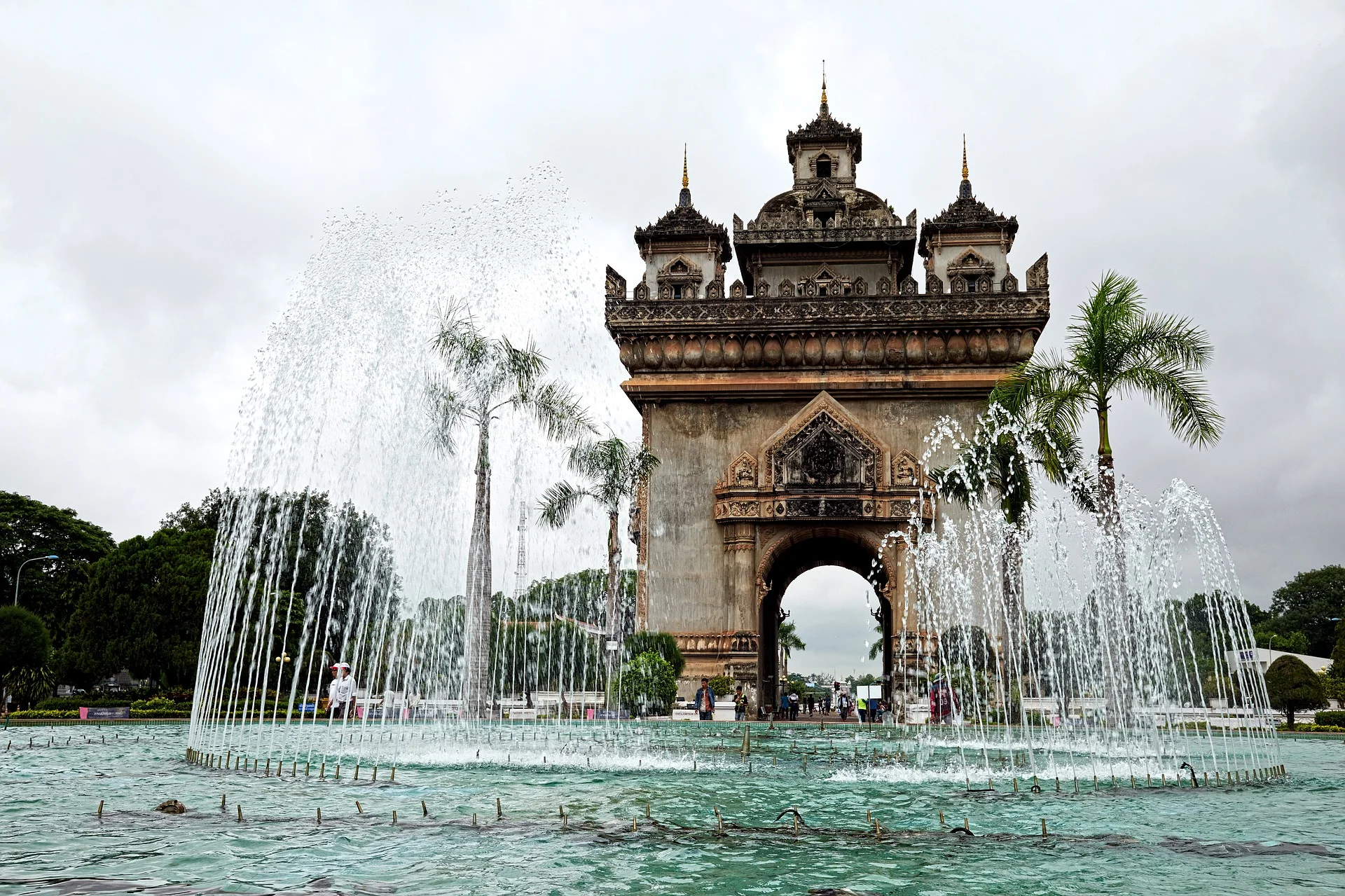
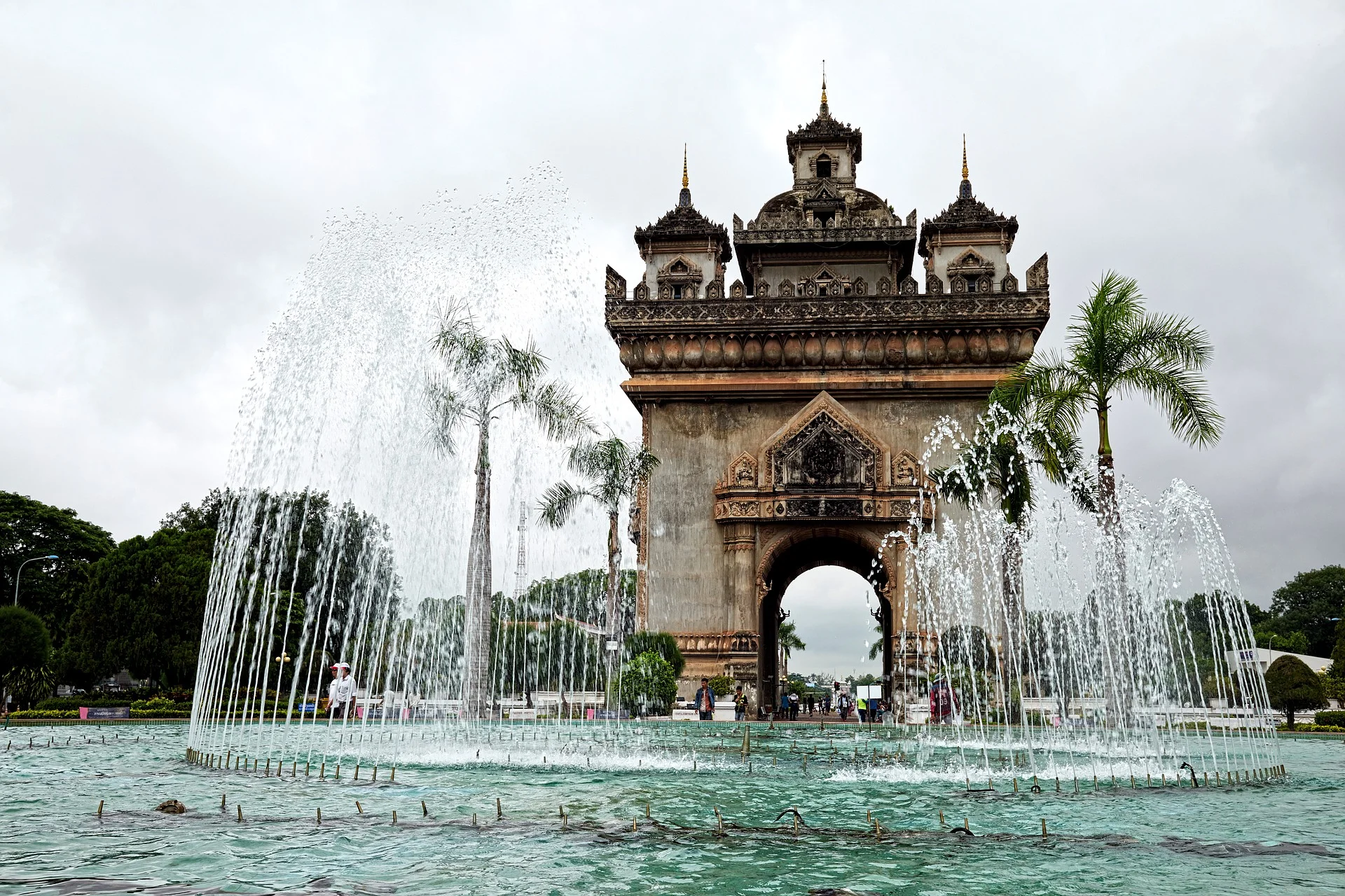
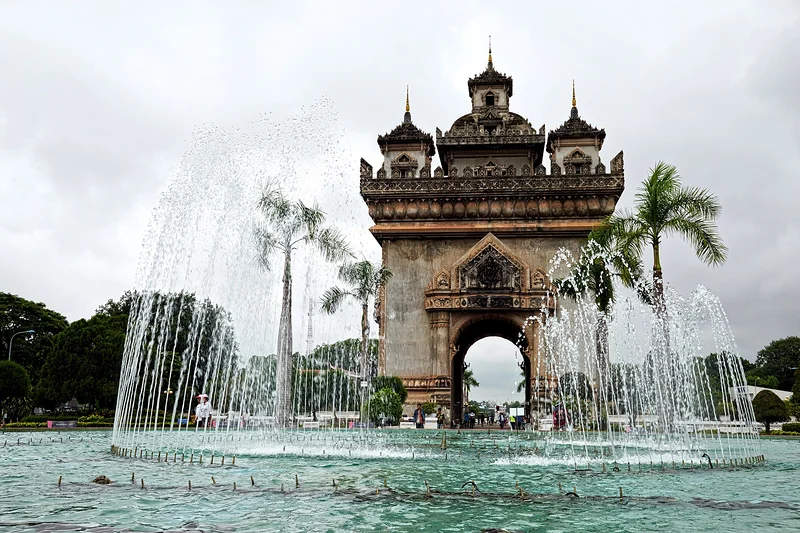
Nicknamed the local Arc de Triomphe, Patuxai sits at the end of the main avenue. You can climb to the top for unobstructed views over the city rooftops, a straightforward way to grasp the modest scale of the capital.
Wat Sisaket and Wat Ho Phra Keo
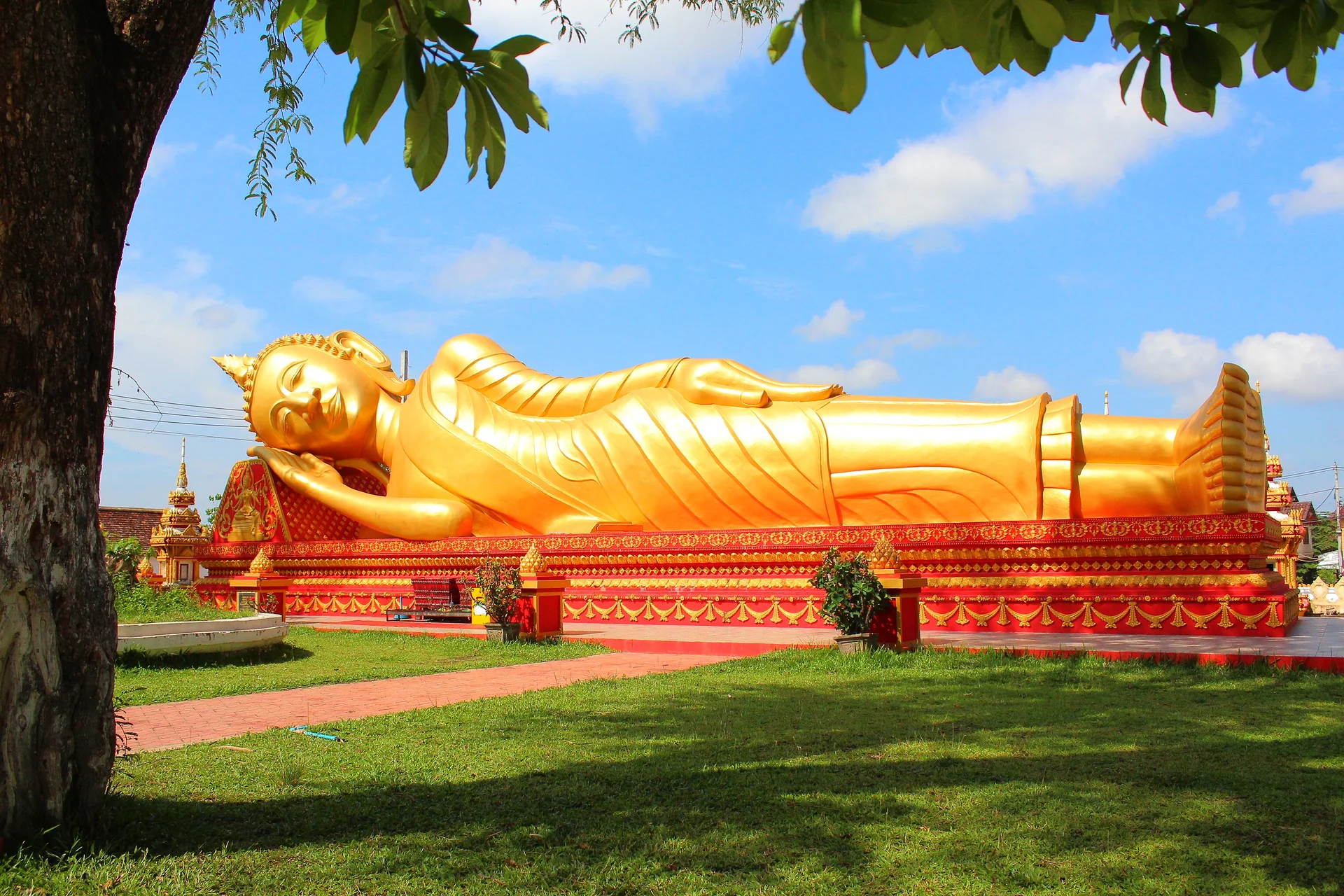
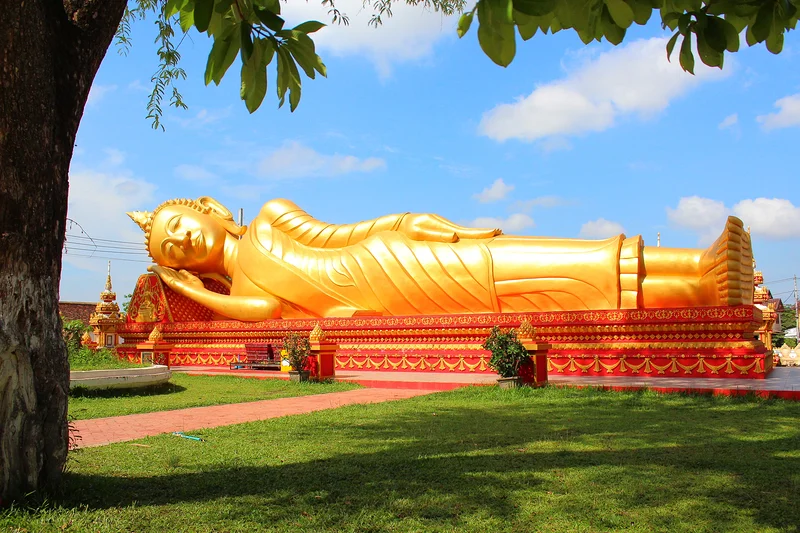
These two neighboring temples hold precious collections. The first protects thousands of Buddha statues lined up in its galleries, while the second, a former royal temple, now displays religious art in a more museum-like setting.
Markets and daily life, the real face of the capital
Talat Sao market mixes traditional stalls with small modern shops, making it a solid stop for a look at Lao textile crafts. Even more authentic, early morning neighborhood markets reveal a city living at its own pace, far from packaged tours.
Where to eat and drink in Vientiane?
Street food dominates, which is a very good thing. Khao piak sen, a thick noodle soup in an aromatic broth, is served in neighborhood joints for just a few thousand kip. Stuffed baguette sandwiches, a legacy of the French colonial era, are easy to find all over downtown.
For a drink, floating bars and river-facing terraces along the Mekong are reliable choices, with Beerlao reigning as the undisputed queen of local evenings.
Where to stay in Vientiane and the surrounding area?
Downtown, around Setthathirath Road, packs in most of the budget guesthouses and small hotels within walking distance of the main temples and the river. For more quiet, slightly outlying residential areas offer more relaxed spots, often run by local families.
How to get to Vientiane?
Wattay International Airport (IATA code VTE) handles flights from several regional hubs like Bangkok, Hanoi, and Seoul, with connections from the US typically routing through those gateways or major Asian hubs. Plan on a total travel time of at least 20 to 24 hours from the US depending on your layovers.
How to get around Vientiane?
The flat, compact historic center is easy to explore on foot or by bicycle. Tuk-tuks are the standard option for longer trips, and you should always negotiate the fare before hopping in.
When to go to Vientiane?
The ideal window runs from November to February, when temperatures drop and the air stays dry. Avoid April, the hottest month, when the thermometer regularly climbs past 95 degrees Fahrenheit without a break.