
Where to stay in Chiba: the 4 neighborhoods to know in 2026
Photo : Travel with Ardhia
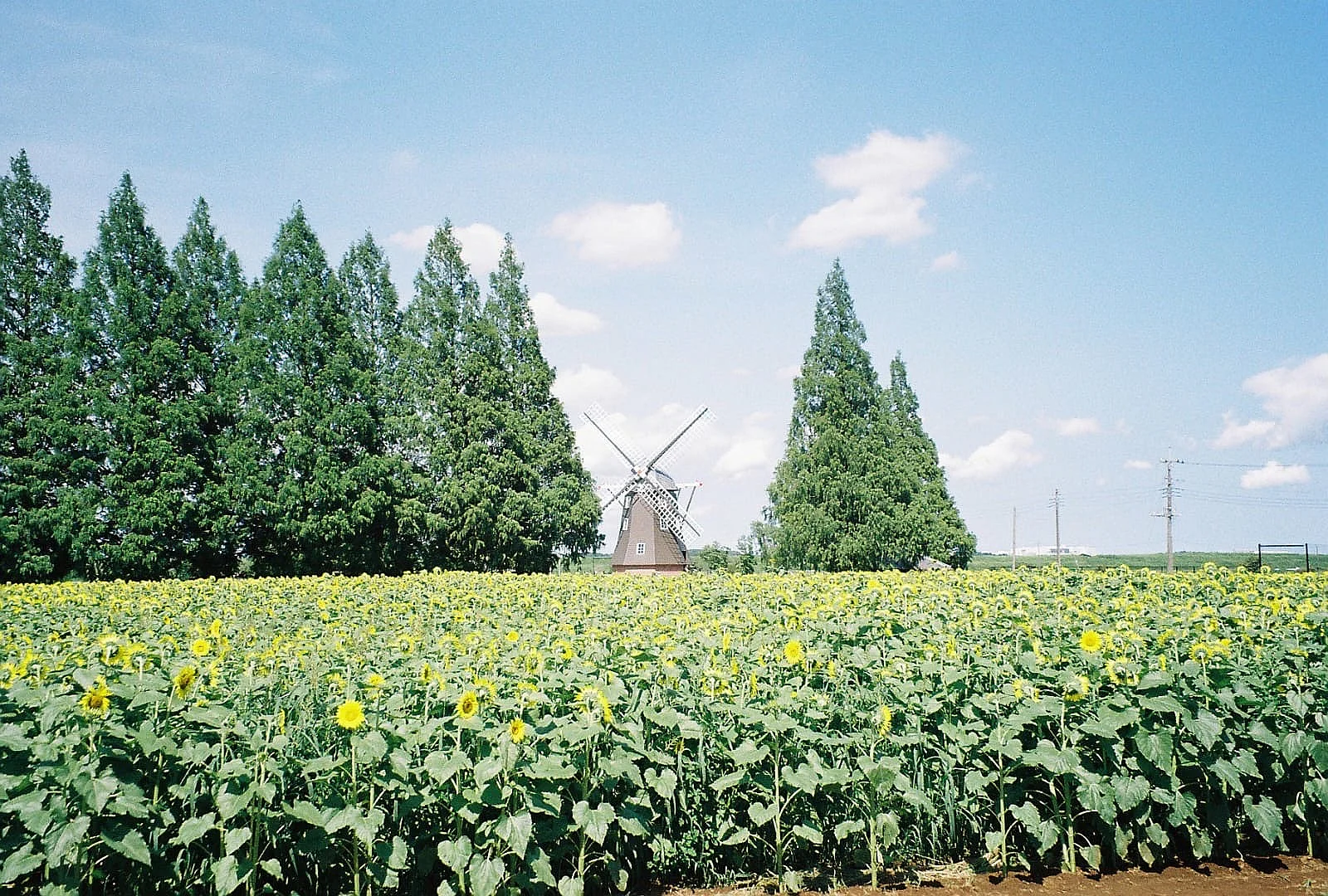
The only traveller's review we have on Chiba is about a field of sunflowers. A park, a windmill, free entry, a fine July day. Except that the park is thirty-five kilometres north of the city, in the prefecture that bears the same name, and that is exactly what Chiba is for most travellers: not a city you visit, but a base you pick for a precise reason. The reason might be a trade fair at the Makuhari convention centre, a concert or a baseball game at the bayside stadium, an early flight from Narita, half an hour away by train, a day at the Urayasu theme park, or simply a room forty minutes from Tokyo Station for far less than Tokyo charges.
The district here answers that reason, and nothing else. Prices follow the same logic: $40* at the entry level, around $62* for a business hotel near the station, $102* for a big Makuhari convention hotel, $136* for the two highest-scored addresses in the city. And this is worth knowing: in trade-fair weeks at Makuhari Messe everything moves up a notch and the rooms vanish. This guide holds four districts: the station, the port, Makuhari, then the west towards Tokyo.
There are more than 80 thousands sunflowers in the park with windmill in the background.
Compare hotel prices in Chiba
In a hurry? Find the best accommodation deals in 3 clicks.
Compare live deals from Booking, Expedia, Agoda and other partners.
At a glance: our picks by traveller type
Pick the profile that suits you to head straight to the recommended neighborhood.
The neighborhood map in Chiba
Get your bearings on the neighborhoods and must-see sights before choosing where to drop your bags. Click a name to jump to its description.
The centre and Chiba station Chiba station and its trains to Tokyo, the rebuilt Chiba castle and its museum, the Aoba no Mori forest park, the suspended monorail that holds a world record, the shopping arcades of the station, the izakaya streets of the centre, the Soga district to the south
for the trains, for low prices, for a night in transit
This is functional Chiba, and it holds around a station. From it leave the trains that put Tokyo Station forty minutes away and Narita airport half an hour away, which explains most of the clientele of the district's hotels. Ten minutes on foot, Chiba castle is a concrete reconstruction from 1967 housing the city museum, and behind it stretches the Aoba no Mori forest park, the big local green lung. And then there is the curiosity the city does not push hard enough: its suspended monorail holds the world record for length, fifteen point two kilometres and eighteen stations, with the cars passing above the streets.
Where to stay in this neighborhood
Vessel Inn Chiba Ekimae Mid-range
The best compromise in the centre, two minutes from the station: 8.4 on more than four hundred and fifty reviews, which makes it the most solid score in the district. Japanese business-hotel rooms, so compact but spotless, breakfast included and a shared bath. This is the choice to make for a night before a flight out of Narita.
THE TSUBAKIMORI Hotel & Residence Luxury
The highest score in this guide, but on about twenty reviews only, and the figure should be read knowing that: 9.1. It is the city's one address that plays in the category of a stay rather than a stopover, with wide rooms and a kitchen on site. Count on $136* and a quarter of an hour on foot from the station.
Chiba Washington Hotel Budget
The largest volume of reviews in the centre, and the lowest score in this guide: 7.3 on more than one thousand three hundred reviews. We cite it for what it is, an older well-placed business hotel a few steps from the station, where you pay the entry price and where the reviews hold the age of the rooms against it rather than the service. From $40*.
HOTEL MYSTAYS Soga Budget
Four kilometres south of the centre, in front of Soga station: 8.0 on more than five hundred reviews. The district has nothing to offer, and that is precisely the point, since the price comes down: simple rooms, a laundry, and two train stops to the centre. For a long stay that does not need to be central.
Pros
- Tokyo forty minutes away and Narita half an hour, straight from the door
- The lowest rates in the city, and izakayas open late
Cons
- An office district: on Sunday the centre is switched off
- Nothing spectacular to visit on site, and the castle is concrete
The port, its tower and the bay front Chiba Port Tower and its observation deck, the seafront park and its man-made beach, the bay promenade, Chiba-Minato station and the monorail, the industrial quays and their cranes, the fish restaurants of the port
for the view over the bay, for quiet evenings, for a rooftop bath
Two kilometres from the station, the city opens onto Tokyo Bay and changes character completely. The port tower, a hundred and twenty-five metres of glass built in 1986, keeps the best viewpoint around: you see the whole bay and, on a clear day, Mount Fuji far behind the cranes. Below, a park and a man-made beach run along the water, and this is where the city comes to walk in the evening. The whole thing is quiet, sometimes a little deserted, and that is its flaw as much as its quality: you sleep here for the bay, not for street life.
Where to stay in this neighborhood
Candeo Hotels Chiba Mid-range
Between the port station and the central station, a quarter of an hour's walk from each: 7.7 on one hundred and seventy-three reviews, and the small volume is worth saying. What the reviews mention first is the Japanese bath on the top floor, open to the bay, which is the house's selling point. The location score, 7.2, says the other half: you have to walk.
Pros
- The bay, the tower and the promenade at the door, without the crowd
- Ten minutes from the station by monorail or on foot
Cons
- Very few restaurants open in the evening in this district
- A single hotel address, and its location is scored low
Makuhari, the convention centre and the stadium The Makuhari Messe convention centre and its halls, the bayside baseball stadium and its concerts, Kaihin-Makuhari station on the Keiyo line, the office towers and seafront hotels, the outlet malls, Makuhari beach
for a trade fair, for a concert, for a game
Makuhari is a city within the city, built in one go on reclaimed land: towers, wide avenues and, in the middle, Makuhari Messe, one of the country's largest convention centres, which runs trade fairs, conventions and concerts back to back. Five minutes on foot, the bayside stadium hosts the local baseball team and, in August, one of Japan's big music festivals, which occupies the stadium and the convention centre at the same time. The hotels are here for that reason and they know it: they are large, well kept, and their prices follow the event calendar. Outside fair weeks it is the quietest place in this guide, thirty minutes from Tokyo.
Where to stay in this neighborhood
Hotel Springs Makuhari Premier Luxury
The recent wing of the big Makuhari hotel, and the best score in the district: 9.0 on more than four hundred reviews. Rooms clearly larger than the Japanese average, baths and direct access to the rest of the complex. This is the address for a trade-fair stay where you actually want to sleep: count on $136*.
Hotel Francs Mid-range
In front of Kaihin-Makuhari station, and the best welcome in the district: 8.1 on more than two thousand four hundred reviews, with 9.2 for the staff and 8.6 for location. The reviews all mention the same things, the station next door, Tokyo thirty minutes away and the airport shuttle that stops outside. Around $102*.
Hotel Springs Makuhari Mid-range
The older wing of the same complex, and the largest volume of reviews in this guide: 7.8 on more than three thousand reviews, with 8.8 for location and the same for the staff, and 8.3 for cleanliness. You come for the position, five minutes from the convention centre, and for the price, accepting rooms that are twenty years old.
Pros
- The convention centre and the stadium on foot, and the beach behind
- Thirty minutes from Tokyo Station on the Keiyo line
Cons
- In fair weeks prices double and everything is full
- Outside events the district is empty and has no street life
Towards Tokyo: Funabashi, Lalaport and Nakayama racecourse The Lalaport Tokyo Bay mall, one of the largest in the country, Nakayama racecourse and its big December race, Funabashi and Tsudanuma stations, the shopping streets of Funabashi, the direct trains to Tokyo and to Chiba
to be closer to Tokyo, for the races, for the malls
To the west, the suburbs of Tokyo begin in earnest, and two addresses draw crowds there. Lalaport Tokyo Bay, in Funabashi, is one of the largest shopping malls in Japan, a building where you spend the day when it rains. And Nakayama racecourse, five kilometres further north, hosts on the fourth Sunday of December the Arima Kinen, two thousand five hundred metres and one of the biggest races in the country, which fills the stands and the trains. You sleep here for a simple reason: Funabashi is twenty-five minutes from Tokyo Station, against forty from Chiba, and prices stay at prefecture level.
Where to stay in this neighborhood
Toyoko Inn Tsudanuma-eki Kita-guchi Budget
In front of Tsudanuma station, between Funabashi and Chiba: 7.3 on close to nine hundred reviews. It is a Japanese chain hotel at its best and at its most limited: tiny rooms with no surprises, a simple breakfast included, efficient staff, and a station served in both directions. From $40*.
Pros
- Twenty-five minutes from Tokyo Station, at prefecture prices
- The big mall and the racecourse within reach by train
Cons
- You are no longer in Chiba: the city is twenty minutes away by train
- A single address worth recommending, and it is a business hotel
Our tips for booking the right place
- The Makuhari Messe calendar decides the prices: This is rule number one for booking here. The convention centre runs trade fairs, conventions and concerts back to back, and each of those events empties the Makuhari hotels and pushes up the ones in central Chiba. Two reflexes before picking a date: check the centre's calendar, and, if you land in the middle of a fair week, look first at Funabashi or central Chiba rather than the seafront. Conversely, a weekend with no event is the best time of the year to sleep large and cheap twenty minutes from Tokyo.
- Narita in half an hour, and what that changes: Chiba station is twenty-six to thirty-seven minutes from the Narita terminals depending on the train, for a few hundred yen, and this is the argument nobody makes: sleeping in Chiba the night before an early flight costs half what an airport hotel costs and takes twenty minutes more. Same logic on the way back, when you land late. Watch the line you pick, though: the fast trains leave from Chiba station, not from the Makuhari mall, and from Makuhari you have to count on a change.
- The suspended monorail, and how to get around: Chiba has a curiosity you see almost nowhere else: its monorail hangs beneath its rail, and it holds the world record for length for that type of network, fifteen kilometres and eighteen stations on two lines. It links the station to the port and the northern districts, it costs a few hundred yen, and the view from the car is worth the ride. For everything else, the city moves by train: the Keiyo line for Makuhari and Tokyo along the bay, the Sobu line for the centre and the west.
- What the prefecture has that the city does not: It has to be said plainly: most of what people remember of "Chiba" is in the prefecture, not in the city. The big theme park is in Urayasu, twenty-five kilometres west; Narita and its temple are to the east; the surf beaches of the Boso peninsula are to the south; and the sunflower park our member writes about is in Kashiwa, thirty-five kilometres north, free and spectacular in late July. Sleeping in the city of Chiba means accepting being at the centre of all that rather than in any one of those places.
- Booking in Makuhari during a fair week without having checked prices elsewhere: the same rooms double, and central Chiba, ten minutes away by train, often stays at its usual rate.
- Choosing the bay front hoping to go out in the evening: outside the hotels, the port district has almost nothing open after eight, and you have to go back up towards the station.
- Believing the two big western attractions are in Chiba: the mall and Nakayama racecourse are in Funabashi, twenty minutes by train from Chiba station, and that is another city.
- Judging a Japanese business hotel on the size of its rooms: here the scores that matter are cleanliness and staff, and a twelve-square-metre room scored 8.5 beats a large one scored 7.
FAQ: where to stay in Chiba
Which district should you stay in in Chiba?
How much does a night in Chiba cost?
Can you visit Tokyo while sleeping in Chiba?
What is there to see in the city of Chiba itself?
Is Chiba a good choice for Narita airport?
What is there to do in Chiba when it rains?
 Keep exploring
Things to do in Chiba
Keep exploring
Things to do in Chiba
Comments (0)
No comments yet. Be the first!