
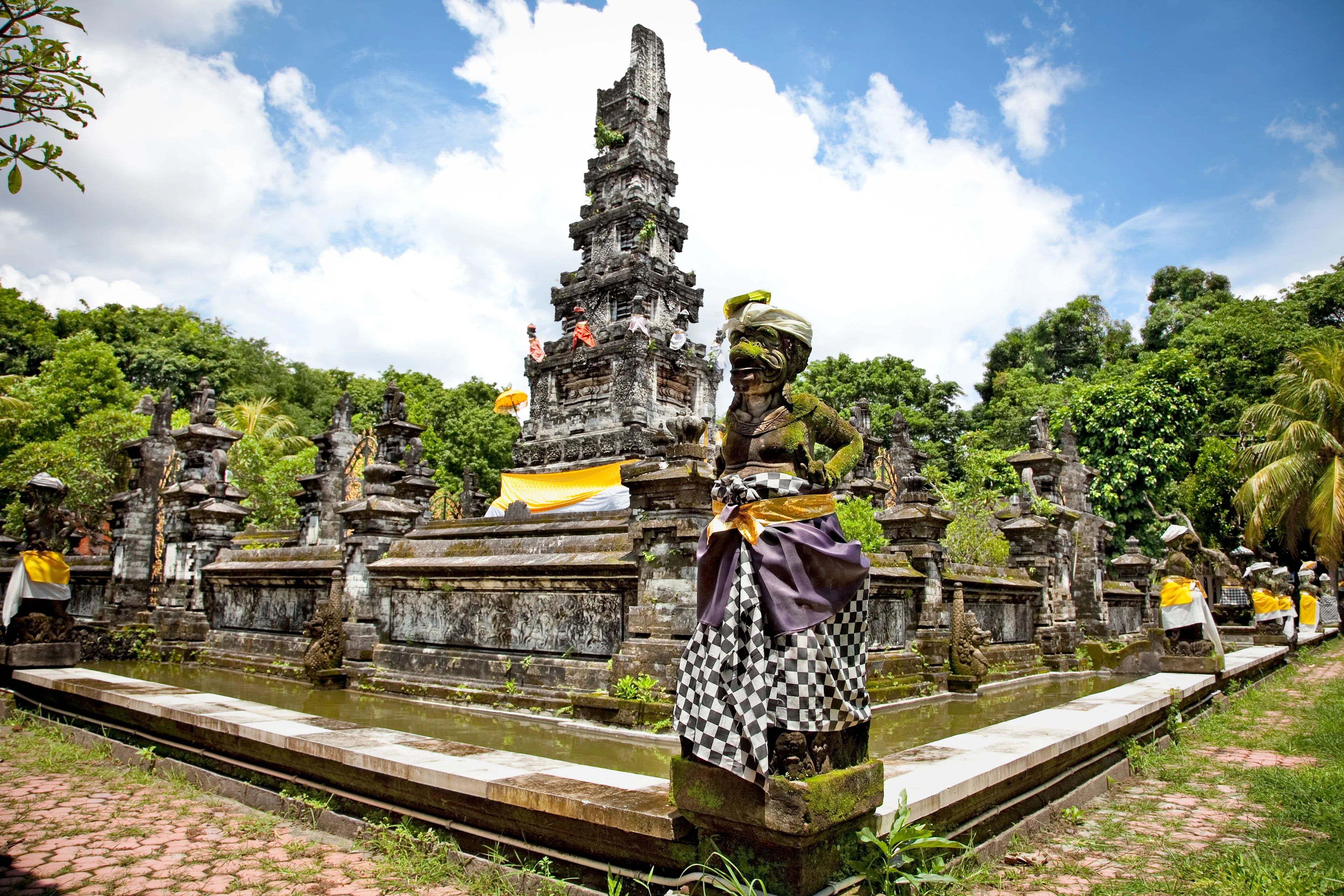
Where to stay in Denpasar: the 5 neighborhoods to know in 2026
Denpasar means "north of the market", and everything else about the city follows from that. The market is still in the same place, on four floors, and the capital of Bali grew around it: an administrative and trading centre nobody comes to see, then, six kilometres further east, a seafront unlike anything else on the island: Sanur and its flat lagoon, closed off by a coral reef. In between lie districts of offices, temples and palaces that people drive through without stopping.
So where do you drop your bags? It all comes down to those six kilometres: the centre to watch the city work, Sanur to sleep facing the water and step onto a boat. Entry level is $17* in town, $29* near the beach; a well-rated address asks $46*, and the beachfront asks $102*, or $158* at the height of the season. Five neighbourhoods follow, and in two of them this guide names not a single address: the reason lies in the hotel listings, not in the geography.
If you want your vacation in Bali to help you learn a little more about Indonesian culture, I recommend spending a day or two in the Balinese capital.
Compare hotel prices in Denpasar
In a hurry? Find the best accommodation deals in 3 clicks.
Compare live deals from Booking, Expedia, Agoda and other partners.
At a glance: our picks by traveller type
Pick the profile that suits you to head straight to the recommended neighborhood.
The neighborhood map in Denpasar
Get your bearings on the neighborhoods and must-see sights before choosing where to drop your bags. Click a name to jump to its description.
Puputan Badung, the market and the west Puputan Badung Square and its monument, the four-floor Badung market, the Bali Museum, the Agung Jagatnatha temple, the four-faced statue at the central crossroads, the Jro Kuta palace, the shopping streets of Gajah Mada
to watch the city work, for the market, for two days
The centre fits into a few blocks, and it stands around its market. The Badung market, the largest traditional market on the island, burned down in 2016 and reopened on four floors: fruit and vegetables at the bottom, spices and offerings in the middle, textiles and basketwork at the top. Across the canal, Gajah Mada street lines up the gold and fabric shops. Five minutes' walk away, Puputan Badung Square carries the name of 20 September 1906, when the court of Badung marched out to meet the Dutch troops; the Bali Museum, open to the public since 1932, and the Agung Jagatnatha temple border the same lawn.
Markets where you will see local crafts (furniture, decor, textiles, pottery...), museums, nice restaurants, and simply locals living their lives without worrying too much about you.
Where to stay in this neighborhood
Quest San Denpasar by ASTON Mid-range
8.2 from over eleven hundred reviews, with 9.1 for staff, 8.8 for value for money and the same for wifi, 8.6 for cleanliness and 8.5 for comfort. Its location, 7.9, says the one thing you need to know: the building sits to the west, three kilometres from Puputan Square, handy for the airport and the Kuta road, far from everything else on foot. Budget $46*.
Pros
- Market, museum and temple on the same block
- The lowest prices in the city
Cons
- Nothing to do once night falls
- Heavy traffic from morning to evening
Sanur: the beach, the lagoon and Semawang Sanur beach and its paved promenade, Matahari Terbit beach, the Le Mayeur museum, the seafront golf course, the Maha art gallery, the Pura Segara temple, the Pura Blanjong temple and its inscription from 914, the harbour for boats to Nusa Penida
to sleep facing the water, for sunrise, for a family
Sanur faces east, and that is the whole difference with the other side of the island: here the sun rises over the sea, and evening falls behind the houses. A coral reef closes the lagoon a few hundred metres offshore, the water stays flat, and a paved promenade runs five kilometres along the beach from north to south, from Matahari Terbit beach down to Semawang. Halfway along, the house of the Belgian painter who married the dancer Ni Pollok became the Le Mayeur museum in 1957. At the southern end, the Pura Blanjong temple shelters a stone carved in 914, the oldest dated inscription on Bali. And this is where the boats leave for Nusa Penida and Nusa Lembongan.
Where to stay in this neighborhood
Bali Komang Guest House Sanur Budget
The best score in this guide, and by far the best deal: 9.4 from over fifteen hundred reviews, with 9.9 for staff, 9.7 for value for money, 9.6 for cleanliness and the same for comfort, 9.5 for facilities. A guest house with a pool in a Semawang lane, a quarter of an hour's walk from the beach, under $46*. The location score, 8.4, is that quarter of an hour.
The Alantara Sanur Mid-range
9.1 from over seventeen hundred reviews, with 9.7 for staff, 9.3 for cleanliness and the same for comfort, 9.2 for facilities and 8.9 for value for money. Two pools, a garden, a gym, and family rooms. The location, 8.1, is the only middling figure: Tirta Ening street sits back from the shore.
Prama Sanur Beach Bali Luxury
The largest review count in this guide: 8.3 from over two thousand seven hundred, with 9.2 for location and 9.2 for staff, 8.4 for cleanliness, facilities and value for money. A large garden hotel set on the beach at the southern end of the promenade, built in the 1970s and showing it: you pay for the sand, not for the new.
Pros
- Sea, temples and boats all in one place
- Sunrise over the water, and a lagoon without waves
Cons
- Six kilometres to the market and the museum
- Beach prices, three to six times those of the centre
Renon: the monument, the offices and the consulates The Bajra Sandhi monument and the Renon field, the Sidik Jari museum and its finger paintings, the Danes Art Veranda, the Udayana golf range, and most of the consulates present on Bali
for paperwork, to run at daybreak, for quiet
Renon was laid out for the provincial offices, and it shows: wide avenues, lawns, gates. At its centre, the Bajra Sandhi monument, opened in 2003, has the shape of a priest's bell and tells the Balinese resistance over three levels; the stairway leads to a gallery that looks out over the whole city. Around it, the Renon field is where Denpasar runs, plays football and sells fritters at daybreak. This is also where most of the island's consulates are, which matters the day you lose your papers.
Pros
- The quietest and airiest district in the city
- The field and the monument, with the consulates next door
Cons
- No address worth naming: this guide names none
- Nothing open in the evening, and three kilometres to the market
The east: the Bali Art Centre and Kesiman The Bali Art Centre and its open-air stages, the Kesiman palace
for the arts festival, for an evening of dance, for the palaces
One month a year, this is the liveliest district on Bali. The Bali Art Centre, a park of open-air stages and halls beside the river, has hosted the province's arts festival since 1979, from mid-June to mid-July: parades, gamelan orchestras, village dances, competitions, workshops, and admission is free. The rest of the year, check the programme before crossing the city. A little further north, the Kesiman palace belongs to one of the three branches of the old royal family of Badung: you see it from the street, and ceremonies sometimes open its courtyard.
Pros
- The arts festival, a month long, and free
- The quietest streets east of the centre
Cons
- No address worth naming: this guide names none
- Outside the festival there is almost nothing to see
The south: Sidakarya, Sesetan and the Suwung mangroves The mangrove information centre and its wooden walkways, the streets of Sesetan and Sidakarya, the southern consulates
for the mangroves, for a last morning before the airport
This is the edge of the city, where the airport road runs along brackish water. More than a thousand hectares of mangrove cover the bay between Denpasar and the airport, and wooden walkways push a few hundred metres into it: herons, fiddler crabs, stilt roots, and silence twenty minutes from the centre. Around them, Sesetan and Sidakarya are districts of houses and workshops where nothing is laid on for visitors, which is sometimes exactly what you want on a last morning.
Pros
- The mangroves, and twenty minutes to the airport
- Streets where the city lives without visitors
Cons
- No address worth naming: this guide names none
- Everything requires a scooter or a car
Our tips for booking the right place
- Two days here, and the rest of the island around them: Denpasar is not an eight-day stop, and our member puts it better than we can: a day or two in the capital is enough to grasp what the beaches leave out. One morning for the Badung market, the museum and the temple; one afternoon for the Renon monument and the Sanur promenade. After that, the city works as a base: Ubud is an hour away, the Tabanan rice terraces an hour and a half, the islands of Nusa Penida and Nusa Lembongan half an hour by boat from Sanur harbour.
- The arts festival changes the city for a month: From mid-June to mid-July, the Bali Art Centre holds the oldest arts festival in Indonesia: a month of gamelan orchestras, village dances, parades and workshops, on open-air stages, free of charge. It is the only period when sleeping in Denpasar rather than Kuta or Ubud justifies itself, and the only one when rooms in the centre genuinely fill up: book a month ahead, at least.
- Sanur faces east, and that shapes the day: Sunrise over the sea is Sanur's free show, around six o'clock all year round since you are eight degrees from the equator. The flip side is the same all year: no sunset over the water, for that you have to cross the island. The other consequence comes from the coral reef: the lagoon is flat and waveless, perfect with children, but at low tide the water pulls far back and uncovers the coral. Check the tide times before promising anyone a swim.
- Getting around: apps, scooters, no metro: There is no public transport a visitor can use without thinking about it: everything happens in a car with a driver booked by phone, and a ride across town costs a few tens of thousands of rupiah. The airport is twenty minutes from the centre and from Sanur by the southern expressway, more than twice that at rush hour. A rented scooter is the island-wide answer; in town, traffic is heavy, one-way streets are many, and walking is limited to the market block and the Sanur promenade.
- Looking for an address in Renon or to the east because the map puts them centrally: hotel listings there are too thin, scores change from one page to the next, and this guide names none of them.
- Booking in the centre while hoping for the beach: six kilometres and an expressway separate the market from the Sanur lagoon.
- Taking a room on a main avenue downtown without checking which way it faces: traffic starts before six and only stops at nightfall.
- Promising a swim at low tide: the lagoon empties, the coral breaks the surface, and the water comes back a few hours later.
FAQ: where to stay in Denpasar
Which neighbourhood should you stay in in Denpasar?
How much does a night in Denpasar cost?
Should you stay in Denpasar or in Kuta to visit Bali?
How many days do you need in Denpasar?
When is the best time to come?
What can you see in Denpasar in one day?
 Keep exploring
Things to do in Denpasar
Keep exploring
Things to do in Denpasar
Comments (0)
No comments yet. Be the first!