
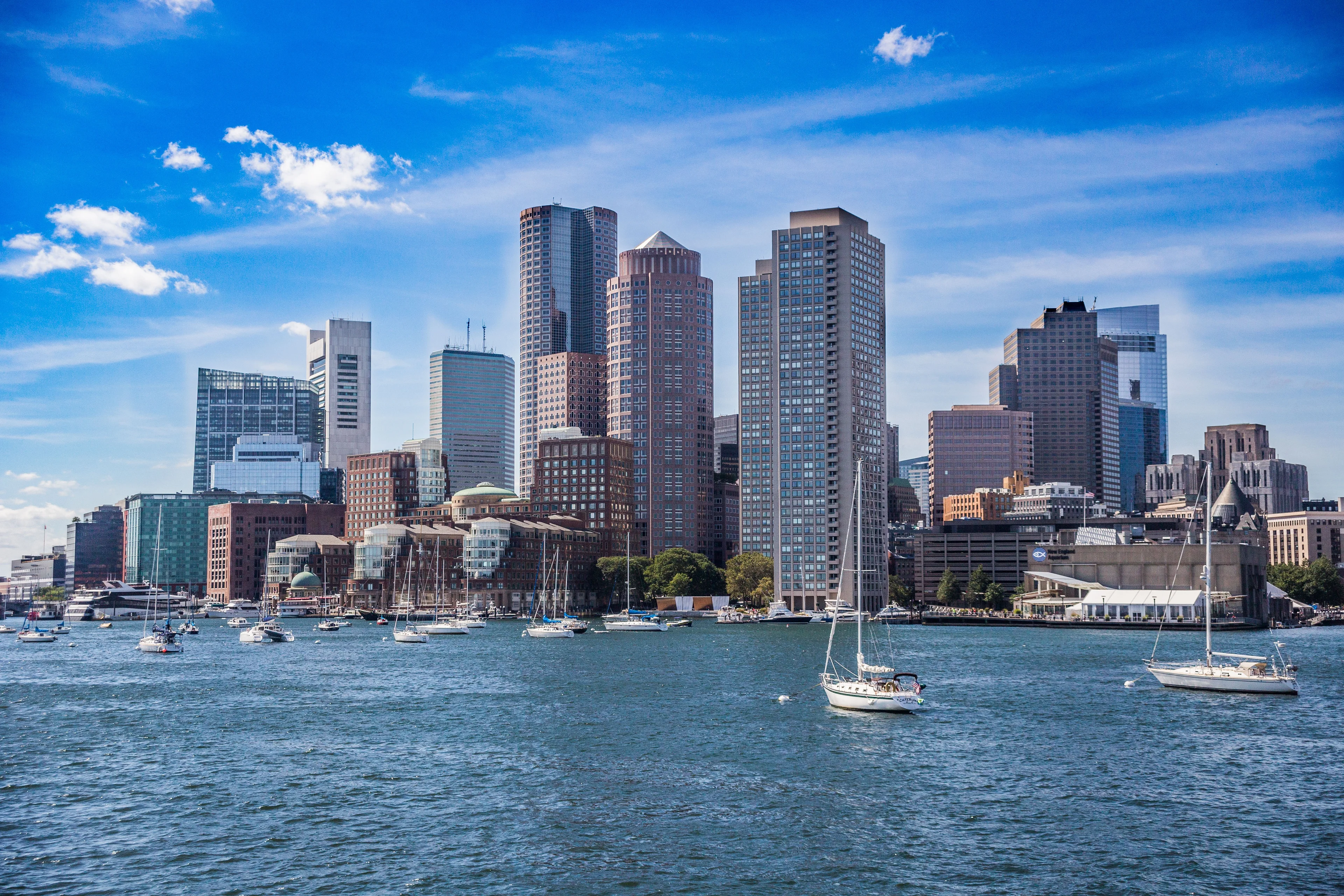
Where to stay in Boston: the 5 neighborhoods to know in 2026
There is a red line painted on the pavements of Boston, and it answers the where-to-stay question better than any map. Four kilometres, sixteen sites, from the lawn of Boston Common to the Bunker Hill monument: the Freedom Trail crosses the historic city on foot, and most of the programme sits on it or two streets away. The city is small, dense, walkable, cut by a river and edged by a harbour, and you get round it faster than you would think.
Two things to know before booking. First: you pay big-American-city rates here, $124* at entry level, $230* for a decent hotel, $400* for an address on the harbour or in Beacon Hill. Second: Harvard and MIT are not in Boston, they are in Cambridge, on the other bank of the Charles, two subway stops away. Five neighbourhoods follow, and the last one offers no address this guide is willing to name.
Boston is a city worth visiting, and if you have the time, you should spend a few days there.
Compare hotel prices in Boston
In a hurry? Find the best accommodation deals in 3 clicks.
Compare live deals from Booking, Expedia, Agoda and other partners.
At a glance: our picks by traveller type
Pick the profile that suits you to head straight to the recommended neighborhood.
The neighborhood map in Boston
Get your bearings on the neighborhoods and must-see sights before choosing where to drop your bags. Click a name to jump to its description.
Downtown, Beacon Hill and the Freedom Trail Boston Common and the Public Garden, the Massachusetts State House and its golden dome, the Old State House and the site of the 1770 massacre, King's Chapel and the Granary burying ground, Faneuil Hall and its market, the Old South Meeting House, the house museums of Beacon Hill, the Museum of African American History, the Holocaust memorial, the New England Aquarium and Long Wharf, the stages of the theatre district
to do everything on foot, for the history, for a first visit
This is where the Freedom Trail begins, on the lawn of Boston Common, the oldest public park in the country, open since 1634. The red line climbs towards the golden dome of the State House, comes back down past the colonial burying grounds and the Old State House, goes by the site of the 1770 massacre and stops at the Faneuil Hall market. Behind it, Beacon Hill lines up its brick pavements, its gas lamps and its house museums on a hill where nobody drives fast. And at the bottom of the slope, the harbour begins at Long Wharf.
You can really feel a part of US history there, which is not the case for every city in North America.
Where to stay in this neighborhood
The Whitney Hotel Boston Luxury
9.1 from over a thousand reviews, with 9.6 for comfort and the same for location, 9.5 for cleanliness, 9.4 for staff, 9.1 for facilities. A Beacon Hill brick building turned into sixty-five rooms, the general hospital and the Charles station at the bottom of the street, the Common ten minutes away. Value for money, 8.2, says the rest: budget $400*.
Pros
- The Freedom Trail and the market on foot
- Every subway line crosses here
Cons
- The highest rates in the city
- Crowded along the red line in summer
Back Bay, Fenway and Longwood Copley Square, the public library of 1848 and Trinity Church, the John Hancock Tower and the Prudential Tower, Old South Church, the Christian Science Plaza and its Mapparium, Symphony Hall and the conservatory, Fenway Park and Kenmore Square, the Museum of Fine Arts and the Isabella Stewart Gardner Museum, the Back Bay Fens, the Charles River Esplanade and the Hatch Shell, the campuses of Boston University, Northeastern and Berklee
for the architecture, for the museums, for a game at Fenway
Back Bay is a nineteenth-century landfill, and it shows: straight streets, rows of brownstones, street names in alphabetical order. At its centre, Copley Square brings together Trinity Church and the public library of 1848, the first in the country funded by taxes, whose reading room you can walk into without asking. Further west, Fenway holds the Museum of Fine Arts, the Gardner Museum and above all Fenway Park, the oldest ballpark in the major league, opened in 1912 and still in service.
It is particularly beautiful, and its architecture is very typical of the region.
Where to stay in this neighborhood
Copley House Mid-range
8.6 from nearly three thousand reviews, with 9.6 for location, 9.0 for cleanliness and the same for comfort, 8.7 for wifi, 8.6 for facilities and 8.2 for value for money. Studios and furnished apartments in Back Bay brownstones, with kitchens, which changes the budget of a week-long stay. Copley and the subway five minutes away.
Pros
- The big museums and the concert halls
- The green and orange lines, and Copley on foot
Cons
- On game nights, Kenmore becomes impassable
- Longwood is a hospital district, with no life in the evening
North End, Charlestown and the north shore The Old North Church and Paul Revere's house, the Copp's Hill burying ground, the Edes and Gill printing office, the frigate USS Constitution and its museum at the Charlestown navy yard, the Bunker Hill monument, the national historical park, the TD Garden, the Museum of Science, the Zakim bridge
for the Italian lanes, for the end of the Freedom Trail, for a game
The North End is the oldest inhabited neighbourhood in the city, and the most Italian: three-metre lanes, pastry shops one after another, and at the end the Old North Church of 1723, the one with the two lanterns of 1775. One bridge further on, Charlestown keeps the frigate USS Constitution, launched in 1797 and still on the navy's register, and then the red line ends its run at the Bunker Hill monument. In between, the TD Garden holds the hockey and basketball nights, and the Museum of Science takes up a whole family for half a day.
Where to stay in this neighborhood
Boston Marriott Long Wharf Luxury
The best location score in this guide, 9.7, and it is earned: the hotel occupies the wharf itself, between the aquarium and the ferries. 8.8 from just 180 reviews, a figure given as it stands, with 9.2 for cleanliness and the same for comfort and 9.1 for staff. The wifi, 7.5, and value for money, 7.8, are the two reservations. Budget $400*.
Pros
- The oldest lanes and the best pastries
- The end of the Freedom Trail and the frigate
Cons
- Noisy lanes at the weekend, and few parking spaces
- Charlestown needs a bus, a ferry or twenty minutes on foot
Seaport, the harbour and South Boston The children's museum and the Boston Tea Party ship museum, the Institute of Contemporary Art, the World Trade Center and Liberty Wharf, the convention centre, the waterfront amphitheatre, the cruise terminal, Castle Island and its fort, the harbour islands
for the recent museums, to sleep in a new building, for families
The Seaport is the neighbourhood that did not exist twenty years ago: docks converted into offices, seafood restaurants and glass hotels, with the Institute of Contemporary Art cantilevered out over the water. For children, two unbeatable addresses face each other across the channel: the children's museum and the Boston Tea Party ship museum, where you throw crates of tea overboard. Further south, Castle Island and its nineteenth-century fort close off the shoreline walk.
Where to stay in this neighborhood
Seaport Hotel® Boston Mid-range
The largest review count in this guide and the steadiest scores: 9.0 from over two thousand eight hundred reviews, with 9.5 for comfort, 9.4 for cleanliness, for location and for staff, 9.3 for facilities. A waterfront hotel beside the convention centre, indoor pool, and the Silver Line that reaches the airport without a change. Budget $230*, the best calculation in this guide.
Pros
- The newest hotels, and the Silver Line from the airport
- Two children's museums side by side
Cons
- Nothing old: the district dates from the 2010s
- Windy and exposed in winter
The south: Dorchester, Jamaica Plain and the campuses The John F. Kennedy library and museum on Columbia Point, the Commonwealth archives, the University of Massachusetts campus, the Arnold Arboretum and its lilacs, the Franklin Park zoo
for the Kennedy museum, for the arboretum, for a tight budget
South of the centre, the city stops being a postcard and becomes a city again. Three places are worth the trip: the John F. Kennedy library, Pei's white building set on a point facing the harbour, the Arnold Arboretum, two hundred and seventy hectares of botanical collections and the finest week of lilacs in the north-east, and the Franklin Park zoo. For the rest, Dorchester, Roxbury and Jamaica Plain are residential districts where this guide names no address: the hotel listings there are too thin.
Pros
- The Kennedy museum and the arboretum, away from the crowd
- The cheapest rents and cafés in the city
Cons
- No address worth naming: this guide names none
- Twenty to thirty minutes by subway to the centre
Our tips for booking the right place
- Harvard and MIT are not in Boston: This is the most common mistake about the city, and it costs an hour a day. Both universities are in Cambridge, a separate town, on the other bank of the Charles: Harvard Square is twenty minutes by subway from Downtown, MIT ten. Booking "near Harvard" when you have come for the Freedom Trail means sleeping in another town. The reverse is true as well: for a campus visit, Cambridge is the right choice, and this guide does not cover it.
- The Freedom Trail is walked in the right direction: Four kilometres, sixteen sites, a red line painted on the ground: the route starts at Boston Common and ends at the Bunker Hill monument, and it is better done in that order. You climb first past the burying grounds and the State House, cross the market at lunchtime, reach the North End for a pastry, then cross the bridge to the frigate. The other way round, you finish on the busiest lawn in the city, in full heat. Allow half a day without the visits, a full day with them.
- The T, the airport and three expensive mistakes: The Boston subway is the oldest in America, opened in 1897, and one rechargeable card covers the four lines and the buses. From Logan airport, five kilometres away, the Silver Line reaches the Seaport and the centre with no fare on arrival, and it is by far the best calculation. Three things that cost a lot: taking a taxi for five kilometres, renting a car for a city where hotel parking costs as much as a room elsewhere, and forgetting that the subway shuts around half past midnight.
- April, October and the two weeks to avoid: September and October are the best season: dry air, maples turning red, campuses reopening. May and June come just behind. Summer is hot and humid, winter frankly harsh, with snow and a harbour wind. Two periods to check closely before booking: the marathon, on the third Monday in April, and graduation week, at the end of May, when the families of tens of thousands of students take every room in the city.
- Booking in Cambridge thinking you are sleeping in Boston: it is a separate town, on the other side of the river, and this guide does not cover it.
- Renting a car for the city: the four subway lines are enough, and hotel parking sometimes costs what a room costs elsewhere.
- Looking for Suffolk Downs as a racecourse: the last race was run there in 2019, and the sixty-five hectares have become a housing site.
- Confusing Old South Church in Back Bay with the Old South Meeting House downtown: two different monuments, a kilometre and a half apart.
FAQ: where to stay in Boston
Which neighbourhood should you stay in in Boston?
How much does a night in Boston cost?
How many days do you need in Boston?
Do you need a car in Boston?
When is the best time to come?
What can you see in Boston in one day?
 Keep exploring
Things to do in Boston
Keep exploring
Things to do in Boston
Comments (0)
No comments yet. Be the first!