
Where to stay in Medellín: the 4 neighborhoods to know in 2026
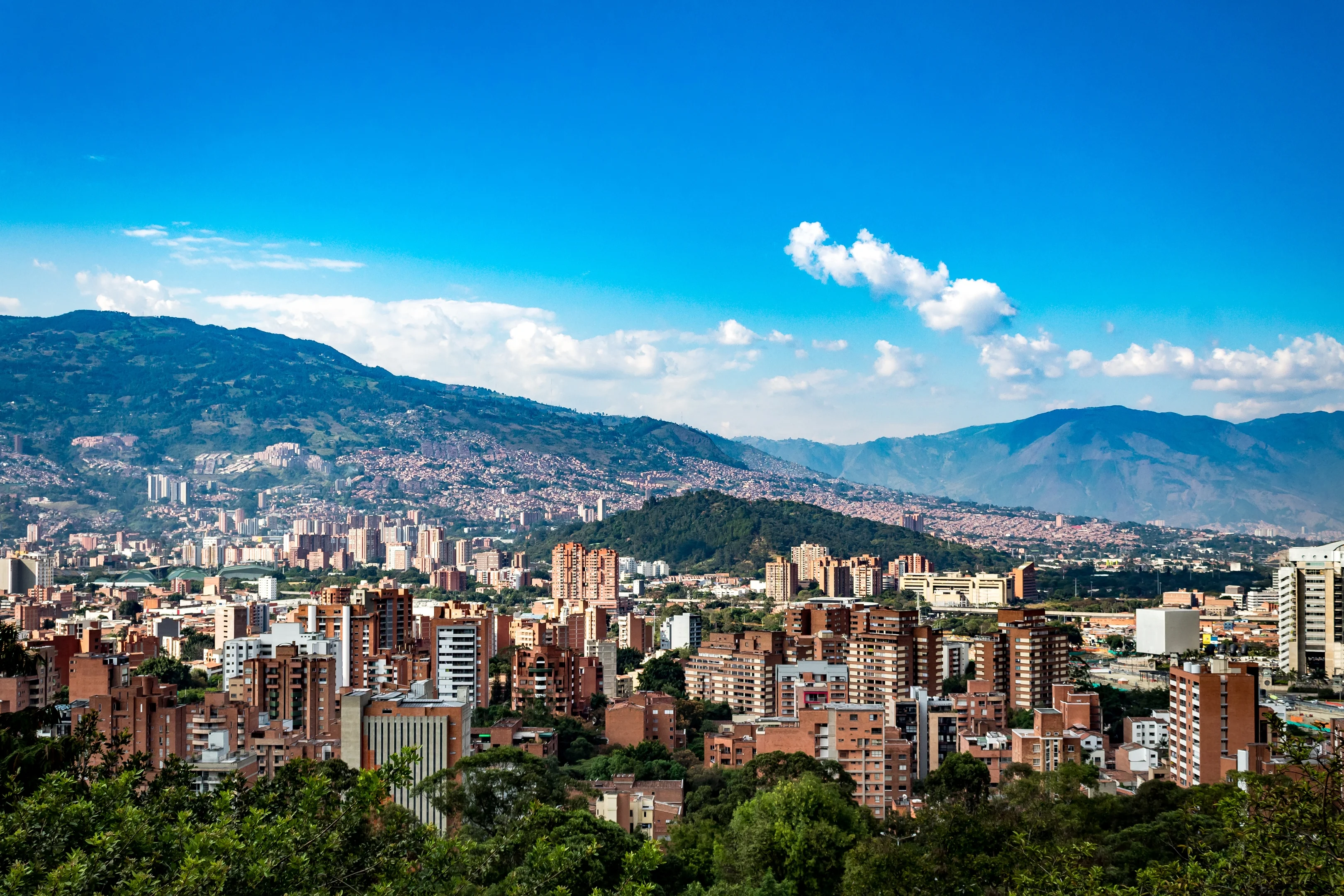
In Medellín, the choice of neighborhood runs between the slope and the flat. The city fills the floor of a narrow valley, at fifteen hundred meters, and it has climbed both hillsides in staircases of red brick, linked to the center by the elevated metro and the cable cars. El Poblado climbs the eastern slope: the towers, the restaurants of Provenza, the bars of Parque Lleras, the views over the whole valley, the taxis to get back down and the highest prices in Colombia. Laureles is the flat neighborhood, laid out in circles in the 1950s, the one where you walk and cycle, with its café terraces and Calle 70. The center is the valley floor, the liveliest and the roughest, with the Boteros on the square, the churches and the noise. Envigado and Sabaneta, to the south, are the villages swallowed by the city, where the Paisas go on Sundays. A member sums up what stays with you: enterprising, warm-hearted inhabitants, and a spring that lasts all year.
In the hostels of El Poblado or Laureles, a dorm bed costs hardly more than $11 to $16*; a private hostel room, a budget hotel in the center or a guesthouse in Sabaneta, $40* up to $62*; a hotel in Laureles or Envigado, a four-star in El Poblado with a pool, from $74* and up to $124*; and the city's only luxury tier, the towers of El Poblado, from $169*, with the suites with a view climbing to $300*. Twelve addresses in total, across four neighborhoods, and luxury lives only in the first one: the city has moved its palaces onto the slope.
Its residents are known for being excellent entrepreneurs and, above all, wonderful people with big hearts.
Compare hotel prices in Medellín
In a hurry? Find the best accommodation deals in 3 clicks.
Compare live deals from Booking, Expedia, Agoda and other partners.
At a glance: our picks by traveller type
Pick the profile that suits you to head straight to the recommended neighborhood.
The neighborhood map in Medellín
Get your bearings on the neighborhoods and must-see sights before choosing where to drop your bags. Click a name to jump to its description.
- 1El Poblado, Provenza, Manila and Ciudad del Río: the slope, the views and the terraces
- 2Laureles, Estadio, La 70 and Belén: the flat neighborhood where you walk
- 3The center, La Candelaria and the university north: the Boteros, the churches and the noise
- 4Envigado and Sabaneta: the southern villages swallowed by the city
El Poblado, Provenza, Manila and Ciudad del Río: the slope, the views and the terraces Parque Lleras and Provenza, Manila and Astorga, Parque del Poblado, Avenida El Poblado and the Oviedo, Santa Fe and El Tesoro shopping malls, EAFIT university, the El Castillo museum, Ciudad del Río and the museum of modern art
for a first visit, the restaurants and bars, the hotels with pools, the views over the valley
El Poblado is the neighborhood visitors choose without knowing it: towers of glass and brick climb the eastern side of the valley, among the trees, and every floor gains a piece of the view. At the bottom, around the metro station, Parque del Poblado, the square of the original village, and the avenue where the big hotels line up. Climbing, Provenza, sloping streets planted with terraces, roasters' cafés and restaurants in houses, the best rated in the country; Parque Lleras, where the city has gone out for twenty years, full of bars until three in the morning from Thursday to Saturday; Manila and Astorga, quieter, with their hostels in villas. Higher still, El Tesoro, the shopping mall on the mountainside from which the whole valley spreads out in the evening. Toward the river, Ciudad del Río, the former industrial wasteland, with the museum of modern art in a steel factory and the covered market where you dine standing up. You stay here to have everything on foot at the top of the slope, for the hotels with pools, for the restaurants and for the view. The downside: the highest prices in Colombia, the touts of Parque Lleras in the evening, and a twenty-minute climb from the metro.
Where to stay in this neighborhood
The Click Clack Hotel Medellín Luxury
In Provenza, at the top of the slope: a design hotel with rooms rated 9.4 for comfort, a rooftop pool facing the valley, a bar where the neighborhood climbs up in the evening, and a 9.0 across one thousand two hundred and seventy reviews, 9.7 for location. The best rated in the neighborhood, at the price of a five-star.
Hotel San Fernando Plaza Mid-range
On Avenida El Poblado, at the bottom of the neighborhood: a business tower with rooms rated 9.3 for comfort and cleanliness, a breakfast that reviews mention first, staff rated 9.3, and an 8.9 across four thousand six hundred reviews, the most booked hotel in the city. The price of a four-star, ten minutes from the metro and a fifteen-minute climb to Provenza.
Masaya Medellín Budget
On Calle 8, five minutes from Parque Lleras: a hostel in a house with patios, dorms and private rooms, a rooftop where you drink facing the slope, salsa classes, and a 9.0 across three thousand two hundred reviews, 9.6 for location. The best-rated bed in the neighborhood, and the private room at the price of a budget hotel.
Pros
- The restaurants of Provenza, the bars of Parque Lleras, the roasters' cafés
- The hotels with pools, the views over the valley, Ciudad del Río and its museum
Cons
- The highest prices in Colombia, the touts of Parque Lleras in the evening
- A twenty-minute climb from the metro, a taxi for everything else
Laureles, Estadio, La 70 and Belén: the flat neighborhood where you walk Laureles and its circular streets, the first and second parks, Avenida Nutibara, Calle 70 and its bars, the Atanasio Girardot stadium and the sports complex, the Pontifical Bolivarian University, Belén, Cerro Nutibara and the Pueblito Paisa, Juan Pablo II park, the zoo, Cerro El Volador
for walking and cycling, the café terraces, long stays, the matches, families
Laureles is the only flat neighborhood in Medellín, and that is its whole charm: a planner laid it out in the 1950s in curved streets and concentric circles around two parks, under laurel trees that give shade, and it has become the neighborhood where you live on foot, by bike and on terraces. In the morning, the cafés around the second park serve the Paisa breakfast; in the evening, Calle 70, on the edge of Estadio, lines up its salsa and guasca music bars, where Paisas go out, not visitors. Around them, the Atanasio Girardot stadium and its pools, where the city's two clubs play in turn and where the whole neighborhood wears the shirt on match nights, the Bolivarian University and its students. To the south, Belén, more working-class, and Cerro Nutibara, the hill in the middle of the valley, with its reconstructed Paisa village, the Pueblito Paisa, from which you see the whole city; Juan Pablo II park and the zoo for children. To the north, Cerro El Volador, the other hill, and its trails. You stay here to walk, for the cafés, for stays of several weeks, for the matches. The downside: no luxury hotel, and a neighborhood that empties on Sunday evenings.
A spring-like climate also makes for great living all year round.
Where to stay in this neighborhood
Hotel Casa Laureles Mid-range
Between the two parks of Laureles: a house turned hotel, rooms rated 9.2 for comfort and cleanliness, a garden, staff rated 9.4, and an 8.9 across eight hundred and ninety reviews, 9.1 for value for money. The best rated in the neighborhood, at the price of a three-star.
Hotel Boutique Laureles Medellín Mid-range
Near Avenida Nutibara: a small neighborhood hotel with rooms rated 9.1, a terrace, staff rated 9.2, and an 8.8 across four hundred and twenty reviews, 9.4 for location. The cafés of the park three minutes away, the stadium ten.
Laureles Garden Hostel Budget
On Calle 43, eight minutes from the park: a neighborhood hostel with a garden, dorms and rooms with bathrooms, a kitchen, bikes, hosts whom reviews name, and a 9.3 across one hundred and forty reviews, 9.8 for location. Few reviews, all pointing the same way: the best-rated hostel in this guide.
Pros
- The only flat neighborhood: you walk, you cycle, you live on terraces
- The cafés of the second park, Calle 70, the stadium, the Pueblito Paisa
Cons
- No luxury hotel
- A neighborhood that empties on Sunday evenings
The center, La Candelaria and the university north: the Boteros, the churches and the noise Plaza Botero and the Museo de Antioquia, the Palace of Culture, Junín and Parque Bolívar, the cathedral, Parque Berrío and La Candelaria, San Antonio, Pies Descalzos, Plaza Mayor and the Plaza de las Luces, the Coltejer tower, La Macarena; to the north, Prado, the botanical garden, Explora, the planetarium, the University of Antioquia, Moravia, and the cable car to Parque Arví
for the real city, the museums and squares, the lowest prices, and nights spent behind a closed door
The center is the valley floor, and this is where Medellín shows itself without make-up: Plaza Botero and its twenty-three plump bronzes given by the sculptor, beneath the black-and-white checkered Palace of Culture, the Museo de Antioquia opposite, Calle Junín and its pre-war cafés, Parque Bolívar and its brick cathedral, the largest in the world in that material, Parque Berrío and its mango sellers under the metro station, and Parque San Antonio, where Botero wanted the bird gutted by a bomb in 1995 to stay next to the new one. Toward the river, the buildings of the new city: the Plaza de las Luces and its three hundred masts, the EPM library, the Barefoot Park and the Metropolitano theater. To the north, by metro, the botanical garden and its wooden orchid house, Parque Explora and its aquarium, the planetarium, the University of Antioquia, and, further on, the cable car that climbs from Santo Domingo to Parque Arví, the forest on the ridge. You stay here for the lowest prices in the city, for the museums and squares on foot, to see the city as it is. The downside: noise, visible poverty, and streets you no longer walk after nightfall, as every hotel's reviews say.
Where to stay in this neighborhood
61Prado Hotel Mid-range
In Prado, the former neighborhood of bourgeois houses north of the center: a guesthouse with a rooftop terrace, a restaurant, staff rated 9.6, and an 8.9 across seven hundred and twenty reviews, 9.2 for value for money. Location is rated 7.7: the neighborhood is crossed by taxi in the evening, reviews say so.
Hotel Nutibara Mid-range
On Calle 52, one street from Plaza Botero: the 1945 palace where the city received its guests, with its marble hall and its rooftop, clean rooms, staff rated 8.4, and a 7.7 across eight hundred and sixty reviews. Location drops to 7.2: you stay here for the history and the Boteros on the doorstep, not for the neighborhood at night.
Gran Hotel Budget
On Calle 54, near Parque Bolívar: a renovated 1944 hotel, staff rated 9.3 and rooms rated 8.8 for cleanliness, an 8.1 across three hundred and sixty reviews. The price of a budget room in the heart of the center, with the same rule as its neighbors: you come back before dark, or by taxi.
Pros
- The Boteros, the Museo de Antioquia, the cathedral, the squares, all on foot
- The lowest prices in the city, the botanical garden and Explora two stations away
Cons
- Noise, visible poverty, no luxury hotel
- Streets you no longer walk after nightfall
Envigado and Sabaneta: the southern villages swallowed by the city Envigado: the main park and the Santa Gertrudis church, the Calle de la Buena Mesa, the Jardines neighborhood; Sabaneta: the park and its church, the restaurants of Calle 69; the Envigado, Ayurá and Sabaneta metro stations; beyond, Itagüí
for families and long stays, the prices of a provincial town, the Paisa Sunday
South of El Poblado, along the metro, Envigado and Sabaneta are two separate municipalities, two former villages that the city has reached without quite absorbing them: each keeps its central park, its white church, its cafés under the arcades where men play dominoes, and its streets of low houses with iron grilles. In Envigado, the Calle de la Buena Mesa lines up the restaurants where Paisas dine on Saturdays, far from the English-language menus of Provenza; in Sabaneta, the park fills on Sundays with families come to eat an arepa and drink an aguardiente facing the church, and Calle 69 parties in the evening. Both are fifteen minutes from Parque del Poblado by metro, twenty-five from the center, and the hotels there are guesthouses and neighborhood hotels at half the price. You stay here for families, for stays of several weeks, for the prices, and to live at the scale of a provincial town. The downside: nothing to visit on the spot, no luxury hotel, and a metro that closes at eleven.
Where to stay in this neighborhood
Arame Hotel Mid-range
In Envigado, near the Ayurá station: a neighborhood hotel with rooms rated 9.2 for comfort and 9.3 for cleanliness, staff rated 9.0, and an 8.7 across seven hundred and thirty reviews, 9.2 for location. The best rated in the south, at the price of a three-star.
Hotel Casa Madero Mid-range
In the heights of Envigado, seven kilometers from Parque Lleras: a house with a garden, a fireplace and free parking, rooms rated 9.1 for comfort, and an 8.7 across two hundred and ten reviews. For families with a car and quiet stays: the city is twenty minutes away by taxi.
Hotel Portón Sabaneta Budget
In Sabaneta, two streets from the park: a simple hotel with rooms rated 8.7 for cleanliness, staff rated 9.0, and an 8.3 across four hundred and eighty reviews, 9.0 for location. The price of a budget room, the Paisa Sunday on the doorstep.
Pros
- The parks, the churches and the cafés of the two villages, the Calle de la Buena Mesa
- Guesthouses at half the price, the metro fifteen minutes from El Poblado
Cons
- Nothing to visit on the spot, no luxury hotel
- The metro closes at eleven, after that it is the taxi
Our tips for booking the right place
- The metro, the cable cars and Comuna 13: the city is visited from above: The metro is the city's pride: one line along the river, another to the west, clean, punctual, closed around eleven at night, and stations nobody has ever seen tagged. The cable cars leave from it: the one from Santo Domingo, above the brick roofs, then the one to Parque Arví, fifteen minutes above the forest, for a day of trails and a market a thousand kilometers from the city; the one from San Javier to Comuna 13, the neighborhood of escalators and murals, which is visited with a guide from the neighborhood, by day. One ticket costs the same on all lines, cable cars included, except the Arví one. Taxis are yellow, on the meter, and rideshare cars leave from everywhere, for $3.40 to $5.70* between El Poblado and the center.
- Twenty-two degrees all year, rain in April and October, flowers in August: The city of eternal spring earns its name: twenty-two degrees on average every month of the year, cool mornings and warm afternoons, and two rainy seasons, from April to May and from October to November, when the downpour falls in the late afternoon and empties the terraces for an hour. Prices rise in early August, for the Feria de las Flores, the week when the farmers of Santa Elena come down with their flowers on their backs, in December, for the illuminations along the river, and at Holy Week. The rest of the year, the hotels are full on match weekends and empty on Sunday evenings.
- The airport is in the mountains, an hour away: José María Córdova international airport is at Rionegro, on the plateau, thirty-five kilometers and an hour's drive away over the Las Palmas pass: the taxi is worth $29 to $40*, rideshare cars a little less, and the white airport bus goes down to the center and to San Diego, near El Poblado, for $4.60 to $6.80*, every fifteen minutes. The other airport, Olaya Herrera, is in town, between Laureles and El Poblado, for domestic propeller flights. For Guatapé and its rock, buses leave from the north terminal, two hours.
- "No dar papaya": the rule of the city: Paisas repeat it: do not give the opportunity. The phone stays in the pocket on the street, the center is left before dark, Parque Lleras in the evening is crossed while declining what is offered there, and the reviews of El Poblado hotels, like the consulates, have for two years spoken of dates arranged on apps that end in a spiked drink and an emptied room: you do not take a stranger up. Beyond that, the city is far safer than its reputation, and Paisas are the first to walk you home.
- A hotel in the center booked for the price without reading what its reviews say about the night: the neighborhood of the Boteros empties and changes face after seven in the evening, and the three addresses in this guide say so themselves.
- A hotel right on Parque Lleras, for anyone who wants to sleep: the bars play until three in the morning from Thursday to Saturday, and the reviews of the hotels on the square all mention the noise. Provenza or Manila, three streets away, are enough.
- The hotels on the airport road, in Rionegro and Llanogrande, for visiting the city: they are made for weddings and Paisa weekends, an hour from everything, and the pass jams on Friday evenings.
FAQ: where to stay in Medellín
Which neighborhood should you stay in for a first time in Medellín?
Where can you stay cheaply in Medellín?
How many nights should you plan in Medellín?
Is Medellín safe for a traveler?
How do you get to the center from the airport?
How much does a night in Medellín cost?
 Keep exploring
Things to do in Medellín
Keep exploring
Things to do in Medellín
Comments (0)
No comments yet. Be the first!