
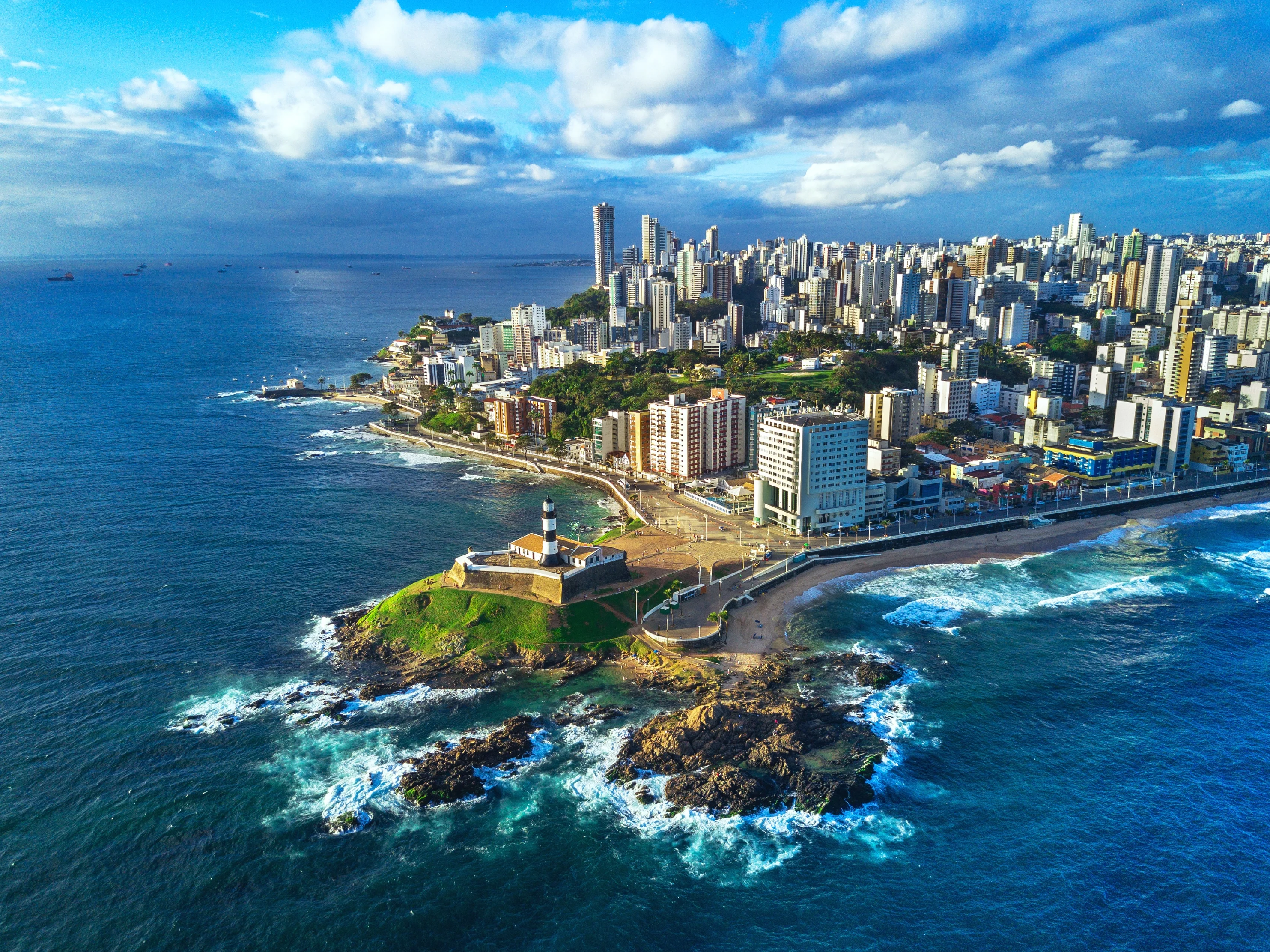
Where to stay in Salvador: the 4 neighborhoods to know in 2026
Salvador is built on two levels. Down below sit the bay, the port, and the market, while up top, seventy-two meters higher, you find the churches, cobblestone squares, and balconied facades. A steep cliff separates the two, and carved into that cliff are four cabins that have been moving up and down since 1873. The Elevador Lacerda, the world's first public urban elevator, handles the vertical drop in thirty seconds, carrying tens of thousands of people every day for a pocketful of change. Around here, nobody asks if a place is far away. They ask if it is up or down.
Deciding your neighborhood means choosing between this clifftop center, the city beaches at the tip of the peninsula, the bohemian neighborhood to the east, the long northern stretches of sand, and the distance is not measured in miles. It dictates what you will do at night and how you will get back. A boutique room in the historic center runs $101 to $180*, a dorm bed around fifteen, and a beachfront hotel in the north between $112 and $210*.
Salvador is a very spread out city, but the historic center is very easy to visit on foot. A little further away, the beaches of Barra are pretty crowded.
Compare hotel prices in Salvador
In a hurry? Find the best accommodation deals in 3 clicks.
Compare live deals from Booking, Expedia, Agoda and other partners.
At a glance: our picks by traveller type
Pick the profile that suits you to head straight to the recommended neighborhood.
The neighborhood map in Salvador
Get your bearings on the neighborhoods and must-see sights before choosing where to drop your bags. Click a name to jump to its description.
Pelourinho and the Upper Town The historic center, perched on the cliff
for a first visit, all on foot
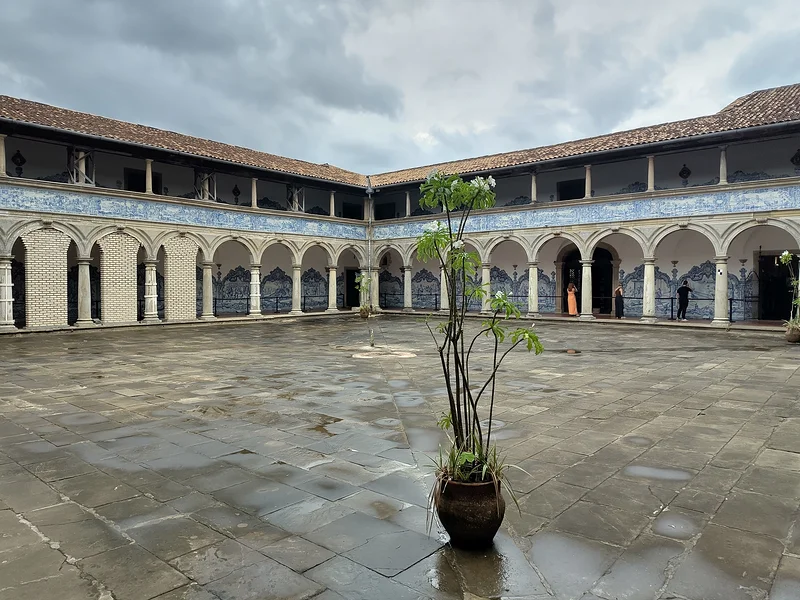
The name tells you what you need to know, as pelourinho refers to the whipping post once used to punish enslaved people. A member of our community points out that these same individuals, blending Catholic saints and orishas, built their own church right here at Nossa Senhora do Rosário dos Pretos. All around, the Terreiro de Jesus brings together acarajé vendors, capoeira dancers, and caipirinha bars. The São Francisco convent drips in gold leaf, and a traveler notes that the chapel candelabra alone is worth the trip. Down at the base of the Elevador, the Mercado Modelo and the bay await. The flip side is that while it is gorgeous by day and lively on party nights, the alleys empty out fast afterward, and you will want to take a car back rather than walking.
Acarajé vendors, capoeira dancers, caipirinha bars... [...] There is so much energy in the main square of Pelourinho.
What to see & do in the neighborhood
Where to stay in this neighborhood
Hotel Villa Bahia Luxury
Two joined colonial houses on the largo do Cruzeiro de São Francisco, facing the gilded church, offering 17 rooms, inner courtyards, a pool, and a rooftop terrace overlooking the rooftops of Pelourinho. You cannot sleep more centrally in the historic core.
Hotel Casa do Amarelindo Mid-range
A restored 19th-century mansion with just 10 rooms, Afro-colonial decor, and a rare rooftop plunge pool facing All Saints Bay. Excellent value and charm for the neighborhood.
Laranjeiras Hostel Budget
The yellow facade in Pelourinho, dorms and private double rooms, patios, and breakfast with seasonal fruit: the top budget bed inside the historic center, with everything reachable on foot.
Pros
- Churches, Terreiro de Jesus, and Mercado Modelo down below
- Capoeira, acarajé stands, and street parties right outside your window
Cons
- The alleys empty out quickly after the shows
- Noisy on party nights, with few everyday shops nearby
Barra and Ondina At the end of the peninsula, the urban beaches
for ocean swimming without leaving the city
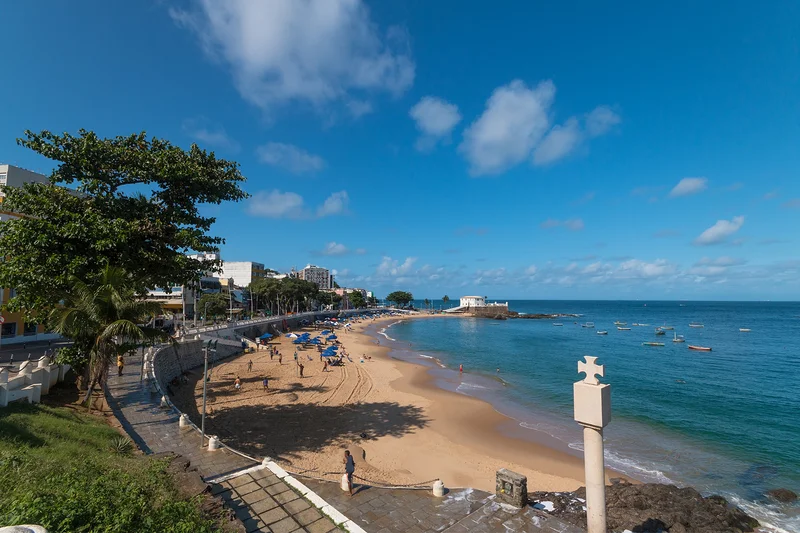
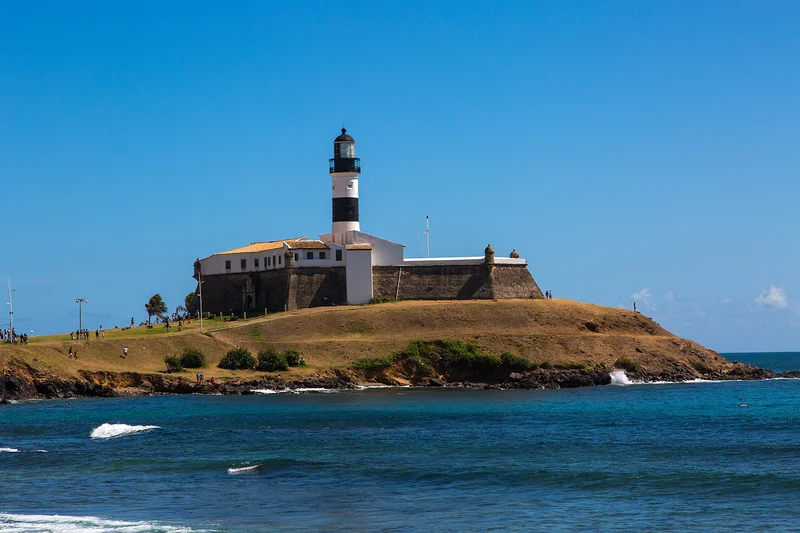
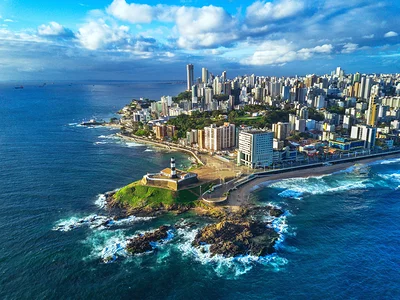
The tip where All Saints Bay meets the Atlantic, guarded by two forts that used to control the entrance and marked by the Barra lighthouse, the most photographed in Brazil. Inside, the Nautical Museum covers the exploration of the bay, traditional saveiro boats, and the triangular trade, while offering travelers in our community sweeping views out to Itaparica Island. Porto da Barra is tiny and packs out for sunset. The downside, which those same travelers point out directly: these are city beaches, so you will find litter on the sand and, around Farol da Barra, occasional sewage odors.
What to see & do in the neighborhood
Where to stay in this neighborhood
Monte Pascoal Praia Hotel Mid-range
A beachfront 4-star hotel right on the Farol da Barra waterfront, featuring a balcony and swimming pool facing the beach with the historic lighthouse a five-minute walk away.
Grande Hotel da Barra Budget
A straightforward spot a fifteen-minute walk from Fort Santo Antônio da Barra and the Nautical Museum, offering the lowest rates in the area while keeping you within walking distance of both beaches.
Pros
- Two beaches, two forts, and the lighthouse on foot
- Shops, restaurants, and neighborhood life year-round
Cons
- Litter on the sand, and sewage odors around Farol da Barra
- The historic center is a twenty-minute drive away
Rio Vermelho The bohemian neighborhood to the east
for the bars, acarajé, and nightlife
The former fishing village turned nightlife hub of Salvador. Tables spill onto the street, acarajé stands run late into the night, Jorge Amado's former home is close by, and this is where the Yemanjá festival takes place every February 2nd on the beach at Rio Vermelho, when thousands of offerings are sent out to sea. The small Paciência beach rounds out the southern edge. The downside is that Pelourinho is a fifteen-minute taxi ride away along winding roads, there is almost nothing to sightsee on foot right here, and the very things that give the neighborhood its charm also bring the noise.
Where to stay in this neighborhood
Zank by Toque Hotel Luxury
Former colonial residence clinging to the hillside above Paciência beach, run by three sisters featuring glass walls, wooden terraces, a rooftop pool and jacuzzi, a spa, and a restaurant. The finest place to stay on the eastern side.
Mercure Salvador Rio Vermelho Mid-range
4-star beachfront hotel with one hundred seventy-four rooms, an infinity pool, and a sauna. Predictable yet reliable, with the neighborhood bars within walking distance and the ocean right outside your window.
Pros
- The best nightlife in the city, entirely walkable
- Acarajé, Yemanjá beach, and late-night dining
Cons
- A fifteen-minute taxi ride from the historic center
- Almost nothing to see in terms of sights, and it gets loud at night
Itapuã and the northern beaches Twenty kilometers away along the ocean
for families and clean sand
Past the airport, the city lets go and the coastline stretches out: Itapuã and its lighthouse, the Abaeté lagoon and park with its white dunes and dark water, Stella Maris, Flamengo, miles of open sand facing the Atlantic, and a water clarity that the downtown beaches just cannot match. This is the zone for hotels with pools, kids' clubs, and gardens. The downside: the Pelourinho is a forty-minute drive away, considerably longer during rush hour, evening transit is scarce, and you will only experience as much of Salvador as you actively set out to find.
Where to stay in this neighborhood
Gran Hotel Stella Maris Urban Resort Luxury
A 4-star beachfront resort in Stella Maris with the full setup, including pools, playgrounds, and direct sand access. It is the go-to pick for families who want the beach every day and the city every once in a while.
Catussaba Resort Hotel Mid-range
A large leisure hotel in Stella Maris a ten-minute walk from the beach, featuring a sauna, solarium, and a picnic area set in a park. It is cheaper than the seafront while offering the exact same sand at the end of the block.
Pros
- Clean sand and actual space at last
- Pools, kids' clubs, and gardens
Cons
- A forty-minute drive from the historic center
- Zero neighborhood life, scarce transit at night
Our tips for booking the right place
- Crossing the cliff costs next to nothing: The Elevador Lacerda connects Praça da Sé to Mercado Modelo in thirty seconds, costs just a few cents, and runs like any city bus, making it the best value ride in Brazil. The Plano Inclinado Gonçalves, a nearby funicular, handles the same route a bit further down. As for the rest, skip the rental car since parking is a nightmare, rideshares and taxis are cheap, and you should take them at night instead of walking back. The airport sits about twenty kilometers from the center, taking forty minutes outside of rush hour.
- Carnival triples everything: Salvador hosts the biggest street carnival in the world, six days in February or March, and it is an immersive experience since the routes pass through Barra, Ondina, and Campo Grande, streets get blocked off, sound trucks play until dawn, and hotels along these corridors demand minimum stays at three to four times the usual rate, sometimes booked a year in advance. In January, the Lavagem do Bonfim packs the city out. The rest of the year, Salvador stays mellow for two weeks and costs a third of those peak prices.
- What our members say about the sand: Good to know before booking a room for the beach: travelers in our community find Porto da Barra pretty but dirty, wedged between two forts right in town, and note trash and occasional sewage smells at Farol da Barra, despite great sunsets and a lively weekend scene. The beaches worth swimming at start past the airport in Itapuã, Stella Maris, and Flamengo. People come to Barra for the lighthouse, the museum, and the vibe, not for a peaceful swim.
- Walking through Pelourinho late at night away from the busy streets: the neighborhood is stunning by day and lively on show nights, but the alleys empty out quickly afterward, and locals and travelers alike advise taking a taxi or rideshare rather than walking, keeping phones and jewelry out of sight. It is a common sense precaution, not a reason to skip staying there.
- Pick a hotel in Barra or Ondina if you want daily ocean dips, but travelers in our community warn that these are urban beaches with litter and occasional odors. They work well for sunset views and neighborhood energy, but for actual swimming, head north or look elsewhere.
- Booking a room right on the Carnival route expecting peace and quiet is a classic mistake. Barra, Ondina, and Campo Grande turn into the epicenter where music blasts until dawn for six straight nights and streets close to all traffic. If you came for Carnival, you are right where you need to be. If not, book Itapuã or Rio Vermelho, or visit another week entirely.
FAQ: where to stay in Salvador
Which neighborhood should you pick for a first trip to Salvador?
Where to stay on a budget in Salvador?
Is Salvador good for families?
Where is the best nightlife in Salvador?
Do you need a car in Salvador?
How much does a hotel room cost in Salvador?
 Keep exploring
Things to do in Salvador
Keep exploring
Things to do in Salvador
Comments (0)
No comments yet. Be the first!