
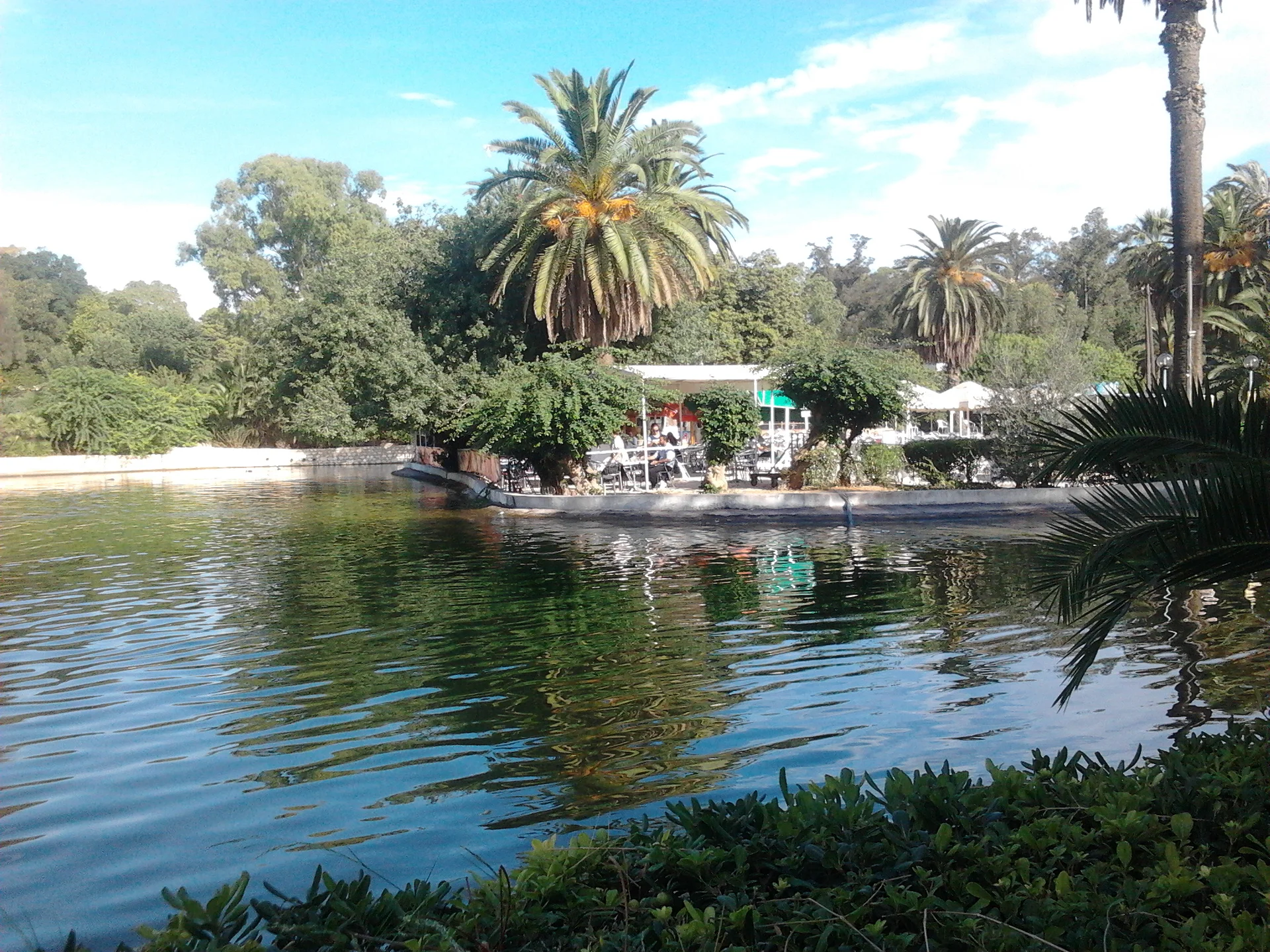
Belvedere Park, the green lung of Tunis and its elevated panorama
High above the Tunisian capital lies Belvedere Park, a 110-hectare oasis where the cool shade of the canopy provides a sharp contrast to the urban intensity below. Established at the end of the 19th century on what was once an olive grove, this English-style park features a rolling landscape of thickets and lawns crisscrossed by shaded pathways.
At the summit, an Arab-Andalusian koubba overlooks the Gulf of Tunis, while down below, families and strollers find relief from the Mediterranean heat.
A Parisian garden under the Tunisian sky
In 1892, authorities of the French protectorate tasked Joseph Laforcade, then the chief gardener of Paris, with landscaping this hillside. The project was ambitious: transform 110 hectares of olive groves into a park. Planting was completed in 1897, but the grounds remained closed for over a decade to allow the vegetation to take hold in optimal conditions. It did not officially open to the public until 1910.
This English-style park is notable for its botanical diversity, with Aleppo pines, majestic palms, giant ficus, fragrant eucalyptus, and centuries-old olive trees forming a Mediterranean palette. Paved roads allow you to explore by car, a rare feature that also makes it a popular shortcut for locals looking to avoid city-center traffic.
The Koubba, an architectural jewel with sweeping views
Sitting at the highest point of the park is the Kobbet El Haoua, or Pavilion of the Air. This 17th-century architectural treasure was not originally built here, as it once graced the Palais de la Rose in La Manouba. Colonial authorities had it dismantled stone by stone to be reassembled at Belvedere Park, where it began a second life.
The koubba features arched galleries, slender columns, stained glass, and intricate stucco panels. From its terrace, the view captures the park canopy before drifting toward the Gulf of Tunis and the distant, blue-tinted outlines of Djebel Boukornine. The pavilion remains a quiet haven for rest and reflection.
A park with many facets
Architectural and cultural treasures
At the park entrance, the Museum of Modern Art stands next to the former neo-Moorish casino opened in 1901. This elegant building once hosted performances by Edith Piaf and Dalida, and later housed exhibitions by Picasso and Miro in the 1970s. Now serving as an officers club, it stands as a reminder of the cultural golden age of Tunis.
A midha (an 18th-century ablution room) relocated from the Souk el-Attarine in the medina, adds to the heritage of the site. It now houses the Children and Nature Club, an educational space dedicated to environmental awareness.
Relaxation and leisure spaces
The park offers plenty of spots to recharge. The artificial lake, filled with ducks, draws families, while Andalusian-style cafes serve iced lemonade under giant rubber trees. Playgrounds dot the paths, and vendors selling ice cream and traditional pastries are a hit with children.
Locals come here for morning jogs, outdoor yoga, or simply to lounge on the grass during sweltering days. This concentration of greenery acts as a true source of fresh air when the heat stifles the capital.
Friendly tip: Visit the park in the late afternoon to catch the golden light over the Gulf of Tunis from the terrace of the Koubba. Bring a picnic and find a spot under the pines for a moment of quiet away from the city noise. The park is particularly pleasant in the spring and fall.
The zoo and the question of animal welfare
Designed between 1963 and 1969 by German landscape architects from Cologne, the zoo covers thirteen hectares and welcomes about one million visitors annually. It showcases African wildlife such as flamingos, elephants, lions, monkeys, and Asiatic black bears. However, animal welfare conditions have been subject to recurring criticism. Rehabilitation work has been underway in recent years to improve the living conditions of the animals, but progress remains a work in progress.
Other information:
- Park highlights: lush vegetation, historical architecture, exceptional panoramic views, accessibility
- Activities: walking or driving tours, picnics, nature observation, outdoor yoga, visiting the Museum of Modern Art
- Good to know: The Association of Friends of Belvedere, created in 1989 and supported by the WWF, works to preserve this heritage and aims for its inclusion on the list of World Historical Gardens
Opening hours
- May to October: 9:00 AM to 7:00 PM
- November to April: 9:00 AM to 5:00 PM