
The secret refuge of the last Apennine brown bears
In Opi, the village clings to a rocky promontory overlooking a valley blanketed in ancient beech forests. The silence is nearly tangible, broken only by the call of a golden eagle or the snap of a branch under the quiet step of a chamois. This remote corner of the Apennines is where one of the most threatened species in Europe survives.
Why visit Abruzzo National Park?
Founded in 1922, this park is among the oldest in Italy. It now stretches across the Abruzzo, Lazio, and Molise regions, which earned it its full name, Parco Nazionale d'Abruzzo, Lazio e Molise. Its emblem, the Marsican brown bear (orso bruno marsicano), is an endemic subspecies found nowhere else on Earth, with a total population of only a few dozen individuals.
This territory is not just a mountain backdrop. It is a conservation laboratory where the survival of unique Apennine wildlife has been at stake for a century.
Biodiversity that escaped extinction
The Abruzzo chamois (camoscio d'Abruzzo) owes its survival to this park. Reduced to a handful of individuals at the turn of the 20th century, it was saved thanks to locally managed breeding programs. The Apennine wolf also finds one of its last strongholds here, as does the golden eagle that nests on rocky ridges.
The ancient beech forests covering much of the territory, particularly around Val Cervara near Villetta Barrea, are part of a UNESCO World Heritage site grouping together primeval beech forests.
Sites to explore around Opi
Val Fondillo, accessible directly from Opi, offers an easy walk through a dense forest where the rare white-backed woodpecker nests. Further south, the Camosciara features waterfalls and rocky walls, a classic playground for spotting chamois from marked trails.
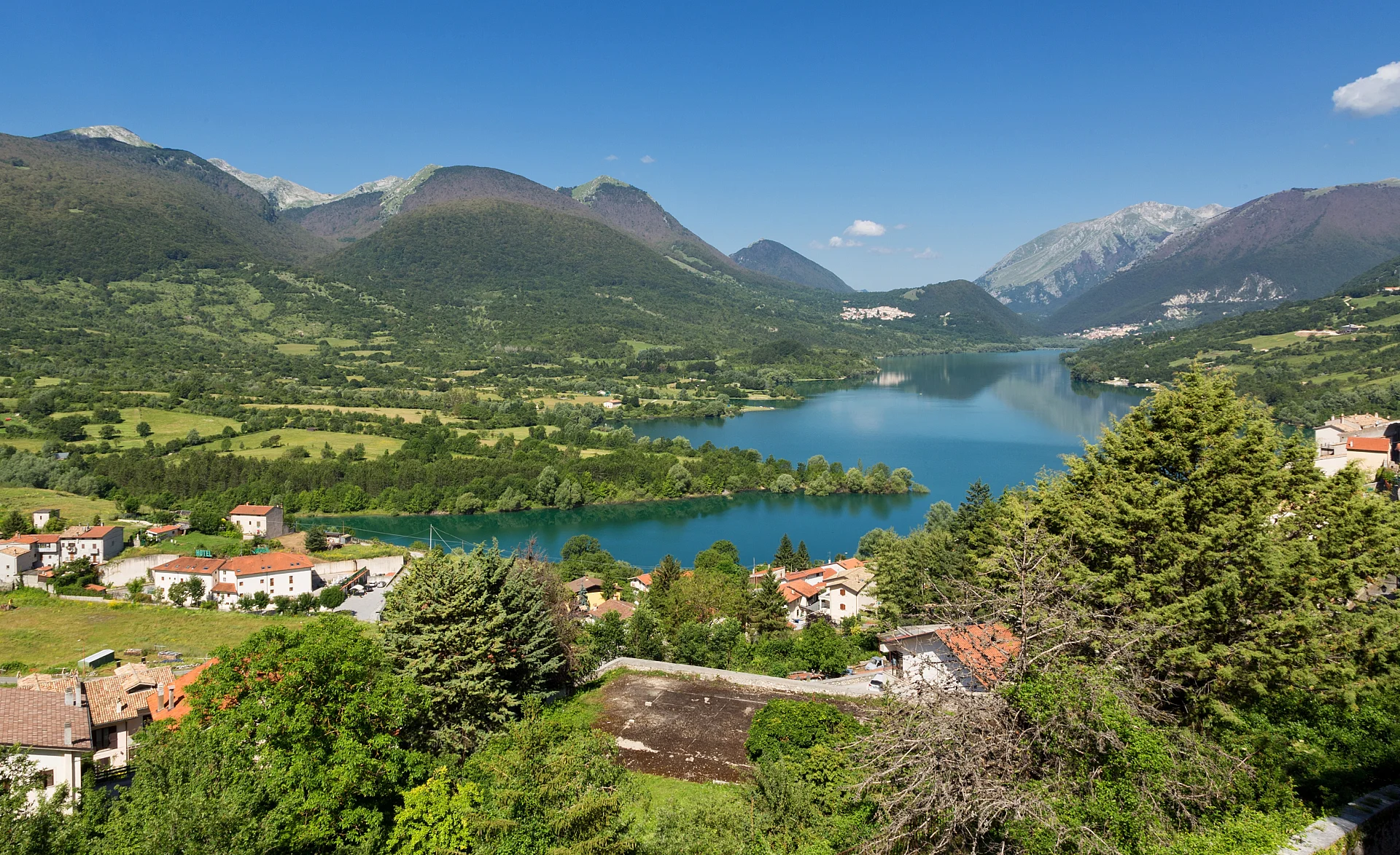
Barrea Lake, an artificial reservoir tucked between the mountains, reflects the stone villages surrounding it. In Civitella Alfedena, a wildlife area allows visitors to observe wolves in a semi-natural space, a reliable alternative for those who might not be lucky enough to cross paths with them in the wild.
Friendly tip: to increase your chances of spotting a bear or wolf in the wild, head out early in the morning or late in the day near the clearings of Val Fondillo with binoculars and patience. Local park guides organize observation trips that significantly improve your odds.
Best for
- hikers looking for varied forest trails
- wildlife and nature photography enthusiasts
- families seeking quiet walks
Less suitable for
- visitors without a car, as the bus network between villages is limited
- those expecting guaranteed wildlife sightings, as animals remain elusive and free-roaming
Opening hours
Abruzzo National Park is an open-access protected natural area. Hiking trails and wilderness zones do not have set operating hours.
Visitor Centers and information points, including the one located in Opi, maintain specific hours that change based on the season:
- High season (July, August, and holiday periods): Open daily, typically from 9:00 AM to 1:00 PM and from 3:00 PM to 7:00 PM.
- Low season: Limited to weekends and public holidays, with reduced hours.
How long for this activity
Plan on at least one full day to explore the main trails, but allow for two to three days if you want to truly immerse yourself in the wilderness areas of Abruzzo National Park.
*Information subject to change

The Abruzzo National Park is famous for housing a variety of wildlife in the heart of untouched landscapes. I loved hiking on the tracks of bears and wolves! I have to admit that they are well hidden, and to maximize your chances of spotting them, it is always better to be accompanied by a local guide. Among my favorite discoveries, I was really blown away by the hikes to Lake Vivo and Val di Rose.