
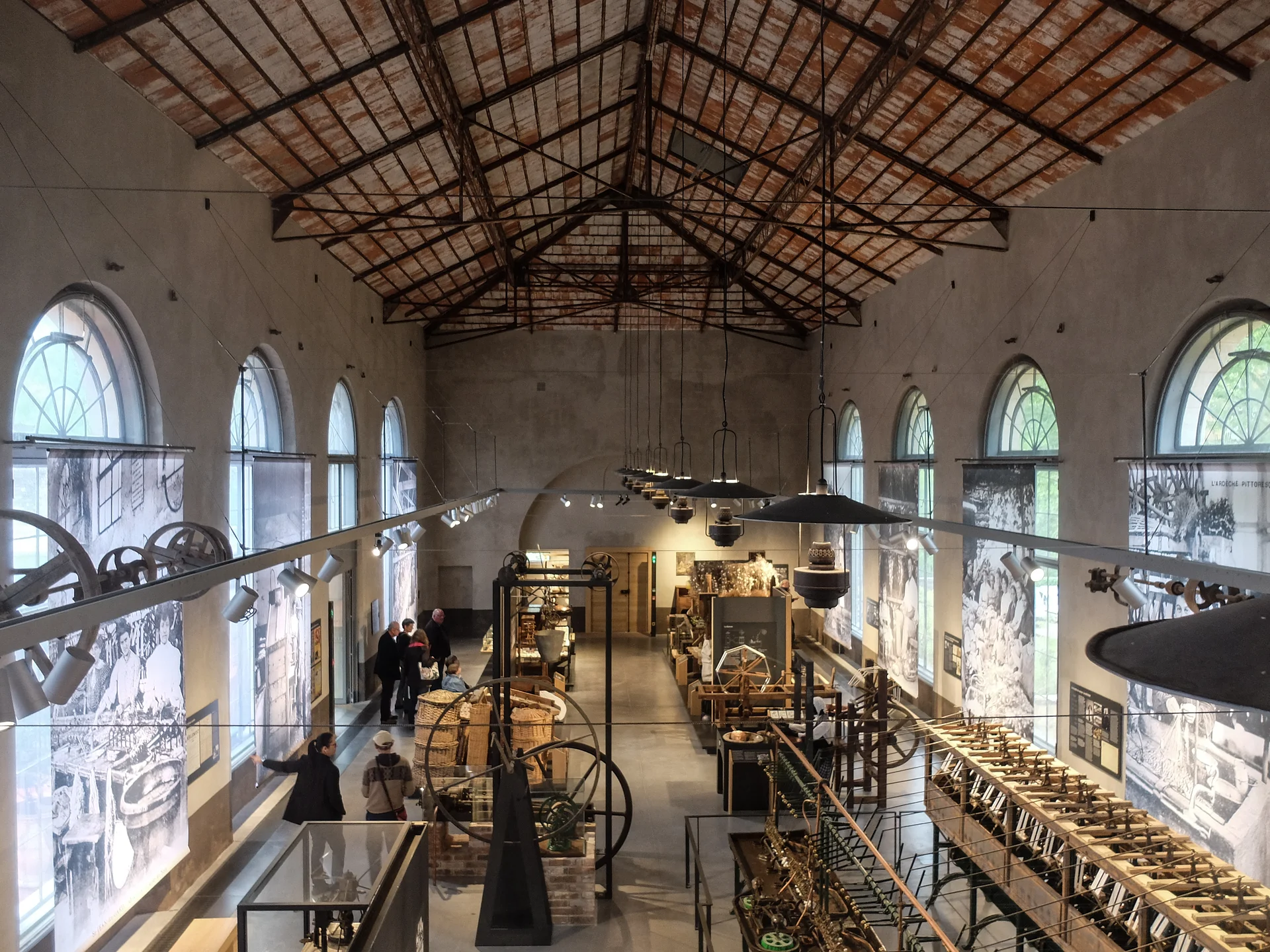
Visiting the Museum of the Cévennes Valleys: a mountain territory's memory
Located in Saint-Jean-du-Gard, in the heart of the Cévennes, the Museum of the Cévennes Valleys traces the history and traditions of a region defined by its rugged landscape and rural lifestyle. Through everyday objects, agricultural tools, and personal accounts, it immerses visitors in the lives of the Cévennes people, past and present.
An immersion into Cévennes life
The museum displays a significant collection of items related to local industries, including farming, livestock, weaving, and chestnut cultivation. You will see the famous clèdes, which are small stone structures used for drying chestnuts, as well as hollowed-out chestnut tree trunks used as beehives, highlighting the region's long-standing beekeeping tradition. Reconstructions of houses and workshops illustrate the layout of local farms where self-sufficiency was the standard.
A territory shaped by history
The Cévennes were the setting for intense religious conflict, most notably the Camisard war in the early 18th century, a Protestant uprising against the repression led by Louis XIV. The museum dedicates a portion of its exhibits to this period, featuring period documents and records of local resistance. Another section explores the evolution of pastoral life and the impact of economic shifts on this once isolated region.
A museum rooted in its environment
The building itself is worth the trip. Housed in a former silk mill, it fits seamlessly into the Cévennes landscape. Outside, an ethnobotanical garden showcases local plants that were historically used for food or medicine. Walking through the site provides a better understanding of how inhabitants adapted to an environment that was often harsh, yet rich in natural resources.
Opening hours
November 1 to March 31: Wednesday to Sunday, 2:00 PM to 5:00 PM
Closed Mondays and December 25

Maison Rouge is the museum of the Cévennes valleys, and it lets you discover a bunch of interesting little things about life in the Cévennes back in the day. It is set up in an old silk factory, in the heart of the pretty little town of St Jean. Free on the first Sunday of the month.