
Visiting Herculaneum
Campania is a beautiful southern region of Italy, inextricably linked to Mount Vesuvius and its wrath. Still active today, this temperamental volcano triggered one of the most devastating eruptions in history, which caused the destruction of four ancient Roman cities in the year 79. Less famous and less sprawling than Pompeii, Herculaneum is one of these lost cities. Buried under a mixture of mud and volcanic material, it is actually the best preserved because it was only reached by the flow the following day. A few miles from Naples, in Ercolano, it remains an invaluable and moving site.
A small town of a thousand wonders
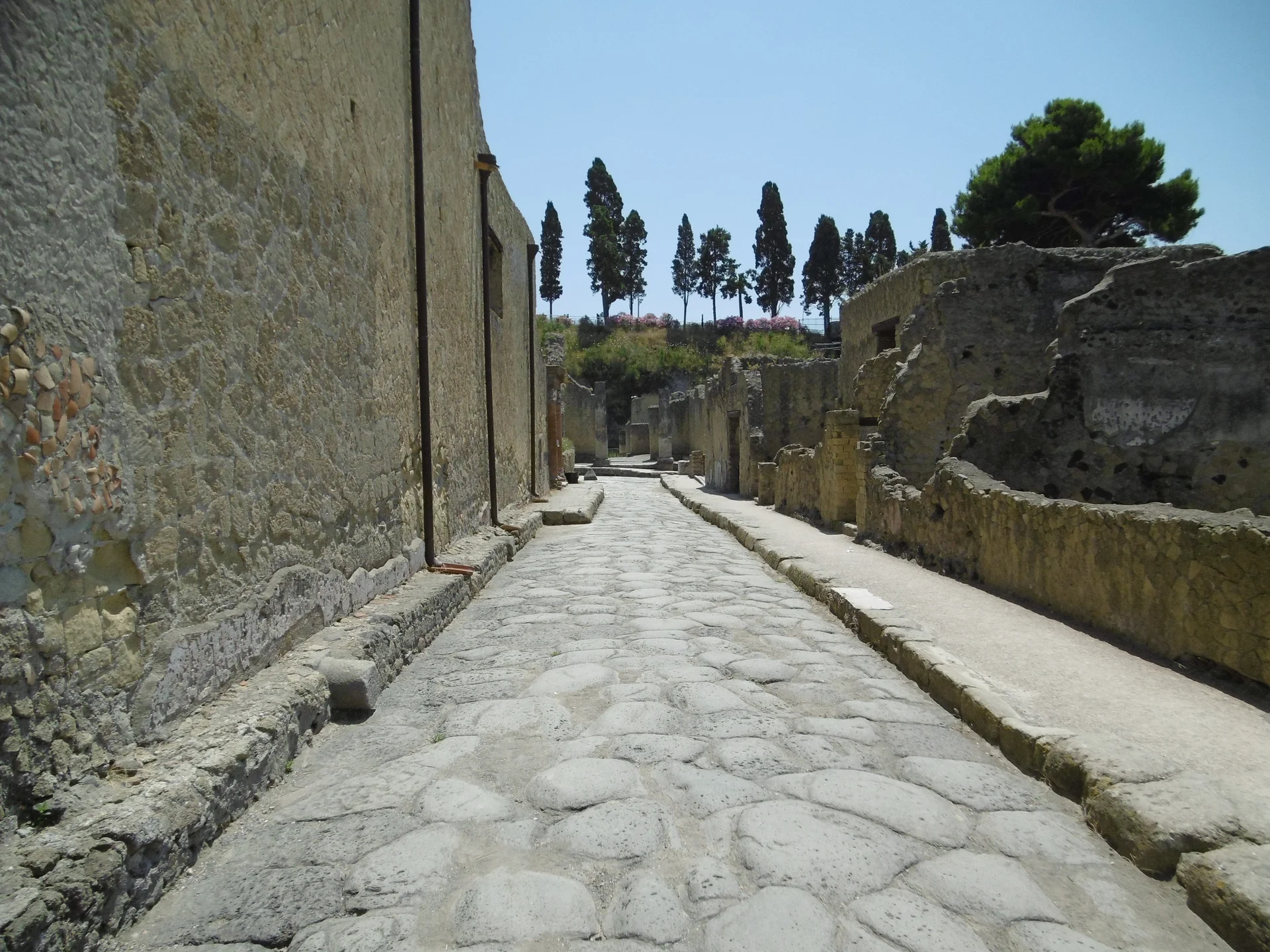
With its perfectly preserved ruins, Herculaneum is an extraordinary archaeological site. Of its original 12 hectares, only a quarter has been excavated. The digs, which began in 1738, experienced some ups and downs, but from 1828 onward, a true treasure began to emerge from its shell. While luxurious homes and their artworks were the primary goal of excavations for a long time, the city’s value as a historical record really came to the fore in 1927. With its sophisticated road system, sewers, fountains, patrician houses, and streets, Herculaneum is a remarkable snapshot of a vanished daily life. In the center, you can see the layout and variety of the insulae (city blocks), though not all rooms have been cleared. The Decumanus Maximus, the main thoroughfare, was the market street, where you can still make out the shops of the baker, the jeweler, or the blacksmith, while the urban Thermae (baths) reveal the refinement of Antiquity. The men's and women's dressing rooms, mosaics, marble, and colorful flooring are striking. A Theater with decor dating back to Nero and a Forum complete this city center, and near the waterfront, the Porta Marina (Sea Gate) and the Sacred Area are wonders. The Villa of the Papyri, with its 1,800 precious scrolls, is said to have belonged to the father-in-law of Julius Caesar. Everywhere you look, the objects, the buildings, and the stories they tell are incredible.

Herculaneum is a very interesting little ancient site. The houses and streets are well preserved. It is less crowded than Pompeii, so it is more pleasant. Wear good shoes and bring water. A guided tour helps to understand the history. Perfect for seeing the life of the ancient Romans. A very interesting walk for the family, even with young children.