
Visiting Copacabana Cathedral
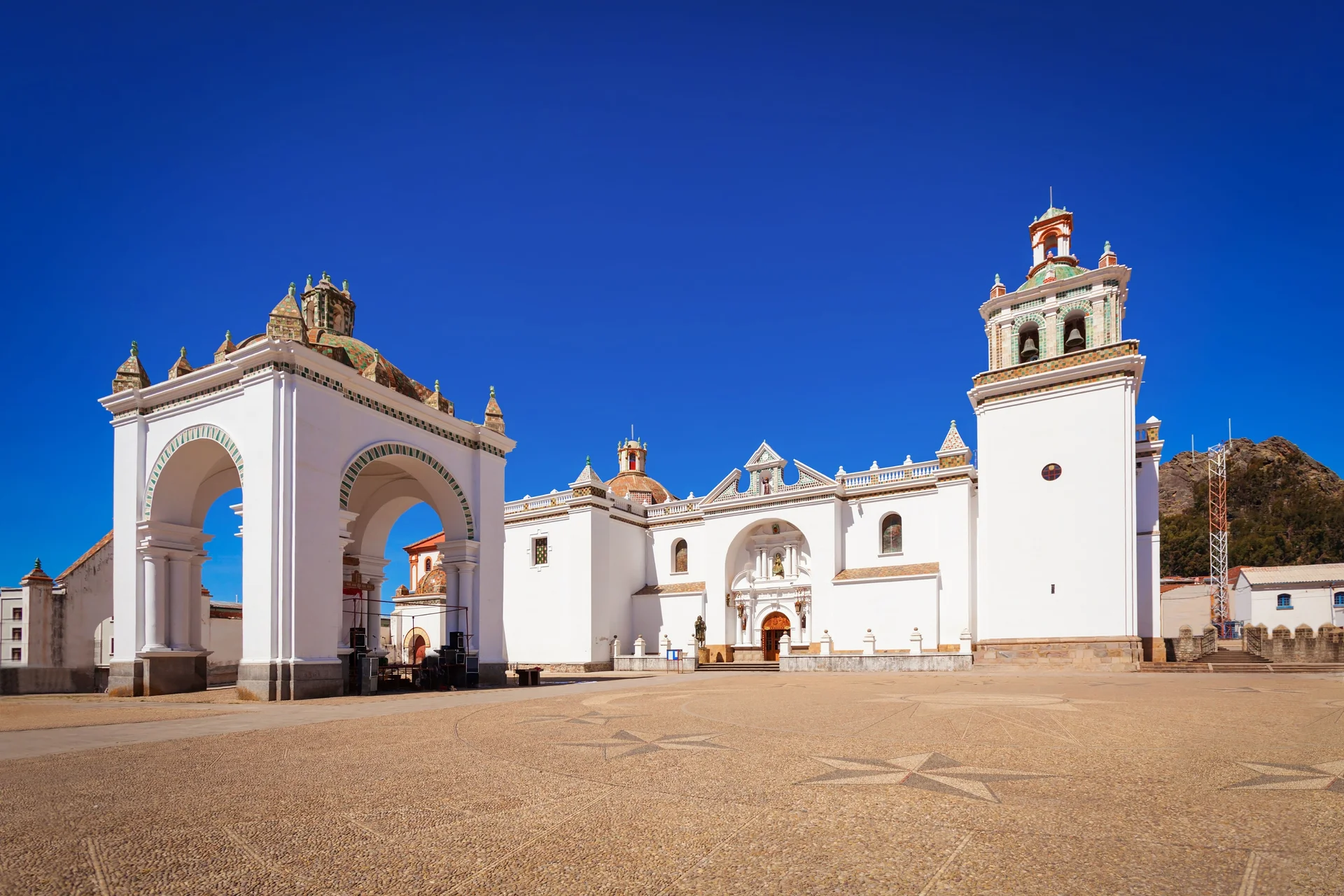
Perched on the edge of Lake Titicaca in the small town of Copacabana stands the imposing Copacabana Cathedral. This sanctuary with its Moorish design serves as a major pilgrimage site in Bolivia, recognized for housing the statue of the Black Virgin of Copacabana, a religious figure venerated across the country.
Architecture with a unique profile
Constructed starting in the 16th century, the cathedral features a Hispanic-Moorish style that is uncommon in the Americas. Its whitewashed walls, domes decorated with colorful tiles, and expansive courtyards provide a monumental appearance. Inside, the decor is more understated, highlighting the gilded altar where the famous statue of the Virgin rests.
An important pilgrimage site
The cathedral acts as the spiritual heart for the worship of the Virgin of Copacabana, the patron saint of Bolivia. Each year, thousands of pilgrims arrive to pay their respects, particularly during the festivities on February 2 and August 5. The statue, carved in the 16th century, is credited with performing miracles and draws visitors from far beyond the borders of Bolivia.
A unique tradition: the blessing of the cars
Outside the cathedral, an unusual scene unfolds every day: the blessing of the vehicles. Owners of cars, trucks, and even buses decorate their vehicles with flowers and garlands before having them blessed by a priest. This ritual, blending Catholicism with Andean beliefs, is a moment to observe for travelers interested in local customs.

The Copacabana Cathedral is very original. First off, go see the Virgin's wardrobe. Dressed thanks to donations, her clothes are changed every three months. I was almost jealous (laughs). You will also see many wishes written in wax on the blackened walls in the candle room. It is quite moving, even if it is forbidden.
Finally, especially on Saturday mornings, the blessing of cars, trucks, and other vehicles covered in flowers and ribbons takes place right on the forecourt. It is surreal!