
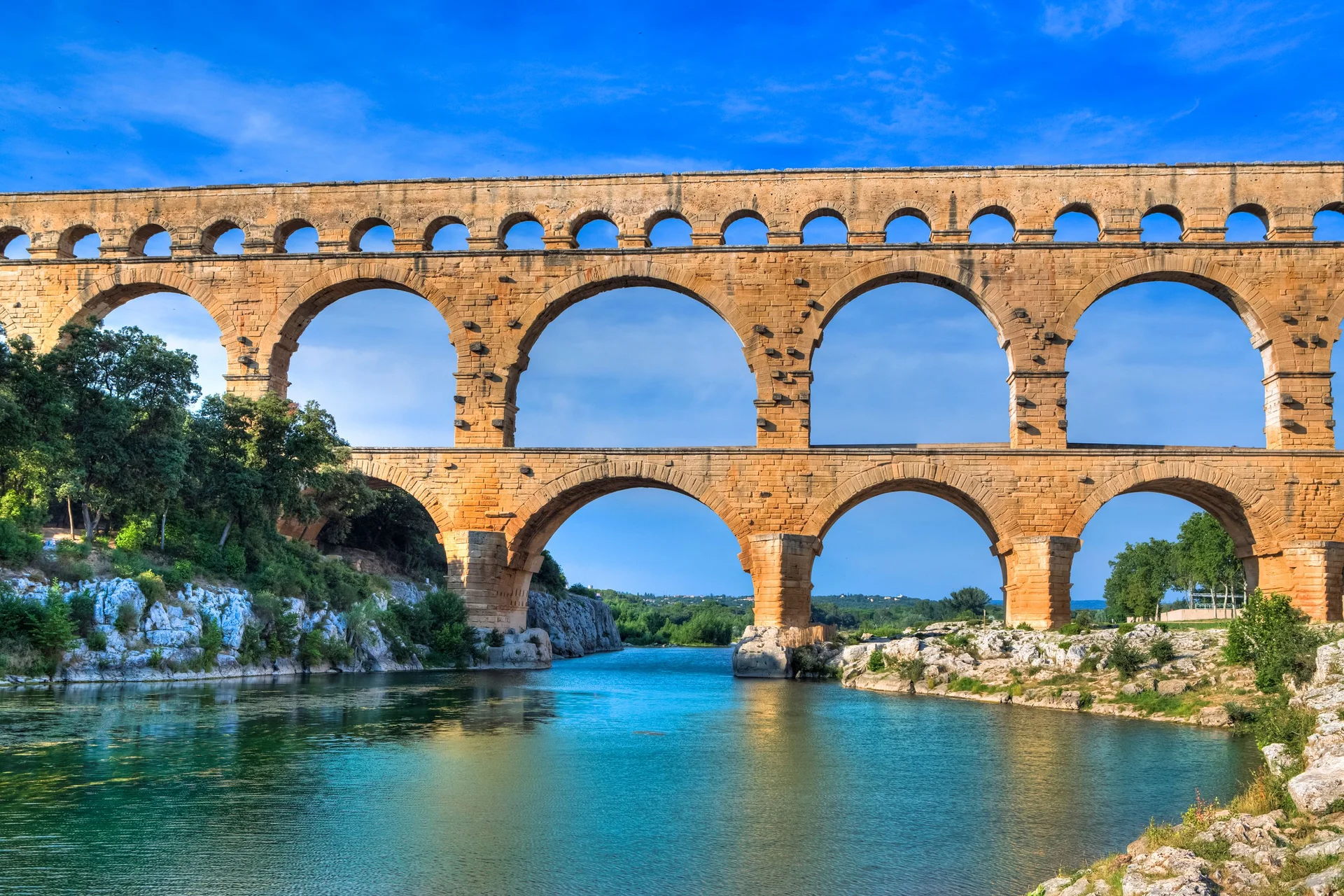
Visiting the Pont du Gard, the Tallest Roman Aqueduct
About thirty kilometres from Nimes, right in the heart of the Gard department, the Pont du Gard towers over the Gardon riverbed as a remarkable testament to Roman ingenuity. This remarkably preserved ancient aqueduct draws history buffs and outdoor enthusiasts alike.
A Masterpiece of Roman Engineering
Built in the 1st century AD, the Pont du Gard was part of a nearly 50 km aqueduct designed to supply Nimes with water from the Eure spring near Uzès. With its three tiers of arches reaching 49 metres in height, it ranks among the largest and best-preserved structures from antiquity. Self-guided visits let you get right up to the monument, while guided tours grant access to the top tier, which is closed during unguided visits.
A Site Designed for Walking and Exploration
The Pont du Gard site offers far more than just its aqueduct. Today, it functions as a sprawling natural and cultural park featuring a modern museum that traces the history of its construction and use through the centuries. Marked trails wind through the Mediterranean garrigue scrubland, offering various vantage points of the structure. Temporary exhibits, a cinema space, and a playground make it an ideal spot for visitors of all ages.
Swimming, Canoeing, and Seasonal Shows
When the weather warms up, the banks of the Gardon transform into a popular swimming spot for locals and travelers alike. You can also rent a canoe to paddle down the river right beneath the monumental arches, offering a unique perspective of the site. During the summer, the Pont du Gard hosts nighttime shows and light projections that highlight its architecture. Booking in advance is strongly recommended, particularly during the peak summer months.
Opening hours
- October to March: 9:00 AM to 5:00 PM
- April to June and September: 9:00 AM to 6:00 PM
- July and August: 9:00 AM to 8:00 PM
*Information subject to change


No need to go to Rome to admire wonders of antiquity! I discovered this bridge during a canoe trip with my parents. Arriving at the site from the water is truly magnificent. The three-level architecture really impressed me. It almost looks like the aqueduct is still working because it seems intact! Plus, it lets you get as close as possible and admire the structure from underneath. A must-do!