
Visiting the Dalí House-Museum in Cadaqués: into the intimacy of a genius
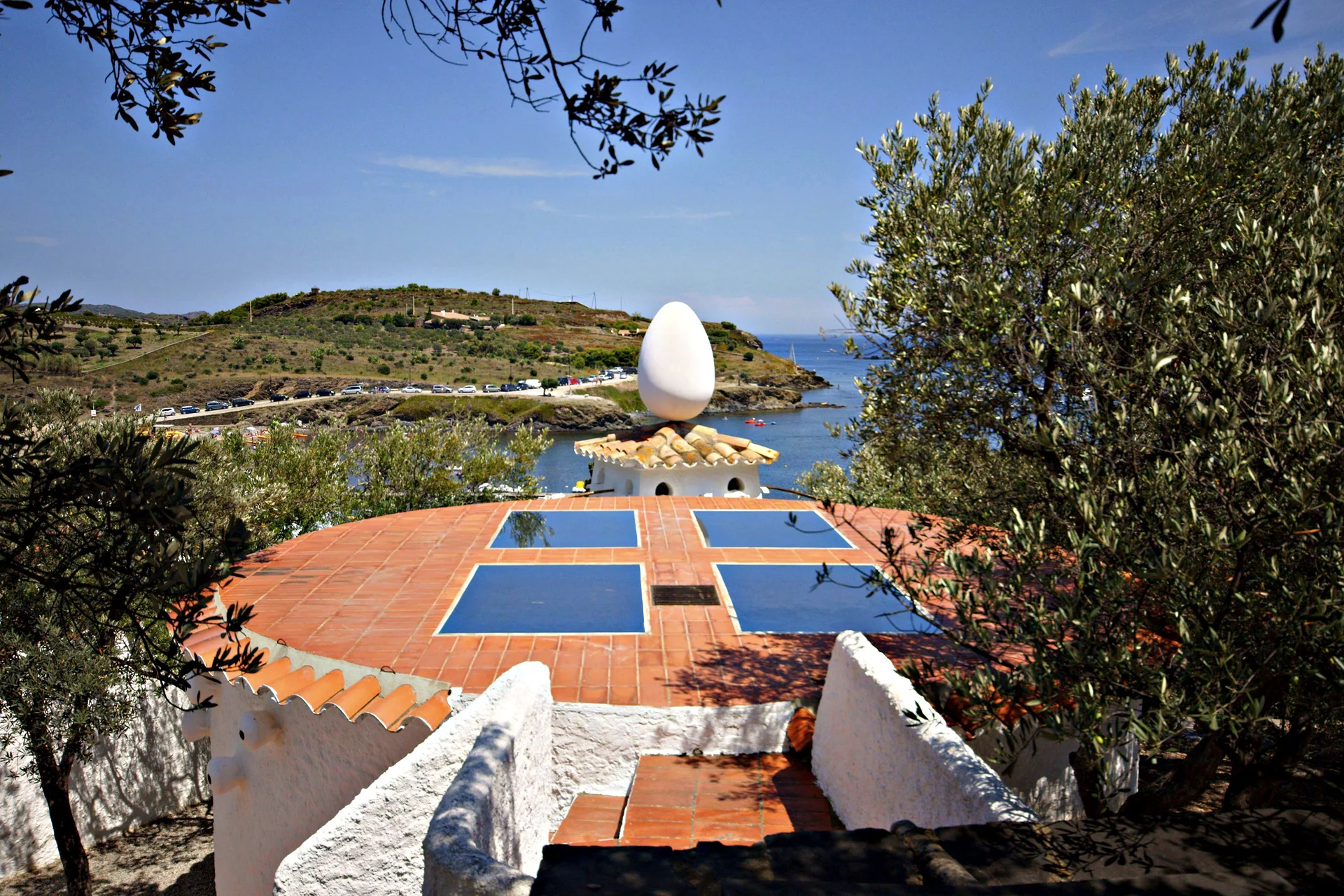
Nestled in the hollow of the baie de Portlligat (Portlligat Bay), battered by winds and bathed in a singular light, stands a stark white building topped with giant eggs. This is not a museum, but an architectural self-portrait. It was here, in this former fishing hamlet, that Salvador Dalí lived and worked for over 50 years, making this place the only true home and studio of his life.
Why step inside this surrealist refuge?
Entering the home of Dalí in Portlligat is like stepping into the personal sanctuary of the artist. Purchased in 1930 as a simple fisherman's shack, the house grew organically over four decades, transforming into a labyrinth of rooms, hallways, and dead-end staircases. Each corner is a key to understanding the man, his obsessions, his love for Gala, and the creative process that fed off this Costa Brava landscape.
An architecture of dreams and obsession
The house is a total work of art, a living structure modeled by the hands and mind of its owner. Dalí himself described it as a true biological structure. The various levels, connected by narrow passages, create a deliberate sense of disorientation, an initiatory path into the Dalinian universe.
From the bear hall to the studio of light
The welcome is theatrical, as a bear adorned with necklaces greets you in the hall de l'Ours (Bear Hall). The tour continues through intimate rooms like the library or the yellow living room, where every object and piece of furniture was meticulously chosen or created. The heart of the house remains the studio, a large room flooded with the light of Portlligat, where the mechanical easel invented by the artist still stands, allowing him to work on large canvases without having to stand.
A journey to the core of the life of Dalí and Gala
The house is a permanent tribute to his muse, Gala. The Salle Ovale (Oval Room), a space with perfect acoustics that resonates with whispers, was her private space and refuge. Every window is designed like a living painting, framing to perfection the bay and the Cap de Creus which inspired the master so much.
Do not forget to see during your visit:
- The courtyard and the pool: The exterior is an extension of the interior delirium. The pool, shaped like a phallus, is surrounded by Dalinian symbols like the lip sofa or the Michelin men.
- The giant eggs: Placed on the roofs, they are a recurring symbol for Dalí, representing prenatal life and rebirth.
- The cricket cage: Near his bed, Dalí kept a cage so that the song of the insect would be the first thing he heard upon waking.
A tip from a friend: booking your tickets online, several weeks or even months in advance, is not an option, it is an absolute necessity. Tours are conducted in small groups every ten minutes and spaces are extremely limited. Showing up without a ticket, especially in high season, is a near guarantee that you will not be able to enter.
Opening hours
*Information subject to change

Whether you are an art lover, a Dali fan, or just curious, I highly recommend visiting this house museum. You are immersed in the extravagant world of the artist through his works and his history. I suggest booking your tickets in advance during peak season because spots are limited.