
Aval Cliff in Etretat: Where Chalk Meets the Ocean
On February 5, 1883, at exactly 4:53 PM, Claude Monet set up his easel on the pebble beach. Before him, the massive arch carved a path through an orange-tinted sky, with the Aiguille (Needle) rising like a stone sentinel. Texan astronomers pinpointed this exact moment by analyzing the sun's position in his painting. Today, three million visitors arrive annually seeking that same light.
Why climb Aval Cliff?
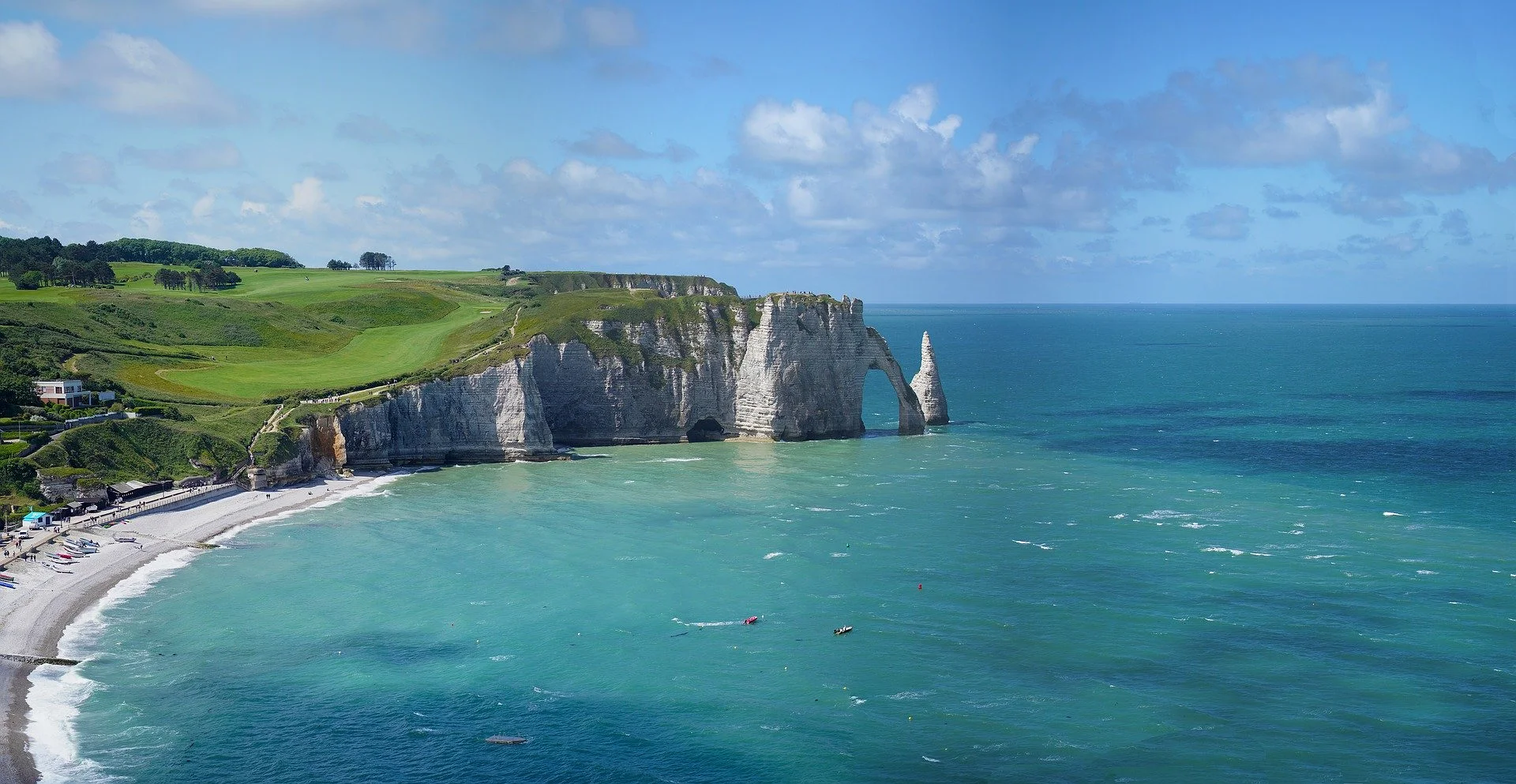
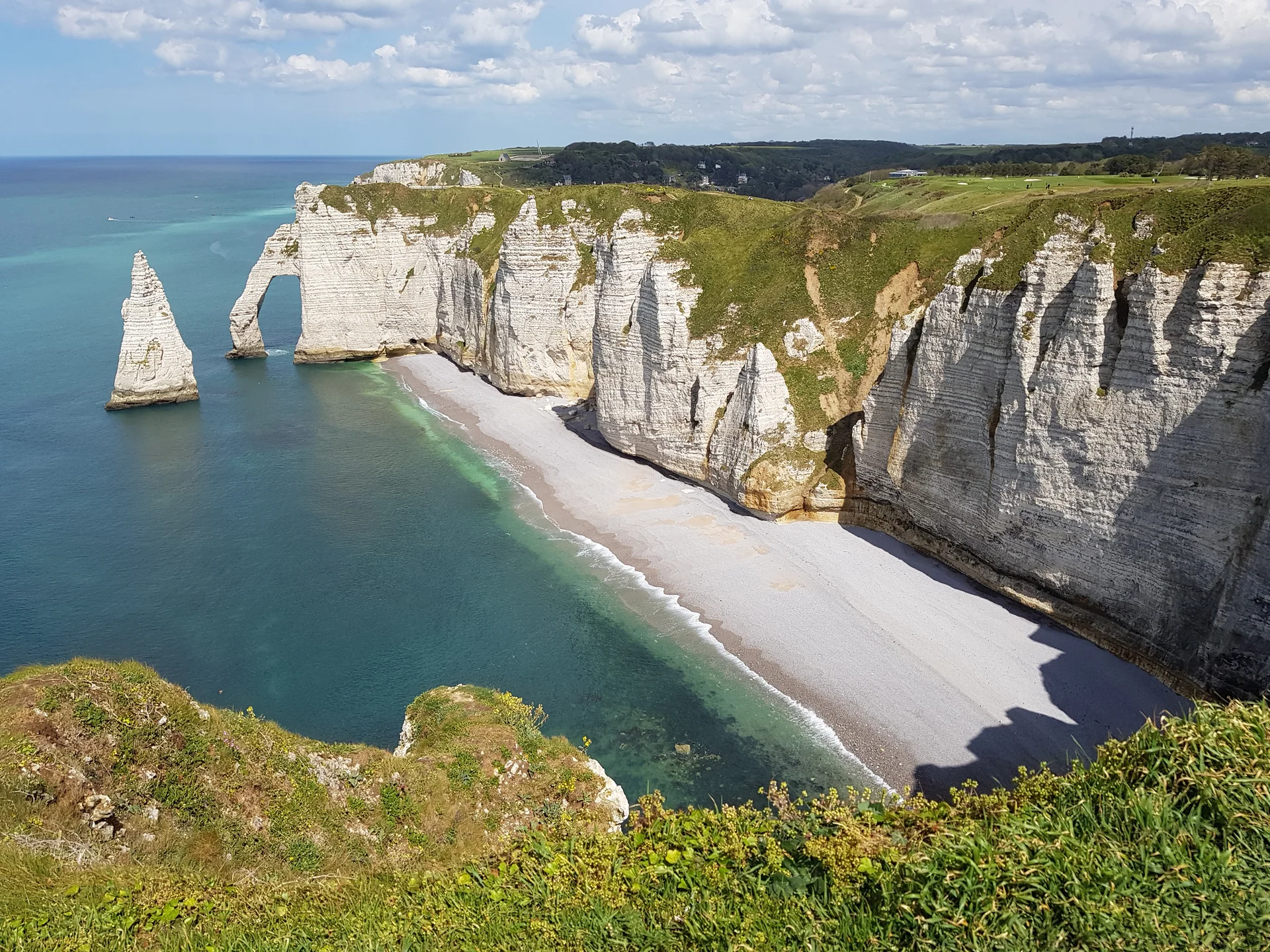
This 74-meter (243-foot) wall dominates the western side of the Etretat bay. Its dramatic arch was not carved by waves, contrary to common belief. A subterranean river once flowed parallel to the coast and eroded its bed into the chalk. The ocean simply widened the passage over millennia. The Aiguille, standing 55 meters (180 feet) tall, is the remnant of a pillar from that collapsed arch.
Maurice Leblanc, the creator of Arsene Lupin, turned this rock into a literary legend. In his 1909 novel The Hollow Needle, the gentleman thief discovers the treasure of the kings of France hidden within. In 1927, the author had the letters D and F carved into the rock as supposed clues to the secret. The letter D disappeared in 2021, claimed by erosion.
An open-air museum for the Impressionists
Monet painted more than 50 canvases of these cliffs between 1868 and 1886. He worked on several paintings at once to capture the shifting light throughout the day. Gustave Courbet, Eugene Boudin, and Henri Matisse also planted their easels on these pebbles. The Musee des Impressionnismes de Giverny (Museum of Impressionism in Giverny) houses several of these works, which document a collective obsession with this changing landscape.
Late afternoon light remains the most sought after. It ignites the white chalk in shades of gold and pink, exactly as Monet immortalized it. Mornings offer harsher contrasts, but photographers appreciate the lack of backlighting on the arch.
Secrets at the cliff base
Marie-Antoinette's oyster beds
At low tide, rectangular basins appear on the rocky foreshore. The Marquis de Belvert had them excavated in 1777 to refine flat oysters from Cancale. Two sloops, the Syrene and the Cauchoise, delivered the shellfish that were then shipped in baskets to Versailles. The queen was fond of them. The remains of this royal farm are visible beneath the green algae.
The Ladies' Chamber
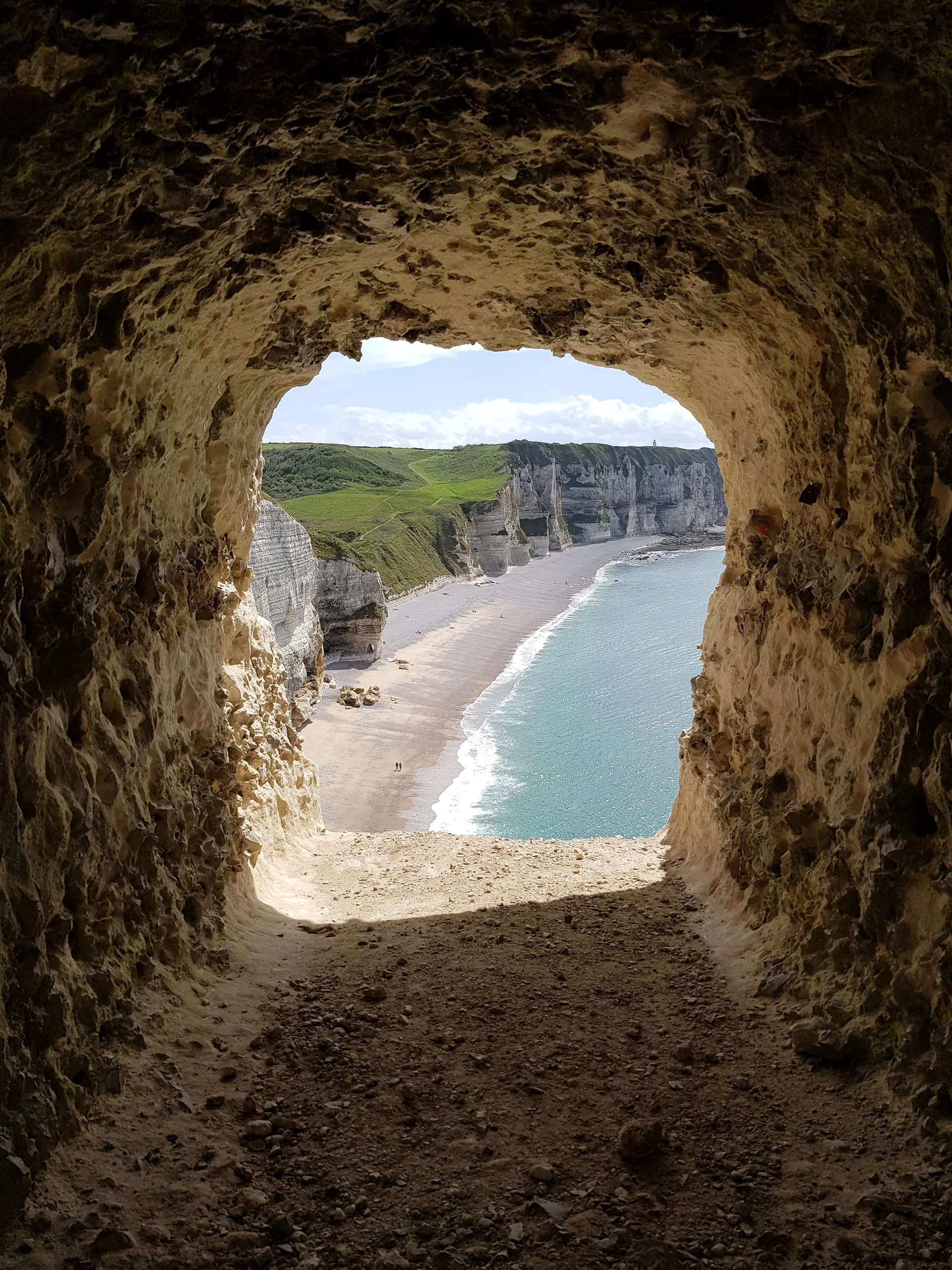
This excavation in the cliff wall is reached by a metal walkway installed about twenty years ago. Legend says three young women hid here to escape a cruel lord from the Chateau de Frefosse. The panorama of the village and the Amont Cliff is striking. Access has been prohibited by municipal decree since April 2025 for safety reasons.
Beyond the arch: The Manneporte and the golf course
The path running along the Golf d'Etretat leads to a second, even more massive arch. The Manneporte rises to nearly 90 meters (295 feet). Maupassant claimed a ship could pass through it with sails fully deployed. The Petit-Port cove below shelters small waterfalls called les Pisseuses, fed by springs seeping from the cliff.
Things to spot along the trail:
- The Caloges, old boat hulls converted into fishermen's huts
- German bunkers at the foot of the cliff, remnants of the Atlantic Wall
- The viewpoint above the Aval arch, facing the Aiguille and the Amont Cliff
Friendly advice: The Trou a l'homme tunnel that passes through the cliff toward Jambourg Beach has been officially closed since 2025. Dozens of walkers get trapped there every year by the rising tide, and rescue operations are now billed to the reckless. If you want to see the Aiguille from the beach, stay on the main beach and strictly observe tide charts.
Opening hours
*Information subject to change

During my bike ride in Étretat, I discovered the famous Aval Cliff with its well-known hole, the Porte d'Aval.
The site is perfect for unforgettable photos, offering a spectacular view of the sea and the surrounding cliffs.
An iconic place you cannot miss!
They are known all over the world, and for good reason! It lived up to our expectations.