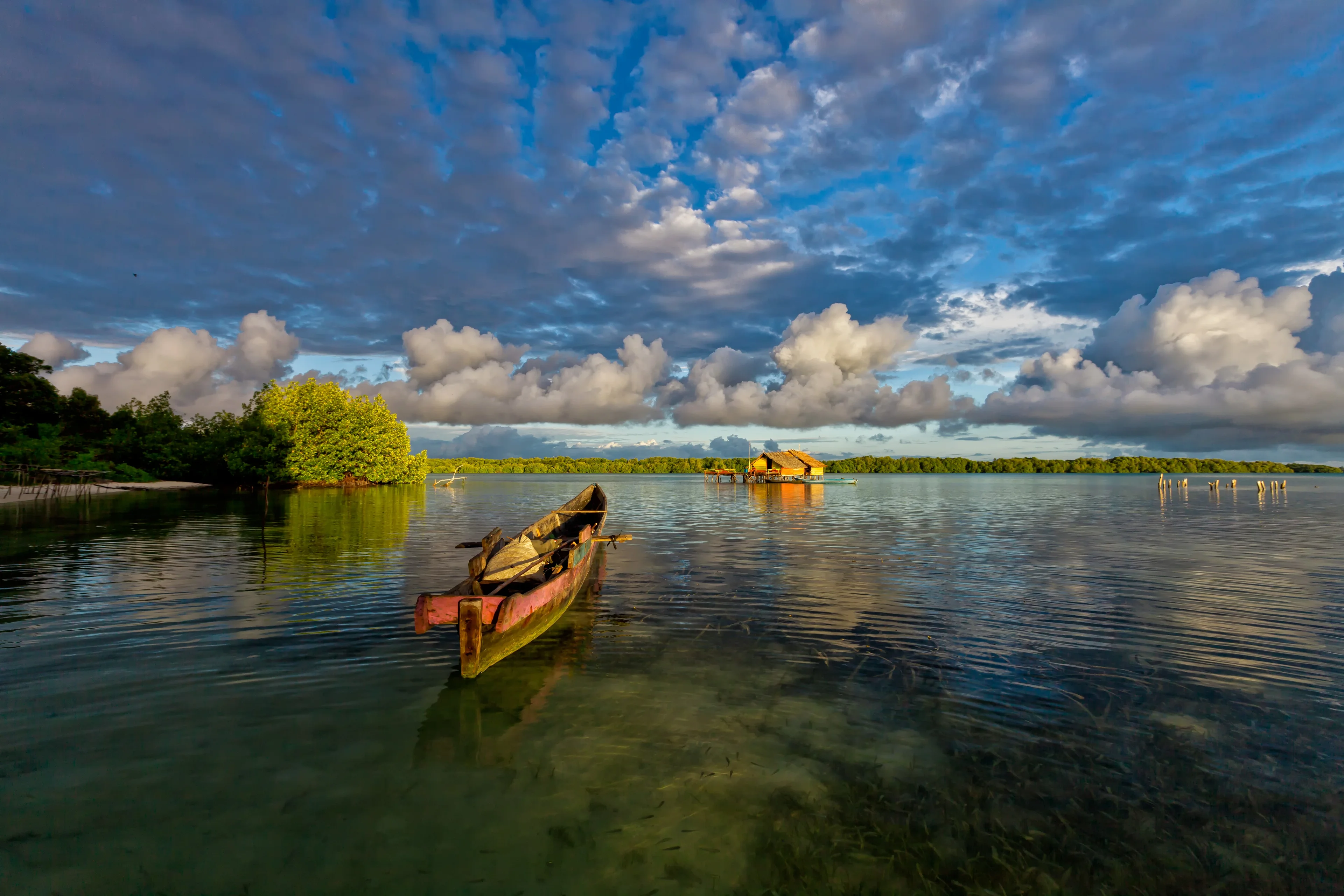
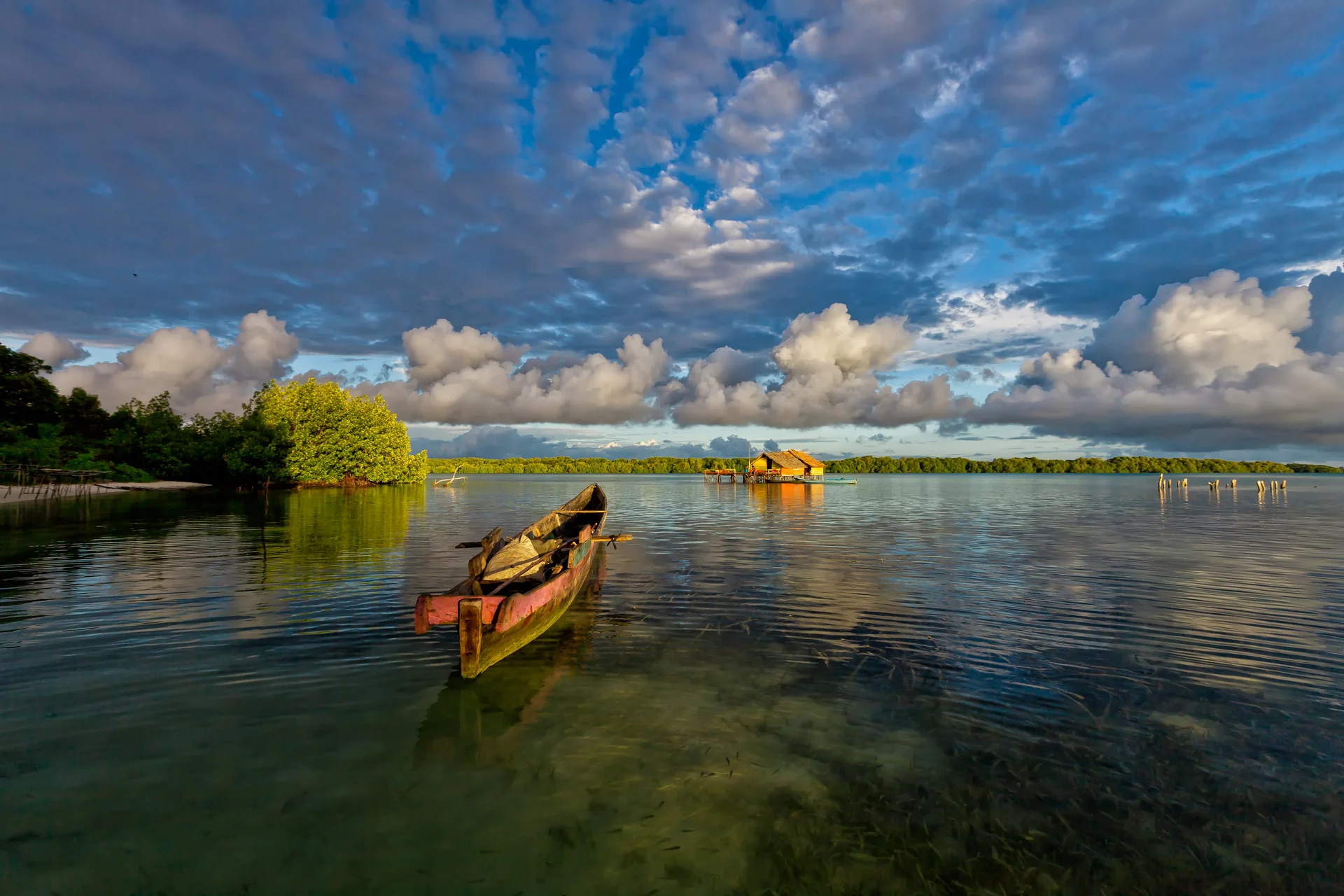
Pilotis à Halmahera

Things to do in Indonesia: 11 must-see attractions in 2026

Discover our members' favorite destinations in Indonesia, plus reviews, practical info, and traveler photos...

The 5 most beautiful cities to visit in Indonesia

Ubud

#1 Ubud +14

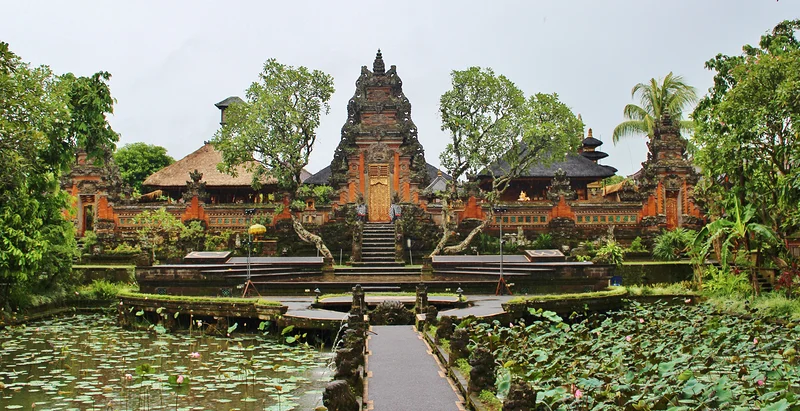
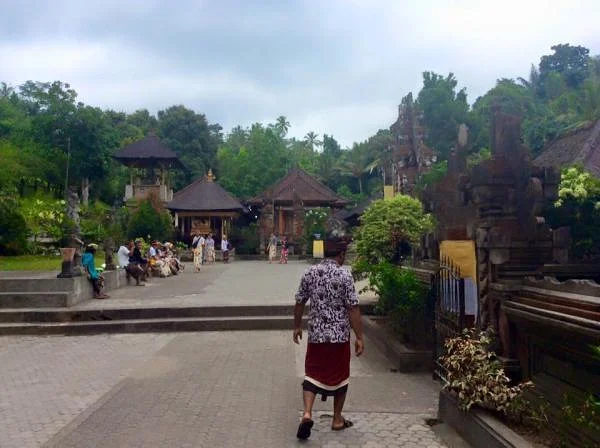
As the cultural heart of Indonesia, Ubud is famous for its terraced rice paddies, ornate temples, and traditional crafts. Located in the center of the Hindu island of Bali, this artistic hub sits at the confluence of two rivers. You can catch performances of legong and gamelan, the local dance and music, or spend your time exploring the many art galleries. Nature lovers will find plenty to explore here as well, with tropical forests surrounding the town. The name Ubud literally translates to medicine, reflecting a long history of traditional healing. This legacy continues today through the abundance of hiking trails, yoga studios, and spas. You might even find yourself trying a four-hand Balinese massage or digging into local specialties like nasi goreng (fried rice), bebek betutu (slow-cooked duck), and babi guling (Balinese-style roast pork).

The climate is tropical and equatorial, with a dry season from April to October and a wet season from November to February. Heavy rain is most common during January and February.

A jungle downtown, respecting nature and macaques

Start your visit at the Monkey Forest Sacred Sanctuary, located in a wooded area that houses a temple of the dead and evil spirits. Out of respect for local superstition, no one enters the temple grounds. You can still admire the intricate Hindu sculptures and the lively atmosphere. Just stay alert around the thousands of monkeys living here. They are drawn to anything shiny or edible. If you want to feed them, only do so in the presence of monkey experts, who are employees of the nature reserve.

Next, head to the fine arts museum, Purilukisan Museum. You will discover the kamasan painting style along with the work of Nyoman Lempad and Aries Smith. In the evening, make your way to the Puri Saren Ubud, the Royal Palace that marks the center of the village. It hosts impressive traditional performances.

A short distance away, Lempad’s House is worth the stop. This was the home of the renowned Balinese artist Gusti Nyoman Lempad, who lived to be 116 years old. Another notable residence is the Walter Spies House, named after the Moscow-born artist who invited celebrities like Charlie Chaplin to stay there. Today, it is open to everyone as the Campuhan hotel.

Art is everywhere

The Neka Art Museum is a private institution that chronicles the history of Balinese painting and the impact of Western influences on the craft. You will appreciate the educational exhibits, the clear timeline, and the impressive selection of international works.

Art enthusiasts should also visit the museum of Antonio Blanco, often called the Dali of Bali. The setting is a beautifully maintained mansion. His works, some of which are erotic, were once targeted by censors. After touring the studio, grab a drink on the terrace of the Bridge Café. The view overlooking the river and the gardens is quite pleasant.

Down below, do not miss the Pura Gunung Lebah temple, set in a lush environment that is perfect for relaxing.

How to get there

Airlines including Qatar Airways, Singapore Airlines, and Cathay Pacific offer service from major US hubs to Denpasar with stops in cities like Singapore, Hong Kong, or Doha.

How to get around

Purchase your Blue Bird taxi ride at the airport, which is the national company, for a fixed rate of ±300,000 Rp (about $19). Expect a travel time of 1.5 to 2.5 hours depending on when you arrive. Traffic in Bali is very dense, and you will rarely drive faster than 20 mph.

Ubud is compact and pleasant, making it easy to see on foot. To reach the rice paddies, rent a bicycle or a scooter for ±30,000 to 50,000 Rp per day (about $2 to $3).

Gili Trawangan

#2 Gili Trawangan +8

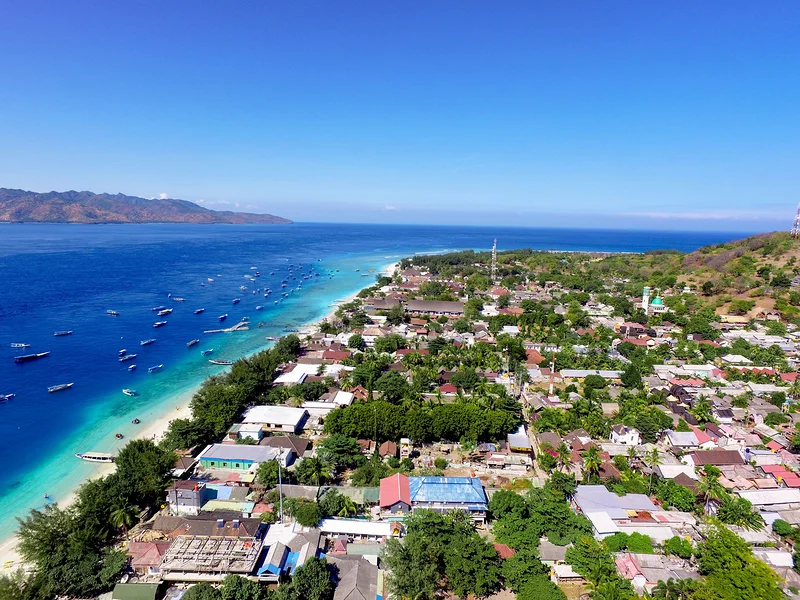
Along with Gili Meno and Gili Air, Gili Trawangan makes up the small Gili Islands archipelago, located northwest of Lombok. In Sasak, the language spoken in this part of Indonesia, Gili translates to "small island." Gili Trawangan is the largest of the three, covering just 1.3 square miles. Motorized vehicles are prohibited on these islets, so you will get around by foot, bicycle, or horse-drawn carriage. In 2018, the area was hit by a magnitude 7 earthquake that caused significant damage.

Diving in Gili Trawangan

The main draw on Gili Trawangan is diving, whether you prefer scuba or snorkeling. Take a boat trip to Nest, located just off the coast of Gili Meno. This underwater installation features 48 human-shaped sculptures by Jason deCaires Taylor arranged in a circle, designed to function as an artificial reef in the Indian Ocean. Another highlight beneath the surface is the chance to swim alongside sea turtles.

The beaches on Gili Trawangan are idyllic, and you can catch the sunset on the west side of the island, particularly near the famous overwater swing at the Ombak Sunset hotel.

Things to do on Gili Trawangan

The island is perfect for exploring, either on horseback along the coast or by hiking up the 240-foot hill that offers views of the Gili Islands, Lombok, and Mount Rinjani. For wellness, you can alternate between yoga sessions, lounging, and Indonesian massages.

The island is also well-known for its nightlife, which continues into the early hours on the beach or even on boat parties.

Near the port, a night market sets up every evening where you can sample local specialties like Nasi Goreng, a spiced fried rice dish with vegetables, or Satés, small meat or fish skewers grilled over charcoal. Near the market, you might stumble upon a traditional martial arts tournament involving stick fighting.

When to go

The best time to visit Gili Trawangan in Indonesia is during the dry season, between May and September. Traveling to the Gili Islands during the high season of July and August is a solid strategy if you want to escape the heavy crowds found on Bali during those same months.

How to get there

You can reach Gili Trawangan by boat from Bali, departing from the ports of Amed, Sanur, or Padangbai using either a standard ferry or a speedboat. From Lombok, boats depart from the port of Bangsal. You can also travel between the neighboring islands of Gili Meno and Gili Air by booking crossings through local agencies on the island.

Borobudur

#3 Borobudur +4

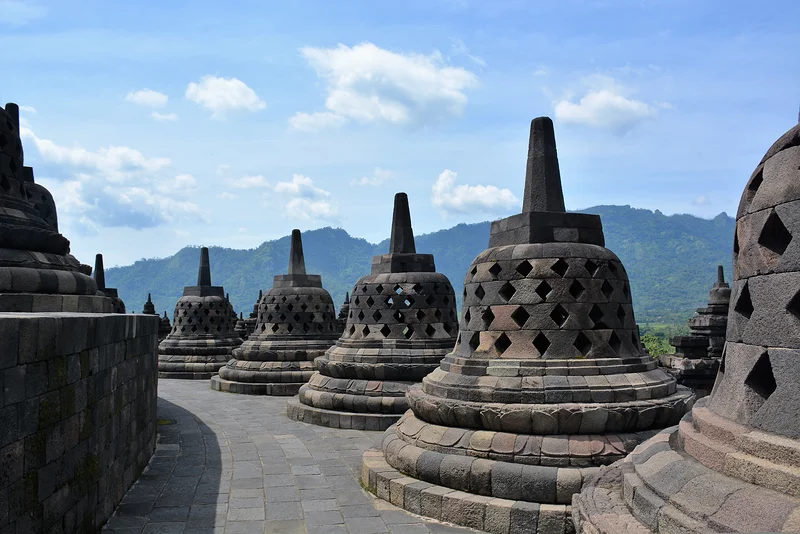
Borobudur sits on the island of Java in Indonesia. Tucked into the Kedu plain, the area is framed by the Menoreh mountain range and the volcano Merapi. These peaks served as a spiritual sanctuary for Buddhist monks for centuries, leading to a high density of temples in the region. Among them is the largest Buddhist monument on the planet, the Borobudur temple, built in the 9th century during the Sailendra dynasty. After being abandoned around 1100 and left to be reclaimed by volcanic ash and jungle growth, the temple was rediscovered in the early 19th century by Java governor Thomas Stamford Raffles.

The world's largest Buddhist temple

Starting in the 1970s, the Indonesian government and Unesco teamed up for a major restoration project to save the structure from collapse. It was named a World Heritage site in 1991. The temple is essentially a massive stupa, a bell-shaped Buddhist monument measuring 123 meters long and 43 meters high. From above, the layout forms a mandala, a visual representation of Buddhist cosmology. Its construction involved moving nearly 1,600,000 blocks of volcanic stone.

The structure consists of nine platforms, with six square bases topped by three circular ones. The highest level holds a large stupa, surrounded by 72 smaller stupas. The temple walls are covered in detailed reliefs telling the story of Buddha. There are 2,670 relief panels in total. Of these, 1,460 are narrative, documenting the transformation of Prince Siddharta into Buddha and the spiritual journey of his disciple Sudhana toward ultimate truth. The temple was originally home to 504 statues of Buddha, though 43 have been lost and at least 300 have been damaged.

The sacred valley of Borobudur

The Borobudur temple is only part of the story, as the entire Kedu plain was a hub for ancient religious life. The valley is lush and fertile, filled with rice paddies and palm trees, and the surrounding mountains have long held deep significance. Nearby, you will find two other notable sites: the Mendut temple and the Pawon temple. The Mendut temple houses three well-preserved statues of Buddha and serves as a center for learning Buddhist precepts. The Pawon temple commemorates the moment Siddharta reached supreme wisdom.

Each year between May and June, during the full moon, processions are held to celebrate Vesak, a sacred day marking the birth and death of the Buddha, which is a public holiday in Indonesia. Pilgrims begin their journey at the Mendut temple, continue through Pawon, and finish at the Borobudur temple.

When to go

The best time to visit Borobudur is during the dry season, which runs from May or June through October.

How to get there

From the bus terminal in Yogyakarta, you can take a local bus or a taxi to reach Borobudur. Alternatively, you can book a private excursion through a tour operator.

Tegallalang

#4 Tegallalang +3

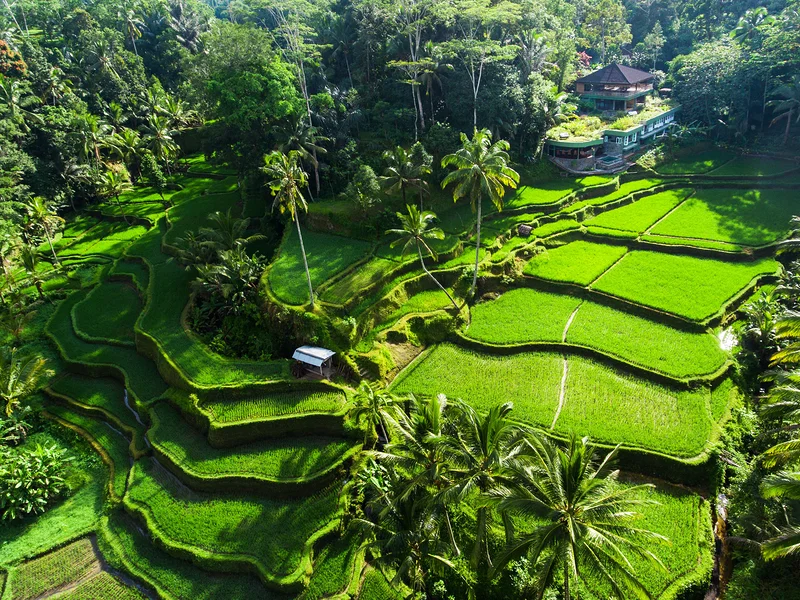
Tegallalang sits in the Gianyar province on the island of Bali in Indonesia. It is known for its terraced rice paddies, a traditional agricultural layout carved into hillsides at an altitude of 600 meters. Perfectly positioned between the town of Ubud and the sacred Lake Batur, it is a standard stop for anyone traveling through Bali.

Beautiful rice fields in Indonesia

The rice terraces of Tegallalang rank among the most visited sites on the island of Bali. They operate on the Subak principle, an agricultural management system created in the 9th century by the saint Rsi Markandeya that is specific to Indonesia. In this complex water distribution system, priests oversee irrigation and farming schedules. You can take scenic walks through the Tegallalang rice paddies, often for a small entrance fee of around 25,000 IDR (about $1.60). In recent years, swings and a zipline have been added to accommodate the rise in tourism.

To relax after exploring the fields, head to the sacred springs of Tirta Empul, built in 1957 by the first Indonesian president Soekarno in the Tegallalang region. While the water in the bathing pools is quite cool, it is believed to purify those who bathe in it, as the temple is dedicated to Vishnu, the Hindu god of water. Be sure to properly knot your sarong before entering the site.


Artisan capital of Bali

Along with the nearby small village of Pakudui, Tegallalang is famous for its thriving craft scene focused on wood carving techniques. This local art is passed down through generations, and their creations, including bowls, dishware, and small decorative items, are sold globally. You will likely find something to take home at the town market.

Regarding religious heritage, the area around Tegallalang was once home to a powerful Brahmin caste. In Manuaba, a small village a few miles from Tegallalang, you will find the Pura Griya Sakti temple, built in the 17th century. Among the temples to see in this part of the island, do not miss the Lake Batur temple, perched in the middle of the caldera at an altitude of 1,000 meters. The Gunung Kawi temple in Tampaksiring is another essential stop. Built in the 10th century, it features a dozen mausoleums carved directly into the rock face, within cavities nearly seven meters high. The tombs hold members of the royal family from that era. Note that to reach Gunung Kawi, you must climb a total of 230 stone steps that wind through lush rice paddies.

When to go

The best time to see the rice paddies of Tegallalang is right before the harvest, specifically in May and June or between September and November.

How to get there

The best way to reach Tegallalang is by motorized vehicle, either a car or a scooter. Additionally, many local agencies organize their own shuttle excursions directly to the rice terraces.

Karangasem

#5 Karangasem +3


Karangasem is a regency located on the far eastern side of the island of Bali in Indonesia. It served as the seat of a historically powerful Balinese kingdom. The rulers took the name Anak Agung, a direct reference to Mount Agung. At 10,308 feet, this is the highest volcano on Bali, and the ruling dynasty considered it the center of the world. By the 19th century, the nine kingdoms of Bali had gradually fallen under Dutch administrative control. The Besakih temple, the most significant on the island, and the vestiges of Semarapura remain as markers of the grand history of Karangasem's sovereigns.


Surrounding areas: remnants of a kingdom

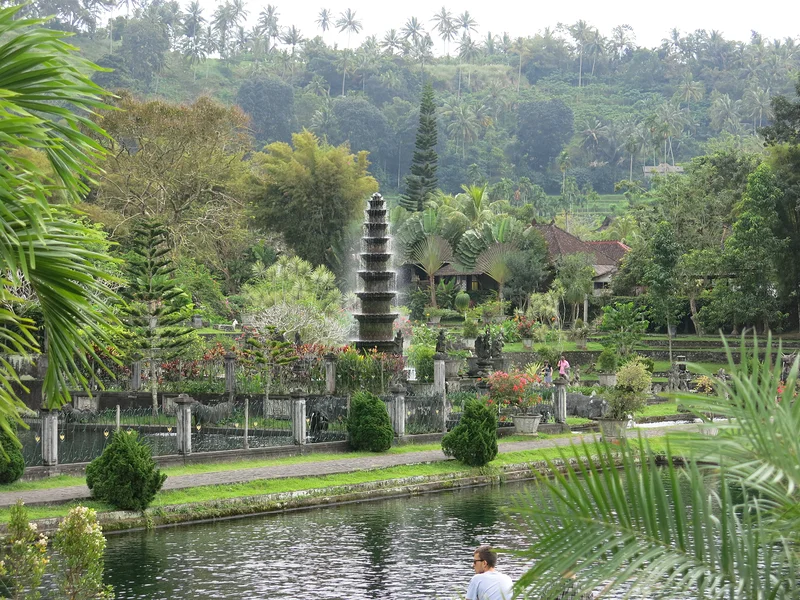
On the road to Karangasem, stop at the historic site of Klungkung, or Semarapura, which holds the remains of the former royal capital. Its courthouse, built in 1710, is packed with traditional Balinese frescoes, carvings, and paintings. The site preserves a deep cultural and ritual legacy from the Anung dynasty. Closer to Karangasem, a trip to Tirtagangga is essential. This water palace was founded in the mid-19th century by the Rajah of Tampalura. After suffering damage during the 1963 eruption of Mount Agung, the pools and gardens were carefully restored for public access. In a similar vein, the Soekasada Ujung water palace is worth the detour. Built right on the coastline, it once served as an observation point for monitoring maritime traffic coming from the neighboring island of Lombok.

The Karangasem region is dense with temples. The nearest is Lempuyang Luhur, a complex dedicated to Shiva that consists of seven distinct temples. Be prepared for a climb of 1,700 steps to reach the top. Not far away, on the slopes of Mount Agung, stands the most sacred temple in Bali: Besakih. It encompasses nearly 80 individual temples scattered across a wide area, all dedicated to the three major Hindu deities, Brahma, Vishnu, and Shiva.


Eastern Bali: rice paddies and the coast

Experience the local geography of Karangasem by hiking in Sidemen, a lush valley filled with vibrant green rice terraces. For those looking for a physical challenge, you can arrange a trek to summit Mount Agung.

The Karangasem coastline is equally striking. The small village of Amed, with its black volcanic sand beaches, offers a quiet, authentic atmosphere. Beyond the beaches, diving enthusiasts should head to Tulamben, a coastal spot known for exceptional marine life. Resting on the seafloor here is the wreck of the Liberty, an American cargo ship sunk by a Japanese submarine in 1942 during World War II.


When to go

Plan your trip to Bali during the dry season, which runs from April through September.


Getting there

From Denpasar, where the international airport is located, you can take a taxi or a shuttle to Karangasem. Alternatively, renting your own vehicle gives you the freedom to explore the rest of the island at your own pace.

Ranking of the 6 activities selected by our editors in Indonesia

#1 Ubud Monkey Forest (Ubud) +3 5

Ubud Monkey Forest is a sacred Hindu reserve in the village of Padangtegal, Indonesia, managed by the local community. It houses three active temples where religious events like the Ngebejiang ceremony, Ngelawang performances, or Tumpek Kandang celebrations occur. During these times, parts of the forest close to visitors. Home to 1,260 long-tailed macaques as of 2022, these monkeys are considered sacred.

#2 Manusela National Park (Amahai) +3 5

Manusela National Park covers 189 hectares on the island of Ceram in Indonesia. This tropical jungle shelters numerous endemic species threatened by poaching, including rare cockatoos. It acts as a vital sanctuary for nearly 200 bird species. Manusela means bird of freedom in the local language. Four traditional villages help protect this area. A guide is required to enter.

#3 Tirtagangga Water Palace (Karangasem) +3 5

Tirtagangga Water Palace sits in eastern Indonesia, within the Karangasem regency, once one of Bali's nine kingdoms. While the 1946 original was destroyed by a 1963 volcanic eruption, the current site remains a peaceful retreat. Explore its fountains, tiered ponds, and natural spring-fed pools where you can swim for 25,000 IDR (about $1.50).

#4 Tanah Lot (Tabanan) +3 5

Tanah Lot sits on a rocky islet just off the coast of Tabanan, Indonesia. Dedicated to sea spirits, this temple is only reachable on foot during low tide. While visitors are welcome, most areas remain reserved for prayer. Locals frequently gather here to celebrate Odalan, a ritual blessing occurring every 210 days.

#5 Prambanan Temple (Prambanan) +2 5

Prambanan Temple, located near Yogyakarta, is a major Hindu complex dedicated to the Trimurti of Brahma, Vishnu, and Shiva. This UNESCO World Heritage site features intricate bas-reliefs and impressive architecture. In the evening, watch a Ramayana dance performance, a traditional reenactment of the classic epic. It is a key stop for history and art enthusiasts on Java.

See the guide See deals

#6 Borobudur Temple (Borobudur) +2 4

Borobudur Temple, located on the island of Java, stands as the largest Buddhist monument in the world. Built in the 9th century, it features nine platforms adorned with intricate bas-reliefs and Buddha statues. Known for its sunrise views, this site remains a major pilgrimage destination for Buddhists, especially during the Vesak festival.

See the guide See deals

Indonesia: 17,000 Islands, Endless Ways to Get Lost

An archipelago roughly the size of the continental US, stretched across 3,100 miles of ocean. Volcanoes that shoot blue flames into the night sky. Orangutans staring you down from the canopy of Sumatra. And everywhere, that smell of incense mixed with spices sizzling in roadside warungs (small family food stalls). Most travelers come for Bali, but the ones who stick around discover a country where every island tells a completely different story.

Indonesia: A Massive Playground, But Not for Everyone

This country rewards curious travelers who can roll with the unexpected. Outside tourist zones, infrastructure is basic, journeys routinely take three times longer than Google Maps suggests, and Western-style comfort is far from guaranteed. If you're after empty beaches reachable by scooter, treks up active volcanoes, and encounters with cultures that haven't been smoothed out for tourism, go for it. If you want a resort vacation with a pool and reliable service, stick to southern Bali or Lombok.

Indonesia is majority Muslim, with the notable exception of Bali, where Hinduism shapes daily life in ways you'll notice immediately. Indonesians are genuinely warm and often curious about foreign visitors, but expect to be asked for photos constantly once you're off the main tourist trail. The tropical heat and relentless humidity will wear you down if you're not prepared for it.

Costs: Cheaper Than Most of Southeast Asia

Budget travelers can get by on roughly 300,000 to 450,000 IDR per day (about $18-$28): a dorm bed, meals at local warungs, and buses or ferries between stops. A comfort budget of 750,000 to 1,200,000 IDR per day (around $46-$75) gets you a private air-conditioned room, some guided excursions, and sit-down restaurants. Activities like scuba diving, guided volcano treks, or a cruise to Komodo add up fast and should be budgeted separately.

Java's Volcanoes: The Most Intense Experiences in the Country

The island of Java packs in some of Indonesia's most memorable moments. Mount Bromo delivers a lunar-landscape sunrise: a smoking caldera, ash dunes, and a crater that rumbles underfoot. You'll leave your hotel in the middle of the night from Malang or Probolinggo, but the exhaustion disappears the moment the view opens up.

Further east, Kawah Ijen has something almost no other volcano on earth offers: blue sulfuric flames that erupt from the crater between 2 and 4 a.m., creating a scene that looks like it belongs on another planet. Sulfur miners still work the crater in brutal conditions, hauling loads up the steep trail. It's a sharp reminder that this isn't just a photo op.

Insider tip: Book a 3-day combo tour out of Yogyakarta that covers both Bromo and Ijen, plus a waterfall stop. You'll save serious time and avoid the logistical headache of connecting between the two sites on your own.

Yogyakarta: Java's Cultural Capital

Yogyakarta deserves at least two full days. Borobudur, the largest Buddhist monument in the world, is best visited at dawn to beat the crowds and catch the morning mist rolling through the stone stupas. About 45 minutes away, the Hindu temples of Prambanan rise in dramatic spires. The city itself has a strong arts scene, traditional dance performances most evenings, and streets where murals share space with open-air markets.

Sumatra: Orangutan Territory

Sumatra is the place to go if seeing orangutans in the wild is on your list. The small town of Bukit Lawang is the base for treks ranging from a single day to several nights inside Gunung Leuser National Park. The orangutans you'll encounter are semi-wild, rehabilitated after being kept in captivity. Making eye contact with one in the forest is the kind of moment that stays with you.

Further north, Lake Toba fills a volcanic caldera formed 75,000 years ago. It's the largest crater lake in the world, and at its center sits Samosir Island, where the Batak people maintain traditions that have survived for centuries. The pace here is slow and genuinely peaceful. A lot of travelers plan two nights and end up staying five.

Bali and Its Neighbors: Past the Tourist Surface

You can't skip Bali, but the south of the island is overrun with hotels, traffic, and souvenir sellers. To find what makes Bali actually worth the trip, head north or inland. The Jatiluwih rice terraces, a UNESCO-listed site, stretch across the hillsides in deep green tiers. The village of Sebatu, about 12 miles from Ubud, has somehow stayed almost entirely off the mass-tourism radar.

The Nusa islands draw visitors for their dramatic cliff scenery. Nusa Penida has some of the most photographed viewpoints in Indonesia, but its roads are rough enough that scooter riders need to be careful. Nusa Ceningan and Nusa Lembongan are better suited to travelers looking for calm water and good snorkeling.

The Gili Islands and Lombok

The three Gili Islands each have a distinct personality: Gili Trawangan for the party scene, Gili Air for a balance between social and quiet, and Gili Meno for silence, sea turtles, and not much else. No motorized vehicles on any of them. Lombok offers a less-developed alternative to Bali, with white-sand beaches in the south and Mount Rinjani, a serious multi-day trek, for hikers who know what they're getting into.

Flores and Komodo: Adventure at the Edge of the Archipelago

Flores remains genuinely off the beaten path despite scenery that rivals anywhere in the region. The winding road across the island passes sculpted rice fields, traditional villages, and volcanic lakes that shift color depending on mineral concentrations. Labuan Bajo is the jumping-off point for Komodo National Park, where Komodo dragons, which can reach 10 feet in length, roam freely.

A two-day liveaboard cruise lets you combine dragon watching with snorkeling on some of the healthiest coral reefs in the world. Manta rays and sea turtles are common sightings here. The underwater biodiversity in this stretch of water ranks among the richest on the planet, comparable to the Coral Triangle that spans much of this region.

Insider tip: The Togian Islands, reached from Sulawesi after roughly three days of travel, offer world-class diving with almost no crowds. Build in extra time and come with patience.

Sulawesi: The Island of Rituals

Toraja country, in the southern highlands of Sulawesi, is unlike anywhere else in Indonesia. The Toraja people keep their deceased relatives in the family home for months, sometimes years, before elaborate funeral ceremonies involving the sacrifice of water buffalo and pigs. Graves carved into cliff faces, with wooden effigies of the dead standing guard outside, create a landscape that's genuinely unlike anything most Western travelers have encountered.

In the north, Bunaken Marine Park regularly hits visibility of 100 feet or more. Divers see sharks, turtles, manta rays, and marine biodiversity that puts most other destinations to shame.

Eating in Indonesia: Sambal, Fried Rice, and a Lot More

Nasi goreng, fried rice seasoned with sweet soy sauce and topped with a fried egg, shows up at breakfast, lunch, and dinner. Satay, grilled skewers served with a rich peanut sauce, is available on practically every corner. Rendang, originally from Sumatra, is a beef curry slow-cooked for hours in coconut milk and spices. It regularly appears on lists of the best dishes in the world, and for good reason.

Every region has its own angle. In Padang, restaurants bring a dozen dishes to your table at once and you only pay for what you eat. In Bali, babi guling (spit-roasted spiced pork) is the local celebration dish. At any warung, a full meal runs around 25,000 to 35,000 IDR (roughly $1.50-$2.20).

Indonesian coffee is worth seeking out. Beans from Toraja, Sumatra, and Java produce earthy, full-bodied cups that serious coffee drinkers will appreciate. The traditional preparation is kopi tubruk: coarse grounds poured directly into the cup with hot water, sediment and all. Let it settle before you drink.

When to Go

The dry season runs from May through October across most of the archipelago. June through September is the sweet spot for volcano treks and outdoor activities. The rainy season, November through March, brings daily downpours, though rarely all-day rain. Some travelers actually prefer this window for lower prices and thinner crowds at the main sites.

Climate varies significantly by island. Bali and Lombok have well-defined seasons. Sumatra and Kalimantan stay humid year-round. For diving, April through September offers the best visibility. Avoid Indonesian school vacation weeks in December and January if you want quieter beaches.

Getting to Indonesia

From the US, expect a total travel time of 20 to 25 hours with at least one connection, typically through Singapore, Kuala Lumpur, Tokyo, Dubai, or Doha. Round-trip fares generally run between $800 and $1,400 depending on the season and how far in advance you book. Garuda Indonesia, Singapore Airlines, Emirates, and Qatar Airways cover the main routes with the most reliable service.

Most international flights land at Jakarta or Denpasar (Bali's airport). US passport holders get a free visa-on-arrival for stays up to 30 days. If you're staying longer, the visa-on-arrival costs around 500,000 IDR (about $31) and can be extended once inside the country. Make sure your passport is valid for at least six months beyond your travel dates, as Indonesian immigration enforces this strictly.

Getting Around

Domestic flights are the fastest way to move between major islands. Lion Air, Citilink, and Batik Air offer reasonable fares if you book ahead. Be cautious with small propeller aircraft on remote routes, where safety records are inconsistent.

On Java, the Kereta Api Indonesia rail network connects Jakarta, Yogyakarta, and Surabaya comfortably and reliably. Ferries link neighboring islands but crossings can be long and basic. Local buses are cheap but slow, and on longer routes the comfort level is minimal.

On the islands themselves, the scooter is king. Rentals run about 60,000 to 120,000 IDR per day (roughly $4-$7). Traffic drives on the left, and in busy areas it can get chaotic fast. In cities, Grab and Gojek work well for motorbike taxis or car rides with a driver, similar to how you'd use Uber back home.
Find the best deals to travel to Indonesia

Hotels and stays Flights Car rentals Custom trips

Top photos posted by members

Pilotis à Halmahera
Gunung kawi
Temple Pura Ulun Danu