
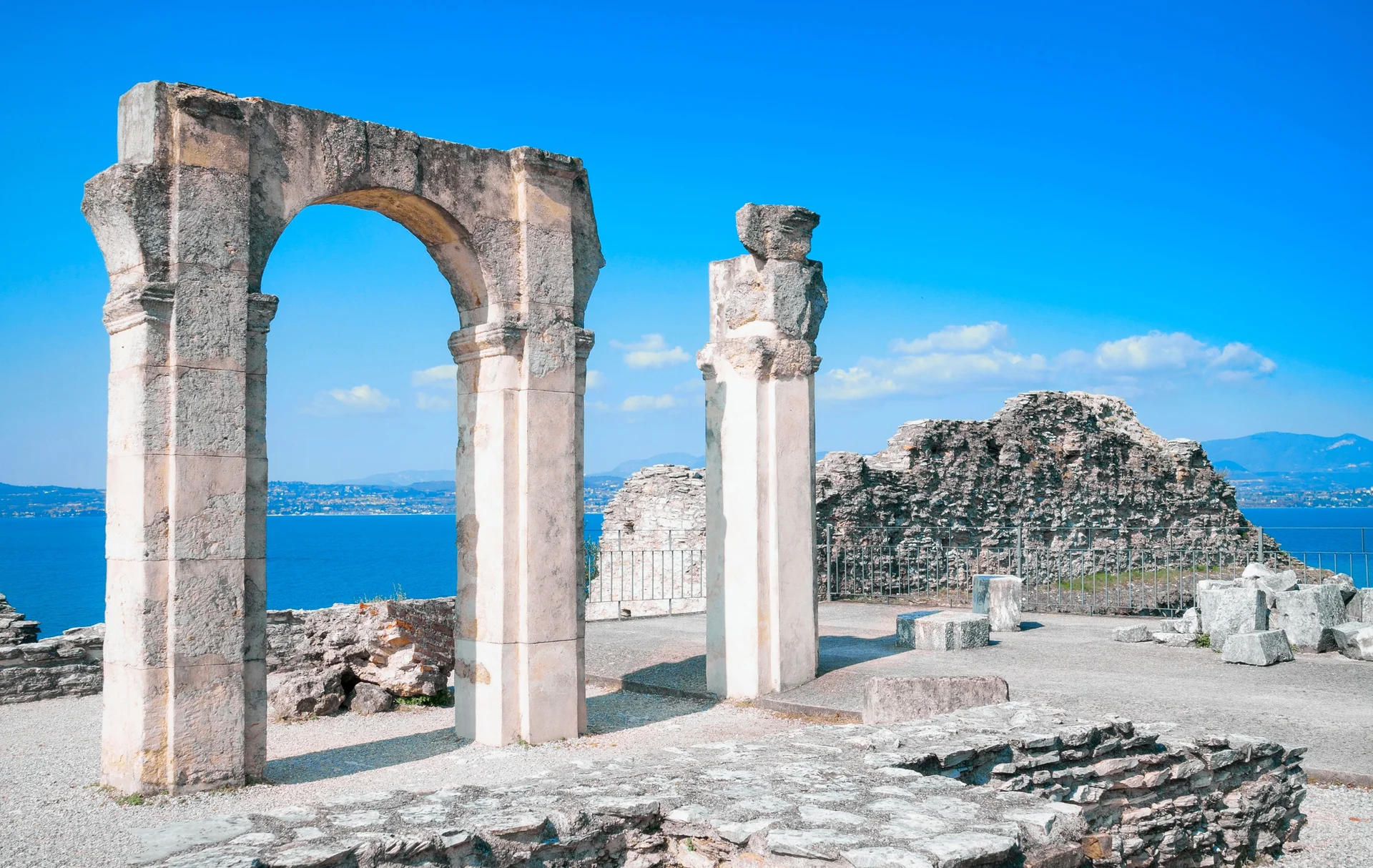
Visiting Catullus' Grotto, the ruins of an immense Roman palace
Don't let the name fool you. There are no dark caves here. Instead, you will find the majestic, sun-drenched ruins of the largest Roman villa in northern Italy. Located at the very tip of the Sirmione peninsula, the site offers a striking blend of archaeology and landscape, where the silence of ancient stone is broken only by the lapping water.
Why is this archaeological site so fascinating?
The name is a poetic misunderstanding. Early Renaissance travelers, seeing the collapsed structures overgrown with vegetation, assumed they were grottoes. They linked them to the poet Catullus, who famously celebrated his love for Sirmione, even though the villa was built after his death. Today, historians believe it belonged to the wealthy Gens Valeria family from Verona.
The site is massive. Spanning two hectares, it stands as an exceptional testament to Roman luxury and engineering. Walking through these grounds means navigating the remains of an opulent residence built between the late 1st century BC and the early 1st century AD, imagining the lives of its occupants against a backdrop that remains just as spectacular two millennia later.
A walk between ruins and nature
The visit is an open-air stroll where every structure tells a piece of the villa's history. The path winds through a vast olive grove, offering constantly changing perspectives of the lake.
The heart of the villa
You can still make out the layout of the home. Long corridors, such as the cryptoporticus, once served the residential quarters. The large central garden, or peristyle, acted as the lungs of the villa. You can observe the massive foundations built to support the structure on the rocky, sloping terrain, which remains a genuine technical feat.
A view over Lake Garda
The villa's location was not chosen by accident. From the grand north terrace, the view of Lake Garda is unmatched. This is where the owners would have hosted guests and contemplated the beauty of the landscape. The famous Jamaica Beach, with its white rock slabs, is visible below, creating a sharp contrast.
Pro tip: The site is very exposed to the sun and offers little shade. Bring water, a hat, and sunscreen, especially in the summer. Combine your visit with a refreshing swim at Jamaica Beach right afterward. You can reach it via a small nearby path.
The archaeological museum: stepping back in time
Before exploring the ruins, a visit to the small but well-curated Archaeological Museum at the site entrance is essential. It displays items recovered during excavations, including fresco fragments, mosaics, sculptures, and everyday objects. These pieces help you better visualize the past splendor of the villa and the daily lives of its inhabitants.
Opening hours
*Information subject to change