
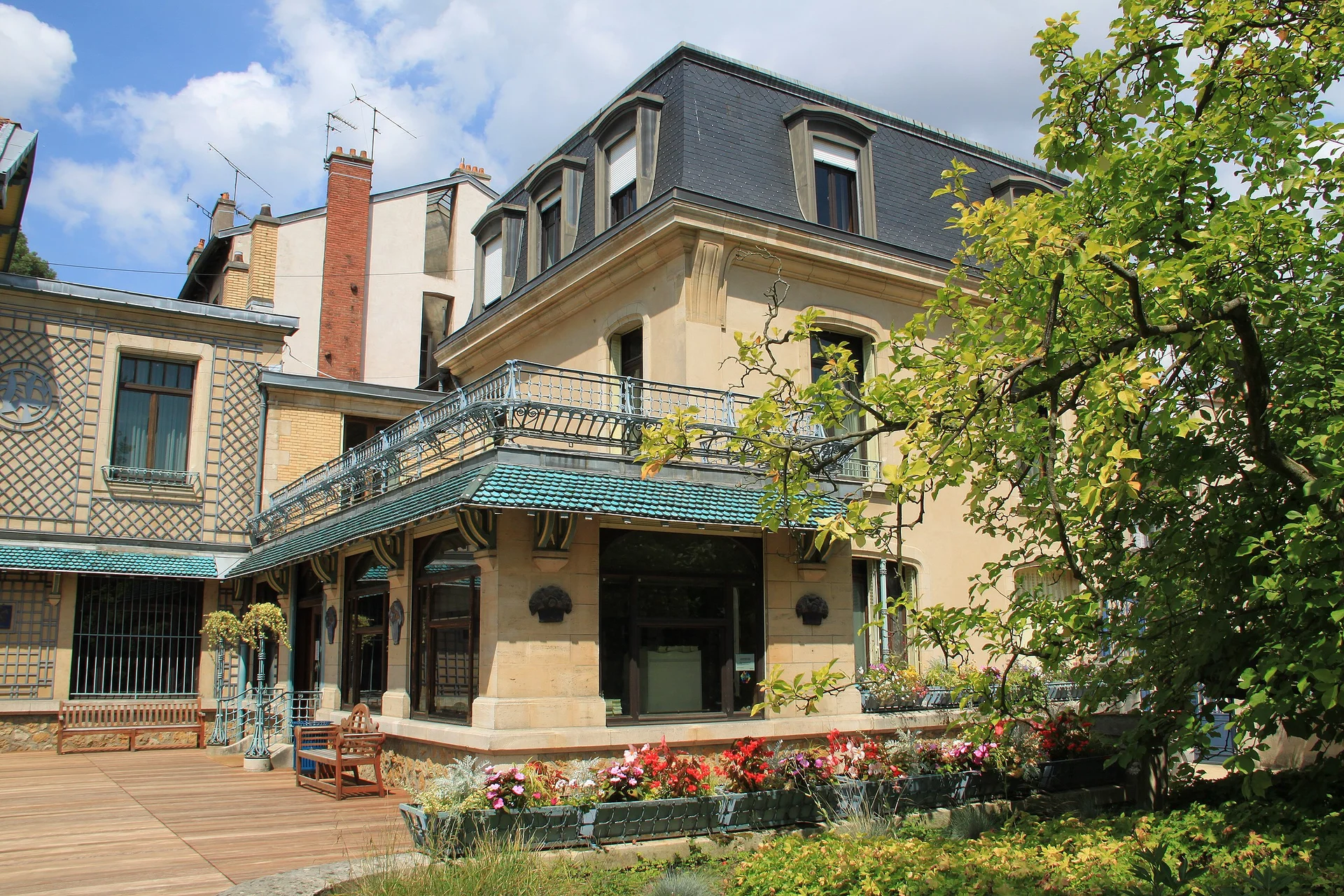
Visiting the Museum of the School of Nancy, Art Nouveau in its original setting
Stepping into the Museum of the School of Nancy is not just entering an exhibition space. It is moving into the heart of a specific era. Housed in the former home of Eugène Corbin, a visionary patron and collector, the museum offers a total immersion into the world of Nancy Art Nouveau where the movement was born and flourished.
Why this museum is essential
Dedicated exclusively to the artistic movement that brought the city its fame, the museum presents a collection of rare coherence and richness. Every piece, from furniture to art objects, tells a story of nature, curves, and technical innovation, all within the intimate setting of an early 20th century bourgeois villa that still feels inhabited by the spirit of its creators.
Exploring living and integrated collections
Rather than a succession of works in sterile rooms, the layout invites you to wander through reconstructed living spaces. The dining room, the living room, the office, and the bedrooms come to life through spectacular furniture sets and everyday objects magnified by the talent of local artists from the Lorraine region.
Furniture, between nature and symbol
Furniture designed by Émile Gallé, Louis Majorelle, or Eugène Vallin are the true stars of the space. You can admire the finesse of marquetry with dragonfly or gingko leaf motifs, the fluidity of lines mimicking plant growth, and the boldness of structures that seem to defy the laws of traditional cabinetmaking.
Do not leave without seeing these pieces:
- The Aube et Crépuscule (Dawn and Dusk) bed by Émile Gallé, a dreamlike masterpiece.
- The Masson dining room by Eugène Corbin, a complete and immersive set.
- The grand piano by Majorelle, combining music and sculpture.
The magic of glass and ceramics
Glassware, a field of excellence for the School of Nancy, is brilliantly represented. Vases and lamps by Émile Gallé and the Daum brothers reveal complex techniques, playing with translucency, colors, and inclusions to capture the beauty of a landscape or the blooming of a flower. Flamed stoneware and ceramic pieces complete this exploration of materials.
A remarkable garden, an extension of art
The visit continues outside in a peaceful garden that is much more than a simple green space. Designed as a total work of art, it showcases plant species dear to the artists of the era. The park also houses surprising monuments that deserve particular attention.
Insider tip: Do not miss the aquarium pavilion hidden at the back of the garden. This surprising structure, attributed to architect Weissenburger, is a small architectural gem. Take the time to admire the stained glass by Jacques Gruber featuring aquatic motifs and descend into the coolness of the rock grotto for an unexpected sensory experience.

I was a little disappointed by the Villa Majorelle, which only has three rooms on display, but the Museum of the School of Nancy really blew me away! I discovered the artists who founded this movement, especially Emile Gallé. I loved the magnificent dining room at the end of the ground floor, as well as the "Dawn and Dusk" bed with its dragonfly woodwork on the first floor. If you are interested in decorative arts, definitely do not miss this museum. Plus, the garden and the building are lovely. Plan on a good hour for your visit.