
Doria Castle, a Genoese sentinel above the Gulf of Poets
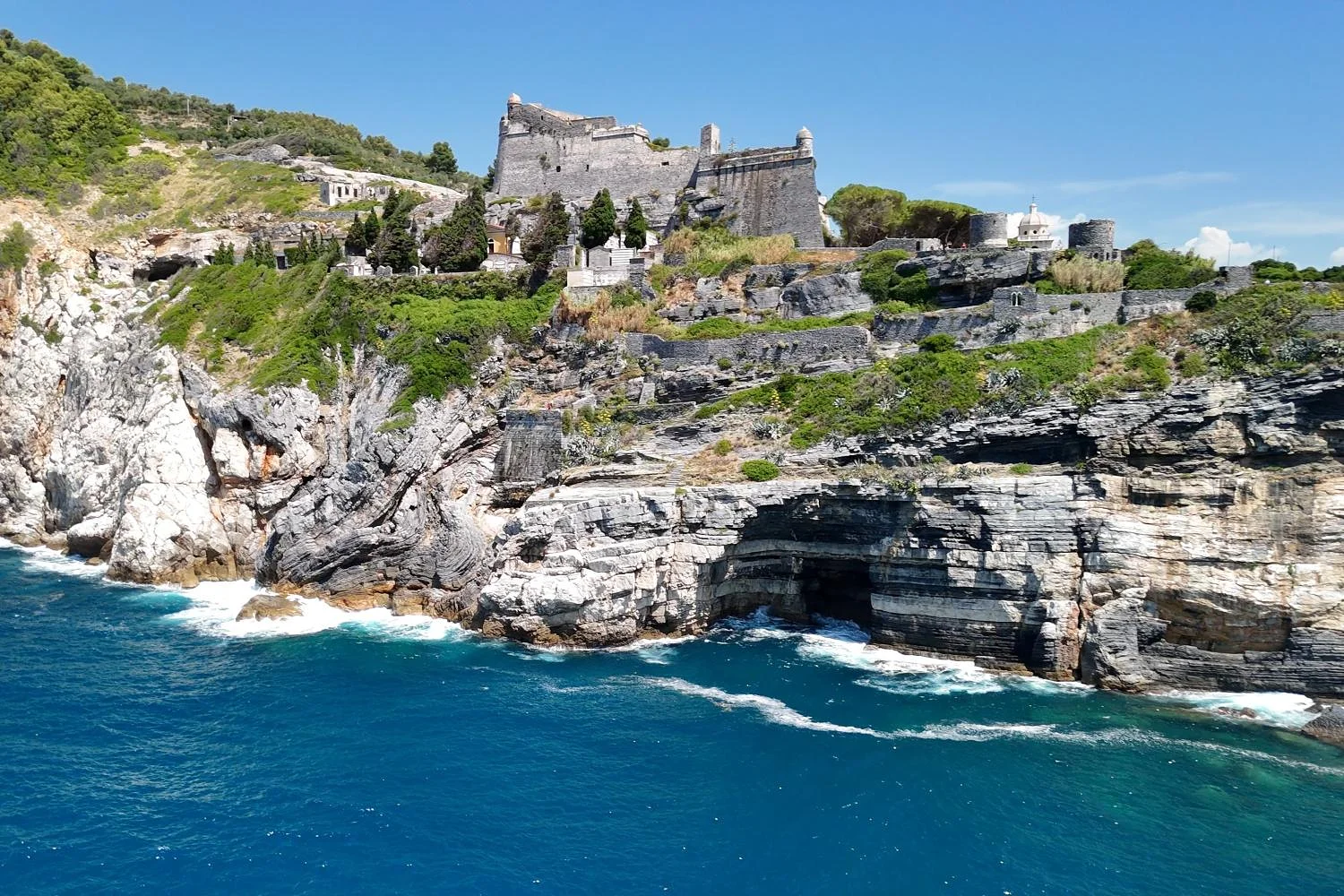
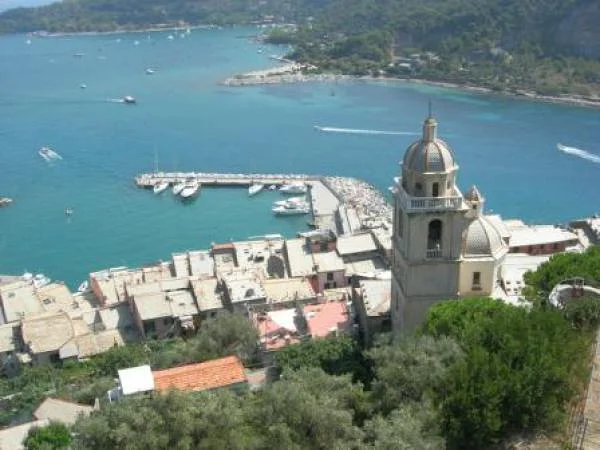
The walls are thick, the stone is dry, and the wind whistles through the arrow slits. From the top of Doria Castle, you command a view of all Portovenere. You can see the village rooftops below, the San Pietro church perched on its rocky spur, the deep blue of the Bocche canal, and the silhouette of Palmaria island directly across the water.
This Genoese fortress, built in 1161 on much older ruins, does not have much to show inside. However, the view from the outside more than makes up for the climb.
Why visit Doria Castle?
The Republic of Genoa did not build its fortresses by accident. When it took control of Portovenere in 1139 with the help of the local lords of Vezzano, they knew they needed a military lock against their Pisan enemies. The current castle dates to 1161 and was expanded and remodeled until the 17th century to keep pace with advancements in artillery.
Its pentagonal shape, three bastions facing the sea, and a circular tower on the mountain side make it one of the most successful examples of Genoese military architecture in Liguria.
After centuries of service, the fortress met a darker fate. Under Napoleon, the French converted it into a political prison. The castle fell into disuse during the 20th century, but it was restored in the 1970s and is now owned by the municipality. It occasionally hosts art exhibitions, cultural events, and even civil weddings.
What you actually see inside
Let's be clear, Doria Castle is not a museum. The rooms are empty, there are no explanatory signs, no period furniture, and no exhibits. Some visitors leave disappointed. It is a mistake to come here expecting anything other than raw architecture and a panorama. The value lies elsewhere.
The Sala Ipostila and the Casa del Castellano
You enter through an imposing stone gate that opens into a vaulted corridor. A covered staircase leads to the Sala Ipostila (Hypostyle Hall), a vast room where groin vaults rest on sturdy stone pillars. Its name comes from ancient temples with flat roofs supported by columns. Above it sits the Casa del Castellano (Captain's House), where the Captain of the People resided in the 16th century, acting as a military authority independent of the official who governed the village.
The battlements and the panoramas
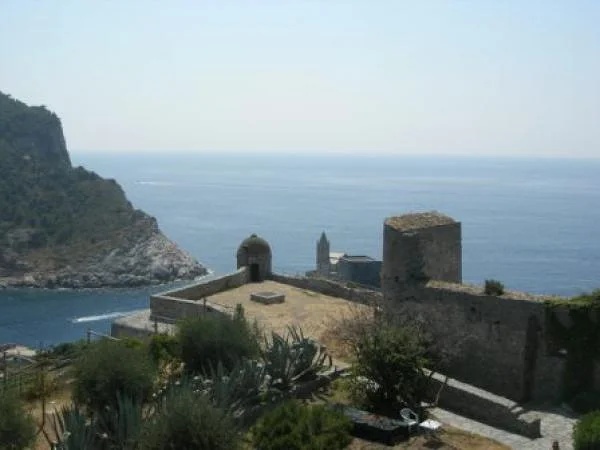
The real reward awaits on the upper terraces. The panorama covers the Gulf of Poets in a 360-degree view, from the Apuan Alps (which can be snow-capped in winter) to the archipelago of Palmaria, Tino, and Tinetto. On the village side, the view drops down to the colorful rooftops and the San Pietro church, which is backlit in the evening. The battlements, with their sentry boxes and feritoie (arrow slits), serve as a reminder that every angle of view originally had a defensive function.
Insider tip: Head up to the castle in the late afternoon when the day-tripper crowds have headed back down. The low-angled light hitting the stone and the sunset view toward Palmaria island are worth the trip alone. Wear flat shoes, as the stairs up from San Lorenzo are steep.
The climb: part of the experience
You do not reach Doria Castle by strolling. The path starts from the San Lorenzo church and climbs via Via dei Mulini (Mill Street), which is lined with the remains of two 16th-century mills that also served as watchtowers. The stone staircase is steep but short. Expect a ten-minute walk from the Porta del Borgo (Village Gate). The path already offers beautiful glimpses of the port below, which provides a good excuse to catch your breath.
Note: The castle sometimes hosts artisans selling jewelry and ceramics on the esplanade, and temporary exhibitions may result in a small surcharge on the entrance fee, which typically hovers around 5 EUR (about $5.50).

The thing that strikes you is how old this fortress is. You can only imagine everything it has seen over the years! From the top of the ramparts, you can breathe in the sea air, admire the view, and fully soak up the atmosphere. Through the openings, you see the village and the sea like so many enchanting paintings.