
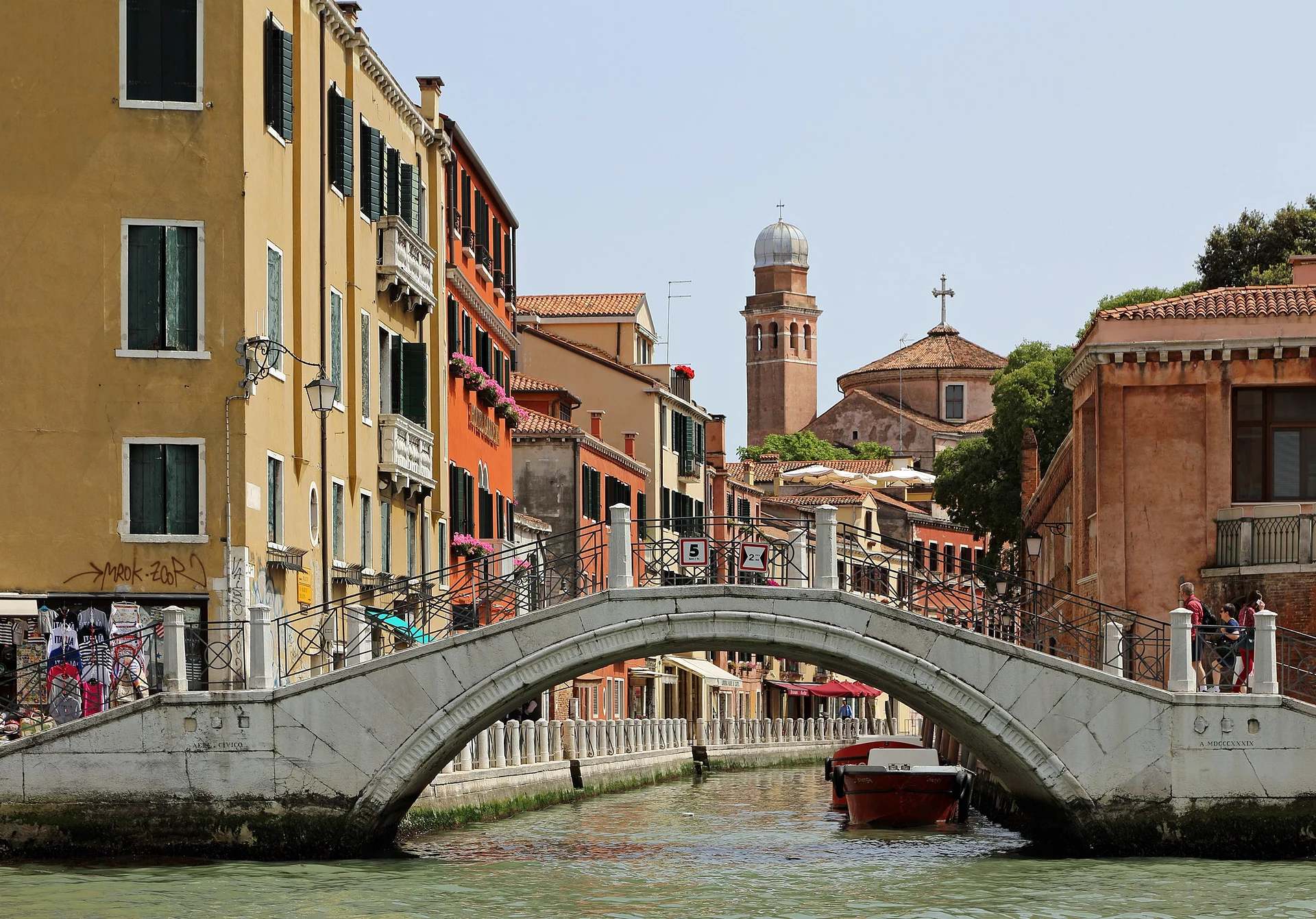
Visiting the Tolentini Canal
The network of canals cutting through Venice defines its character, and the Santa Croce district is no exception. The rio dei Tolentini, also known as rio de la Croce, offers a 300-meter walk through a sestiere (district) that housed the monastery and church of San Francesco della Croce until the 19th century. While the canal and bridges still carry the name, the original buildings are gone, replaced by the Giardini Papadopoli. This waterway serves as a unique route to explore these layers of history.
Along the water and stone
It is difficult to grow tired of Venice, where historic buildings stand right at the water level. While they are less frequent in this residential district, following the Tolentini Canal still offers rewarding stops. Two bridges cross it, the Ponte de la Croce with its iron cross railings and the Ponte dei Tolentini built of red brick and stone. The latter leads to the San Nicolo da Tolentino church, constructed between 1706 and 1714. Its triangular pediment and large portico with six simple columns shelter a flamboyant alla romana (Roman style) high altar. A bit further on, the Giardini Papadopoli and their cypress trees provide a pleasant urban park, established in 1834. The church and monastery of Santa Croce once stood here, with origins dating back to the 9th century. After many changes, the complex was demolished in 1810. Perhaps only an old column remains at the corner of the street, which is the subject of local debate. Some suggest it was a site where criminals were punished. Regardless of the legends, the Tolentini is best enjoyed on foot, offering a path through history and its lingering mysteries.

Canal located at the entrance to the city (near the Santa Lucia train station). We took a pleasant walk along the Papadopoli gardens and the San Nicolo Church. These are two monuments worth visiting in this part of the city. We did this walk in the summer with beautiful sunshine, which really allowed us to enjoy it.