
The Rouen Museum of Fine Arts: Five centuries of European painting for free
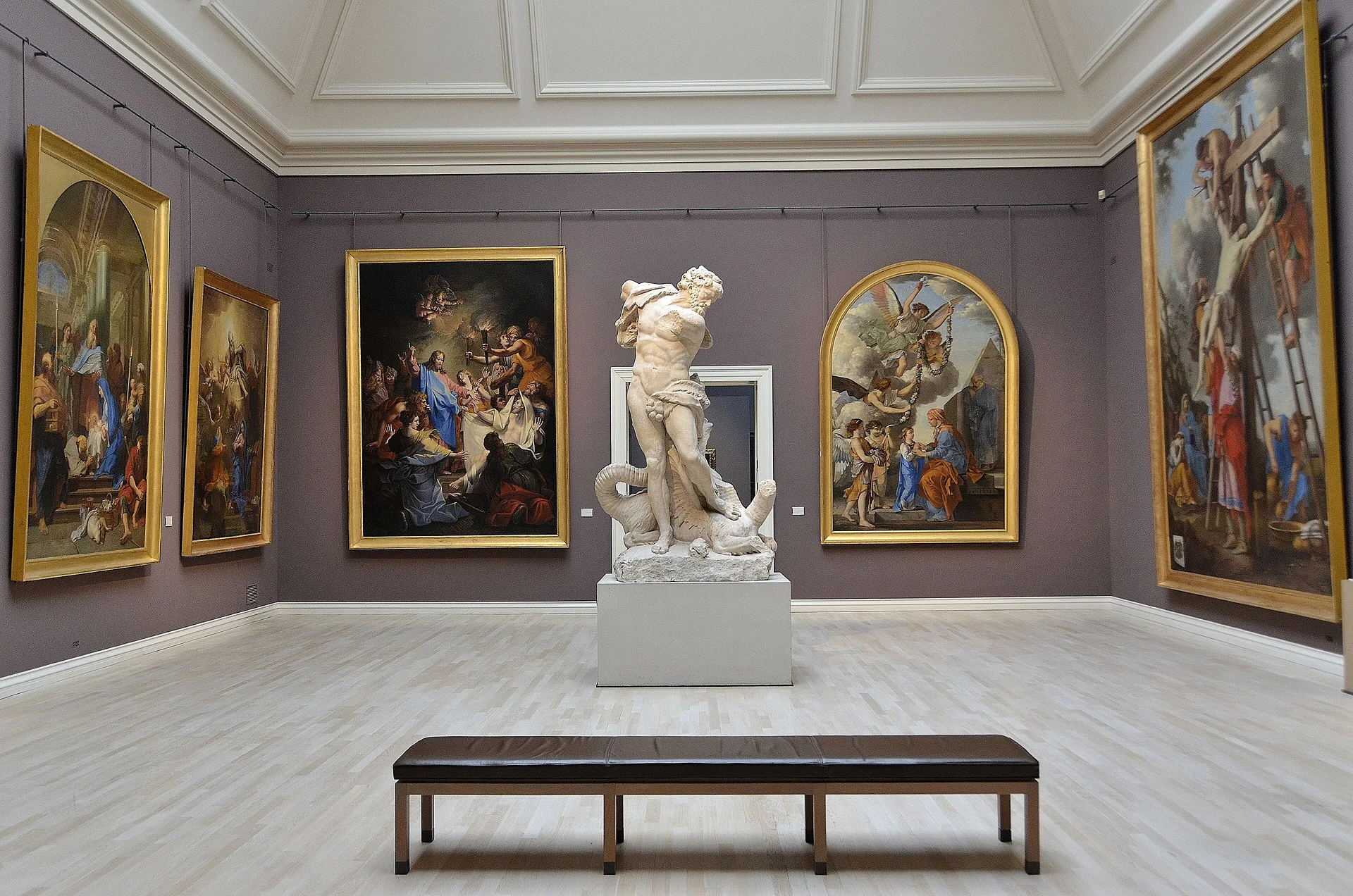
Natural light pours from the glass roof onto the pale stone floor of the sculpture garden. Surrounding you, busts and bronzes stand out in the hushed silence. You have not seen anything yet. Behind this dramatic entrance redesigned by Andrée Putman in 1994, about sixty rooms showcase five centuries of European art, from Perugino to Modigliani, in one of the most significant regional museums in France.
Why visit the Rouen Museum of Fine Arts?
Created in 1801 by Napoleonic decree, the museum opened its doors as early as 1809 with 244 paintings. Two centuries of donations and acquisitions later, the collection holds about 8,000 works. By 1878, the institution was already cited as the most comprehensive museum in France after those in Paris.
This status is not just symbolic. You will encounter Caravaggio, Velázquez, Rubens, Poussin, and Delacroix along a single chronological path, with no entry fee for the permanent collections.
The other major draw is the Impressionist collection. The donation from local industrialist François Depeaux in 1909 made Rouen the leading city in France for this movement outside of Paris. Monet, Sisley, Pissarro, Renoir, Degas, and Caillebotte are names that line the gallery walls with a density rarely seen in a provincial museum.
Rooms and works to spot
The 17th century, the beating heart of the collection
The Christ at the Column by Caravaggio, painted in 1607, is one of the few canvases by the master preserved in France. The tension of the scene and the raking light on the skin of Christ will stop you in your tracks. A few rooms away, the Democritus by Velázquez (1629) stares at you with an enigmatic smile. The Adoration of the Shepherds by Rubens completes this set of a quality unusual for a regional museum.
Géricault, the local son
Eleven paintings by the Romantic master born in Rouen are exhibited in a room with deep blue walls. The effect is striking. His anatomical studies and rearing horses take on an almost oppressive intensity in this dark setting. The portrait of the carpenter from the Raft of the Medusa reminds us that the Louvre does not have everything. The works of Géricault that are not at the Louvre are found here in Rouen.
The Impressionist gallery
The layout of the Salle Depeaux provides enough distance to appreciate each painting. Among the masterpieces:
- Rouen Cathedral, the Portal and the Albane Tower, Gray Weather by Monet, from his famous series painted from a window facing the cathedral
- General View of Rouen, also by Monet, which offers a panorama of the city from the Côte Sainte-Catherine
- The Boieldieu Bridge in Rouen, Sunset by Pissarro, bathed in a golden mist
Friendly tip: The free Wivisites app, accessible via the QR code at the museum entrance, offers two self-guided audio tours on your phone. There is a "masterpieces" tour and an Impressionist tour. It is a great way to avoid getting lost in the sixty rooms.
A building worth a look
The architect Louis Sauvageot delivered this neoclassical building between 1877 and 1888. The facade overlooks the Square Verdrel, which is pleasant for a break before or after your visit. Inside, the renovation led by Andrée Putman restored the quality of the original volumes while increasing the exhibition surface area.
The sculpture garden, a vast glass-roofed hall that welcomes visitors, is a space in its own right. You will also find the MBA-Café there, open every day from 12:00 PM to 3:00 PM for a light lunch.
Just behind the museum, the Musée Le Secq des Tournelles (Le Secq des Tournelles Museum), installed in a former Gothic church, exhibits a unique collection of ironwork. Both are easily visited in the same half-day, and both are free.

I lived in Rouen for 3 years, and I really appreciated the cultural and historical richness of the Normandy region. Visiting the Museum of Fine Arts was a must for me, given the impressionist heritage in the area! I found the museum building absolutely sublime during my visit, and the collections are very beautiful. That said, I was a little disappointed to see almost no impressionist paintings during my visit (Monet, Manet, Renoir...). It would have been almost logical, given how many artists from this movement came from the region.