The UAE: Seven Emirates, One Skyline
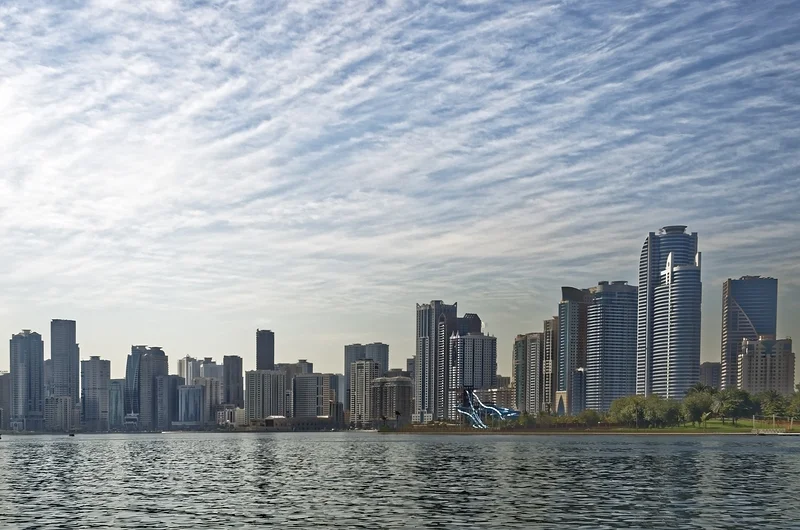
Fifty years ago, pearl divers were working these shores from wooden dhows. Today, skyscrapers punch through the clouds and artificial islands reshape the coastline. Few places on earth have rewritten themselves this fast.
That transformation is exactly what makes the UAE like nowhere else. The federation, founded in 1971, is made up of seven emirates: Abu Dhabi, Dubai, Sharjah, Ajman, Umm Al Quwain, Ras Al Khaimah, and Fujairah. Each has its own personality, from Dubai's unapologetic glitter to the quieter, more traditional feel of the northern emirates.
Great for comfort seekers, less so for rough travelers
The UAE rewards travelers who value modern comfort and flawless infrastructure. Families will find theme parks, supervised beaches, and air-conditioned malls built for escaping the heat. Couples after accessible luxury will find five-star hotels that often cost less than comparable properties in Western Europe. Architecture enthusiasts could spend a week here and barely scratch the surface.
That said, if you're after deep cultural immersion, spontaneous conversations with locals, or untouched wilderness, this destination may leave you flat. Emirati nationals make up only about 10% of the population, and interactions with them tend to stay surface-level. English is everywhere, everything works, and the whole country runs like a Swiss watch. For some travelers, that seamlessness starts to feel manufactured. If you need rough edges and happy accidents in your travel, the UAE probably isn't your place.
A real budget, but scalable
Plan on spending between 400 and 1,000 AED per day ($110-$270) depending on your travel style. A decent hotel room starts around 200 AED/night ($55), while luxury properties run several times that. Meals range from 20 AED ($5) at an Indian or Pakistani canteen to 120-200 AED ($33-$55) at a proper restaurant. Major experiences like the Burj Khalifa observation deck or a desert safari run 150-550 AED ($40-$150). The metro and bus system is genuinely cheap, around 7-8 AED ($2) per ride.
Skylines that don't look real
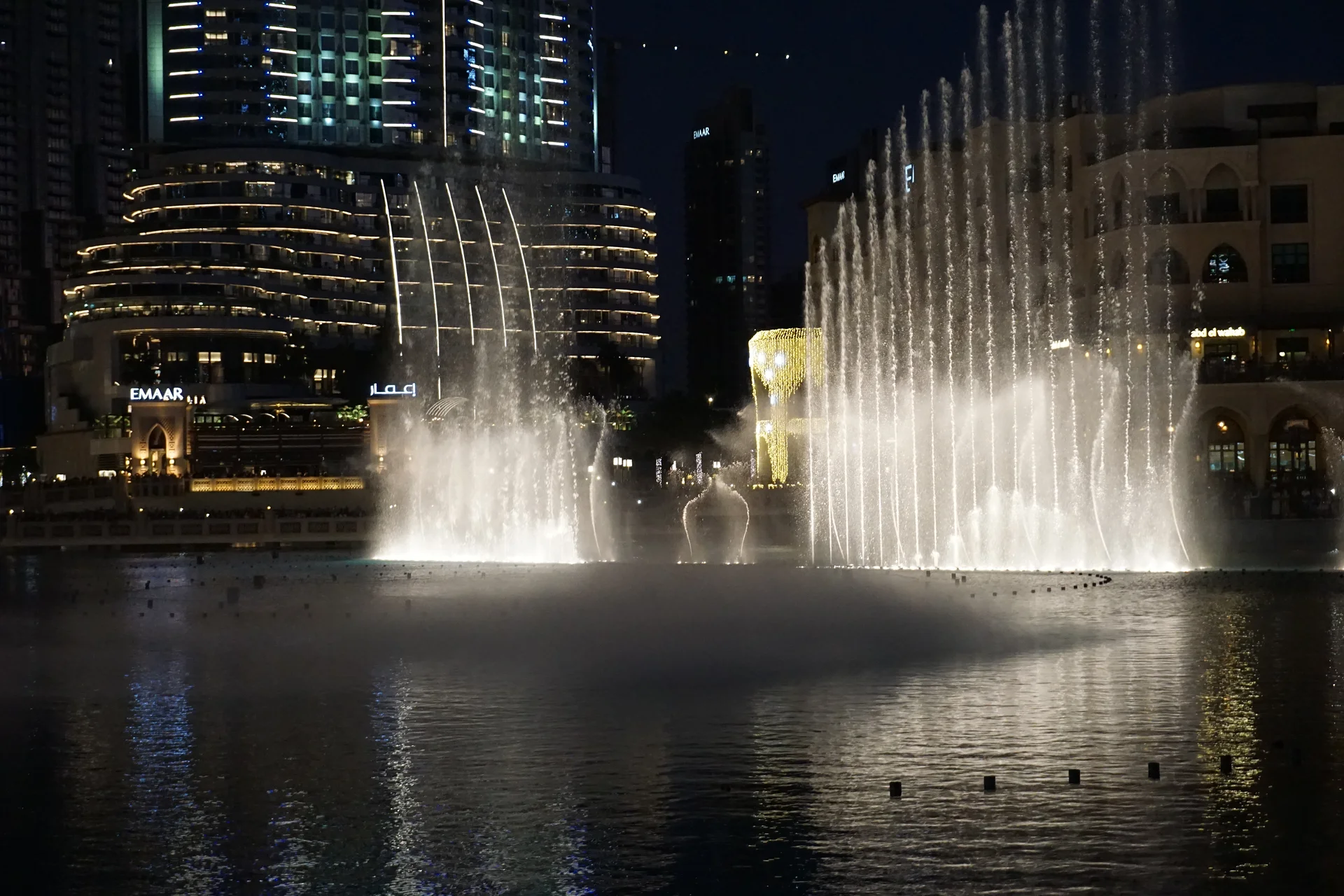
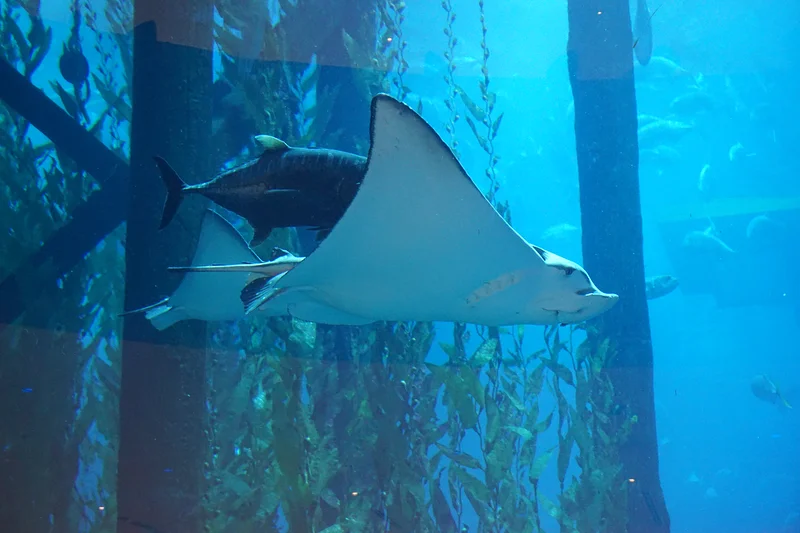
Dubai is the country's showpiece. The Burj Khalifa tops out at 2,717 feet (828 meters), with the desert on one side and the Persian Gulf on the other. At its base, the Dubai Mall packs in a giant aquarium, an Olympic-size ice rink, and hundreds of stores. The fountain show that runs every evening at the base of the tower is free, and genuinely worth stopping for.
For something more grounded, the Al Fahidi historic district pulls you back to where this city started. Narrow lanes lined with wind-tower houses sit in sharp contrast to the glass towers a few blocks away. Art galleries and traditional cafes occupy old merchant homes. The abra ride across the Dubai Creek, a short hop on a wooden boat, costs under 2 AED (less than a dollar) and gives you one of the best views of old Dubai you'll find.
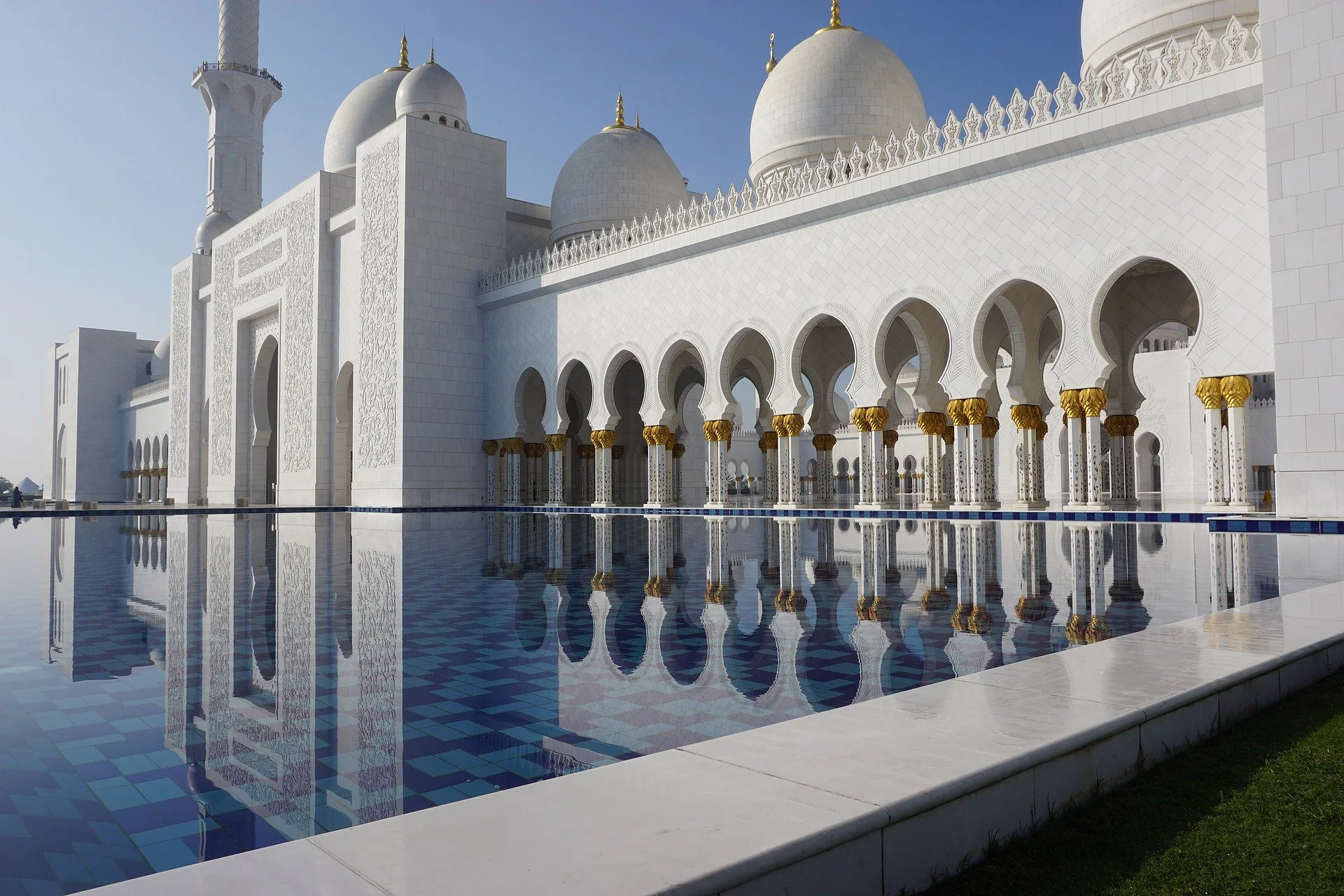
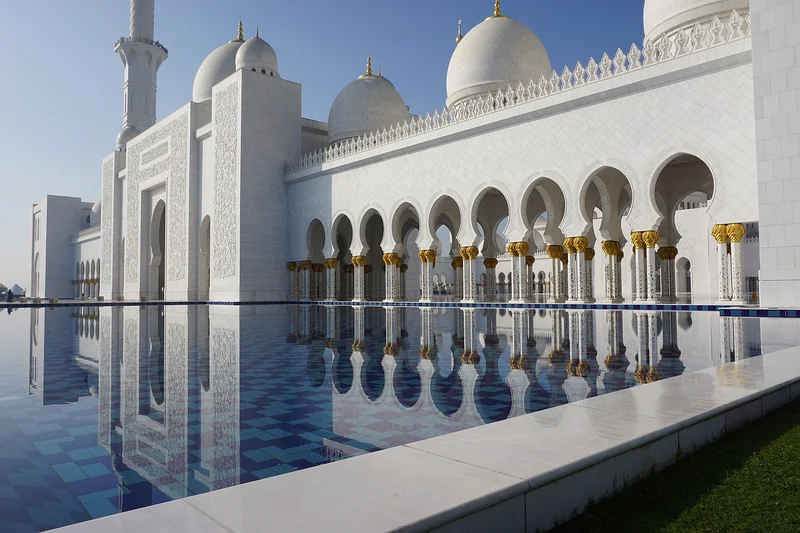
Abu Dhabi plays a different game. The capital leans into culture and refinement. The Louvre Abu Dhabi, designed by architect Jean Nouvel, houses an impressive permanent collection under a latticed dome that filters the desert light in a way that photographs cannot do justice. The Sheikh Zayed Grand Mosque is enormous, 82 white domes, and open to non-Muslim visitors outside prayer times as long as you dress modestly (abayas are provided at the entrance for free).
Pro tip: Book your Burj Khalifa tickets online at least several days out. Sunset slots go fastest and the cheapest tickets disappear quickly. Peak-hour pricing can easily double the base rate.
Desert and mountains most visitors never see
Beyond the cities, the country has landscapes that catch most visitors off guard. The Liwa Desert, at the edge of the Rub' al Khali (the Empty Quarter), has the tallest dunes in the country, some topping 1,000 feet (300 meters). 4x4 safaris take you deep into that sand ocean, and overnight Bedouin camps let you sleep under a genuinely dark sky.
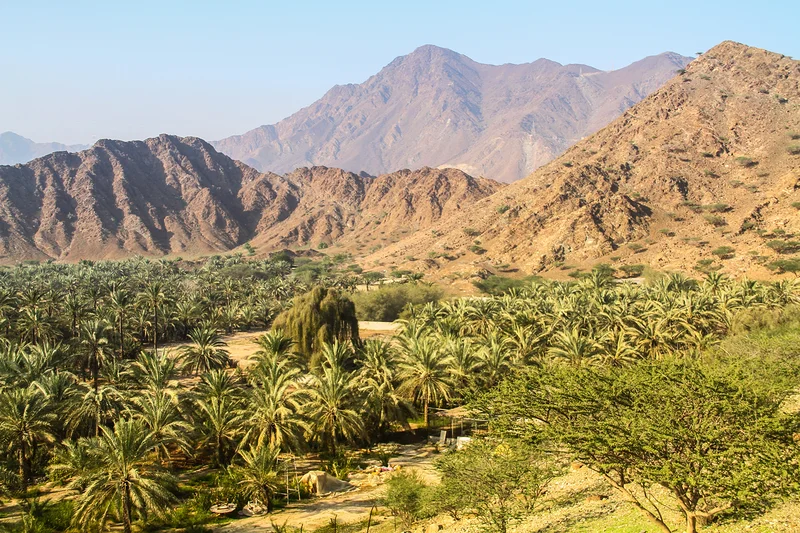
Ras Al Khaimah is home to Jebel Jais, the UAE's highest peak at 6,345 feet (1,934 meters). The drive up winds through the ochre Hajar Mountains. At the top, the world's longest zipline sends riders nearly two miles at speeds over 93 mph (150 km/h). Hikers get marked trails with panoramic views over the Gulf of Oman.
Fujairah and the east coast
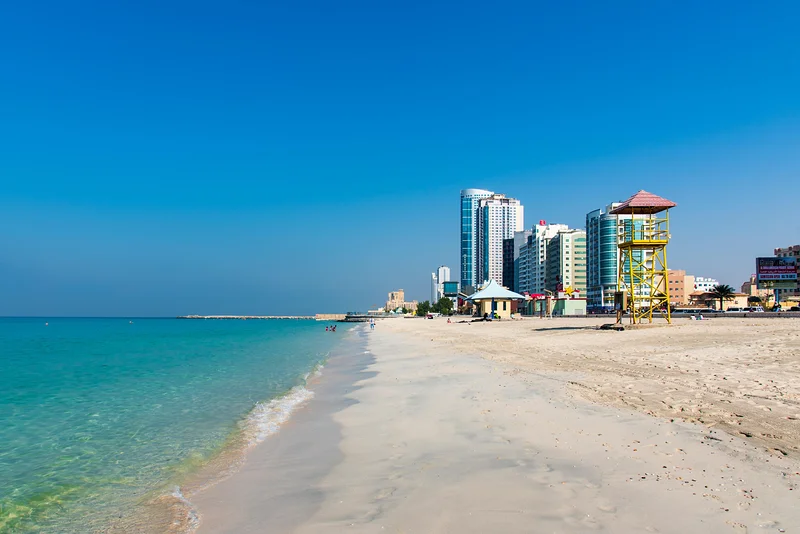
Fujairah, facing the Gulf of Oman rather than the Persian Gulf, stays well off the mass-tourism radar. Its beaches have dark volcanic sand, a striking contrast to Dubai's pale shores. The Al Bidya Mosque, built in the 15th century from coral stone and dried mud, is one of the oldest in the country. Just offshore, Snoopy Island (named for its profile, which resembles the cartoon dog) offers some of the UAE's best snorkeling and diving, with healthy coral reefs and plenty of marine life. Think Caribbean-level water clarity, without the Caribbean crowds.
The drive from Dubai crosses the Hajar Mountains and ranks among the most scenic roads in the country. The Wadi Shees valley hides natural pools, small waterfalls, and an old farming village clinging to the hillside. Set aside a full day for this area.
Pro tip: For the Jebel Jais zipline, book an early morning slot in winter. Temperatures at the summit are actually cool, and visibility is at its best. Budget around 660 AED ($180) for the experience.
Sharjah and the cultural side of the UAE
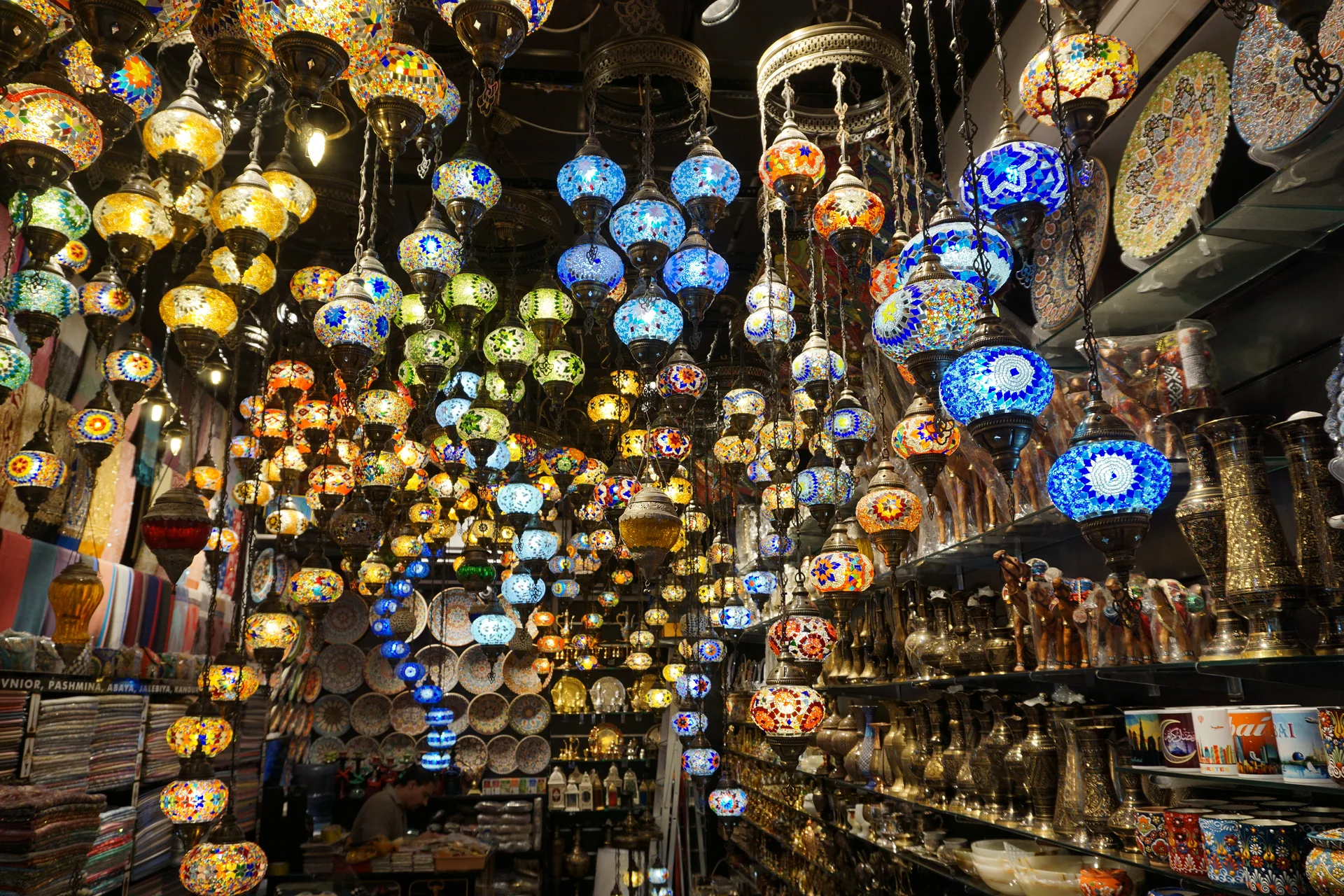
Sharjah, the third-largest emirate, was designated the Arab World's Cultural Capital by UNESCO. Its 16 museums cover Islamic history, contemporary art, and local traditions. The Museum of Islamic Civilization holds ancient manuscripts, ceramics, and textiles. The traditional souks here feel more authentic and less polished than anything in Dubai.
Unlike its neighbors, Sharjah bans alcohol entirely, which gives it a noticeably more conservative atmosphere and draws a family-oriented crowd. The Al Qasba district offers canal boat rides and a Ferris wheel. For something genuinely offbeat, the ghost village of Jazirat Al Hamra in Ras Al Khaimah is one of the most unusual stops in the country. Abandoned in the 1960s, its coral-stone houses and empty mosques sit frozen in time, a snapshot of life before the oil money arrived.
Thrills and beach days
Theme park fans have real options here. Ferrari World in Abu Dhabi holds records for the world's largest indoor roller coaster and fastest ride. IMG Worlds of Adventure in Dubai puts Marvel, Cartoon Network, and dinosaur zones under one massive air-conditioned roof. Warner Bros. World covers Batman, Looney Tunes, and Scooby-Doo territory.
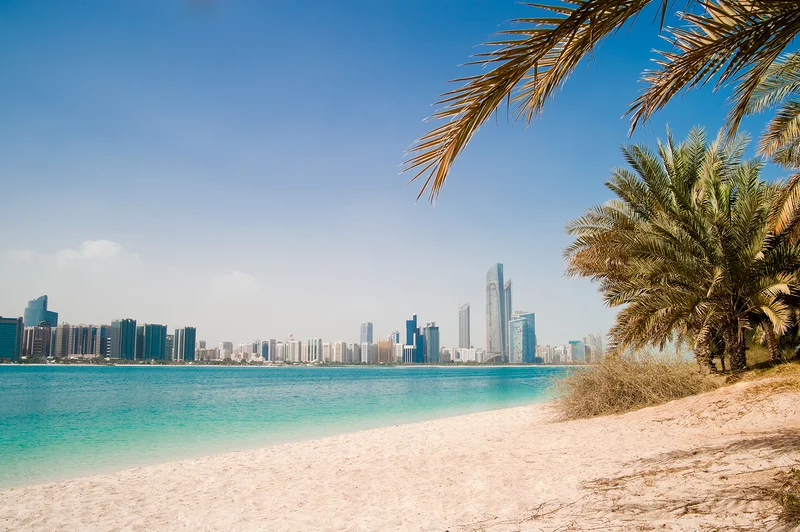
The beaches offer a welcome change of pace. Jumeirah Beach in Dubai lines up beach chairs and water sports with the Burj Al Arab as your backdrop. For something quieter, Saadiyat Island in Abu Dhabi keeps its natural dunes intact and occasionally sees sea turtles nesting. Golfers will find lush courses that rise improbably out of the desert, irrigated around the clock to stay green.
Camel racing, a genuine Emirati tradition, happens Friday mornings at the Al Marmoom Camelodrome, south of Dubai. Admission is free, and the scene is genuinely surreal: remote-controlled robot jockeys strapped to camels running at full speed. Most tourists skip it. That's a mistake.
Eating in the UAE: Indian street food and Lebanese mezze
Authentic Emirati cooking is harder to track down than you'd expect. Machbous, spiced rice served with meat or fish, is the national dish. Harees, a slow-cooked wheat and lamb porridge, shows up at celebrations. Luqaimat, small golden doughnuts drizzled with date syrup, are the dessert of choice. To actually eat this food, head to Al Fanar or Meylas, two restaurants that recreate the atmosphere of 1960s UAE.
Day to day, what you'll actually eat reflects the country's wildly mixed population. Indian and Pakistani canteens serve generous biryanis for 20-30 AED ($5-8). Lebanese shawarma is everywhere and fast. Arabic coffee, cardamom-spiced and served with dates, accompanies almost every social interaction. Karak, a spiced, milky sweet tea that originated in the Gulf, has become the go-to everyday drink, available at 24-hour cafeterias across the country.
Alcohol is served only in hotel bars and restaurants, where cocktails run 55-90 AED ($15-25) without much effort. Sharjah has a total ban. The Friday brunch at Dubai's luxury hotels, an all-you-can-eat spread with champagne and wine included, is a genuine local institution and a favorite among the expat crowd.
When to visit the UAE
The window from November through April is when the country is at its best. Temperatures sit between 68 and 86°F (20-30°C), which is genuinely comfortable for beaches and desert excursions. Summer, from May through September, is brutal. Highs regularly hit 113°F (45°C) with coastal humidity that makes it feel even worse. Even the bus stops are air-conditioned. Prices drop significantly in summer, but outdoor activities become genuinely unpleasant.
The Dubai Shopping Festival in January and February draws bargain hunters from across the region. The Abu Dhabi Formula 1 Grand Prix in November turns the capital into a full-scale party. If you visit during Ramadan, know that restaurants stay closed until sunset and eating or drinking in public during daylight hours is prohibited.
Getting to the UAE
From the US, Emirates and Etihad Airways both offer nonstop service to Dubai and Abu Dhabi from several major American cities, including New York, Los Angeles, Dallas, Houston, and Chicago. Flight times from the East Coast run roughly 12-13 hours; from the West Coast, closer to 16-17 hours. Round-trip fares typically range from $700 to $1,500 depending on the season and how far out you book. Prices spike around the holidays and during peak European school breaks, which fill the hotels.
Dubai is also one of the world's busiest connecting hubs for onward travel to Asia, Africa, and Oceania. A multi-day stopover on a longer trip is a smart way to see the country without blowing up your budget. US citizens do not need a visa in advance. You'll receive a free 30-day tourist visa on arrival, with the option to extend. Your passport needs to be valid for at least six months beyond your entry date, standard CBP advice applies before you leave home.
Getting around the UAE
The Dubai Metro is fully automated, heavily air-conditioned, and connects the airport to the city center and most major neighborhoods. The bus network fills in the gaps. Taxis are metered and affordable, around 1.8 AED per kilometer ($0.50). Both Uber and Careem (the regional equivalent) work reliably throughout the country.
If you want to cover multiple emirates, renting a car is the practical move. Roads are excellent, gas is cheap, and distances are manageable: 90 minutes from Dubai to Abu Dhabi, 2 hours to Ras Al Khaimah. Watch your speed. Speed cameras are everywhere and the tolerance, especially in Abu Dhabi, is essentially zero. Air-conditioned intercity buses connect the main cities for a few dollars, a solid option if you'd rather not drive.
Crossing into the Omani enclave of Musandam, a dramatic fjord landscape that looks nothing like the rest of the Gulf, requires a separate Omani visa. Border formalities take about 30 minutes and cost around 55 AED ($15). A one or two-day side trip there pairs extremely well with a UAE visit.