
St. Peter's Basilica, where art and faith defy comprehension
Walking through the doors of St. Peter's Basilica feels like stepping into a space where human scale loses all meaning. The 610-foot long interior seems to stretch endlessly under the massive vaults, while light pours down from the dome like a physical presence. Every square inch here holds a piece of artistic genius and spiritual history.
Why is St. Peter's Basilica truly unmatched?
Built over the reputed burial site of the Apostle Peter, this cathedral has been the center of the Catholic world for more than four centuries. Its construction brought together the greatest minds of the Renaissance and Baroque eras. Bramante drafted the initial plans in 1506, Michelangelo designed the monumental dome, and Bernini directed the final aesthetic, including the iconic colonnade and the bronze baldachin.
The current structure replaced a 4th-century church commissioned by Emperor Constantine. This sixteen-century legacy makes St. Peter's more than just a site. It is a living record of religious history, where each pope has left a mark in stone and marble.
Masterpieces housed within the basilica
Michelangelo's Pietà
In the first chapel on the right sits one of the most moving sculptures in art history. The Pietà, created by a 24-year-old Michelangelo, captures the moment Mary cradles the body of Christ. The Carrara marble looks as soft as skin, and the folds of the drapery move with a fluidity that defies the medium. It remains the only work the artist ever signed, with his name carved across the sash of the Virgin.
Bernini's Baldachin
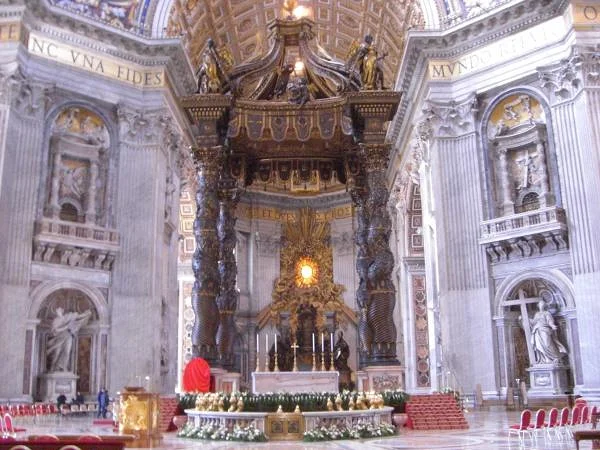
At the center of the nave, the Baroque baldachin rises 95 feet, marking the spot of Peter's tomb. The twisted bronze columns, decorated with vines and bees, create an upward energy that pulls the eye toward the dome. Bernini famously melted down bronze beams from the Pantheon to create this colossal work, which was completed in 1633.
The climb to the dome
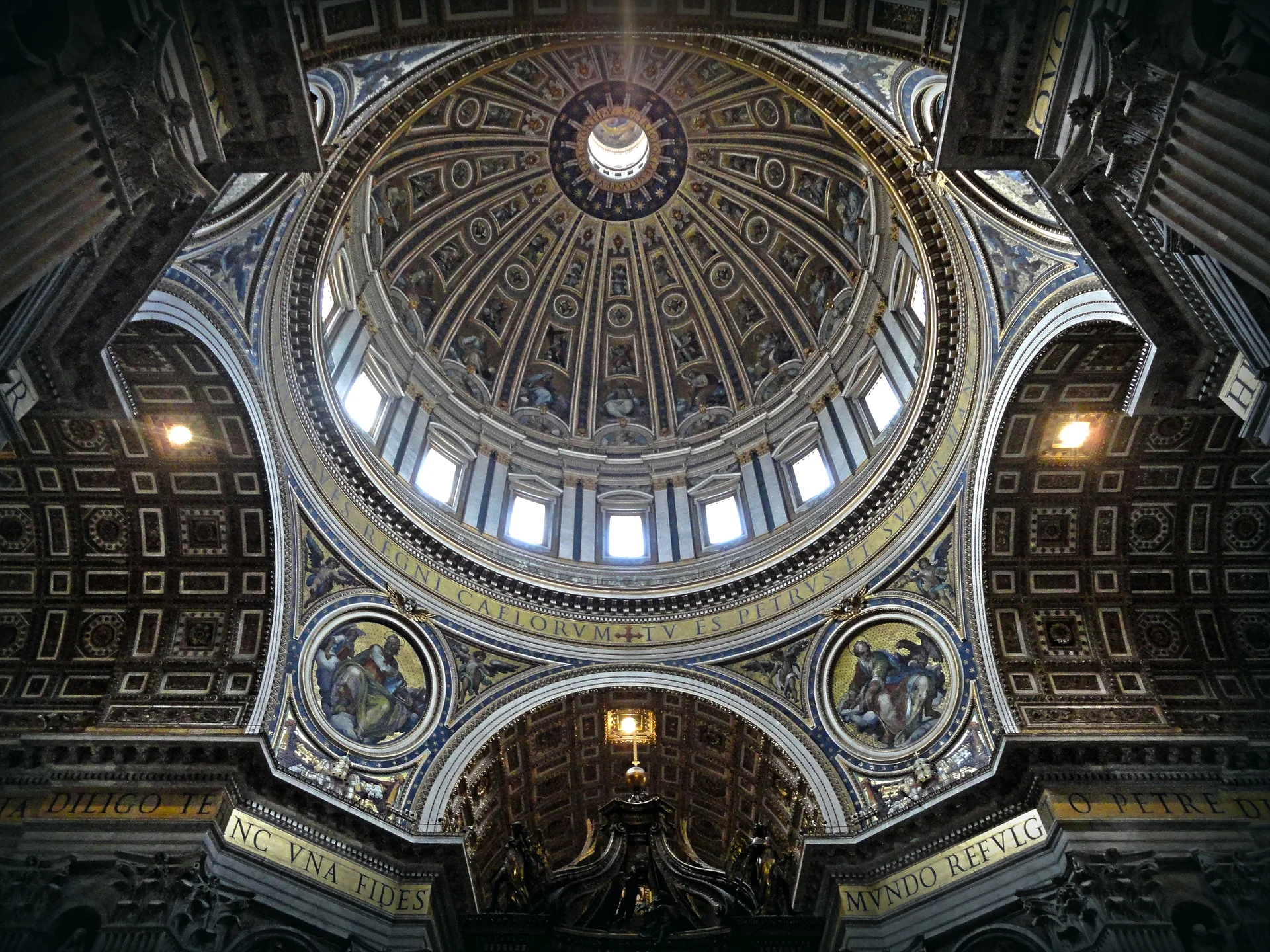
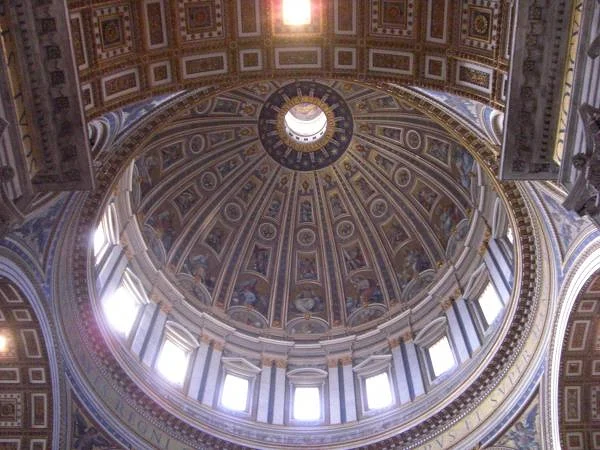
The 551 steps leading to the top of Michelangelo's dome are a workout, but the view is the payoff. The path first takes you inside the dome, where you can see the massive mosaics up close, before winding through the narrow space between the inner and outer shells of the structure.
At the summit, Rome opens up in all its glory. You can see St. Peter's Square forming a perfect ellipse below, the Tiber River tracing a silver line toward the sea, and the ochre rooftops of the city stretching toward the Aventine and Janiculum hills. On a clear day, the horizon extends all the way to the Alban Hills.
Insider tip: Book your dome ticket online and arrive at opening time, 8:00 AM. You will beat the crowds and catch the morning light hitting the interior mosaics. The acoustics at this hour are perfect for hearing the Gregorian chants from the early morning masses.
Experiencing the basilica beyond the tourist path
St. Peter's is more than its architecture. Attending a papal mass or simply walking through during a service changes how you see the space. Voices echo under the vaults, incense hangs in the sunbeams, and the spiritual side of the monument comes to life.
Don't miss these treasures:
- The statue of Saint Peter, a 13th-century bronze whose right foot has been polished smooth by millions of hands
- The Vatican Grottoes, the underground necropolis where 91 popes are buried
- The funerary monument of Alexander VII, a dramatic masterpiece by Bernini
- The mosaics of the dome, which depict paradise and are visible from the nave floor
- The Chair of Saint Peter, a monumental reliquary that houses a medieval throne
Opening hours
*Information subject to change

If I had to associate this basilica with one sight, it would be the dome. You can climb up it. It is not always easy if you are afraid of heights, but it is clearly worth it. And then there are the masterpieces like the famous Pieta. You will have to wait a little while, but seeing them up close is a stroke of luck in itself. I recommend avoiding mass days, but I think you already knew that.