
Visiting the National Museum of Magna Graecia
This is one of the first buildings in Italy constructed specifically to house a museum, and archaeologist Paolo Orsi even served as its director in 1907. Its significance goes well beyond the symbolic. Established in 1882, the National Museum of Magna Graecia provides a primary opportunity to discover magnificent artifacts tied to the territory of Magna Graecia. It houses rare items recovered from various sites along the southern Italian coast, and its collections are invaluable. Located near the historic center, it is a primary stop in Reggio Calabria.
Treasures of Ancient Civilizations
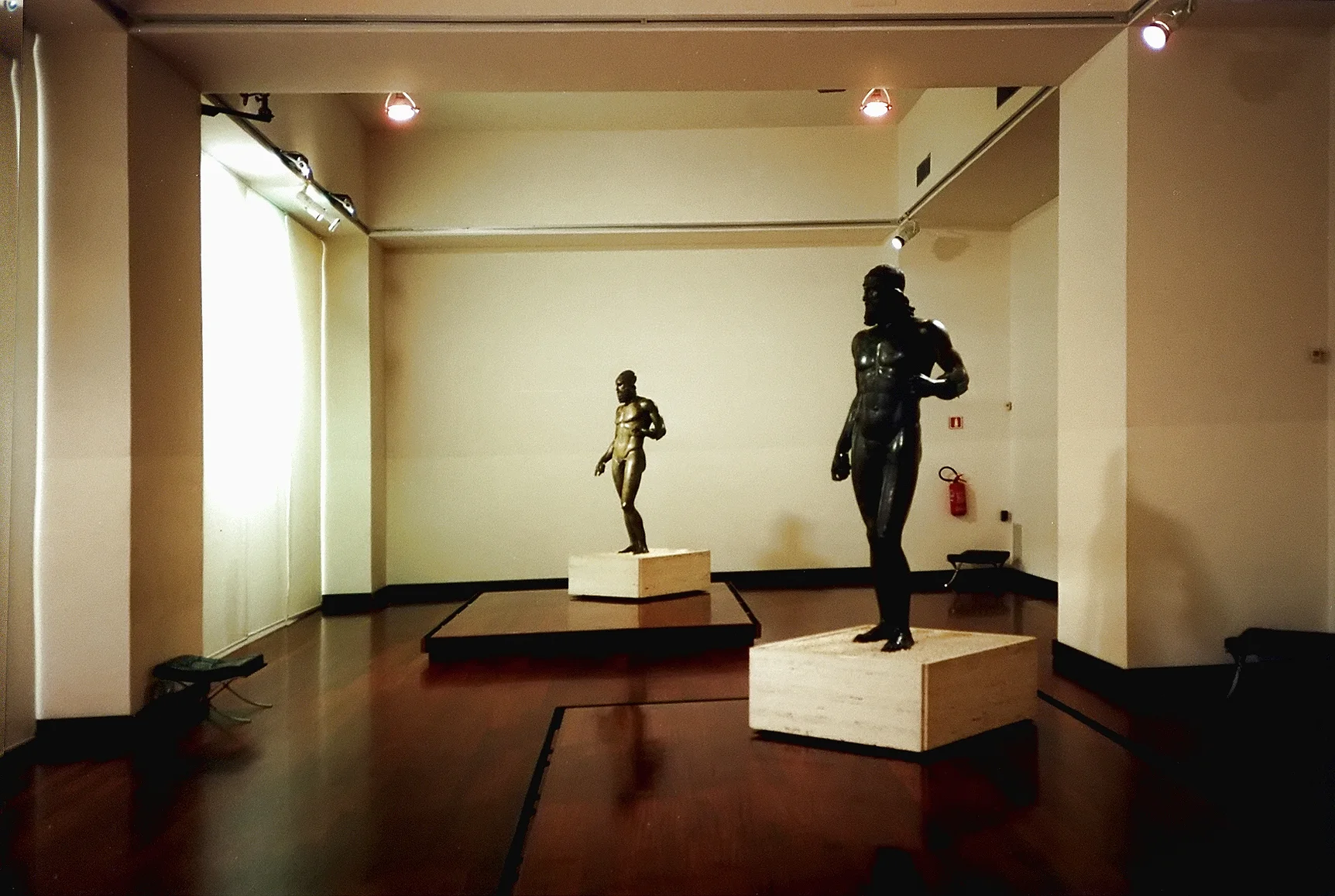
Many visitors come here for one reason alone. As the true centerpieces of the National Museum of Magna Graecia, the Riace Bronzes are absolute masterpieces. These sculptures, standing 1.98 and 1.99 meters tall, are among the very rare Greek bronzes of such size. Dating to 460 and 430 BCE, these two warriors are exceptional. Recovered by an amateur diver, they perfectly illustrate the spirit of the museum, which contains other remnants jealously protected by the seabed, such as the Philosopher's Head hidden in the Strait of Messina or sublime amphorae. The Basel Head is one of the most enigmatic pieces on site, dating to the 5th century BCE. It is believed to represent an important figure, and its color gives it a striking aura. Numismatic enthusiasts will find plenty to appreciate among the displayed coins, including 134 pieces from a single hoard. In the Colonies section, the sculpture of the Dioscuri, the divine twins and their horse, serves as a testament to the city-state of Locri, in Calabria, while the Kouros of Reggio and its missing arm originated on the island of Paros. Standing 90 cm tall in white marble, it has watched over the world since the late 4th century BCE. It is a young newcomer compared to the knapped pebbles of the Paleolithic era or the 110,000-year-old engraving of the Bos Primigenius. This four-story museum is modern and engaging, offering a journey that stretches all the way back to prehistory.
Opening hours
| Monday | Closed |
|---|---|
| Tuesday | 09:00-20:00 |
| Wednesday | 09:00-20:00 |
| Thursday | 09:00-20:00 |
| Friday | 09:00-20:00 |
| Saturday | 09:00-20:00 |
| Sunday | 09:00-20:00 |

Known for its 2 bronze Riace warrior statues, this museum contains quite a few other objects from ancient and antique civilizations.
Not very big, but well done, not too expensive, and even free for kids. It is a good visit to do with the family. It is really a great chance to spark the curiosity of the younger ones during vacation.