
Visiting Capo Vaticano
Geologists from around the world know Capo Vaticano well, and the unique properties of its nearly white granite are the subject of numerous studies. Facing this imposing rocky promontory and its striking setting, visitors are primarily captivated by its pure beauty. Just a few kilometers from Tropea, it operates as a distinct hamlet attached to the municipality of Ricadi. Its coastline consists of coves and beaches stretching from Tono Bay to Virgin Mary Beach. It is a grand site where nature sets the rules.
Spectacular views and dozens of beaches
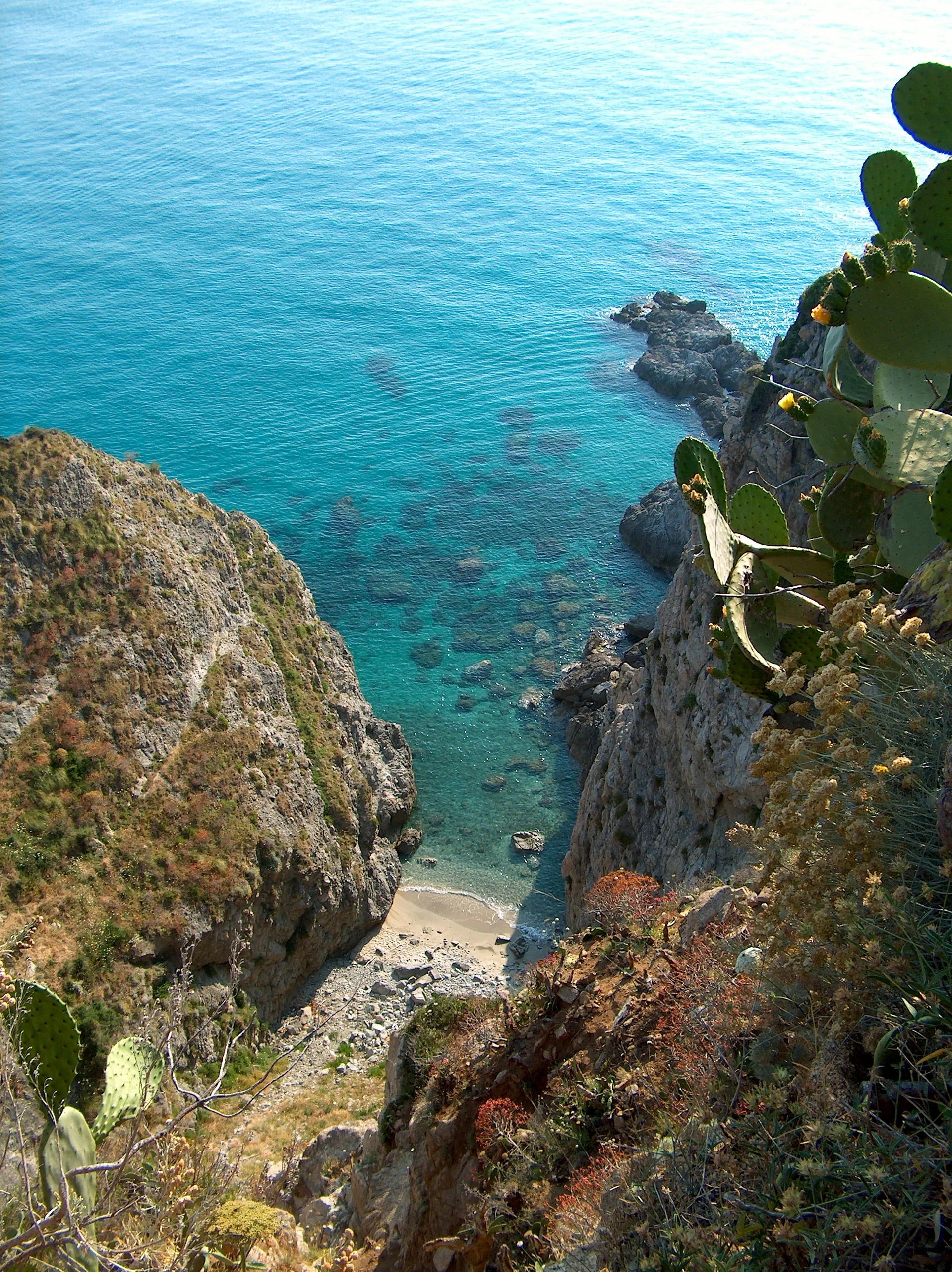
Between its mild climate and dramatic landscapes, southern Italy plays with the mountains and the Tyrrhenian Sea. Capo Vaticano stands out as one of its true highlights, stretching for roughly 7 kilometers along a coast made of cliffs, caves, and rocky spurs overlooking one gorgeous bay and shoreline after another. Some spots feature fine white sand, while others reveal themselves as secluded corners tucked away in greenery. Everywhere you look, crystal clear waters with an iris blue tinged in green make for exceptional swimming. Grotticelle Beach and its three bays rank among the most well-known, but depending on what you are looking for, dozens of sites are accessible with or without amenities. One of the high points of the cape is the Belvedere di Faro, from which a trail leads to the 1870 lighthouse, still active on its promontory. From the Aeolian Islands sitting across the water to the Strait of Messina, Capo Vaticano delivers sweeping views, making it worth exploring entirely on foot. You can also cruise along the coast by boat for a different perspective of the scenery. Restaurants, bars, shops, and charming guesthouses make this a fully equipped destination, and one of the most memorable along the Costa degli Dei (Coast of the Gods).

The local topography, made up of a succession of beaches, coves, and cliffs, is stunning.