
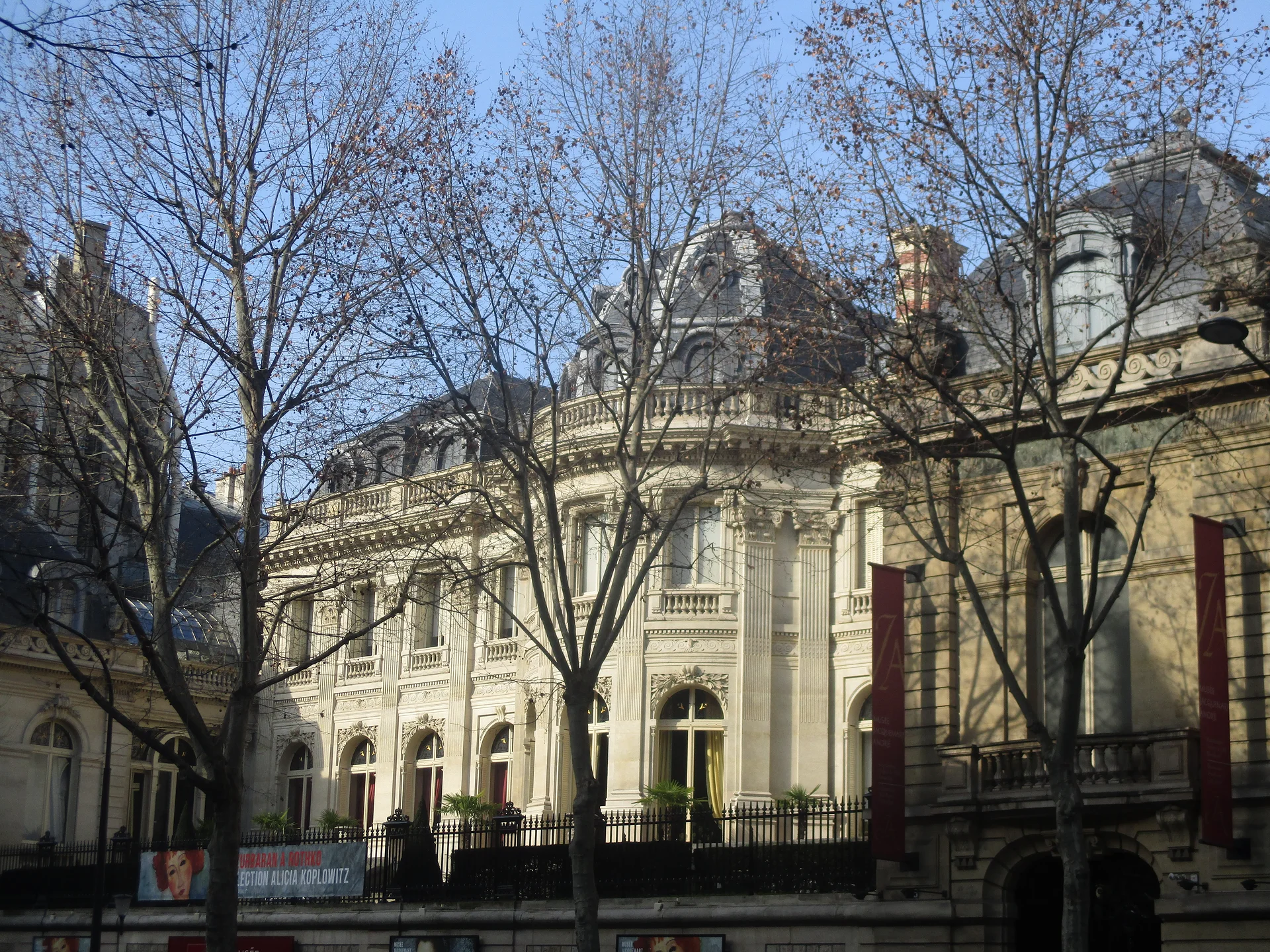
A private mansion frozen in the opulence of the Second Empire
Behind the gate at 158 boulevard Haussmann hides one of the best-kept secrets in Paris. Marble shines under the glass roof of the winter garden, the monumental staircase rises in a double spiral that seems to defy gravity, and frescoes by Tiepolo tell the story of a French king on the walls of a banker's home.
The Jacquemart-André Museum is not your typical museum. It is a journey into the private life of a passionate couple who dedicated their fortune to an insatiable thirst for art.
The story of a consuming passion
Édouard André, heir to a massive banking fortune, had this mansion built between 1868 and 1875. The architect Henri Parent created an architectural feat designed to rival the Palais Garnier. Everything changed in 1872 when a young portraitist, Nélie Jacquemart, came to paint his portrait.
Their 1881 marriage united two relentless collectors. For thirteen years, the couple traveled across Europe, from Italy to England, bringing back paintings, sculptures, and precious furniture. After Édouard died in 1894, Nélie continued this quest alone until she bequeathed the entire collection to the Institut de France (Institute of France) in 1912, transforming their home into a public museum.
Treasures of the permanent collections
French art of the Enlightenment
The state rooms on the ground floor reveal a dazzling collection of 18th-century French art. The Salon des Peintures (Painting Room) displays canvases by Boucher, Chardin, and Nattier, while the circular Grand Salon features a gallery of busts sculpted by Coysevox, Houdon, and Pigalle. The furniture is equally refined, featuring chests of drawers signed by Riesener and stamped armchairs covered in Beauvais tapestries.
The Italian museum, a Renaissance sanctuary
On the first floor, Nélie's former studio houses the inner sanctum: the Italian museum. Reserved for a few privileged guests during the couple's lifetime, this space holds the most important private collection of Italian paintings in Paris. The Vierge à l'Enfant de Botticelli (Madonna and Child by Botticelli) hangs alongside panels by Paolo Uccello and sculptures by Donatello. Flemish and Dutch masters are also represented with Les Pèlerins d'Emmaüs de Rembrandt (The Pilgrims of Emmaus by Rembrandt) and works by Van Dyck.
Venetian masters and their monumental frescoes
In 1893, during a trip to the Veneto, the couple discovered two spectacular frescoes by Giambattista Tiepolo in the Villa Contarini. They purchased them and had them dismantled panel by panel. The operation took eight months. Today, these masterpieces adorn the grand staircase and the current tea room, which served as the original dining room.
Dazzling theatrical architecture
The double-revolution staircase remains the masterpiece of the mansion. This technical feat by Henri Parent combines marble, stone, iron, and bronze with surprising lightness. The two flights of stairs curve in on themselves, multiplied infinitely by the mirrors lining the walls of the winter garden.
This jardin d'hiver (winter garden), a trend imported from England under Napoléon III, allowed guests to cool off between two stuffy salons. The glass ceiling floods the space with light, making the antique sculptures and exotic plants shimmer. In 1876, the magazine L'Illustration raved about this architectural marvel.
Friendly tip: Book your ticket online to skip the line and aim for a weekday morning visit. The free audio guide adds significant value to the experience. Do not miss the tea room located in the former dining room under the Tiepolo fresco, which you can access without a museum ticket.
A visit between intimacy and splendor
The tour takes you through the couple's private apartments: Madame's bedroom furnished in the Louis XV style, the antechamber where they ate breakfast surrounded by family portraits, Édouard's library, and his smoking room filled with travel souvenirs.
The temporary exhibitions, held two to three times a year, draw nearly 400,000 visitors annually. In 2024, major restoration work restored the historic monument to its full glory, particularly the monumental staircase and the Tiepolo frescoes.
Do not miss:
- The double-revolution staircase and its Tiepolo frescoes
- The Vierge à l'Enfant de Botticelli in the Italian museum
- The Pèlerins d'Emmaüs de Rembrandt
- The winter garden under its luminous glass roof
- The state rooms and their 18th-century furniture
Opening hours
| Monday | 10:00-18:00 |
|---|---|
| Tuesday | 10:00-18:00 |
| Wednesday | 10:00-18:00 |
| Thursday | 10:00-18:00 |
| Friday | 10:00-18:00 |
| Saturday | 10:00-18:00 |
| Sunday | 10:00-18:00 |
Nocturne jusqu'à 20h30 le lundi lors d'expositions temporaires. Dernière entrée 30 minutes avant la fermeture.
*Information subject to change

Less well known than its huge national competitors, the Jacquemart-André Museum is one of my favorite museums in Paris. The setting of the former private mansion is magnificent, whether it is the facade or the stunning courtyard enclosed in a semicircle. Inside, the museum immerses us in sublime decor, including richly furnished salons, a winter garden, and a fascinating double staircase. It showcases beautiful permanent collections focused on Italian painting, but especially fabulous exhibitions. Unfortunately, the rooms are relatively small, so you cannot always fully enjoy the artworks when it gets crowded. After the visit, we love stopping at the tea room, which serves delicious pastries.