
What to know about the Arc de Triomphe in Paris
From its rooftop terrace, the Arc de Triomphe commands a view of twelve avenues radiating out like a giant star. The blonde stone catches the evening light while traffic swirls incessantly below. Napoleon ordered its construction in 1806, just after Austerlitz. It took three decades to finish this neoclassical colossus, which stands 164 feet tall.
A monument born from an imperial promise
On February 18, 1806, a decree officially launched the project. Architect Jean-François Chalgrin designed an arch inspired by Roman antiquity but at a massive scale. The Grande Armée had been winning battle after battle, and the Emperor promised his soldiers they would return home walking under triumphal arches.
Work dragged on. Napoleon abdicated in 1814 without seeing his vision completed. The Arc was finally inaugurated in 1836 by Louis-Philippe, who dedicated it to the armies of the Revolution and the Empire. It was a calculated political move to reconcile the French people around a shared symbol.
Sculptures that tell the story of France
La Marseillaise by François Rude
On the northeast pillar, it is impossible to miss this Romantic masterpiece. A winged woman, her face contorted in a rallying cry, brandishes her sword toward the enemy. Beneath her, warriors of all ages charge into battle. François Rude sculpted this high-relief between 1833 and 1836. The intensity of the movement and the expressiveness of the faces make this group one of the most powerful sculptures on the monument.
The face of this allegory of Liberty is said to have been inspired by Sophie, the artist's wife. The helmeted head alone measures nearly 6.5 feet. These colossal proportions are hard to appreciate from the ground, but they reveal their true power once you are up close.
The other high-reliefs
Facing the Champs-Élysées, Le Triomphe de Napoléon (The Triumph of Napoleon) by Jean-Pierre Cortot celebrates the peak of the Empire in 1810. On the other two pillars, Antoine Etex sculpted La Résistance (The Resistance) and La Paix (The Peace). Each group recounts a key moment in the French epic.
The 660 names carved in stone
Look up at the inner pillars. Forty columns of names are aligned in the shadows. There are 660 generals, marshals, and admirals who served France between 1792 and 1815. Among them, 128 names are underlined, marking those who died in combat. The selection process sparked bitter arguments. Victor Hugo himself fumed in a poem in 1837, lamenting the absence of his father's name.
Friendly tip: Arrive early in the morning or late in the afternoon to avoid the heavy crowds that fill the terrace. The 284 steps of the spiral staircase can feel endless, but an elevator is available for those with reduced mobility and pregnant women.
The Tomb of the Unknown Soldier and its eternal flame
In the center of the plaza, a slab of Vire granite bears the inscription: "Here rests a French soldier who died for the Fatherland, 1914-1918." Since November 11, 1920, this grave has honored all soldiers who fell for France. Three years later, a flame was lit for the first time by André Maginot, the Minister of War.
Every evening at 6:30 PM, the flame is rekindled during a public ceremony. Silence falls over the plaza. Flags are lowered, the bugle plays the Call to the Dead, and a minute of silence passes. This ritual has never ceased, not even during the German Occupation.
The panoramic terrace, a unique view of Paris
From the top, the perspective is striking. The historic axis unfolds in all its splendor: the Champs-Élysées descend toward Concorde and the Louvre on one side, while the Grande Arche de la Défense rises on the other. The twelve avenues trace their perfect star around the monument. The Eiffel Tower emerges in the distance, and the Sacré-Cœur dominates Montmartre to the north.
The museum installed in the interior rooms traces the history of the monument through models, archival documents, and sculptures. A film projected on a loop explains the construction and symbolism of this building, which has become a national emblem.
Opening hours
April to September: 10:00 AM to 11:00 PM (Tuesdays 11:00 AM to 11:00 PM).
October to March: 10:00 AM to 10:30 PM (Tuesdays 11:00 AM to 10:30 PM).
Last entry 45 minutes before closing.
Special closures: January 1, May 1, May 8 (morning), July 14 (morning), November 11 (morning), December 25.
Flame rekindling ceremony every day at 6:30 PM (free access to the plaza).
*Information subject to change

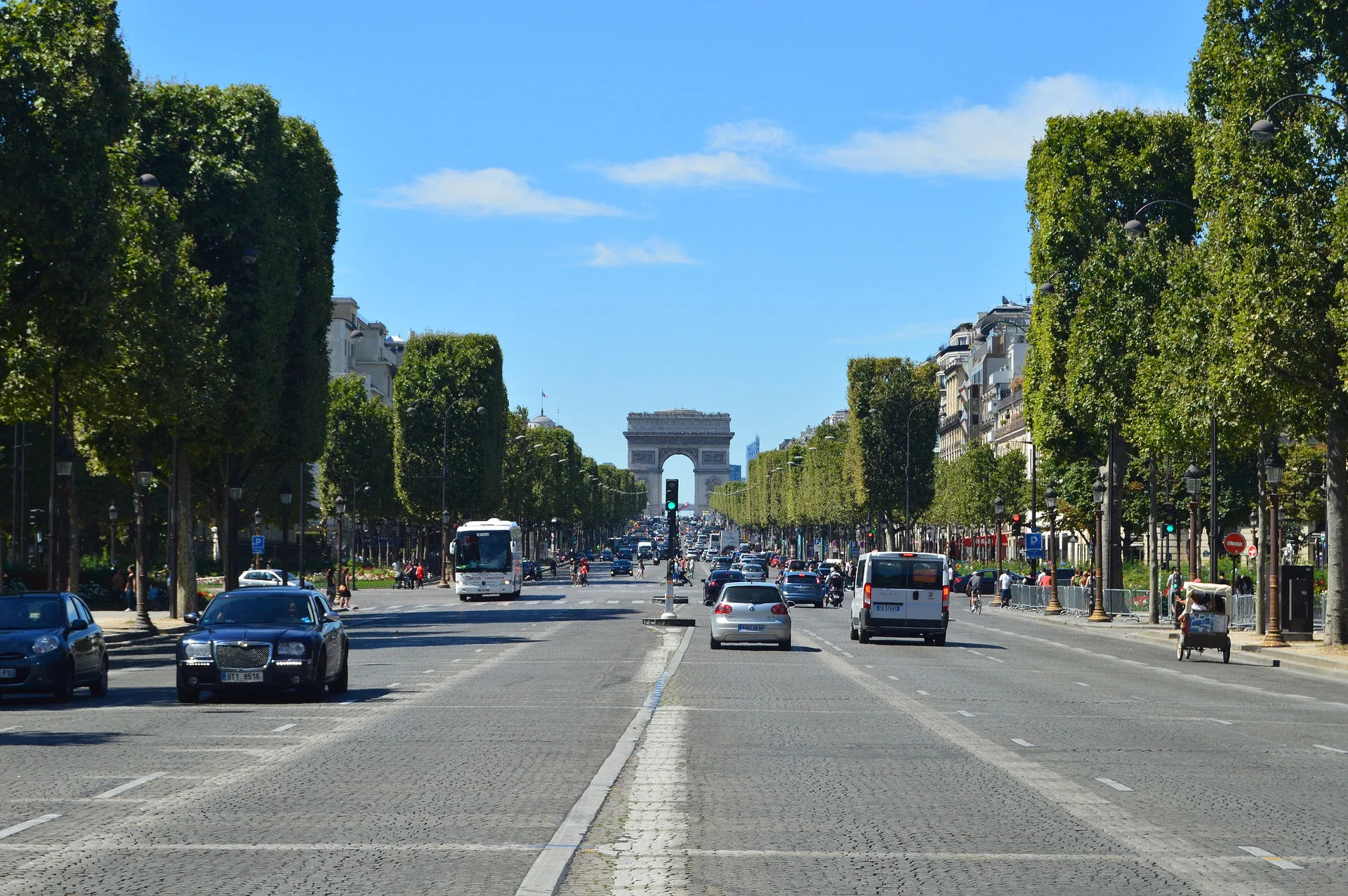
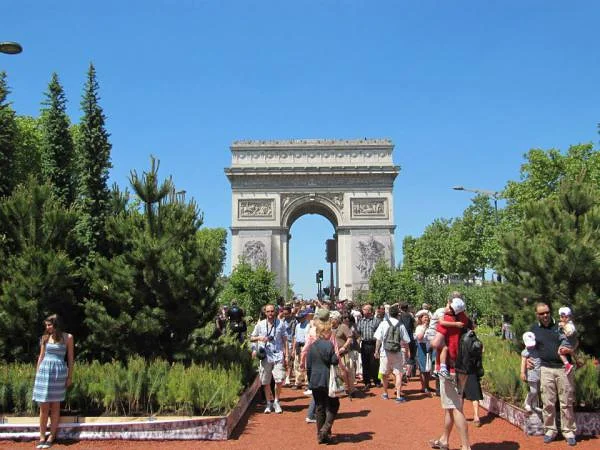
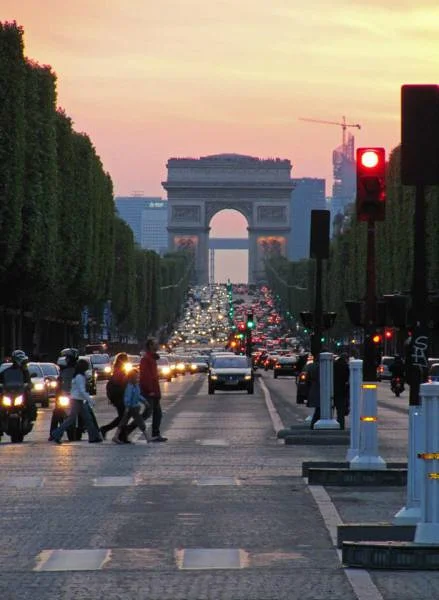
The most famous traffic circle in France is surrounded by constant traffic, and the crowds pressing in at the foot of the monument make your head spin! This massive arch is definitely impressive, and its solid look is clearly visible from the Champs-Elysees. The perspective is beautiful from the top of the avenue. Finally, the view is superb from the summit, but it is so expensive just for the right to go up!