
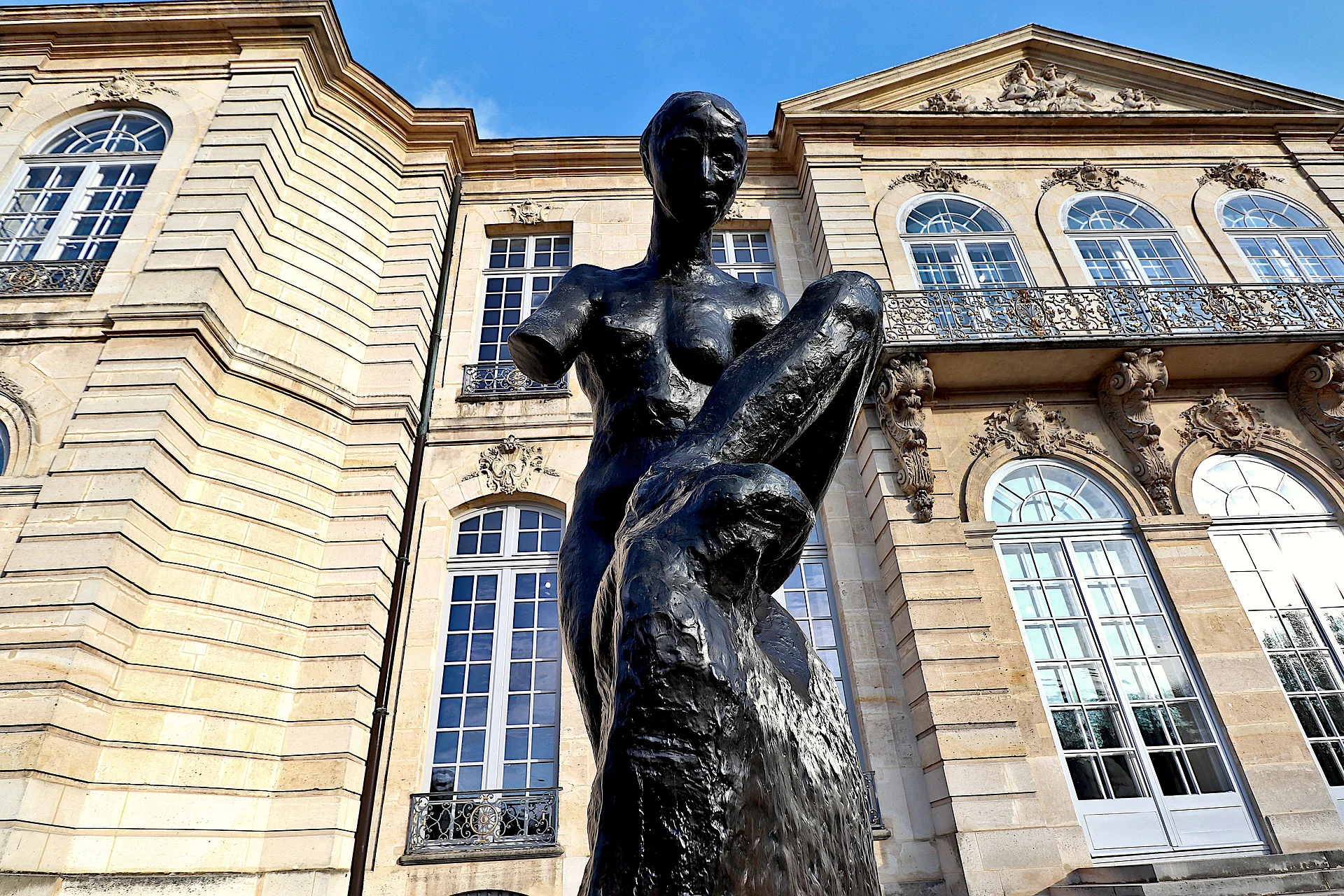
The Rodin Museum: bronze figures in a Parisian garden
A bronze man hunched over in thought, fist pressed to his lips, stares into the distance from the shade of a rose garden. Around him, the gates of hell rise over twenty feet tall. You are just steps from the Invalides, in one of the most tranquil spots in Paris.
Why visit the Rodin Museum?
Auguste Rodin lived and worked here, in this 18th-century mansion, until his death in 1917. In exchange for donating his collection to the French state, he ensured the Hôtel Biron would become a sanctuary for his work. The museum opened in 1919 with a specific mission: to showcase not just the master's sculptures, but his entire creative world.
The collection includes 6,800 sculptures, 8,000 drawings, and 10,000 photographs. Rodin's personal art collection is also on display, featuring canvases by Van Gogh, Renoir, and Monet. Works by Camille Claudel, his student, collaborator, and lover, occupy their own dedicated space.
Masterpieces you cannot miss
The Thinker and The Gates of Hell
This meditative figure, crouched on a rock, was originally meant to represent Dante contemplating the circles of Hell. Rodin sculpted him as the centerpiece of The Gates of Hell, a public commission that was never officially delivered and occupied him for over thirty years. This monumental 21-foot doorway spawned some of his most famous works. It contains over 200 figures of the damned in a swirling mass of tortured bodies.
The Kiss and The Burghers of Calais
The Kiss was initially intended to be part of the larger Gates, but Rodin removed it, feeling it was too gentle amidst such suffering. The white marble, displayed inside the mansion, catches the light differently throughout the day. In the garden, The Burghers of Calais walk toward their sacrifice, each face expressing a mix of fear and resignation that Rodin spent years perfecting.
Pro tip: Arrive by 10:00 AM on a Wednesday to enjoy the garden when it is nearly empty. Start outdoors if the forecast looks cloudy. The Hôtel Biron can wait, but the light is better for the bronze sculptures when it is overcast. The L'Augustine cafeteria, tucked into the garden, serves decent daily specials with a view of the bronzes.
The sculpture garden: seven acres of sculpted greenery
The park spans nearly seven acres, organized around a central pond and a rose garden. Two marked paths guide your walk: the Garden of Sources and the Garden of Orpheus. Lawns are open for picnics. In the spring, between March and May, the blooming roses create a surreal backdrop for the patinated bronzes.
Key works in the garden include:
- The Thinker: the 1904 monumental version, located near the pond
- The Gates of Hell: along the south facade
- The Burghers of Calais: a group of six figures in motion
- Balzac: a controversial portrait of the writer in a dressing gown
The Hôtel Biron: a historic monument
The building dates to 1730. Its wood paneling, parquet floors, and tall windows create the atmosphere of a private home rather than a museum. The rooms are organized by theme: Rodin's Italian period, his portraits, and preparatory plaster studies. An entire floor is dedicated to the works of Camille Claudel. The intensity of her sculptures, such as The Mature Age or The Waltz, is striking for its emotional power.
Opening hours
*Information subject to change

I really like how this museum is organized. The tour is split into two parts. There are some works inside, which is pretty standard. But a whole other part is outside, like an open-air museum. It perfectly showcases the sculptures among the plants.