
Les Invalides, the golden-domed colossus holding Napoleon
On December 15, 1840, a funeral procession made its way up the Champs-Élysées in freezing temperatures. Hundreds of thousands of Parisians crowded the streets to accompany the remains of Napoleon Bonaparte, brought back from the island of Saint Helena.
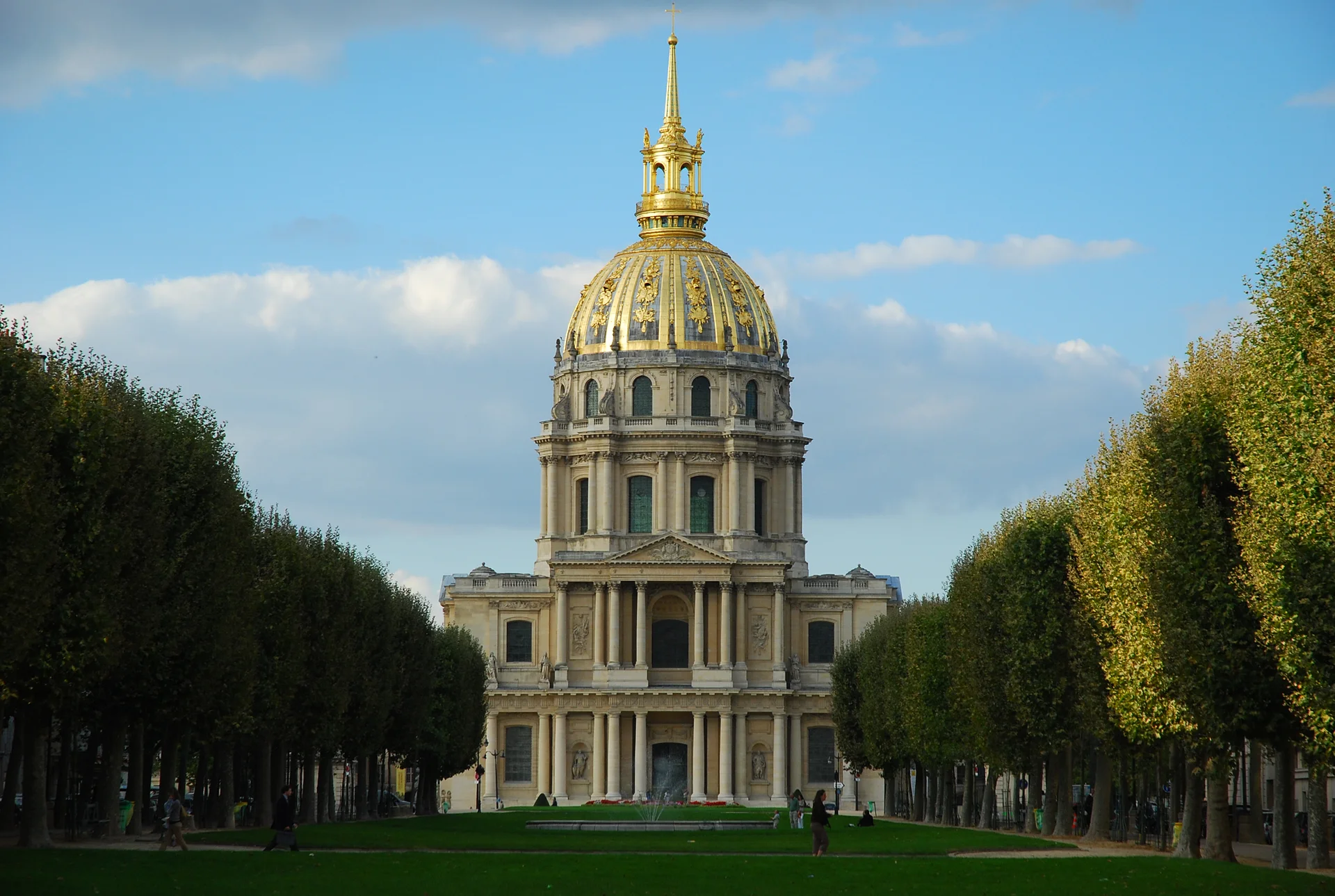
The final destination was the gleaming dome of Les Invalides. Nearly two centuries later, that same golden cupola, covered in nearly 13 kilograms of gold, remains one of the most recognizable landmarks on the Paris skyline.
Why visit Les Invalides?
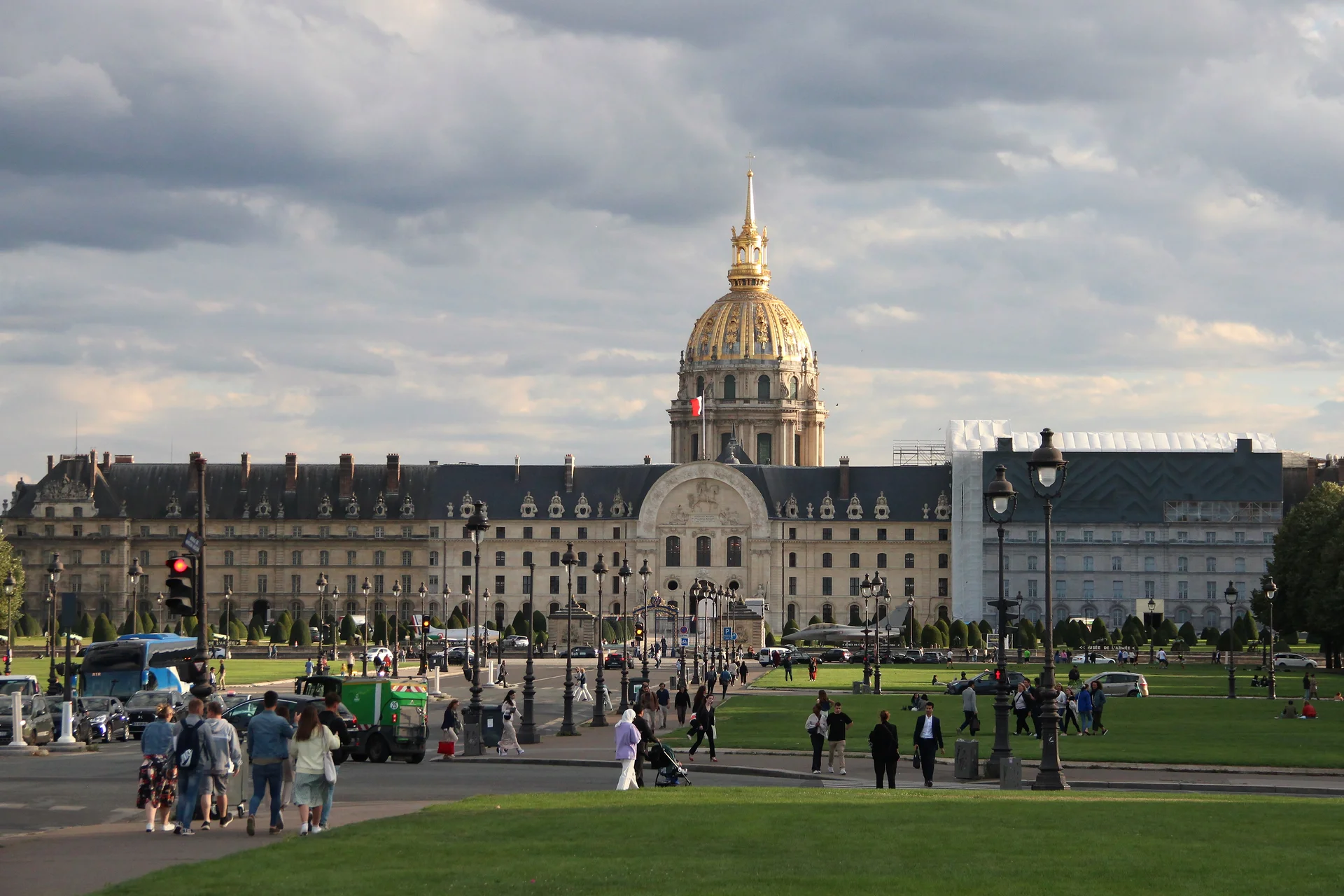
Before Les Invalides existed, wounded soldiers wandered the streets of Paris or scraped by in monasteries. In 1670, Louis XIV made a definitive call to build a massive complex to house, treat, and feed his veterans. Architect Libéral Bruant designed a layout of 15 courtyards capable of hosting up to 4,000 residents. Remarkably, about a hundred veterans still live within these walls today.
The result is a sprawling 13-hectare site functioning simultaneously as a military hospital, a national pantheon, an art and history museum, and a venue for official state ceremonies. Few places in Paris layer this much history onto a single piece of ground.
The dome and Napoleon's tomb
The dome of Les Invalides, designed by Jules Hardouin-Mansart and finished in 1706, reaches a height of 107 meters. It stood as the tallest point in Paris for generations, until the construction of the Eiffel Tower. Its structure relies on a double-dome system where the lower, open cupola reveals the frescoes painted by Charles de La Fosse on the upper dome, creating an open-sky illusion typical of baroque art.
Down below, Napoleon's tomb demands absolute quiet. The sarcophagus weighs 18 tonnes of red Siberian porphyry, resting on a green granite base. The emperor's body lies inside six nested coffins made of different materials including wood, lead, mahogany, and ebony. The entire chamber exudes a striking sense of solemnity.
The Army Museum and its overlooked collections
A timeline from the Bronze Age to the 20th century
The Army Museum, established in 1905, holds over 500,000 artifacts. The galleries of historic weapons and armor dating from the 8th to the 17th century rank among the finest globally. The royal collections feature suits of armor that belonged to Francis I, ceremonial swords, and intricately engraved cannons.
The spaces dedicated to the two world wars deserve careful attention. The fully multimedia Historial Charles de Gaulle traces the general's life through immersive installations. The Museum of the Order of the Liberation, included with admission, documents the French Resistance and Free France with moving precision.
The Museum of Relief Maps
On the fourth floor, around one hundred scale models of French towns and fortresses built under Louis XIV and Napoleon III offer a fascinating exhibit. These hyper-detailed miniature models were originally used to plan territorial defense. Many visitors walk right past them.
Friendly tip: the Cour d'Honneur and the Saint-Louis des Invalides Cathedral are completely free to enter without a ticket. Take the opportunity to examine the 60 bronze cannons displayed in the courtyard and listen closely, as impromptu organ concerts occasionally echo through the space. For the museum, evening openings on the first Friday of every month from 6 PM to 10 PM with tickets priced at $12* let you experience the illuminated dome in a rare atmosphere.
A place where history stacks up
On July 14, 1789, Parisian rioters targeted Les Invalides first to seize the weapons stored in the cellars before marching on the Bastille. During World War II, Royal Air Force pilots hid in the cathedral rafters to evade the Nazis. 17th-century graffiti carved by the disabled veterans themselves remains visible on some interior walls.
Since July 2024, the Minerve project has opened a new space dedicated to the site history, featuring a 17th-century tactile model and an immersive room spanning different eras. Les Invalides continues to reinvent itself.
Opening hours
Evening hours on the first Friday of every month from 6:00 PM to 10:00 PM.
Closed on January 1, May 1, and December 25.
*Information subject to change

I was impressed by the size of this building, which is truly immense. Napoleon's tomb is also imposing and quite elegant. I recommend visiting the museum, which is super interesting. Plan on spending several hours there.