
Independence Plaza: the heart of Montevideo
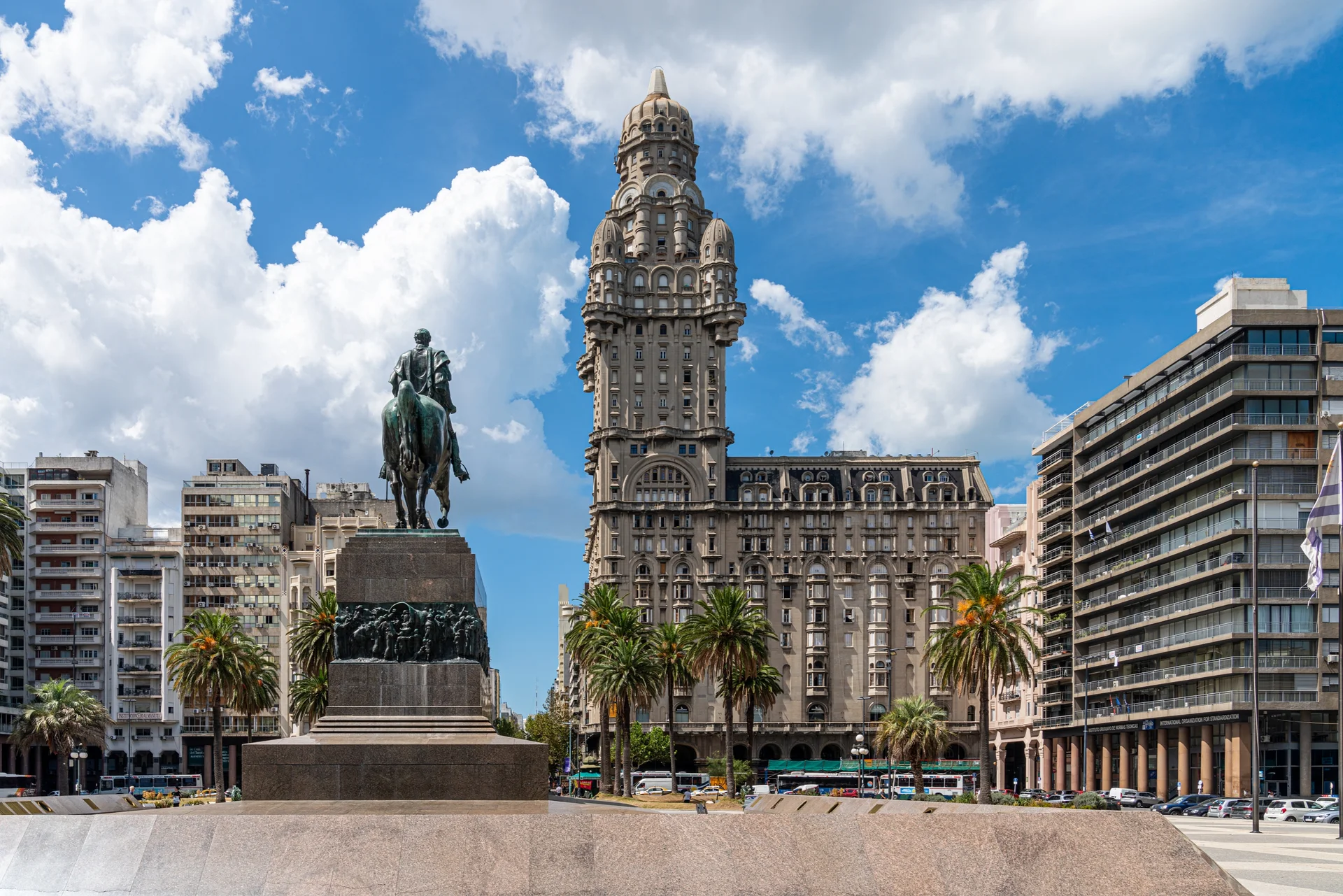
Thirty-three palm trees stand under the Uruguayan sky. They are not there by chance, as each one honors the heroes of the Cruzada Libertadora (Liberation Crusade) who freed the country in 1825. This rectangular plaza marks the invisible border between the colonial old town and modern Montevideo. Office workers from the surrounding buildings pass by tourists in a quiet, typically Uruguayan bustle.
Why visit Independence Plaza?
This esplanade has been the nerve center of the capital since its design in 1837 by the Italian architect Carlo Zucchi. His inspiration was the Rue de Rivoli in Paris. It was laid out on the ruins of the former Spanish citadel, which was razed after independence. In the early 20th century, the French landscape architect Carlos Thays designed the flower beds and planted the palms that give the plaza its current look.
The plaza gathers the symbols of Uruguayan national power and identity. The Palacio Estévez, a former presidential residence, sits next to the modern Torre Ejecutiva, which serves as the president's current office. Since 2010, this is where the presidential inauguration ceremonies take place.
The monument to Artigas and its underground mausoleum
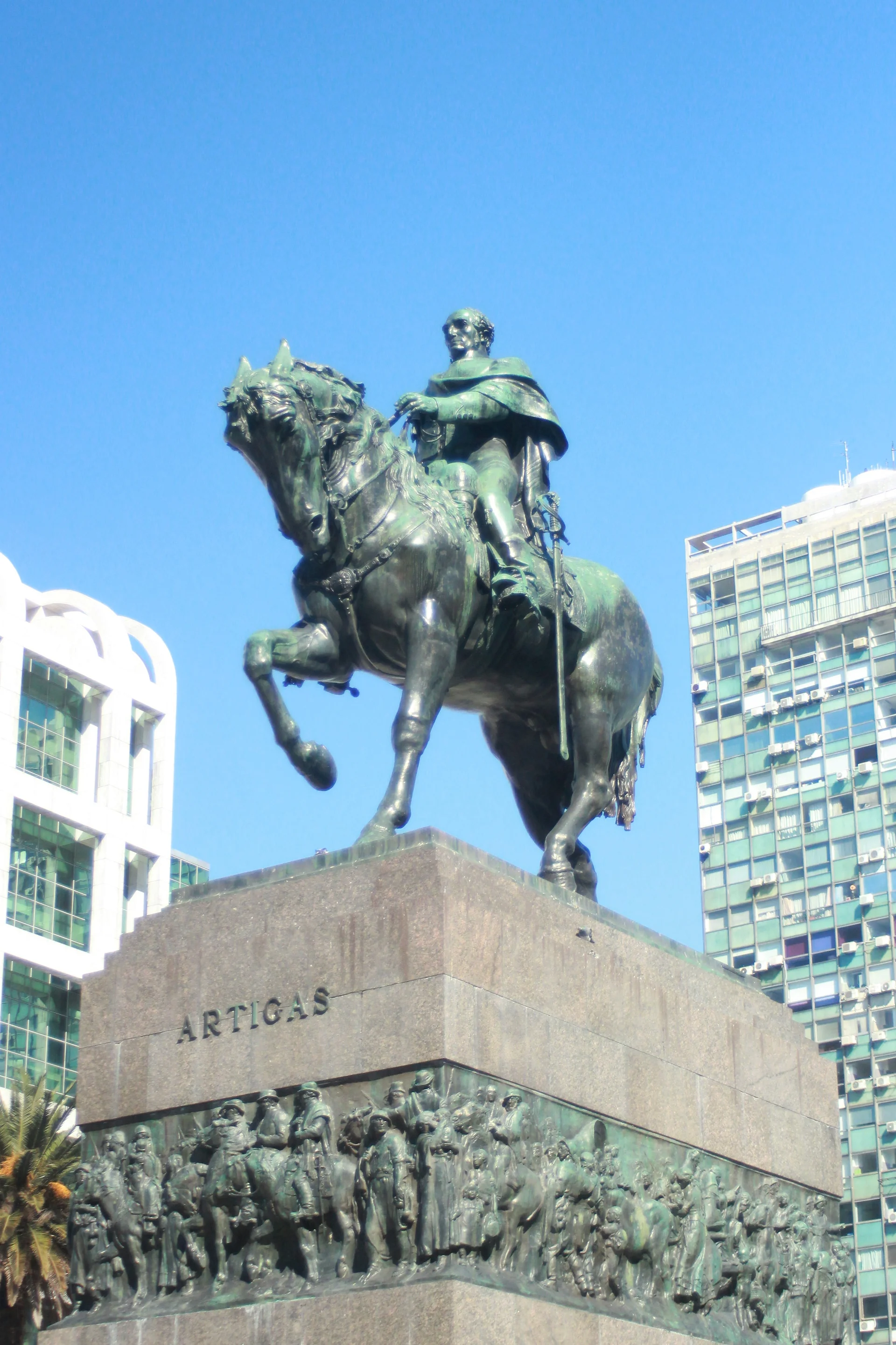
In the center, an imposing 17-meter-tall bronze equestrian statue dominates the space. It depicts José Gervasio Artigas, the father of Uruguayan independence, dressed in his poncho and holding the reins with a firm hand. Inaugurated in 1923, the work of Italian sculptor Angelo Zanelli weighs 30 tons.
Below the monument hides a place of reflection often missed by hurried visitors. Two black granite staircases lead down to an underground room where the urn containing the remains of the national hero rests. The space, opened in 1977, is bathed in a solemn dim light from a natural skylight. Two soldiers from the Blandengues de Artigas regiment keep a permanent guard, frozen in their period uniforms.
Friendly tip: The changing of the guard takes place every Friday at noon. The ceremony is simple and moving, lasts about ten minutes, and attracts far fewer tourists than more famous European counterparts.
The monuments surrounding the plaza
The Palacio Salvo
On the east side, the iconic silhouette of the Palacio Salvo reaches for the sky. This eclectic-style skyscraper stood 105 meters tall when it opened in 1928, making it the tallest in South America at the time. Designed by the Italian architect Mario Palanti, it now houses apartments, offices, and the Museo del Tango. The location is significant, as it was here, in the former Confitería La Giralda, that the tango La Cumparsita was played for the first time.
The Puerta de la Ciudadela and the Teatro Solís
To the west, the Puerta de la Ciudadela (Citadel Gate) stands as a lonely remnant. This stone gate is the only preserved fragment of the colonial fortifications destroyed in 1829. It marks the entrance to the Peatonal Sarandí, a pedestrian street that winds all the way to the port.
The Teatro Solís, inaugurated in 1856, occupies the southwest corner. Its neoclassical columns and 1,500-seat Italian-style auditorium make it one of the most prestigious theaters in Latin America. Guided tours are available to see the backstage areas.
What visitors often overlook
The 18 de Julio avenue, the main commercial artery of Montevideo, begins exactly at the northeast corner of the plaza. Its name commemorates the date of the first Uruguayan constitution. Crossing it means leaving historic Montevideo to step into the modern city.
The benches facing the monument offer an ideal vantage point to understand the city rhythm. Locals settle in with their thermoses and mate, watch the buses go by, and discuss the news. The plaza is not just a tourist site, it is a place of daily life.

Bordered by the old Casa de Gobierno and the newer, more modern government palace, Plaza de la Independencia pays tribute to Artigas, the hero of independence, whose statue sits in the center, as well as the 33 heroes known as "Orientales" who pushed back the Portuguese invasion, to whom the 33 palm trees in the square refer.