Rizières den terrasses de Banaue
  1. Top destinations
  2. Asia
  3. Philippines

Things to do in Philippines: 9 must-see attractions

Discover our members' favorite destinations in Philippines, plus reviews, practical info, and traveler photos...

The 5 most beautiful cities to visit in Philippines

Manila

#1 Manila +18

Manila is a city of extreme contrasts. Some travelers suggest skipping the Philippine capital entirely, arguing it lacks the polish western tourists expect. Others call it the "Pearl of the Orient," claiming its appeal is widely overlooked. If you are traveling through the Philippines, here is why you should consider giving Manila a fair shake.

Churches and history

Manila often takes heat for its gridlocked traffic, political volatility, and smog. However, specific neighborhoods offer a deep look into the local past. The historic colonial district, known as Intramuros, holds the city's most significant landmarks, including a high concentration of churches. The San Agustin Church, dating back to 1589, is the oldest religious structure in the country. Its earthquake-resistant baroque architecture earned it a spot on the UNESCO World Heritage list. For a deeper dive into national history, head to Fort Santiago, which houses a museum dedicated to José Rizal, the Philippine national hero. If you enjoy cultural institutions, you will likely spend time at the National Museum of Natural History and the Ayala Museum for a look at pre-Hispanic history. For something more unconventional, the Marikina Shoe Museum displays 800 pairs of shoes once owned by the former First Lady.

A cultural melting pot

The capital serves as a crossroads for a diverse range of cultures and ethnicities. A prime example is the Chinese Cemetery, built in 1843 just outside the city center. You will find incredible mausoleums and sarcophagi that blend Chinese and western influences. From turtle-shaped tombs to three-story "houses" for the departed, the variety is striking. After exploring, head back into the chaos of the city in Chinatown. Filipinos, Chinese, and Spanish influences have coexisted here for centuries. Often cited as the oldest Chinatown in the world, founded in 1594, it is the place to eat. Grab some pancit (Chinese noodles), empanadas, or lumpia, a crispy snack similar to a spring roll.

Shopping and nightlife

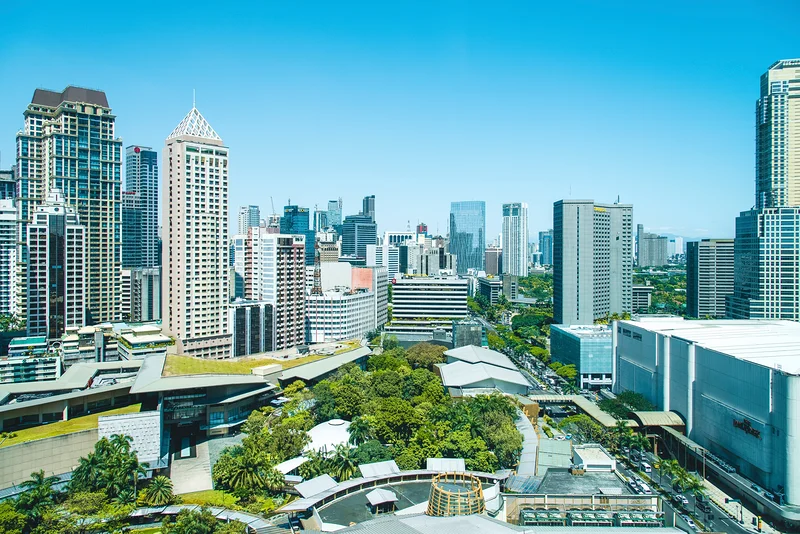
Manila has fully embraced the 21st century. You can shop in trendy boutiques or catch a performance at the Cultural Center of the Philippines. Makati, a modern financial hub located 5 kilometers (about 3 miles) away, contains some of the largest shopping malls on the planet. Grabbing a drink at a rooftop bar in Makati is a standard evening activity, as the area is packed with high-end cocktail lounges.

When to go

You can visit Manila year-round, but the most pleasant weather arrives between December and February. You will avoid the worst of the rain during the summer months, but the heat and humidity can become intense.

How to get there

Expect to pay at least 550 USD (about 30,800 PHP) for a round-trip flight from the United States. Your flight will likely involve at least one layover, often in the Middle East or East Asia, resulting in a total travel time of roughly 18 to 22 hours depending on your departure city.

Tagaytay

#2 Tagaytay +11

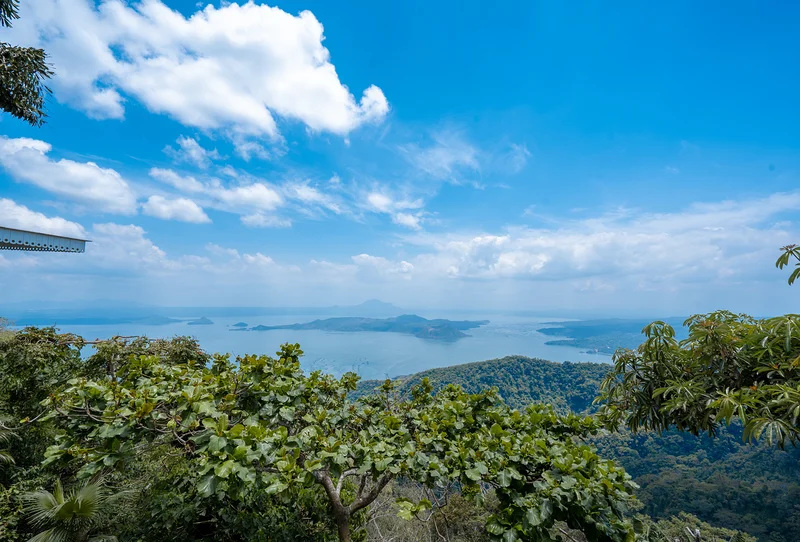
Tagaytay is a municipality in the province of Cavite, in the Philippines, located in the southern part of Luzon island, home to the capital, Manila. Sitting at an elevation of 2,000 feet, it enjoys cooler temperatures than the rest of the country, similar to the relief you might find in the Appalachian highlands. The name Tagaytay comes from the tagalog language, meaning "the ridge." The town sits on a high ridge overlooking Taal Lake and its iconic volcano, providing clear views of the surrounding landscape. The view from the rooftop of the Taal Vista hotel is widely considered one of the best in the area.


The city of Taal Volcano

Tagaytay is known primarily for its location, perched on a hillside that offers panoramas of the Caldera and the Taal volcano. This high-altitude placement was historically chosen to keep the town out of reach of the volcano's frequent eruptions, which have devastated lower-lying towns nearby.

The volcano of Taal is the smallest active volcano in the world, with its most recent eruption occurring in 2020. It is a part of the Pacific Ring of Fire. From the nearby village of Talisay, you can arrange an excursion to the volcano. A short boat ride followed by a 40-minute hike brings you to the summit, where you can see fumaroles, craters, and the lake inside the crater.

Tagaytay began to grow in importance during the early 20th century. Located just a few hours south of Manila, it gradually became a popular retreat for residents of the capital seeking nature and quiet. In 1938, Philippine President Manuel L. Quezon visited Tagaytay to sign Commonwealth Act 338, which formally established the city.


A base for hiking

Tagaytay features several green spaces like Picnic Grove or the People's Park in the Sky, which has a unique history. These grounds were originally developed to house the residence of the former Philippine dictator, President Marcos. Following the 1986 Philippine Revolution, the site was preserved and converted into a public park.

Tagaytay also serves as an ideal base for mountain hikes, including ascents of Mount Batulao, Mount Talamitam, or Mount Pico de Loro. The area is known for its flower fields and coconut plantations. Be sure to stop by the local market or try a bowl of bulalo, a beef shank soup that is the regional specialty.


When to go

The best time to visit the Philippines is between November and March, when temperatures are warm and rainfall is minimal.


How to get there

From the capital, Manila, take a bus from the Paranaque Integrated Terminal Exchange (PITX). The trip takes about 2 hours. If you are driving, you can reach the city via the Santa Rosa - Tagaytay Road in about 90 minutes.

Puerto Galera

#3 Puerto Galera +10

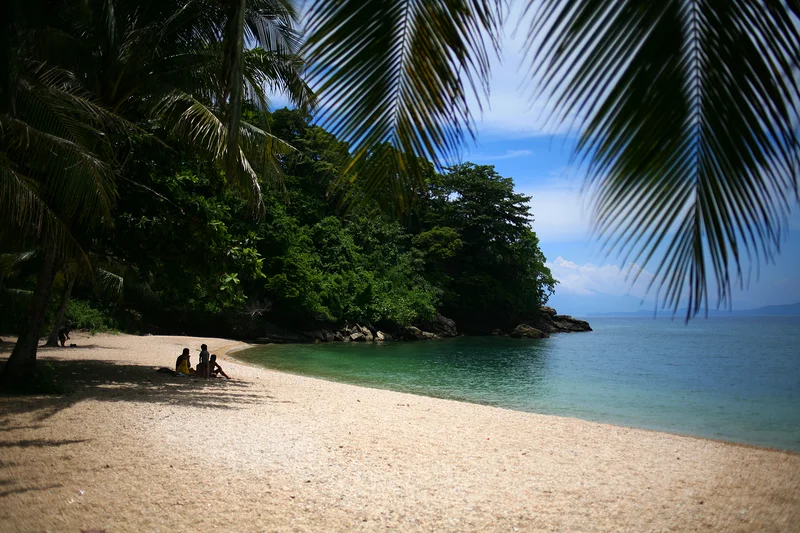
Puerto Galera is a beach town located on the island of Mindoro in the Philippines. It is a premier destination for scuba diving and snorkeling. The town sits near Apo Reef, a sprawling 34-square-kilometer coral system recognized as a UNESCO World Heritage site, which supports a massive array of marine life. Puerto Galera is also known for its accessible beaches and a wide range of dining and entertainment options, attracting a significant community of international expats.


Beaches and coastal recreation

Puerto Galera features several well-known beaches, including White Beach. This is the island's primary tourist hub, packed with nightlife, bars, restaurants, and tour operators. Other notable spots include Talipanan, which offers a smaller, quieter atmosphere, Sabang, a lively beach stretching along the former fishing village of the same name, and Aninuan.

The area is set up for a wide variety of water and land-based activities. Beyond diving, you can rent jet skis, kayaks, or windsurfing gear, go catamaran sailing, or book a deep-sea fishing trip. On land, the options are equally diverse, including paintball, mountain biking, go-karting, archery, and hiking.


The island of Mindoro, forests and biodiversity

The island of Mindoro is heavily forested and biologically diverse. Serious hikers often tackle the trail to Mount Halcon, one of the highest peaks in the Philippines, reaching an elevation of over 2,500 meters. For shorter excursions, the paths leading to the 31-meter-tall Tamaraw Falls or the Tukuran falls offer excellent opportunities to observe local flora and fauna. To reach the Tukuran falls, you even have the option of taking a ride on a cart pulled by oxen.

For those interested in local culture, the Mangyan village at the southern end of the island is worth a visit. This community is supported by a philanthropic family to preserve the heritage of an indigenous people who have faced historical persecution. On the western side of the island, do not miss the Immaculate Conception Church, which houses an excavation museum filled with artifacts and relics that provide a window into local history.


When to go

The best time to visit Puerto Galera is between January and April, which coincides with several local festivals. Be aware that typhoon season typically runs through October and November.


How to get there

From Manila, take a bus to the Batangas pier, then transfer to a ferry bound for Puerto Galera. If you are arriving from the island of Tablas, a ferry will take you to Roxas, where you will need to continue by land to reach Puerto Galera. From Coron, ferries arrive at San Jose on the western side of the island, from which you can take a series of buses to Roxas, Calapan, and finally, Puerto Galera.

Boracay

#4 Boracay +10

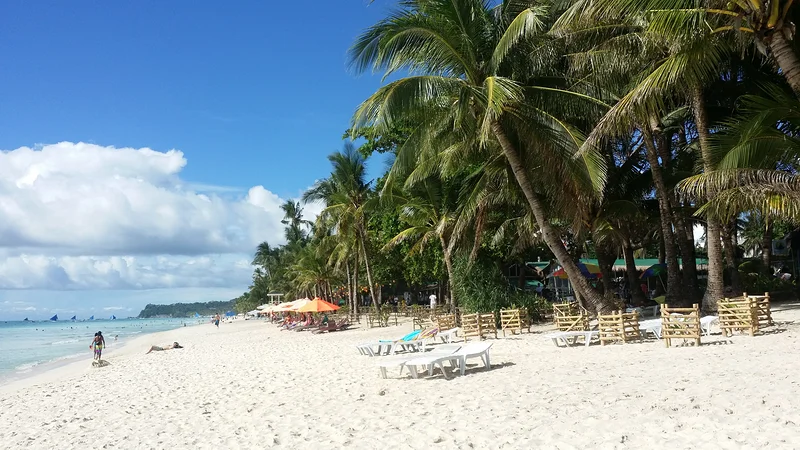
Boracay is an island in the Visayas archipelago in the central Philippines, located about 185 miles from the capital, Manila. This small island, measuring about 4 miles long and roughly a mile wide at its narrowest, is known for its white sand beaches and high-energy nightlife. In recent years, it has drawn up to 2 million tourists annually. Falling victim to its own popularity, the resident population surged to over 33,000 by 2018, up from barely 12,000 in 2000. In 2018, Philippine president Rodrigo Duterte ordered a six-month closure of the island for environmental rehabilitation.


A tropical escape in the heart of the Philippines

Boracay checks all the boxes for a classic tropical getaway: turquoise waters, coral reefs, warm sand, and a range of upscale hotels, restaurants, and bars. It is a destination for partying, lounging, or scuba diving. You will find plenty of activities on the water, including paddleboarding, surfing, parasailing, and jet-skiing, alongside the traditional D'Talipapa market for fresh seafood.

The island's two most famous stretches are White Beach, a 2.5-mile strip often ranked among the top ten beaches in Asia, and Bulabog Beach, located on the opposite side, where wind conditions are better suited for water sports. White Beach is divided into sections known as "stations," which refer to old boat landings and help with navigation. Other, quieter beaches are accessible, particularly in the less developed northern part of the island. There are also trails for hiking through the local landscape.


The rehabilitation of Boracay

During the closure ordered by the president of the Philippines, the island underwent a cleanup and implemented new regulations, such as bans on drinking and smoking on the beaches. Quotas were established, limiting the island to a maximum of 19,200 tourists at any given time. Hotels failing to meet environmental standards were shuttered, and local roads were renovated to improve traffic flow. To prevent illegal development, a 30-meter buffer zone from the shoreline was established where all permanent structures are prohibited.


When to go

The best time to enjoy Boracay's beach culture is during the dry season, from December through March. Avoid the months between June and October, which see significantly more rainfall. Be sure to book your trip well in advance, as the visitor quotas mean space can fill up quickly.


How to get there

Boracay is accessible by ferry from Caticlan on the neighboring island of Panay, where the local airport is located just across the strait. You can also travel via the international airport in Kalibo.

Banaue

#5 Banaue +9

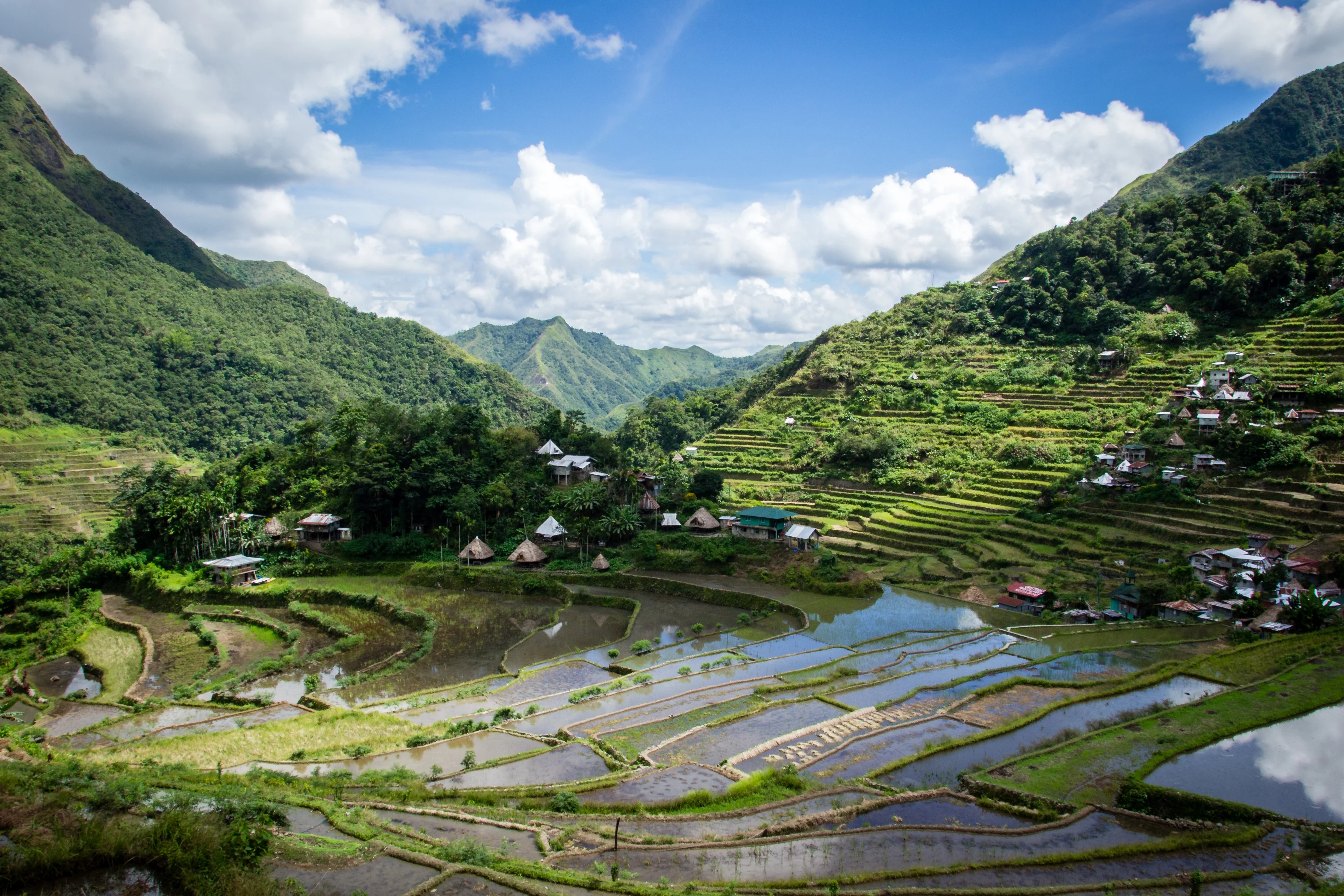
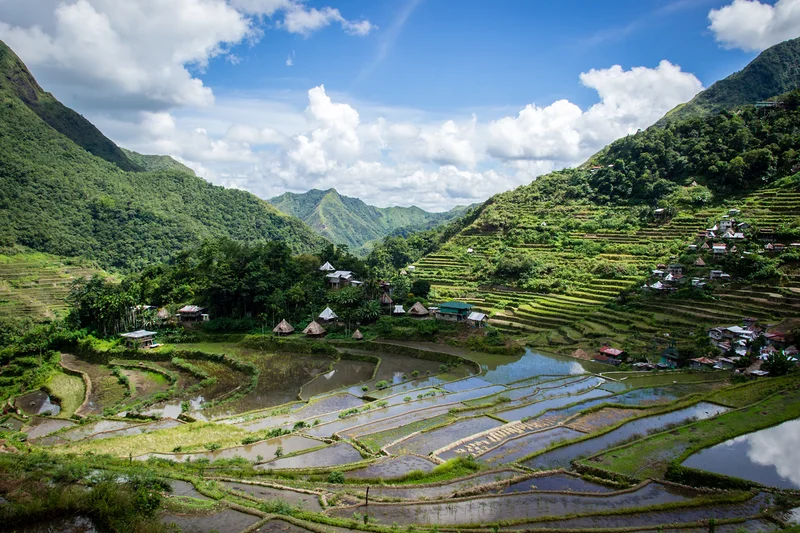
Banaue is a village on the island of Luzon in the Philippines, sitting at an elevation of 1,200 meters (about 3,937 feet) in the Cordillera mountains, near the peak of Mount Amuyao. It is known for extensive rice terraces carved over 2,000 years ago by the Ifugao people, a site recognized as a UNESCO World Heritage landmark since 1995. These terraces function as a sophisticated irrigation system, capturing and distributing water from the mountain forests to nourish the rice crops. Even today, local farmers maintain the fields using traditional, manual techniques.

Seeing the rice terraces, the eighth wonder of the world

Banaue is a small, rugged village and one of eleven settlements inhabited by the Ifugao tribe. Expect cooler temperatures here thanks to the high altitude and mountainous terrain. While the local economy has been anchored in rice farming for two millennia, tourism is now a significant part of daily life. The retaining walls that form the terraces were built by hand, using local materials like mud and stone. Locals often refer to the fields as "stairways to the sky," a fitting name given the steep climbs required to reach the various basins scattered throughout the valley.

You can easily walk through the rice paddies from the village to reach observation points like the Chango View Point or the Front Size View Point. If you are looking for more of a workout, multi-day treks through the valley are available, and hiring a local guide is highly recommended.

Starting point for trekking in the Philippine Cordillera

Most treks lead you through the rice fields to neighboring villages like Batad, which sits inside a natural green amphitheater, as well as Bangaan and Cambulo. Hiking routes often lead deep into the wilderness to spots like Tappia Falls, a 21-meter (69-foot) cascade where you can take a dip, or the Guihob natural pool, which was partially damaged by a typhoon in 2010. Those looking for a challenge can head to the Awa View Deck, a trail that provides a sweeping aerial view of the terraces below. You can also travel between villages by jeep, the primary local transport, or by renting a bicycle on-site.

When to go

The scenery shifts dramatically throughout the year. The landscape is lush and vibrant green during the rainy season in June and July, while the atmosphere turns dry and earthy between December and March, which coincides with the rice planting season. If your schedule allows, try to visit during the Ifugao indigenous culture festival in April to experience days of traditional costumes, songs, and dances.

Getting there

From Manila, the capital, you can take a bus to Banaue. The trip takes about 9 hours. Many travelers prefer the overnight bus to save on time, though the daytime route offers impressive mountain views.

Ranking of the 4 activities selected by our editors in Philippines

#1 Picnic Grove (Tagaytay) +6 5

Picnic Grove is a green space overlooking Tagaytay and Taal Lake. This spot offers high-altitude views alongside space for a family picnic. The park features meadows, pine forests, food stalls, and signature picnic tables with pointed roofs. Visitors can walk, dine, or experience the heights via the zipline and Ferris wheel.

#2 Rizal Park (Manila) +5 5

Rizal Park serves as a vital green space in Manila, Philippines. This site hosted the archipelago's declaration of independence and features the Rizal Monument, honoring the national hero. Known as Luneta during the Spanish era, this park sits between Taft Avenue and Manila Bay, offering prime sunset views, gardens, an orchidarium, and the Rizal Fountain.

#3 Taal Volcano (Talisay) +5 5

Located about 40 miles south of Manila, the capital of the Philippines, this site is defined by its unusual geography. The volcano's crater contains a lake, which in turn features a small, rocky islet. This crater, known as Volcano Island, is itself an island sitting within the waters of Taal Lake. That lake is situated on the island of Luzon. This nested scale of land and water is unique in the world.

Taal is often cited as the smallest active volcano on the planet. More somberly, the eruptions and tsunamis triggered by its volcanic activity, combined with the proximity of populated areas, make it the deadliest in the history of the country.

The site is monitored and currently open to visitors. The volcano is never completely dormant, and you may see harmless fumaroles escaping from the crater. To reach it, you will need to take a banka, a type of traditional local outrigger boat, for a 20-minute ride to dock on Volcano Island. From there, you climb to the summit. The ascent to the crater, which reaches an elevation of 1,300 feet in some spots, can be done on foot or by horse. Hiking up is a decent workout, especially given the heat and humidity, but it is manageable without special equipment in about 40 minutes. Furthermore, hiking is free and allows you to take in the views at your own pace.

#4 Dumaluan Beach (Panglao) +4 5

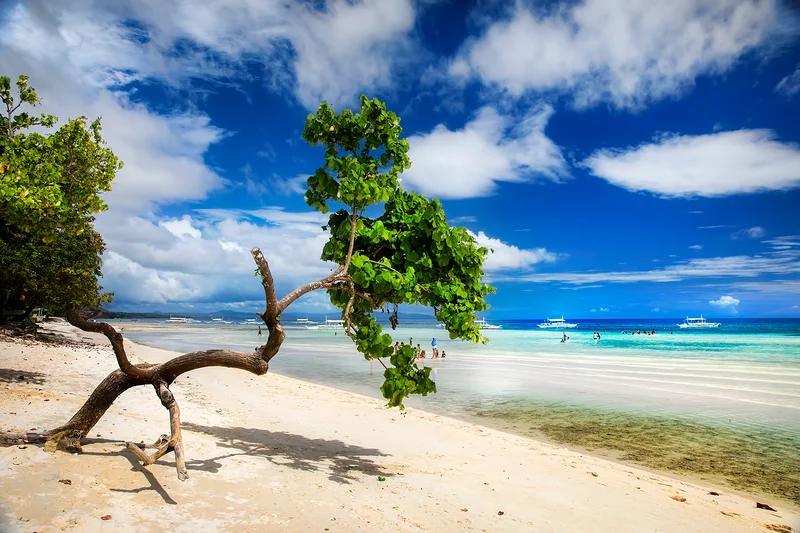
Stretching nearly two kilometers, Dumaluan Beach is the premier white sand destination on Panglao, Bohol, in the Philippines. Quieter than nearby Alona Beach, it features turquoise waters and a gentle slope perfect for families. With sunrise ocean views, shade from coconut palms, and soft sand, this spot is essential for true relaxation.

See the guide See deals

Visiting the Philippines: 7,000 Islands, 7,000 Stories

Seven thousand islands scattered between the South China Sea and the Pacific Ocean. That's the Philippines, and no two of them feel the same. Tropical Asia collides with four centuries of Spanish colonial history, and the result is unlike anywhere else on the continent.

Is the Philippines the right destination for you?

The Philippines rewards travelers who are genuinely flexible. If empty beaches, world-class diving, and volcanic landscapes are on your list, this archipelago delivers. Divers come for the reefs, hikers come for the mountains, and anyone curious about a genuinely layered culture will find plenty to dig into.

That said, go in with realistic expectations. Getting between islands takes time, infrastructure outside the main tourist zones can be basic, and the rainy season (June through October) can derail plans fast. Manila, the entry point for most international flights, is a sprawling, noisy, traffic-choked city of 13 million that can feel overwhelming on arrival. Push through it, though, and the rest of the country more than makes up for it.

Luzon: urban chaos and natural wonders

Manila hits hard at first. But the walled colonial district of Intramuros is worth your time: baroque churches, cobblestone streets, and Fort Santiago tell 400 years of turbulent history in a way that no museum could. Think of it as the Philippines' answer to Old San Juan, minus the cruise ship crowds.

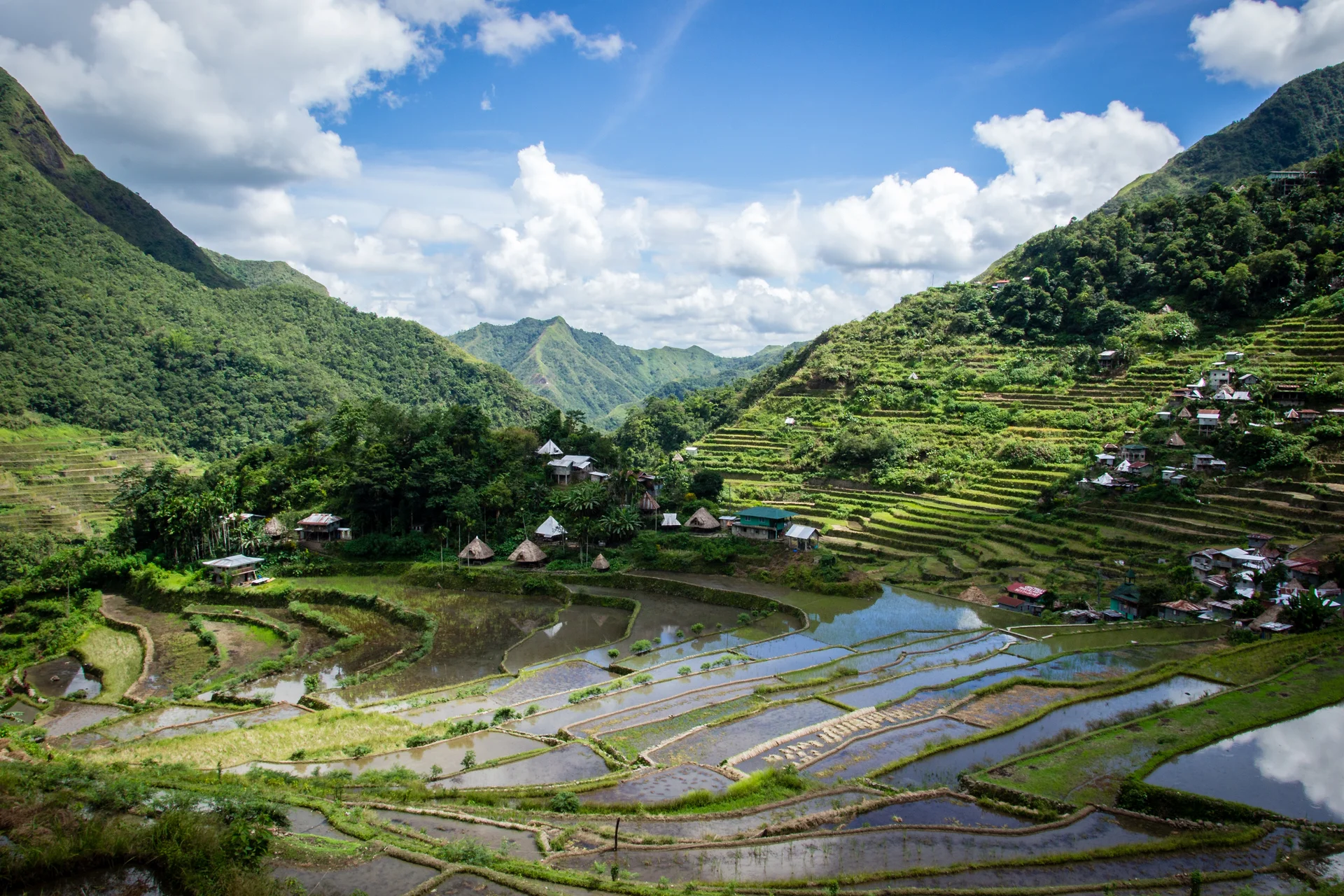
The real shift happens once you leave the capital. Head north to the rice terraces of Batad, hand-carved into the Cordillera mountains by the Ifugao people roughly 2,000 years ago. The terraces follow the mountain contours in sweeping steps that look almost too perfect to be real. UNESCO agrees: they're a World Heritage Site.

Insider tip: Skip Batad on weekends. Domestic tourists flood the site and the whole atmosphere changes. Go on a weekday and you'll often have the viewpoints nearly to yourself.

Volcanoes and whale sharks: the outdoor adventure case

Mount Pinatubo is one of the country's best hikes. The volcano erupted catastrophically in 1991, and today its crater holds a striking turquoise lake. The round-trip trek covers about 9 miles through lunar-looking lava fields. It's not technical, but it's a full-day commitment.

Further south, the town of Donsol becomes one of the world's best places to swim with whale sharks between February and May. These gentle filter-feeders reach up to 40 feet long and cruise the shallow waters close to shore. It's a snorkeling experience more than a dive, and genuinely unlike anything you'll find in the Caribbean.

Palawan: the last wild frontier

Palawan is a long, narrow island-province stretching about 400 miles between the South China Sea and the Sulu Sea. Old-growth forest meets immaculate coral reefs, and development is still light enough that it feels like the Philippines did 30 years ago.

El Nido, a small former fishing village, is the gateway to the Bacuit Archipelago. Massive limestone karsts rise straight out of turquoise water, enclosing hidden lagoons you can only reach by kayak. Each small island has its own character: powdery sand beaches, sea caves, coral gardens. It's the kind of scenery that looks like a screensaver but is completely real.

Insider tip: Book your island-hopping tours the evening before at the port in El Nido rather than through your hotel. You'll pay about 30% less and get to choose your group size.

Coron: diving into WWII history

The Coron archipelago holds one of the best wreck diving destinations in the world. Around a dozen Japanese warships sunk during World War II rest at depths between 30 and 130 feet, now fully colonized by coral and marine life. Even beginners can explore the shallower wrecks, and Kayangan Lake offers crystal-clear snorkeling for non-divers.

The Visayas: where Philippine culture shines

The central Visayas islands are where the country's festive, welcoming character really comes through. Cebu, the Philippines' second city, mixes modern malls with old colonial churches and a food scene that rivals Manila. But the surrounding islands are the real draw.

Bohol has two things you won't find anywhere else: the Chocolate Hills, a geological oddity of 1,268 perfectly cone-shaped mounds that turn brown in the dry season, and the tarsier sanctuary in Corella. Tarsiers are fist-sized primates with enormous fixed eyes that can't move in their sockets. They're nocturnal and easily stressed, so keep quiet and move slowly.

Siquijor: the island that earned its reputation

Locals call Siquijor the island of sorcerers, and it leans into that identity. Traditional faith healers still practice here, and the island has a quiet, slightly otherworldly atmosphere that's hard to explain. The Cambugahay Falls offer natural swimming pools in an almost unreal shade of blue, and the beaches are largely uncrowded.

Boracay closed for a six-month environmental rehabilitation in 2018 and came back significantly cleaner. Its 2.5-mile stretch of powdery white sand backed by coconut palms remains one of the best beaches in Southeast Asia. It does get crowded, but the cleanup effort was real.

Insider tip: Avoid Boracay from December through February, when it's at peak capacity. April to May or September to November gives you the same beaches with far fewer people.

Eating in the Philippines: a fusion that makes sense

Filipino food doesn't get the international attention it deserves. Adobo, the national dish, braises pork or chicken in vinegar, soy sauce, garlic, and bay leaves until the meat is fall-apart tender. Lechon, a whole suckling pig roasted on a spit, shows up at every major celebration and is worth seeking out. Sinigang is a sour tamarind-based soup that's deeply comforting, especially on a rainy evening.

The fruit alone is worth the trip. Mangoes from Guimaras are widely considered the sweetest in the world. Davao's durian is polarizing (the smell is intense, the flavor is complex). Rambutan, with its translucent white flesh, is easy to love. And halo-halo, a shaved-ice dessert layered with sweetened beans, jellies, and condensed milk, is the perfect antidote to the afternoon heat.

Night markets are where Filipino social life happens. Grilled fish, balut (a fertilized duck egg, a local delicacy that's not for the faint-hearted), and lumpia (Filipino spring rolls) make up the standard spread. A cold San Miguel beer rounds it out. Expect to spend 150 to 300 PHP per person (about $3 to $5) for a full sidewalk spread.

When to go to the Philippines

The dry season runs November through April, with temperatures between 77°F and 86°F and minimal rain. That's your window. March and April push toward 95°F in Manila and can feel brutal if you're not used to humid heat.

The monsoon arrives between May and October, though timing varies by region. The western side of the archipelago, including Palawan and western Luzon, gets hit from June through November. The eastern side stays wet year-round. Typhoon season peaks from July through September and is not something to brush off.

For diving, the timing depends on where you're going. Palawan and Boracay are best November through May. Bohol and Siquijor dive best from February through June. Donsol's whale sharks are present February through May.

Getting to the Philippines from the US

There are no nonstop flights from the US to Manila, but several carriers offer solid one-stop options. From the West Coast, Philippine Airlines and Korean Air connect through Seoul, with total travel times around 14 to 16 hours. From the East Coast, expect 20-plus hours with a connection. Emirates, Qatar Airways, and Singapore Airlines are reliable options routing through Dubai, Doha, and Singapore respectively.

US passport holders get 30 days visa-free on arrival, no advance application needed. Make sure your passport is valid for at least six months beyond your return date, and have proof of onward travel ready at immigration.

For domestic connections, Cebu Pacific, Philippine Airlines, and PAL Express cover the main routes: Manila to Cebu, Davao, Puerto Princesa (Palawan), and Kalibo (for Boracay). Book these early. A Manila to Puerto Princesa flight booked in advance runs roughly 2,800 to 5,600 PHP (about $50 to $100), but last-minute fares spike.

Getting around the Philippines

Ferries are the backbone of inter-island travel. 2GO Travel handles the main routes between Manila, Cebu, Bohol, and Palawan on air-conditioned ships. Manila to Cebu takes about 22 hours; Manila to Puerto Princesa is around 36 hours. It's slow, but it's cheap and the overnight crossings save you a hotel night.

Jeepneys, the elongated, heavily decorated vehicles descended from US military jeeps left after World War II, are the classic local transport. They're inexpensive and cover every corner of the main islands, but they're slow and routes can be confusing for first-timers. Tricycles (motorcycles with a sidecar) handle shorter distances in smaller towns.

For covering serious ground between distant islands, flying is the practical choice. Domestic fares booked ahead are reasonable: Manila to Puerto Princesa typically runs 2,800 to 5,600 PHP ($50 to $100) depending on season and lead time.

In Manila, the elevated rail lines (MRT and LRT) are your best friend during rush hour. A day pass costs 100 PHP (under $2) and covers the full network. Taxis and ride-apps exist but Manila traffic is genuinely some of the worst in Asia, so don't count on ground transport during peak hours.

Find the best deals to travel to Philippines

Hotels and stays Flights Car rentals Custom trips

Top photos posted by members

Rizières den terrasses de Banaue
traffic
SM megamall

Latest reviews

Bohol, exceptional beach, Chocolate Hills

Even though it is very busy with tourists, I really enjoyed the island of Bohol. Its natural beauty is undeniable, with superb beaches that are perfect for relaxing, and a pleasant atmosphere despite…

4 0

Unforgettable experience

I had the chance to discover the Pinatubo volcano during a trail run, and it was an unforgettable experience. The site is simply exceptional, but you have to earn the access, as effort and perseveran…

1 0

Exceptional

The Chocolate Hills are an absolutely exceptional site that is truly worth the trip. Standing before this unique landscape, made up of hundreds of perfectly shaped hills, you cannot help but be amazed…

2 0

The view is breathtaking

In my opinion, Banaue is a must-see on the island of Luzon. Perched in the mountains, this region offers spectacular rice terraces carved into the hillsides. The view is breathtaking. Authentic and g…

4 0

not much to see

I have to admit that I didn't really enjoy my visit to Manila. Aside from discovering a few interesting markets, the city didn't win me over. What strikes you most is the stark contrast between the l…

13 0