
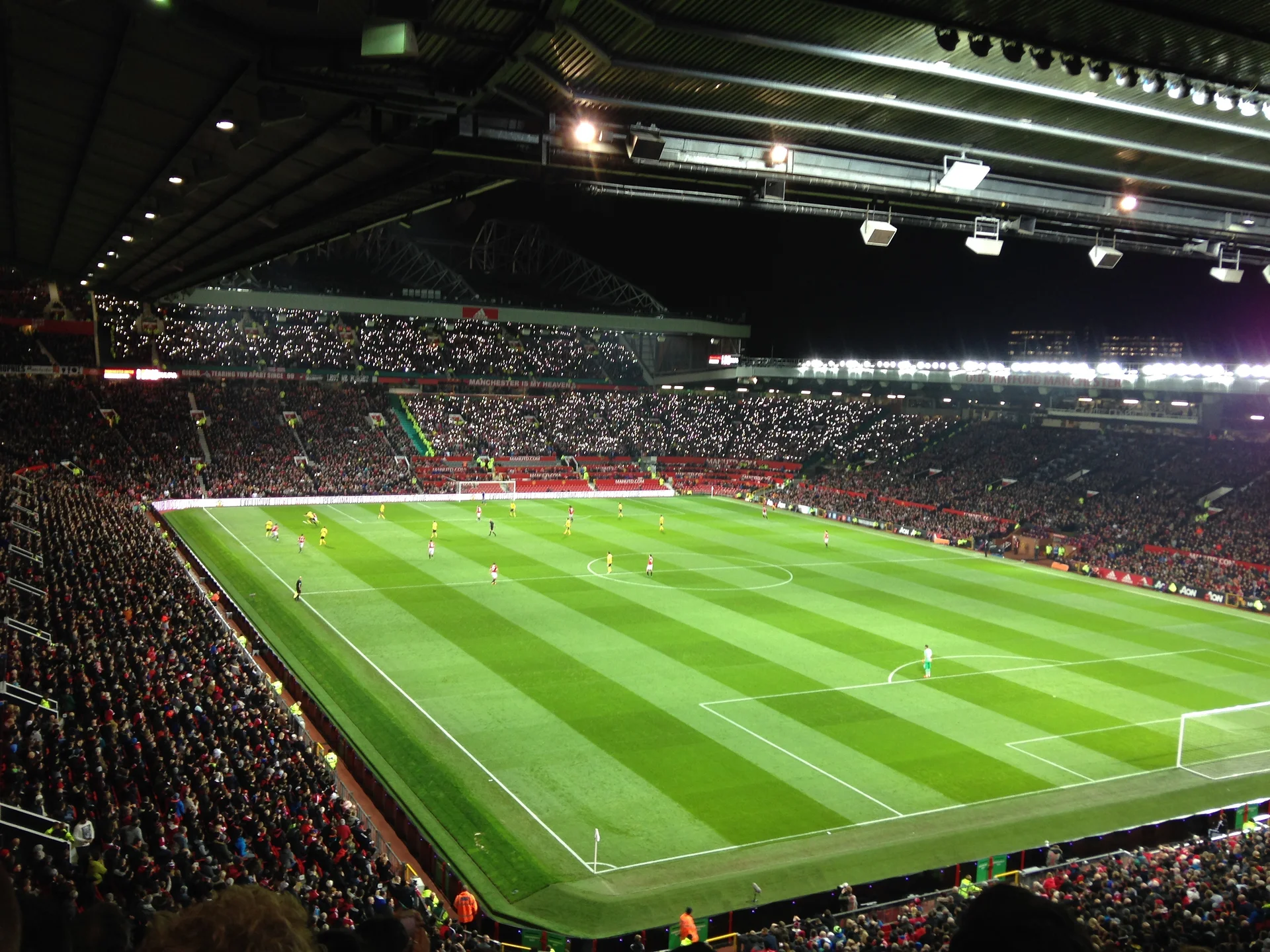
The Home of Manchester United
Located in Manchester, Old Trafford serves as the home turf for the legendary Manchester United. It stands as the second largest football stadium in the United Kingdom behind Wembley Stadium and the seventh largest in Europe.
A History of Resilience
Manchester United remains the most decorated football club in the United Kingdom. With 20 league titles and numerous cup victories, it ranks among the most profitable clubs globally, currently valued at 3 billion GBP (about 3.8 billion USD). This success was not always guaranteed, as the club navigated decades of significant financial hurdles.
The stadium was designed by Archibald Leitch, a Scottish architect known for his work on various grounds across the United Kingdom and Ireland. Completed in 1909, the facility now holds approximately 80,000 spectators. This capacity and scale earned it the nickname Theatre of Dreams for an all-seater stadium.
The path to its current state was long. In 1936, the North Stand was renovated with a new roof, followed by the South Stand two years later. The stadium suffered near-total destruction during World War II. During this period, Manchester United was forced to play and train at the former ground of their local rivals, Maine Road.
Reconstruction occurred throughout the 1950s, featuring a covered main stand and the installation of floodlights to host evening European matches. In 2006, an expansion added 8,000 seats. Beyond football, the stadium serves as a venue for rugby league matches and major concerts.
A Must for Football Fans
From the stands and locker rooms to the press rooms and VIP suites, the tour offers a comprehensive look behind the scenes. While stepping onto the pitch is off-limits to the public, you can walk through the grandstands and the famous sections: the Sir Alex Ferguson Stand (North), the Sir Bobby Charlton Stand (South), the Stretford End (West), and the East Stand. The facility also houses 165 VIP suites.
The attached museum tracks the evolution of the club. The collection features jerseys and boots worn by the team's greatest players, and the trophy cabinet displays a significant haul of silverware. In honor of their legacy, the club celebrates its icons with either a dedicated museum exhibit or a commemorative statue.
Opening hours
*Information subject to change

While many clubs haven't hesitated to move to brand new stadiums in recent years, Manchester United has chosen to stay loyal to its historic home, expanding and improving it over the years. The result is a truly special stadium with unique architecture that doesn't look like any other. Although it is very large and perfectly functional, there is an old-school, classic English football atmosphere floating in the air.