
Visiting the John Rylands Library: Victorian Gothic and the pursuit of knowledge
The moment you step onto the forecourt of the John Rylands Library in Manchester, you are transported to another era. This building, a pure masterpiece of Victorian neo-Gothic architecture, stands with a quiet majesty, inviting you to discover the treasures hidden behind its intricate dark stone facades.
Why visit the John Rylands Library?
Beyond its function as a university library, the John Rylands Library is a true cathedral for books, a monument to knowledge and art. It was commissioned by Enriqueta Rylands in memory of her husband, John Rylands, a successful industrialist, and opened in 1900. It serves as a sumptuous home for one of the most important collections of rare books and manuscripts in the world, offering a sensory immersion into history and culture.
Architecture that tells a story
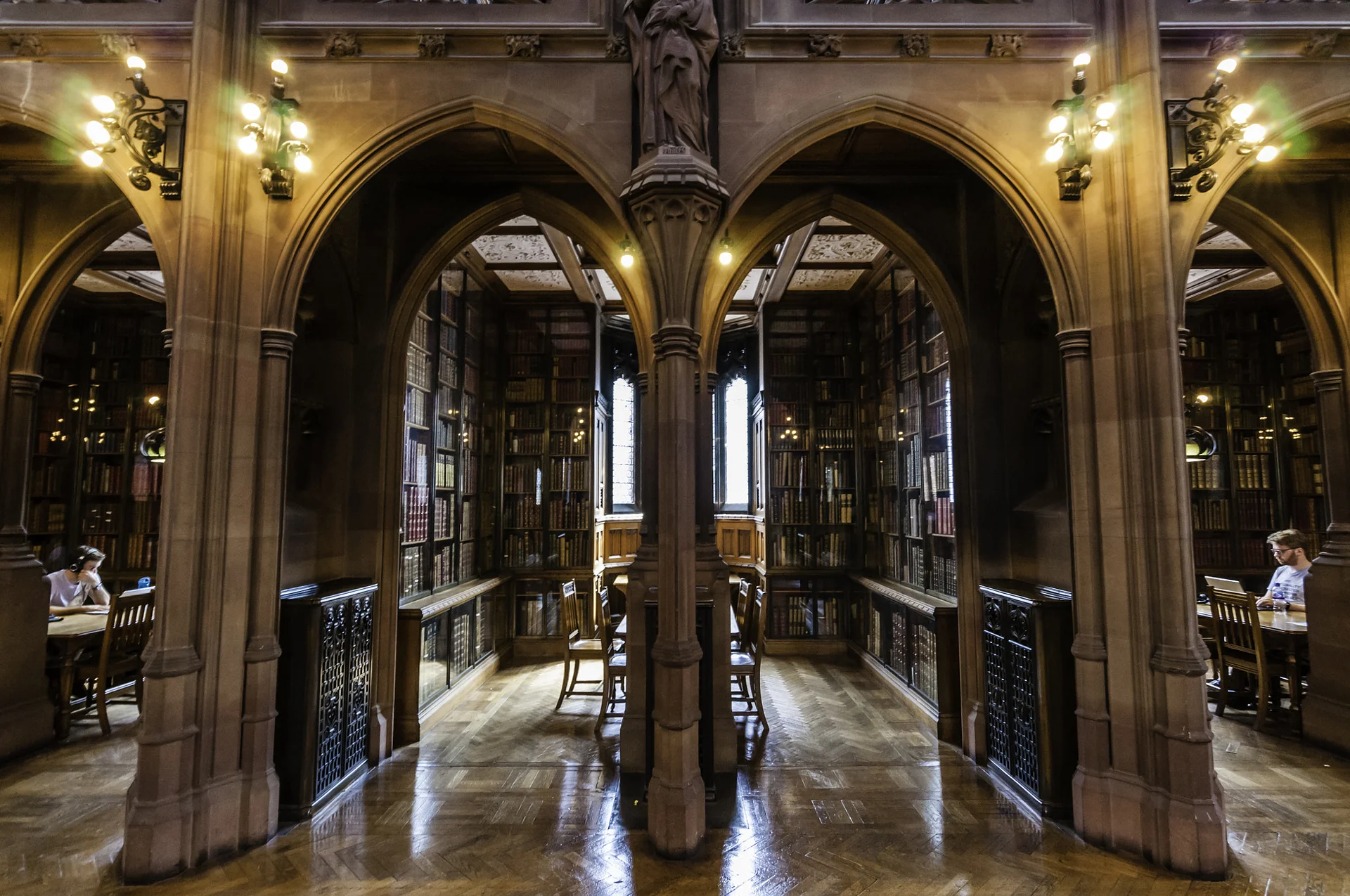
Every architectural detail of the Rylands library is a work of art. From the carved gargoyles to the impressive stained glass windows that flood the rooms with colored light, and the soaring vaults reminiscent of the finest medieval cathedrals, everything works to create an atmosphere of reverence. The red Runcorn sandstone used for its construction gives it a dark and mysterious patina, especially under the often cloudy skies of Manchester.
Friendly tip: Do not miss the Historic Reading Room, the beating heart of the library. This is where the architecture is at its most spectacular, with its carved wooden galleries and glass bays. Take the time to admire the details of the statues and coats of arms that adorn the space.
Written treasures: from manuscripts to rare editions
The collection at the John Rylands Library is immensely rich. It houses a multitude of precious documents that fascinate researchers and casual visitors alike.
Ancient manuscripts and papyri
- The Rylands Papyrus 457 (also known as the St. John Fragment): considered the oldest known fragment of the New Testament, dating from the early 2nd century.
- Illuminated medieval manuscripts: bibles, books of hours, and classical texts, showcasing the scribal art of bygone eras.
Priceless printed editions
- One of the largest collections of works by William Caxton, the first English printer.
- Incunabula, books printed before 1501, which trace the beginnings of printing in Europe.
- Correspondence and personal documents of historical and literary figures, offering an intimate glimpse into their time.
The John Rylands Library is not just a place of conservation. It is a space where the past and present meet, where every book and every stone whispers tales of scholarship and human ingenuity.
Opening hours
| Monday | Closed |
|---|---|
| Tuesday | 10:00-17:00 |
| Wednesday | 10:00-17:00 |
| Thursday | 10:00-17:00 |
| Friday | 10:00-17:00 |
| Saturday | 10:00-17:00 |
| Sunday | Closed |
*Information subject to change

I loved my visit to this magnificent library.<br>
It is a place rich in history where you will feel like you are in Harry Potter's castle!<br>
The library is open from Monday to Saturday and admission is free. Go check it out without hesitation :)