
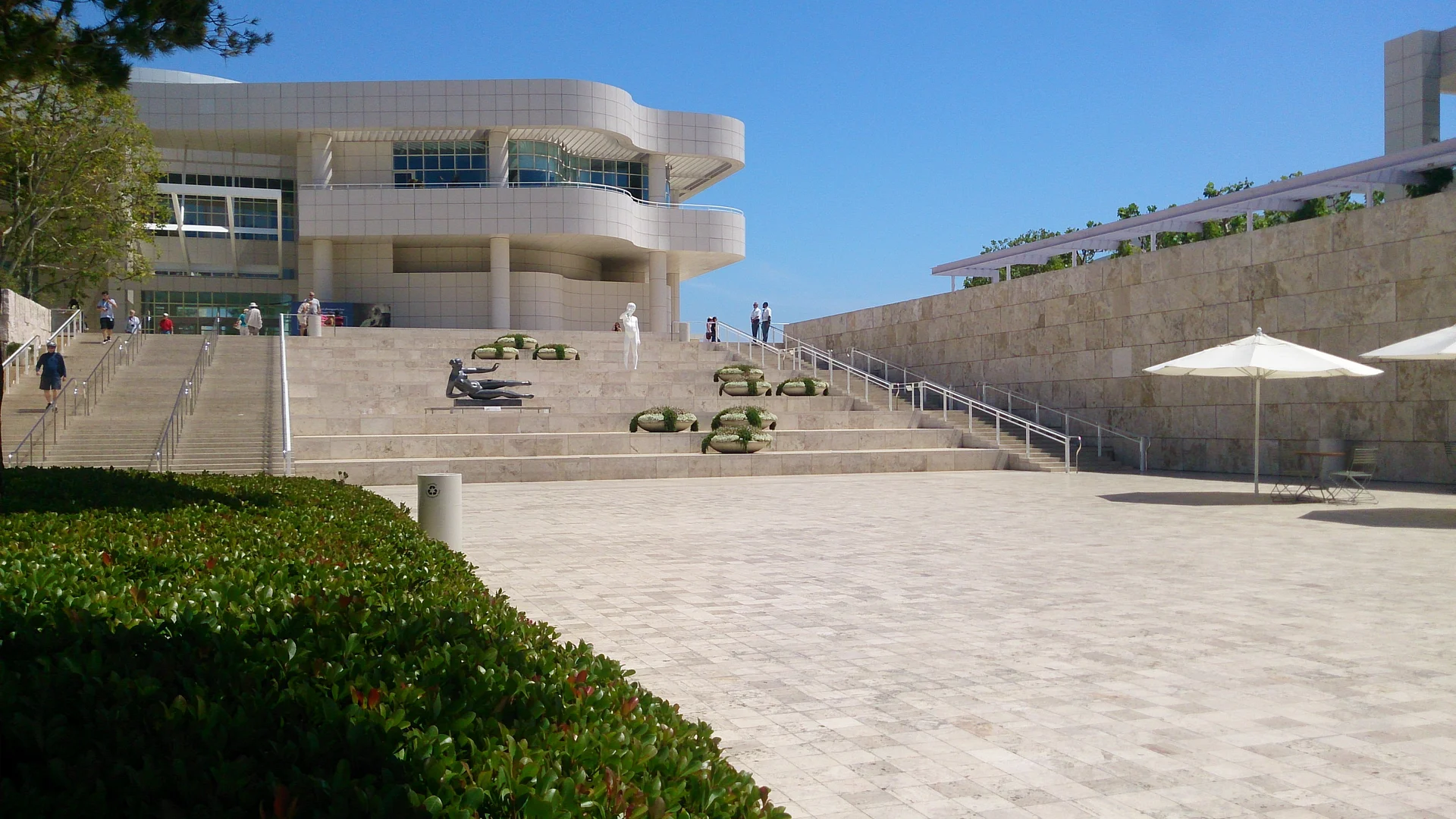
Visiting the Getty Center
The Getty Center began as one man's vision. Jean Paul Getty, who built a fortune in the oil industry, was a devoted patron of the arts. He established the Getty Foundation in 1953 to support the visual arts, and in 1974 he opened a museum focused on antiquities at his property in Malibu. By 1997, most of the collection had moved to a hilltop overlooking Los Angeles.
The modern museum complex was designed by architect Richard Meier. Its layout and materials often surprise first-time visitors.
A village in the hills
Richard Meier aimed to give the museum the feel of an Italian mountain village. He spared no expense in achieving this, importing travertine stone for the floors and walls directly from a quarry near Rome.
Your visit begins with a tram ride from the parking garage to the main entrance. This ascent above the sprawl of Los Angeles is a highlight in itself. Once at the top, you will find four pavilions for permanent collections, one for rotating exhibitions, the Getty Research Institute, which houses over 800,000 documents, and the offices of the Getty Foundation.
The grounds feature several gardens, including a cactus garden, a sculpture garden, and the central garden designed by Robert Irwin. The latter is a complex floral labyrinth that incorporates a flowing stream and waterfall.
The collection
If architecture is not your primary interest, the museum's holdings will keep you occupied. The galleries house significant collections of paintings and sculptures. You can view works by masters such as Da Vinci, Rembrandt, Cezanne, Manet, Monet, Goya, Rodin, and Gauguin. It is a formidable lineup of artists.
In the evening, you can watch the sun set over the distant hills with the lights of Beverly Hills visible below.
Opening hours
| Monday | Closed |
|---|---|
| Tuesday | 10:00-17:30 |
| Wednesday | 10:00-17:30 |
| Thursday | 10:00-17:30 |
| Friday | 10:00-17:30 |
| Saturday | 10:00-21:00 |
| Sunday | 10:00-17:30 |
*Information subject to change

A romantic outing to do in LA. Splendid setting, interesting works of art. In a city that is not that glamorous after all, this really stands out.