
Blue Mosque: 20,000 Iznik tiles under a dome suspended in light
The first thing that hits you isn't the blue. It is the light. It pours through 260 windows arranged across multiple levels, bounces off the glazed tiles, and gives the interior air an almost liquid quality. The original stained glass, decorated with floral patterns, filtered even more intense colors. Those who saw it in the 17th century were stunned.
Why visit the Blue Mosque?
The Sultanahmet Camii, its official name, is the final great mosque of the classical Ottoman period. Sultan Ahmed I had it built between 1609 and 1616 to compete with Hagia Sophia, which stood right across from it. He was barely twenty years old when he launched the project, and the empire was then navigating a period of military and financial decline. The move was as much political as it was spiritual.
The architect Sedefkar Mehmed Aga, a student of the legendary Mimar Sinan, was also a master mother-of-pearl inlayer. This dual expertise explains the ornamental precision of the building. His name, Sedefkar, literally means artisan of mother-of-pearl. He successfully married Byzantine influences inherited from Hagia Sophia with the Ottoman architectural grammar, producing what many consider the decorative peak of the genre.
The architecture and the details that make the difference
The scandal of the six minarets
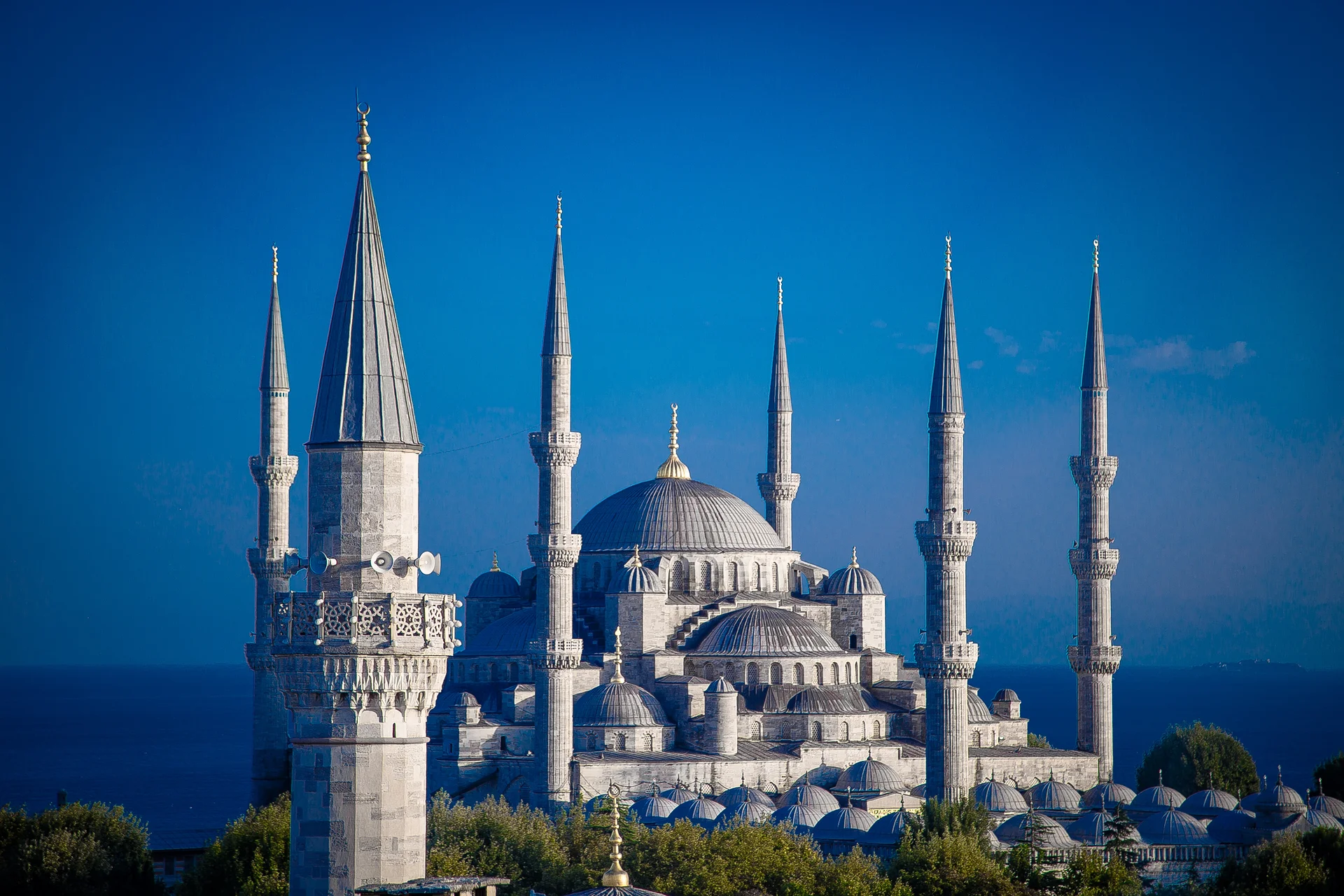
Six minarets. No Ottoman mosque had ever had so many. Only the sacred mosque in Mecca had as many at the time, which triggered a fierce controversy. The sultan resolved the crisis by financing the construction of a seventh minaret in Mecca. A popular legend says that Mehmed Aga confused altin (gold) and alti (six) when the sultan asked him for golden minarets.
The 20,000 Iznik tiles
More than 21,043 ceramic tiles cover the interior walls. They were produced in the workshops of Iznik, then at the height of their craft. Tulips, carnations, cypresses, pomegranates: the floral motifs are rendered in cobalt blue, turquoise, green, and tomato red, that signature color of Iznik ceramics. The density of the tiles gives the walls an almost textile texture, as if the surfaces were draped in painted silk.
The dome and the elephant feet
The central dome reaches a height of 43 meters with a diameter of 23.5 meters. It rests on four massive pillars with a diameter of 5 meters, which locals nickname the elephant feet. The arrangement of the windows around the base creates an illusion: the dome appears to float, detached from its structure. The interior calligraphy is the work of Seyyid Kasım Gubari, who hailed from Diyarbakir.
What most visitors miss
The tomb of Sultan Ahmed I, who died at 27, is located right next to the mosque. You can also see the graves of his wife Kosem Sultan and his sons Murad IV and Osman II. The mosque was part of a much larger complex that included a hospital, Quranic schools, a covered bazaar, and a hammam. The bazaar, the Arasta, still exists: it runs along the south side of the mosque and today sells carpets and ceramics.
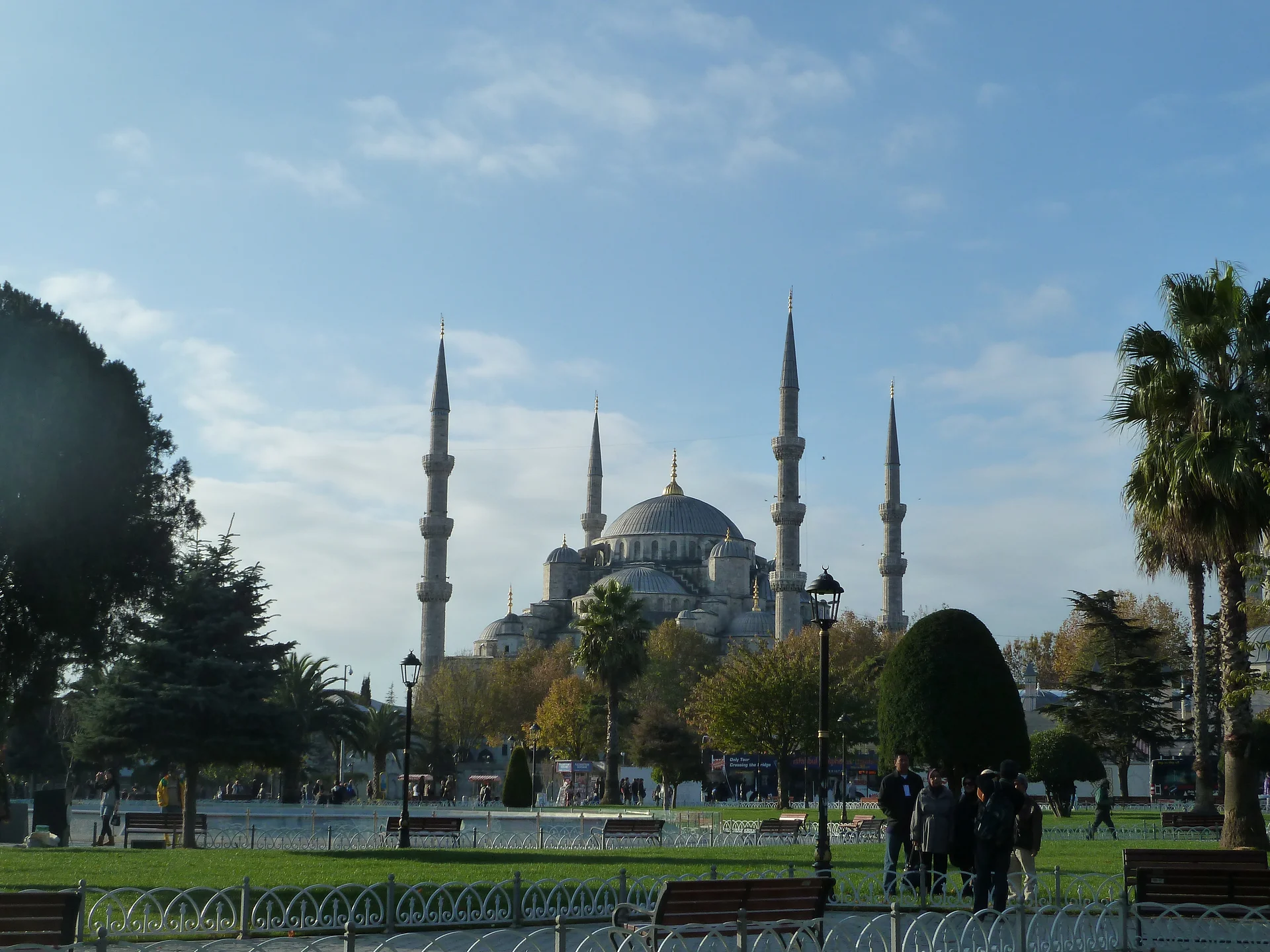
The inner courtyard is also worth lingering in. Its 26 granite columns support arcades covered by small domes, and the hexagonal ablution fountain occupies the center. This is often where, at the end of the day, the light is most beautiful for photographing the minarets.
Friendly tip: The mosque closes its doors to visitors during the five daily prayers, for about 90 minutes each time. On Fridays, it only opens to non-worshippers after 1:30 PM. Check the day’s prayer times before you head out. The ideal window remains Tuesday through Thursday, between 9:00 AM and 11:30 AM, when the security line rarely exceeds 15 minutes.
- Look for: The Iznik tiles in the upper galleries, the white marble mihrab, the carved minbar, the chandeliers suspended at eye level, and the imperial loge with its mother-of-pearl and ivory inlays.
- Dress code: Shoulders and legs must be covered, and women need a headscarf. Cover-ups are provided for free at the entrance. You must remove your shoes before entering.
Opening hours
On Fridays, the Blue Mosque opens to non-worshippers after approximately 1:30 PM. Prayer times in Istanbul vary by season, so check the schedule before your visit.
*Information subject to change

This mosque is free and really beautiful both inside and out. If you forget something to cover up with, scarves and wraps are available at the entrance.