
Verona, Way Beyond a Balcony and a Romance
It is 6pm on Piazza Bra, and the pink stone tiers catch a golden glow under the setting sun. In a few hours, 15,000 people will fill this Roman amphitheater to listen to Aida under the stars.
Twenty centuries separate the gladiators from the tenors, but the walls have not moved. Shakespeare set the impossible love of Romeo and Juliet here. Millions of travelers visit every year to photograph a balcony that did not even exist before 1936. Yet the true magic of this city lies elsewhere, in its quiet squares where Veronese locals go about their day as if tourists did not exist.
A City for Northern Italy Lovers
Verona suits travelers wanting a taste of Italy without the overwhelming crowds of Venice or Florence. You can easily explore the city on foot in two or three days, and its heritage spans every era from Roman ruins to medieval palaces and Renaissance churches. Wine enthusiasts will be in heaven. The Valpolicella hills start twenty minutes from downtown and produce Amarone, one of Italy's most powerful reds.
On the other hand, if you are looking for beaches or a wild nightlife scene, look elsewhere. Veronese evenings revolve around a terrace spritz and a late dinner. Families with young children will appreciate the relative calm and short distances between sites, though few activities are specifically geared toward them.
A Classic Northern Italian Budget
Expect $113 to $210* per night for a solid hotel in the historic center, and $68 to $102* in the outer neighborhoods. A full meal at a trattoria runs between $29 and $45* per person, wine included. Admission to the Arena costs $14*, or you can opt for the Verona Card at $31* for 24 hours and $36* for 48 hours, which covers all museums and public transit.
The Arena and Piazza Bra
The Arena di Verona dates back to the year 30 AD. As the third-largest Roman amphitheater after the Colosseum and the one in Capua, it once held 30,000 spectators. An earthquake in 1117 destroyed the outer ring, leaving only a single section known as the Ala. The interior remains remarkably intact, boasting exceptional acoustics.
Since 1913, the Verona Opera Festival has staged productions here every summer from June to September. The 2025 season marked the 102nd festival. Even if you do not attend a performance, tour the interior during the day. Climb to the very top tier for panoramic views of the city and imagine the gladiator matches that played out here two millennia ago.
Friendly tip: book your tickets online and arrive early in the morning to skip the lines. The stone seating tiers are hard, so rent a cushion for $2.30 to $5.70* from vendors right outside the entrance.
The Medieval Center and Its Squares
Piazza delle Erbe occupies the site of the ancient Roman forum. Today, a morning market fills the square under colorful umbrellas. The surrounding medieval and Renaissance facades tell the story of seven centuries of commercial history. This is where locals actually grab an aperitivo, rather than at the crowded sidewalk cafes on Piazza Bra.
Just steps away, Piazza dei Signori carries a much more solemn atmosphere. A statue of Dante has stood at its center since 1865. The Arche Scaligere, the Gothic tombs of the family who ruled the city in the 14th century, stand in an adjacent alley. The 84-meter Torre dei Lamberti offers the best viewpoint over the red tile rooftops and the curving Adige River.
Juliet's House and the Shakespearean Myth
Let's be honest: Casa di Giulietta is a completely manufactured tourist attraction. The balcony was added in 1936 simply to satisfy visitors. The 13th-century house originally belonged to the Dal Cappello family, whose name vaguely resembles Shakespeare's Capulets, but the connection ends there.
That said, the devotion to the myth carries a certain charm. Thousands of letters arrive every year addressed to Juliet, and volunteers actually answer them. The courtyard is free to enter and constantly packed. Touring the interior costs $6.80* and lets you step out onto the famous balcony. If you hate crowds, skip it entirely or arrive right at opening time.
The Left Bank of the Adige: Veronetta and Giusti Gardens
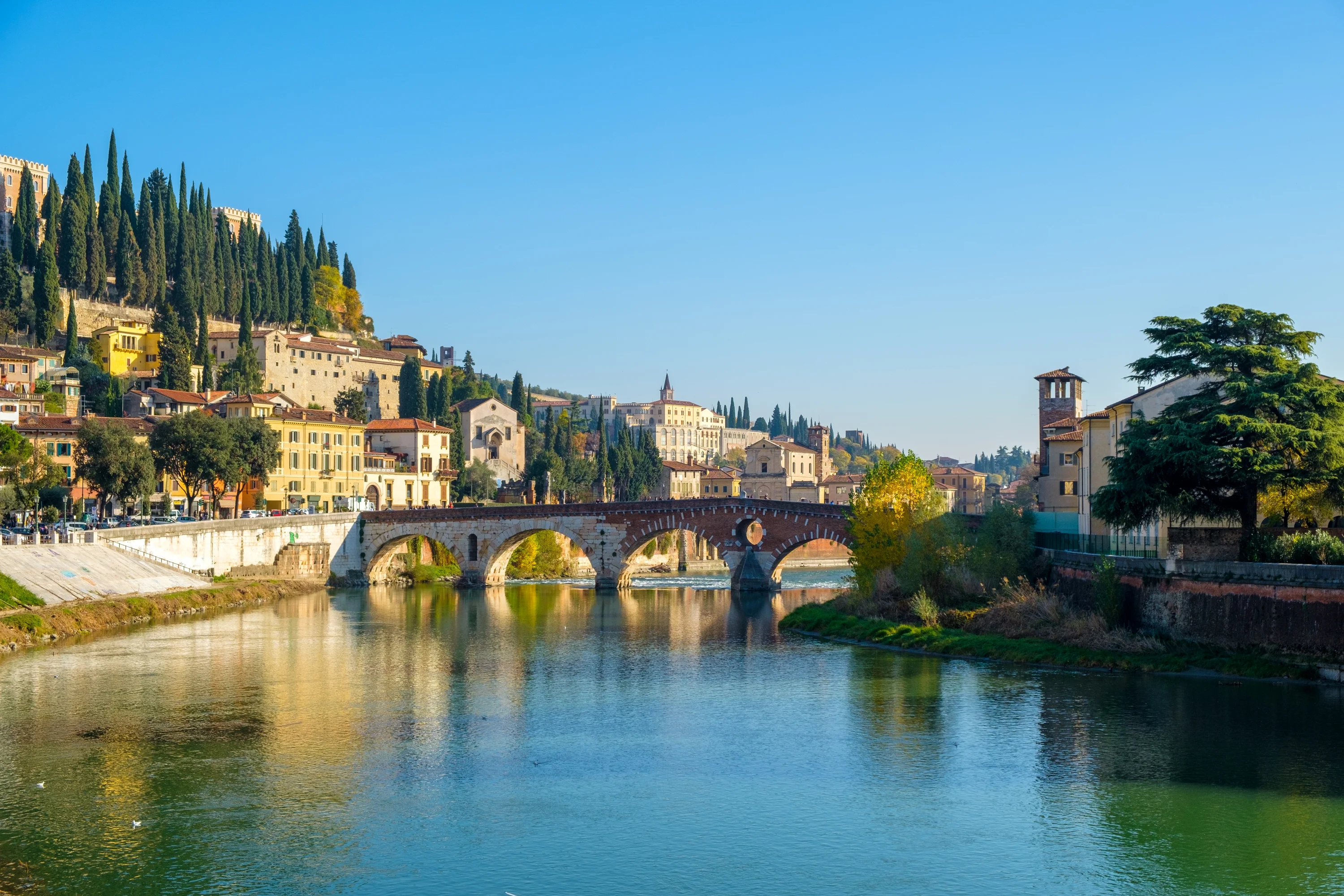
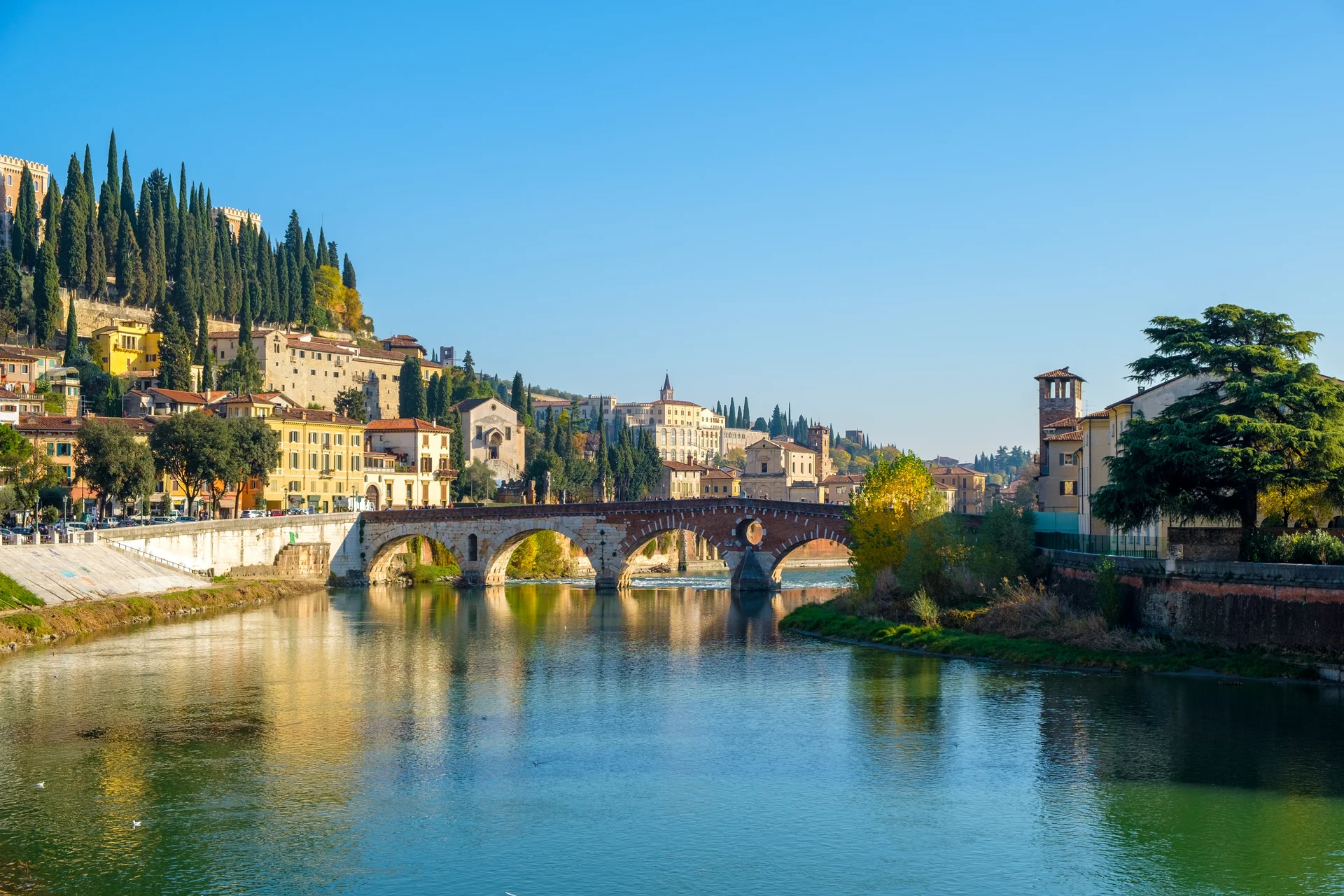
The Veronetta neighborhood across the river remains largely overlooked by tourists. You cross via the Ponte Pietra, originally built by the Romans in 100 BC. German troops blew it up in 1945, but the people of Verona rebuilt it stone by stone using blocks salvaged from the riverbed.
The Giusti Gardens are well worth a detour. This 16th-century Renaissance garden features towering centuries-old cypress trees, boxwood mazes, and artificial grottos. Goethe used to walk here during his Italian journey. The belvedere at the top provides a sweeping view looking down over the city. Admission costs $16*, or $12* with the Verona Card. Go on a weekday to have the paths almost entirely to yourself.
Friendly tip: from Castel San Pietro, reachable via a funicular or a steep set of stairs, the sunset panorama over the city is unbeatable. Locals love to bring picnic baskets up here on Sundays.
Where to Eat and Drink in Verona
Risotto all'Amarone is the city's signature dish. Vialone Nano rice, grown in the Po Valley, absorbs the robust Valpolicella red wine and turns a rich purple hue. The flavor is intense, subtly sweet, and carries notes of candied fruit. Expect to pay $14 to $23* depending on the restaurant.
Bigoli, thick pasta resembling plump spaghetti, typically comes served with duck or anchovy ragu. Pastissada de caval, a horse meat stew simmered with wine and spices, dates back to the 5th century. It divides opinions, but Veronese locals take great pride in it. Osteria al Duca prepares it the traditional way, served alongside creamy polenta.
For aperitivo, grab a table on Piazza delle Erbe around 6pm. A spritz costs $4.50 to $6.80* and usually comes with cicchetti, traditional Venetian small bites. Gelateria Savoia, open since 1939, dishes out artisanal gelato right across from the Teatro Filarmonico.
Where to Stay in Verona and Around
The historic center remains the top choice for a first visit. You will be within walking distance of all the major sights and close to the lively evening street scene. Prices run high, especially during the opera festival or major trade shows like Vinitaly in April.
The Cittadella neighborhood, located between the train station and downtown, offers a great compromise. You can walk to Piazza Bra in ten minutes. Borgo Trento, across the Adige River, suits travelers who prefer peace and quiet. Public parks and residential streets here offer a welcome break from the tourist bustle.
For tighter budgets, the StraVagante Hostel offers clean, comfortable rooms starting at $68*. The Hotel Milano & SPA, located just 50 meters from the Arena, features a rooftop hot tub with views looking straight at the amphitheater. Be sure to book several weeks ahead during peak season.
How to Get to and Around Verona
Valerio Catullo Airport sits 11 kilometers from downtown. The Aerobus shuttle connects to Porta Nuova station in fifteen minutes for $7.90*. If you are flying out of North America, you will need a connecting flight through a major European hub since direct US routes are limited or seasonal. Train travel is often much more practical, as Verona sits squarely on the main Milan-Venice-Trieste rail line.
From Milan or Venice, the high-speed train takes about 1h15. From Florence, plan for 1h30. Cheaper regional trains take about thirty minutes longer. Once you arrive, you can cover everything on foot. The historic center is compact and entirely pedestrianized. City buses run out to the outer neighborhoods if needed.
When to Go
Spring and autumn deliver the ideal conditions with mild temperatures, golden light hitting the pink stone buildings, and manageable crowds. Summer draws opera lovers, but the heat can be intense and hotels book up solid during the festival. Winter stays pleasant for travelers seeking quiet, though certain sites trim their operating hours.
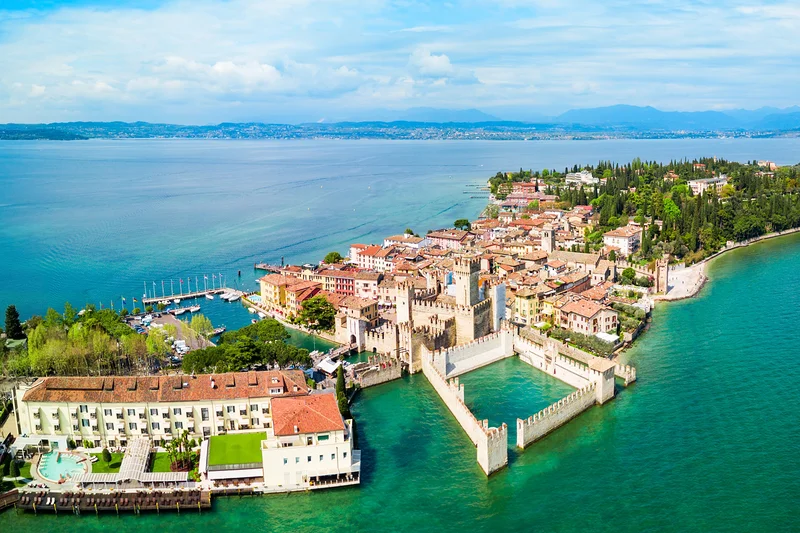
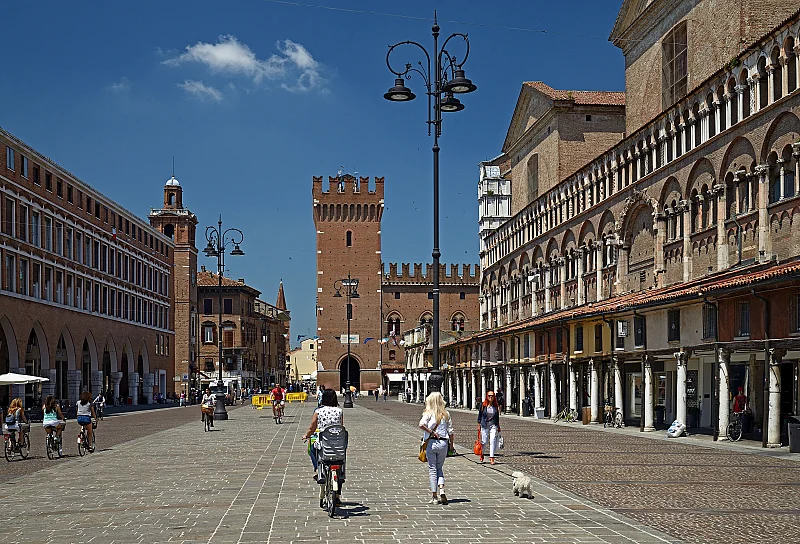
While Verona is well known for being the setting of the love story between Romeo and Juliet, the city is also very beautiful. The medieval historic center is very well preserved. It is a real pleasure to wander through the cobblestone streets. The city is also lively and has plenty of cafes, bars, restaurants, and shops.